.svg)
Why most finance teams are stuck in pilot purgatory while competitors deploy autonomous systems


Your finance team is using AI. You're proud of the adoption numbers. But you're still stuck in pilot purgatory while competitors are deploying autonomous systems that replace entire workflows.
72% of finance leaders now use AI tools, up from 34% last year. That's explosive adoption. But here's the problem: only 11% have moved to production deployment. The gap between experimentation and production isn't about better prompts or more training data. It's about architecture. Most finance teams are building AI assistants that support tasks. They should build autonomous agents that replace entire workflows.
This isn't a question of ambition or timeline. It's a foundational design decision that determines whether your AI initiatives deliver 15-20% productivity improvements or 80-90% workflow elimination. The assistant vs agent choice shapes everything that follows. Get it wrong at the start, and you could spend 18 months in pilot purgatory. Then you'll find your foundation can't scale to production.
The experimentation trap: why 89% of finance teams can't reach production
The L.E.K. Consulting 2025 Office of the CFO Survey shows a paradox. 35% of CFOs are testing AI pilots or proofs of concept. But only 11% use AI in production. The Protiviti Global Finance Trends Survey 2025 shows 72% adoption. It also confirms most deployments stay at task-level automation. They do not replace full workflows.
The problem is architectural. Finance teams use AI copilots for expense categories or invoice data entry. They see modest gains, saving 15% to 30% on tasks. Then they learn their foundation cannot scale to replace workflows on its own. They're stuck enhancing human workflows when they should be replacing them entirely.
Architecture determines outcomes: assistants vs agents
AI assistants require human oversight for every decision and create new coordination costs. You still manage the workflow, the assistant just speeds up individual steps. Autonomous agents handle entire workflows end-to-end with humans in oversight roles only when exceptions occur. The agent owns the workflow, not the human.
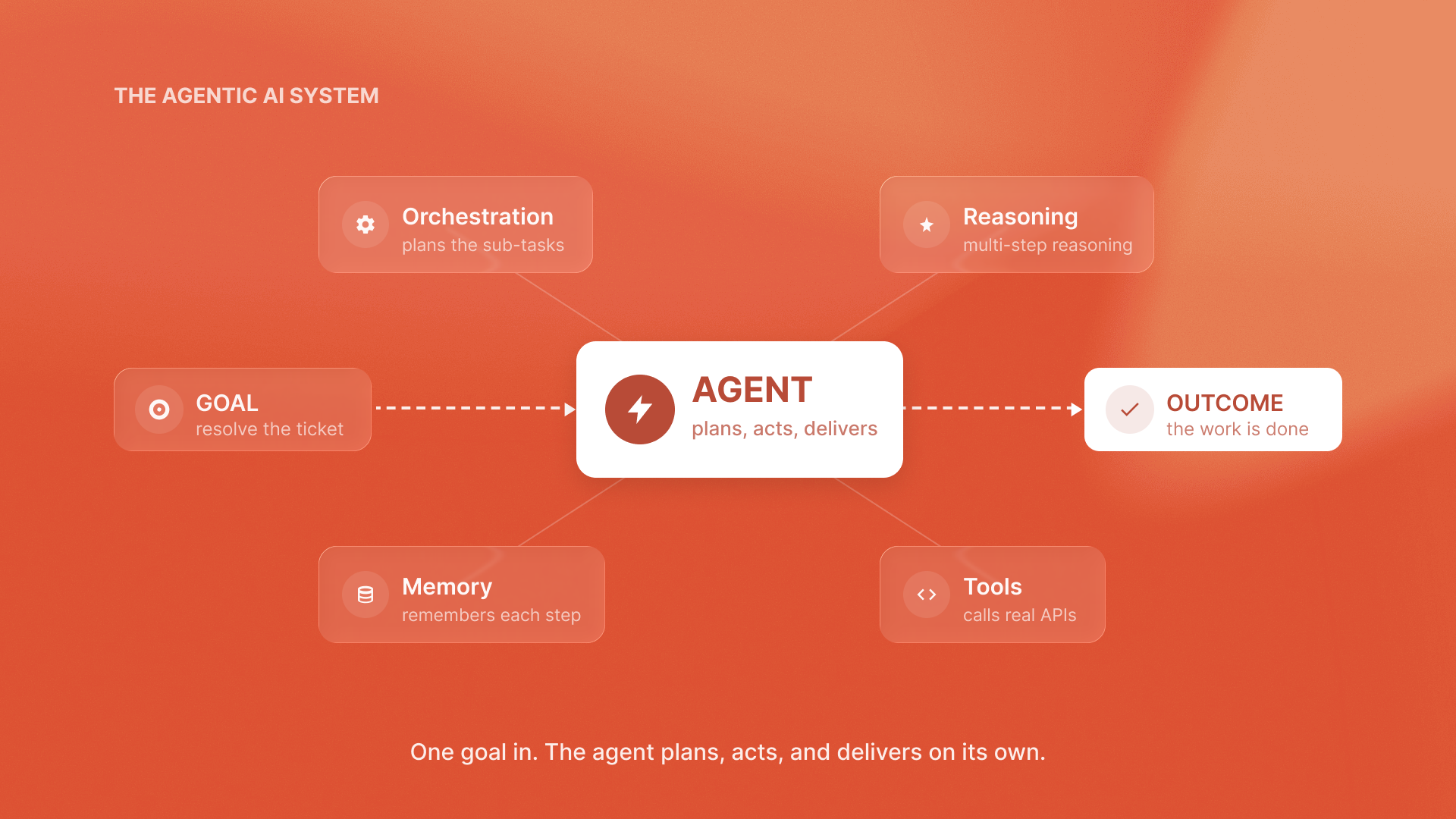
By 2028, autonomous agents will execute 60% of routine finance tasks. This is according to Gartner research. The shift from task-level automation to workflow replacement requires fundamentally different architecture. Agents need perception layers to understand context. They need reasoning engines to make decisions. They need action capabilities to execute tasks. They need learning loops to improve over time. Assistants don't need any of that because humans still control the workflow.
When QA flow built autonomous testing agents, we designed for end-to-end workflow ownership from day one. The agent sees design changes in Figma. It considers what test coverage is needed. It creates and runs tests. It uses the results to improve future test plans. That's workflow replacement, not task enhancement.

Production economics: real ROI comes from workflow replacement
Finance teams stuck in assistant mode report marginal productivity gains. Invoice processing that took 60 minutes now takes 45 minutes. That's useful but not transformational. Teams using autonomous agents see big workflow gains. Invoice processing drops from 3 days to 4 hours. Month-end close shrinks from 10 days to 3 days. Compliance monitoring shifts from quarterly manual reviews to continuous automated checks.
The economics are radically different. Saving 15-20 minutes per task creates incremental efficiency. Eliminating 80-90% of manual effort in specific processes creates competitive moats. The difference isn't about better AI models, it's about whether you're enhancing tasks or replacing workflows.
The path to production requires architectural discipline from day one
Successful deployments start with agent architecture even for pilot projects. You build on autonomous foundations (decision-making, persistent memory, multi-step reasoning) from the start. This enables smooth growth from one automated workflow to broader deployment across finance operations. Failed deployments start with assistants and add autonomy later. They learn too late that assistant foundations can’t support agent capabilities.
- A common pattern shows up often.
- Teams deploy AI copilots.
- They see small wins.
- They celebrate adoption metrics.
- Then they hit a wall when trying to scale to production.
When to build assistants vs agents
Stick with assistants for one-off tasks, highly variable workflows, and processes requiring nuanced human judgment. Commit to agents for high-volume repetitive workflows, rules-based decisions, and processes with clear success criteria. The architecture decision should be made before building, not after pilots fail to scale.
By 2028, 60% of routine finance tasks will be executed by autonomous agents. The question isn’t whether finance will be automated. It is whether your company will be among the first. Will you build competitive moats with autonomous systems? Or will you lag behind and bolt autonomy onto assistants that can’t support it?
Success Stories
Read more

.png)
.svg)
