.svg)
Why fractional CTOs ship production AI faster than full-time hires

.png)
Everyone's hiring for AI leadership. Smart companies are renting it instead.
Series B+ startups face a brutal trilemma. They must ship AI features fast. They face fierce competition for AI leaders. Hiring often takes 3 to 6 months. They also risk building the wrong architecture. This happens without production agent experience. Full-time CTO hires cost $300K-500K annually and take half a year to onboard. Consultants deliver strategy decks that gather dust while your competitors ship. Internal teams lack the architectural expertise to choose between assistants and autonomous agents correctly.
Fractional CTO services solve for velocity, cost, and execution simultaneously. Here's how the math works and why this model is winning.
The AI leadership crunch is getting worse
Leadership roles related to artificial intelligence grew between 40% and 60% in fiscal year 2025. That's not a talent pool expanding, it's a feeding frenzy. Competition for AI executives is fierce. Pay packages now often reach $300K to $500K. Hiring can also take longer. This is hard when you must ship production agents in 8 to 12 weeks. Not in 8 to 12 months.
The timeline problem creates competitive disadvantage. While you're interviewing candidates and negotiating offers, competitors with fractional leadership are already deploying autonomous systems. By the time you onboard a full-time CTO, the market has moved.
.png)
Fractional CTOs cost 60-80% less and start immediately
Fractional CTO services cost $10,000-25,000 per month, representing 60-80% savings compared to full-time executive compensation. More importantly, they start executing immediately. No hiring process, no onboarding delay, no ramp-up period learning your business. They bring proven playbooks from production deployments and ship systems in weeks.
The ROI gap isn't marginal. SMEs with strong tech leadership show 18% higher revenue growth and 15% greater profitability versus competitors. The question isn't whether to invest in AI leadership. The question is which model delivers results fastest.
Consultants deck, fractional CTOs ship
Most consulting engagements produce recommendations and roadmaps that require your internal teams to execute. You pay for strategy, then discover your team lacks the production AI experience to implement correctly. The architectural decisions get wrong, and six months later you're rebuilding.
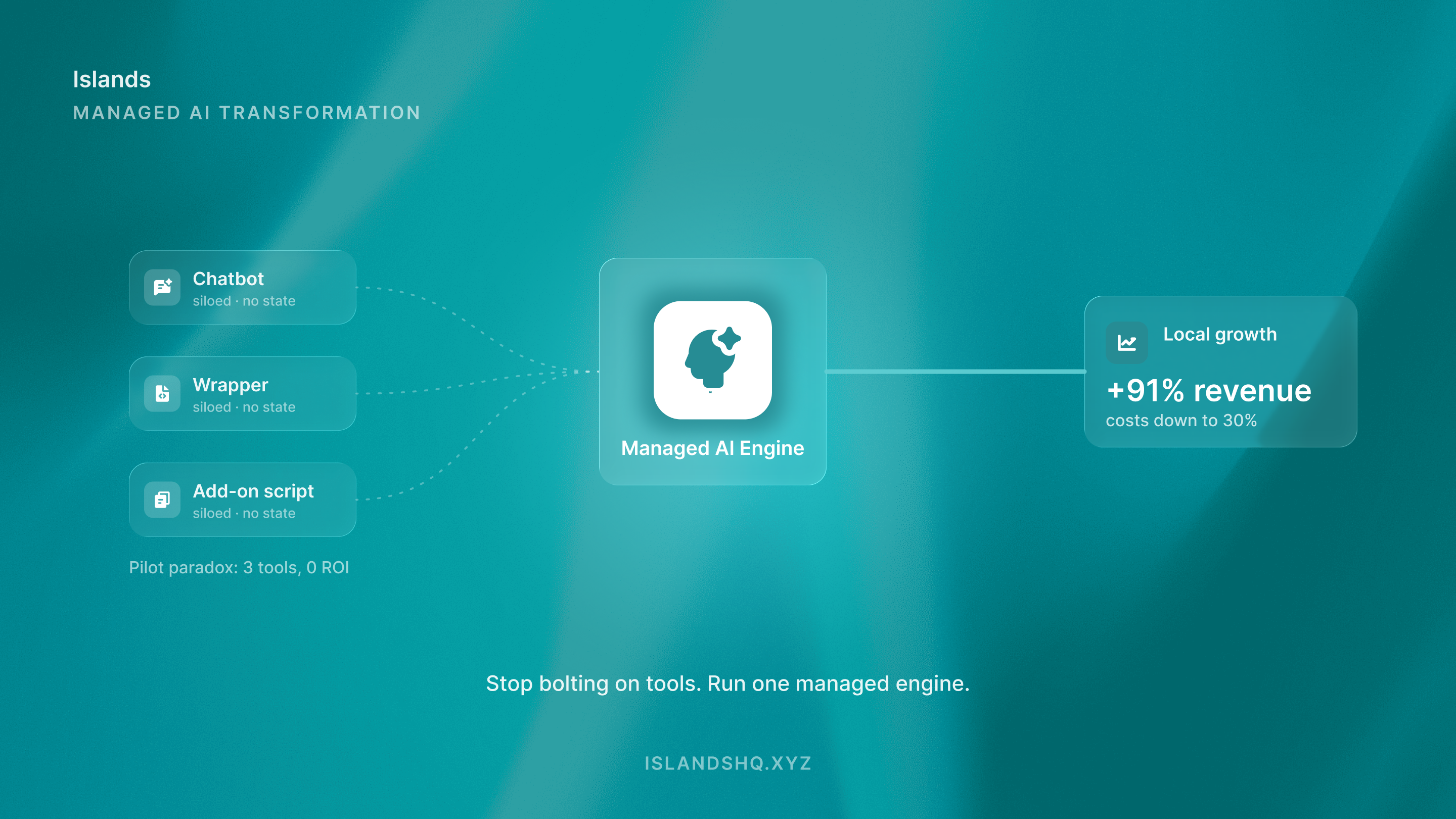
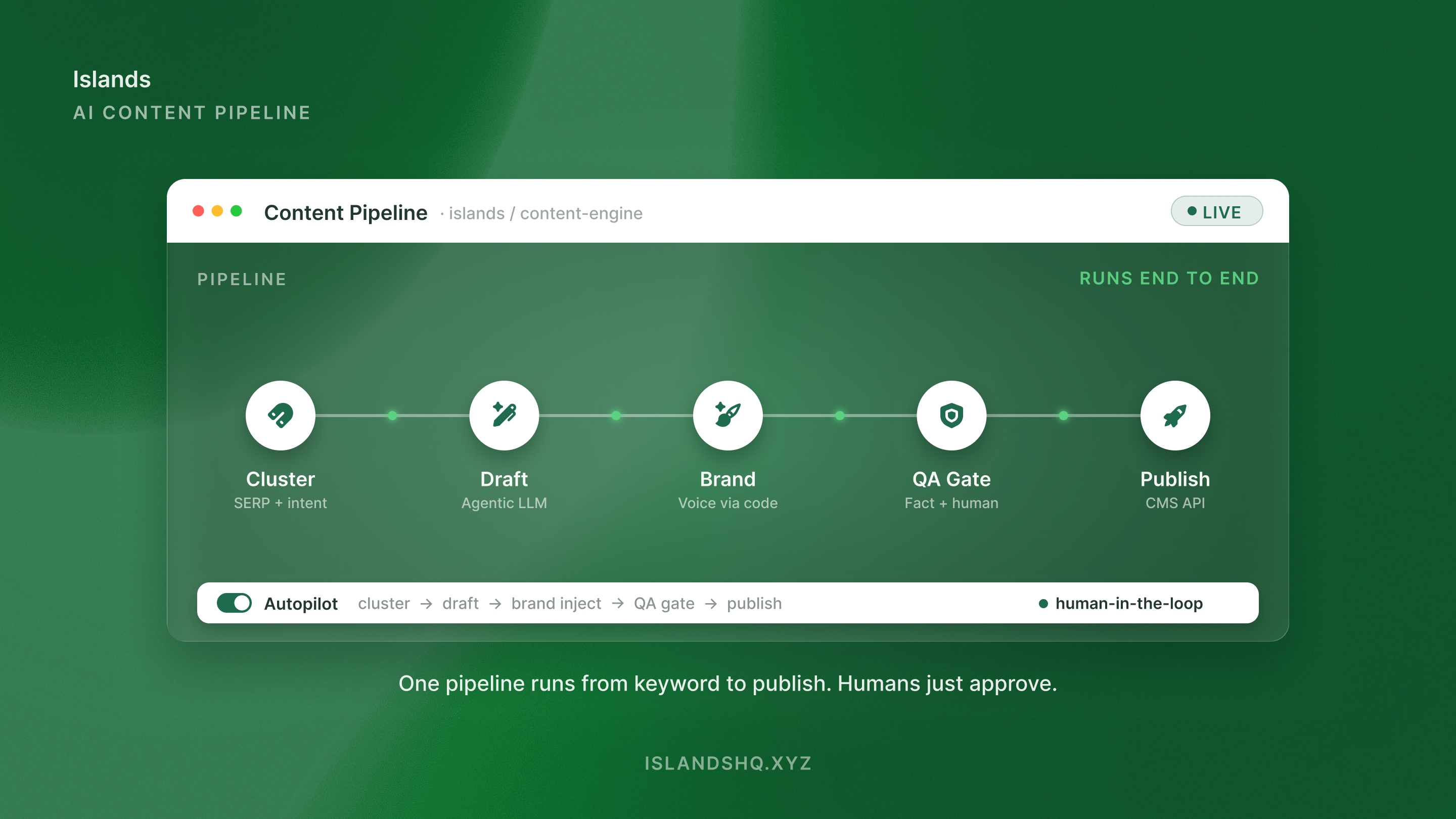
Fractional CTOs with production agent experience bring hands-on architecture. At Islands, we've deployed autonomous systems like QA flow for testing automation and ReachSocial for LinkedIn engagement. These aren't theoretical frameworks. They're working systems handling real workflows, and the architectural lessons transfer directly to your use case.
The difference is execution velocity. Fractional CTOs architect and ship, moving from strategy to deployed systems in weeks rather than quarters.
The agent vs assistant decision requires executive expertise
Companies waste 6-12 months building assistant-style copilots when business needs workflow replacement. This architectural mistake comes from leaders lacking experience with production AI agents, not from engineering execution. Your developers can build whatever you specify. The question is whether leadership knows what to specify.
The choice between AI assistants and autonomous agents determines ROI. Assistants augment human work. Agents replace workflows entirely. Get this wrong, and you may waste six months on tech that adds 10% efficiency, not 10x capability. For more on this distinction, see our breakdown of agentic AI vs assistants.
What happens in 2026
Companies that move fast on AI with fractional experts can build strong moats. Meanwhile, competitors are still interviewing executives or waiting for consultants to deliver. The window for AI transformation advantage is narrowing. Leadership model choice determines whether you're shipping production agents in Q1 or still building teams in Q3.
In 12-18 months, AI capabilities won't be differentiators. They'll be table stakes. The companies winning will be those who chose execution velocity over traditional hiring models.
Success Stories
Read more

.svg)
