.svg)
The AI interface playbook: designing for agentic user experiences

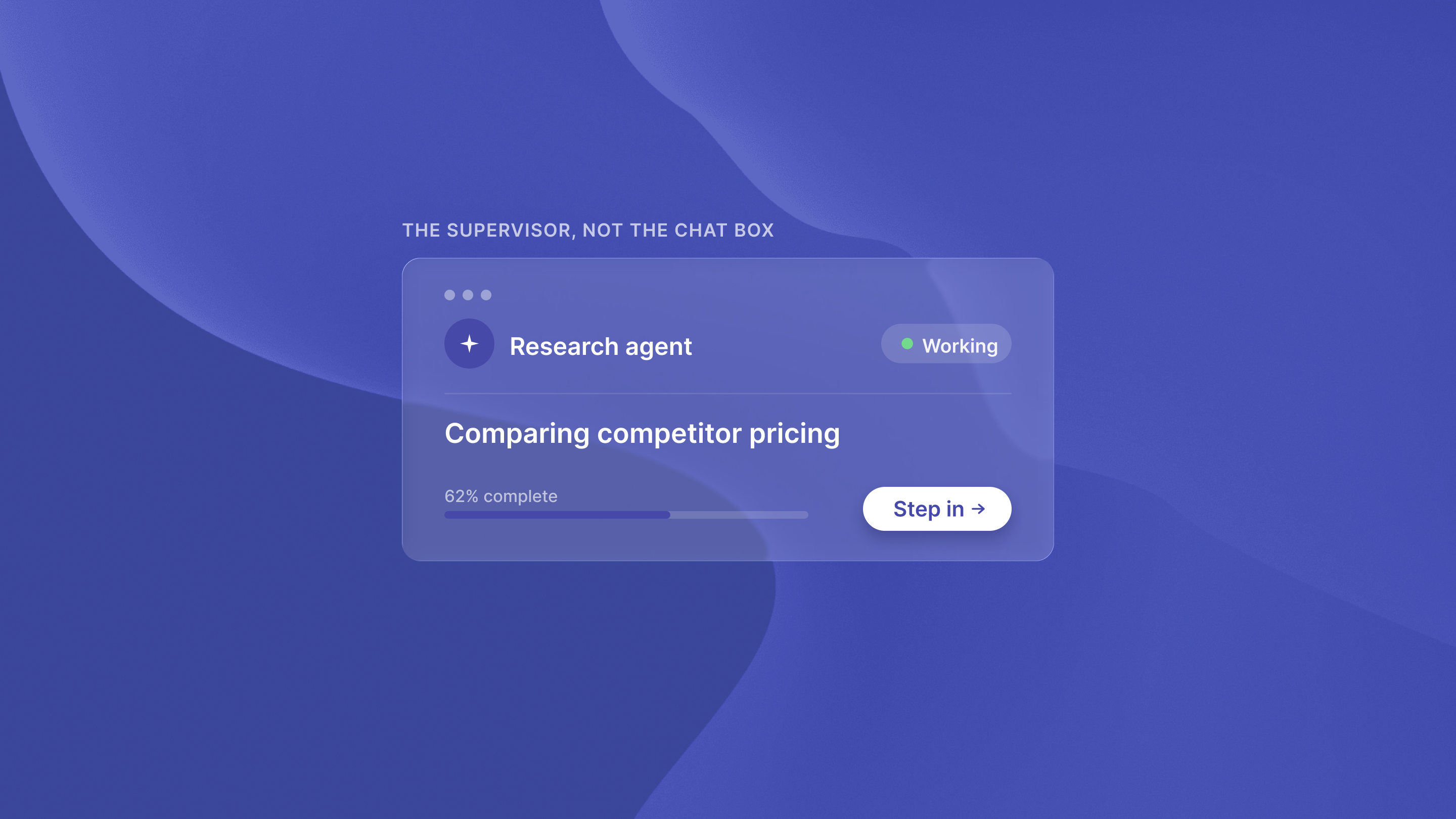
A VP of Engineering at a scale-up recently realized their AI assistant was a glorified search bar. It also had high latency. They were building a faster way to wait rather than an agent. The architectural trap involves applying legacy SaaS UX to autonomous agents. While assistants require constant prompting, agents require a supervision-first interface. This shifts the user from detailed tasks to high-level goal steering. It also avoids issues with task-specialized AI architecture that copies old, monolithic software. Mastering interface design for AI starts with moving beyond the chat box.
What we are seeing in agentic user experience
The market is shifting toward a model that prioritizes infrastructure over drafting. Teams struggle when they treat an autonomous system like a chatbot. Managing an agent through a text box is ineffective. According to Smashing Magazine, effective UX design for AI agents requires specific patterns to manage autonomous behavior and provide visibility into decision-making. These patterns shift how we visualize background processes.
Key results
- Shift from granular instructions toward high-level intent steering
- Replacement of chat box fatigue with steering-and-supervision models
- Increased investment in persistent status indicators and intervention points
- Deployment of transparency logs for production-grade auditability
The death of the chat box: Why agentic UX is different
From granular instructions to high-level intent
Traditional software is built for click-and-wait interactions. You give a command and wait for a result. With autonomous AI systems, users manage outcomes rather than tasks. Effective agentic interfaces move toward steering-and-supervision models where users manage long-running background tasks. This interface focuses on intent rather than individual actions, allowing the system to handle multi-step reasoning independently. When deploying autonomous AI agents, the UI prioritizes system visibility.
The shift to asynchronous supervision
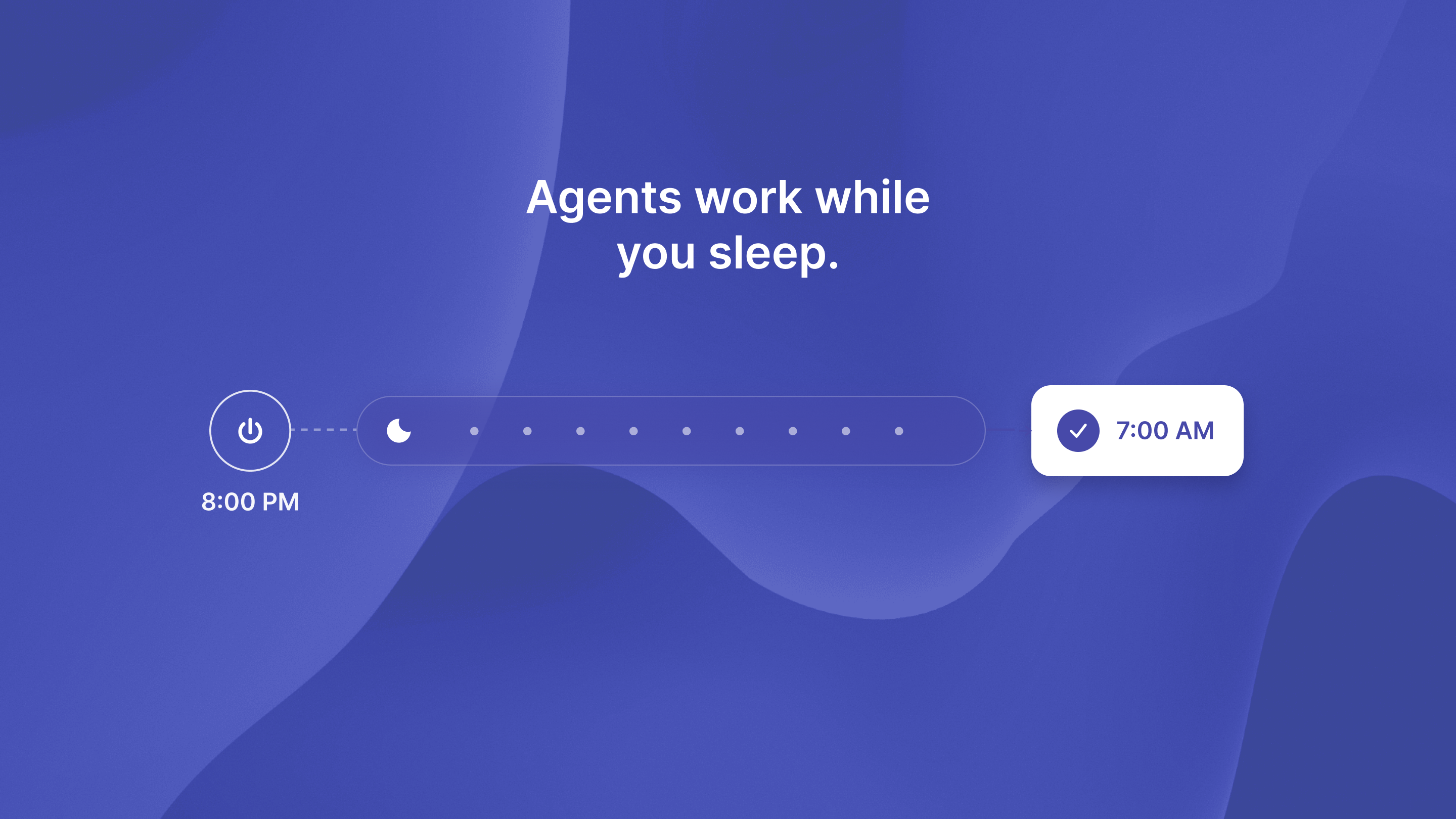
Because agents perform work over time, the UI reflects an asynchronous reality. Evolving the traditional design process is necessary for autonomous system interactions. The user is not always present when the work happens. The AI agent orchestration layer manages these workflows without cluttering the interface. Persistent status indicators and intervention points allow humans to steer the agent without micromanaging. human intervention remains critical for performance improvement.
Evolving the double diamond for autonomy
Next-gen agentic AI requires evolving the Double Diamond process for autonomous system interactions (UX Matters).
- Discovery: Focus on identifying the user high-level intent rather than specific UI actions.
- Definition: Set the steering parameters and guardrails for the agent autonomous behavior.
- Development: Build interface patterns that allow for asynchronous feedback, moving beyond brittle automation projects that lack production-grade infrastructure.
- Delivery: Implement transparency logs so users can audit the agent decision-making process.
Practical patterns for interface design for AI
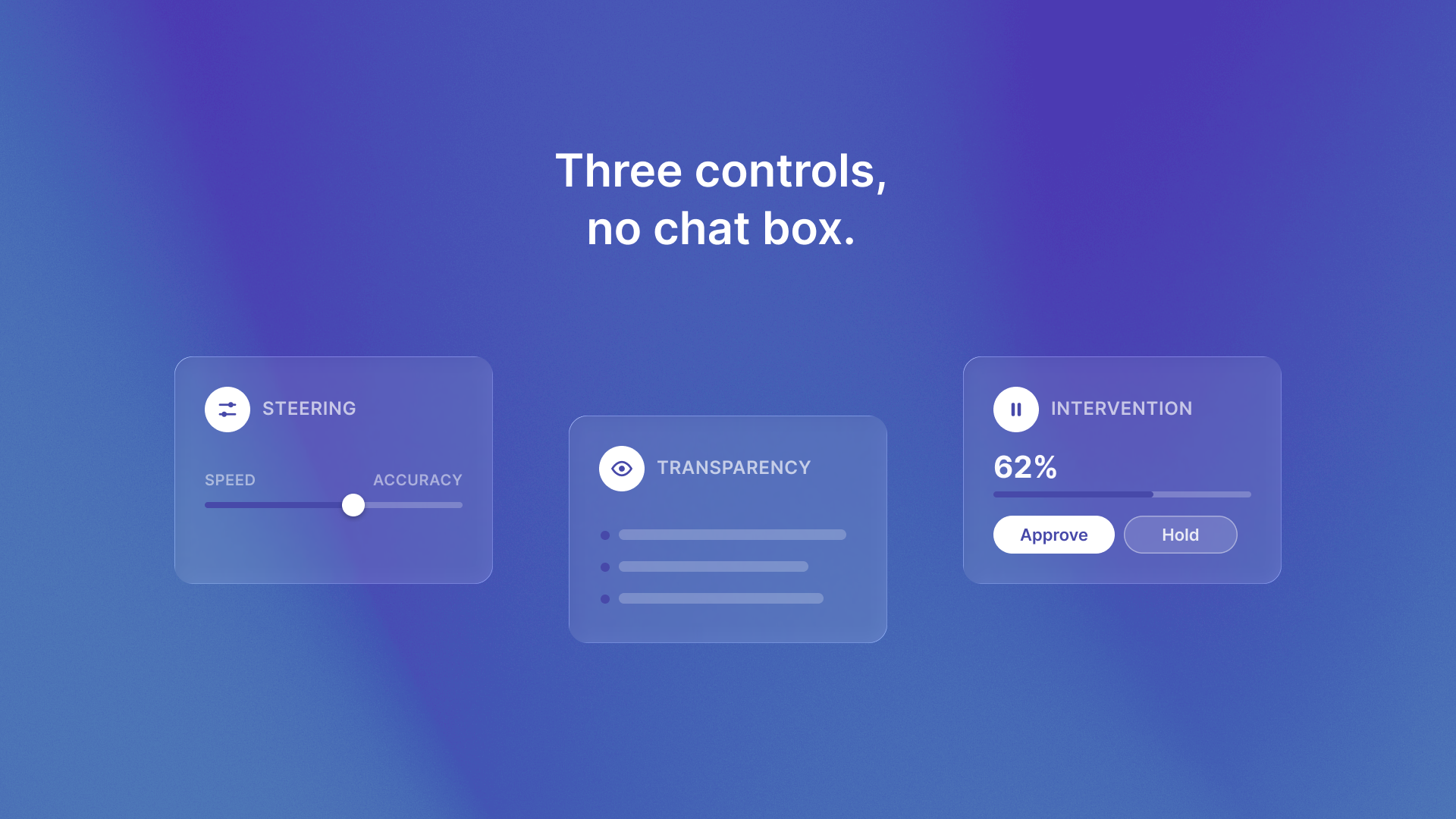
- The steering wheel vs. the command line. Replace open-ended text fields with structured intent controllers that define the agent goals and boundaries.
- Transparency logs. Provide a real-time view of the agent reasoning process so the user can see why a specific decision was made.
- Human-in-the-loop intervention points. Design specific triggers where the agent pauses and asks for human confirmation before high-stakes actions.
Lessons from the field
Many organizations struggle because most enterprise AI deployments lack the planning and action layers necessary for true autonomy. In production-grade systems, this looks like a supervision dashboard rather than a chat history. At Islands, we leverage learnings from our portfolio ventures like QA flow and ReachSocial to build these interfaces. Emphasizing intent-based steering and asynchronous monitoring helps teams focus on the right architectural goals. This helps avoid the perception-only architecture that forces costly future rebuilds.
The bottom line
Production-ready agents require an interface that builds trust through transparency. Static software is a legacy asset. The future is a dynamic workforce managed through intent. Audit your current AI architecture to see if you are building assistants or true agents. The shift from task-based UI to intent-based supervision is the only way to achieve real scale. Our team provides fractional CTO services and AI audits to ensure your stack is built for autonomy.
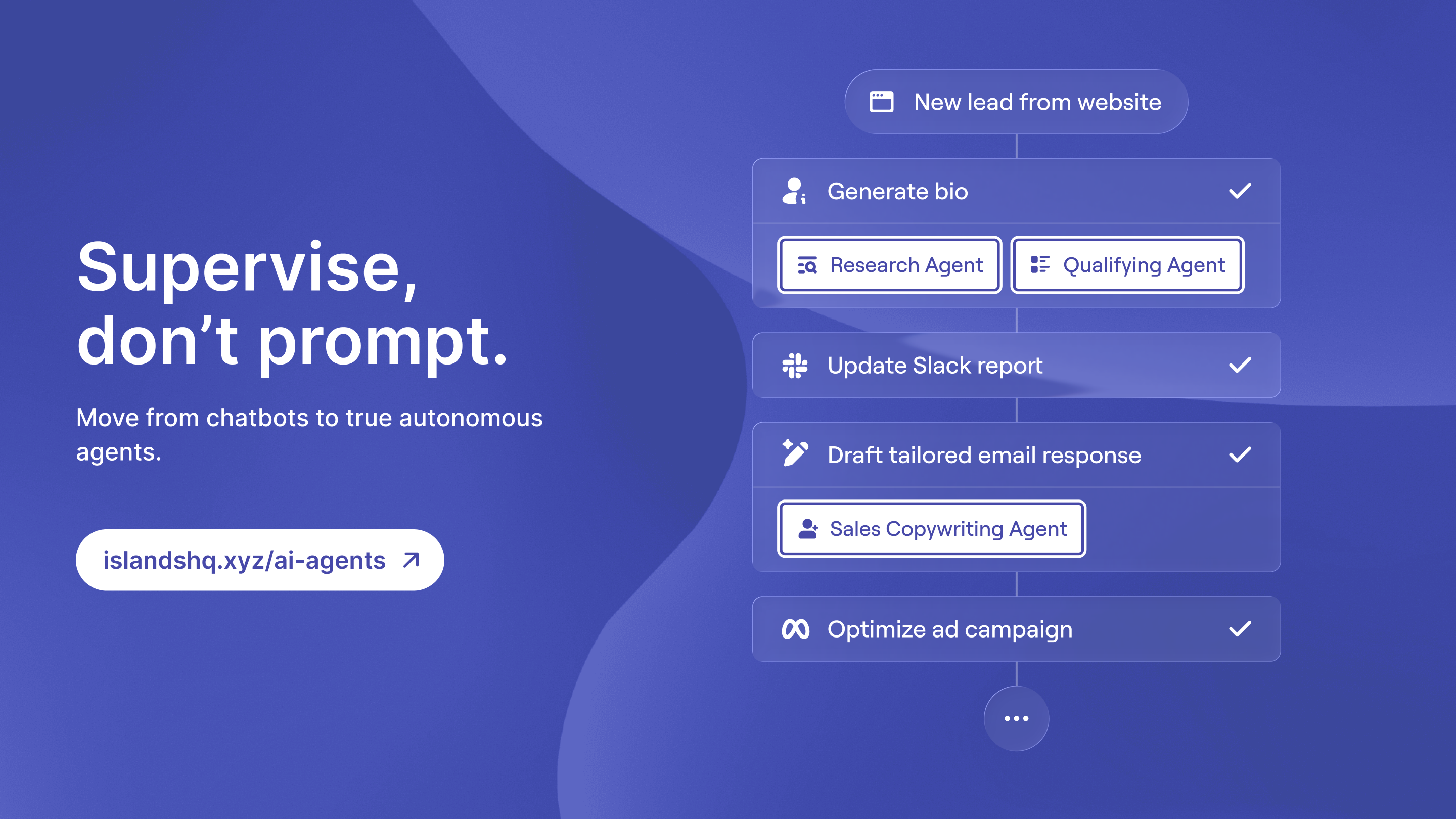
Ready to scale your autonomous systems? Book a call with Islands today.
Success Stories
Read more

.svg)
