.svg)
How to build an AI newsletter automation workflow that actually sounds human

A VP of Engineering at a Series B fintech recently shared that their newsletter sounded like a generic bot. They were using a single-prompt LLM wrapper, which meant their brand equity was leaking out with every send. This represents the architectural trap of single-prompting. It lacks the iterative logic required to maintain a consistent brand voice across complex communication tasks. Implementing a system for AI newsletter automation using specialized agents provides a way to scale content without losing authenticity. To do this, you must move from simple assistants to autonomous workflow systems.
Why single-prompt AI newsletter automation fails the brand test
The latency of context
Single-prompt systems struggle because they cannot take in enough context about a brand’s history and values at once. When you try to cram style guides, past examples, and current news into one prompt, the model loses the signal in the noise. This results in generic outputs that feel disconnected from the founder's actual voice. Many organizations fall into this scaling trap by relying on people to fix broken AI outputs. Instead, they should build systems that prevent these issues.
The hallucination of voice
Without specialized logic, LLMs often default to a polite but robotic corporate tone. They hallucinate what they think a professional sounds like instead of adhering to your specific brand voice AI requirements. Agentic design patterns enable autonomous behavior that maintains consistent logic across complex communication tasks, according to Coursera. By splitting the workflow into specialized sub-agents, you confirm the voice before the final draft is written. This helps you avoid structural failures that often happen in basic automation projects.
The architecture of an agentic newsletter pipeline
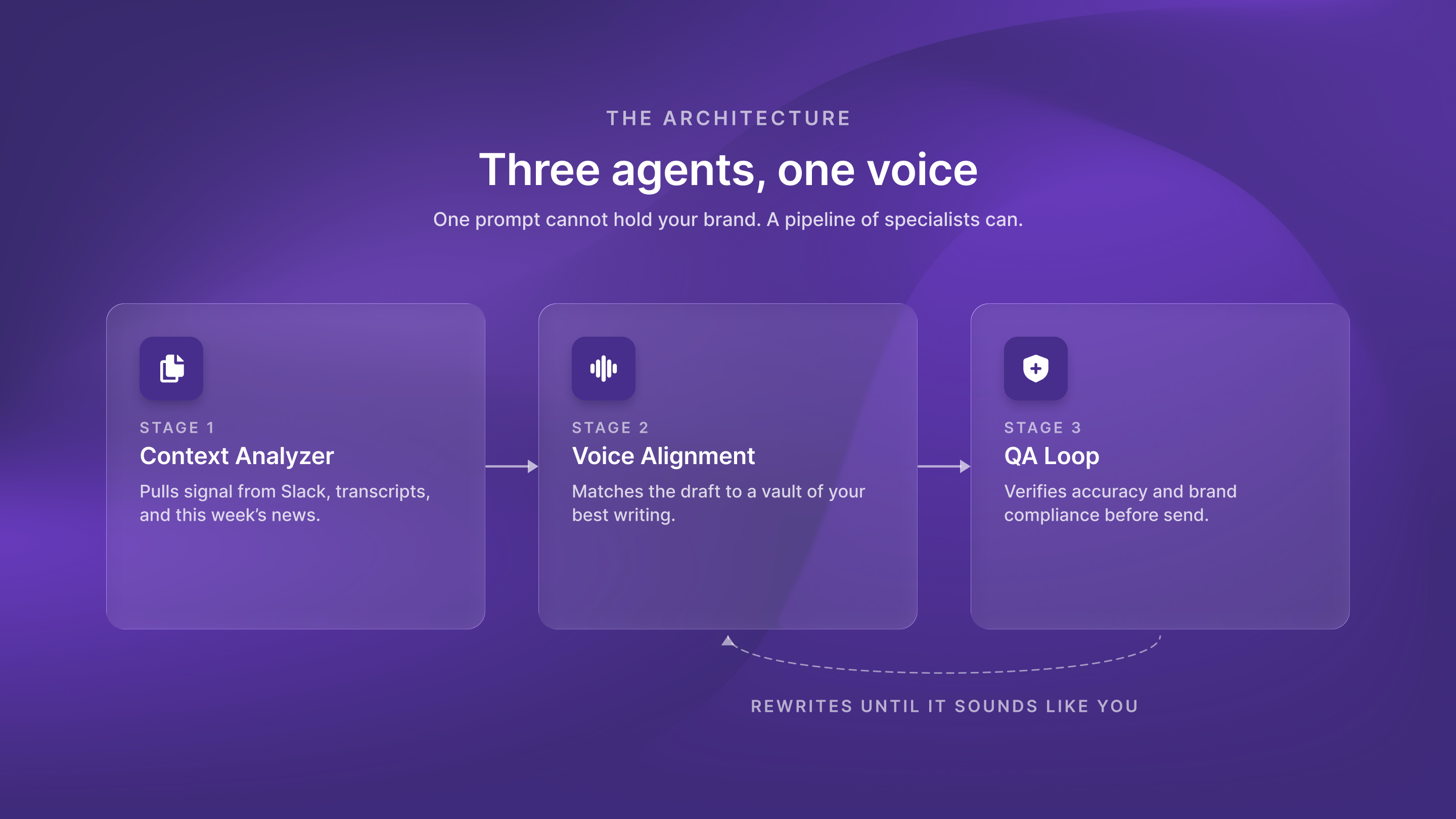
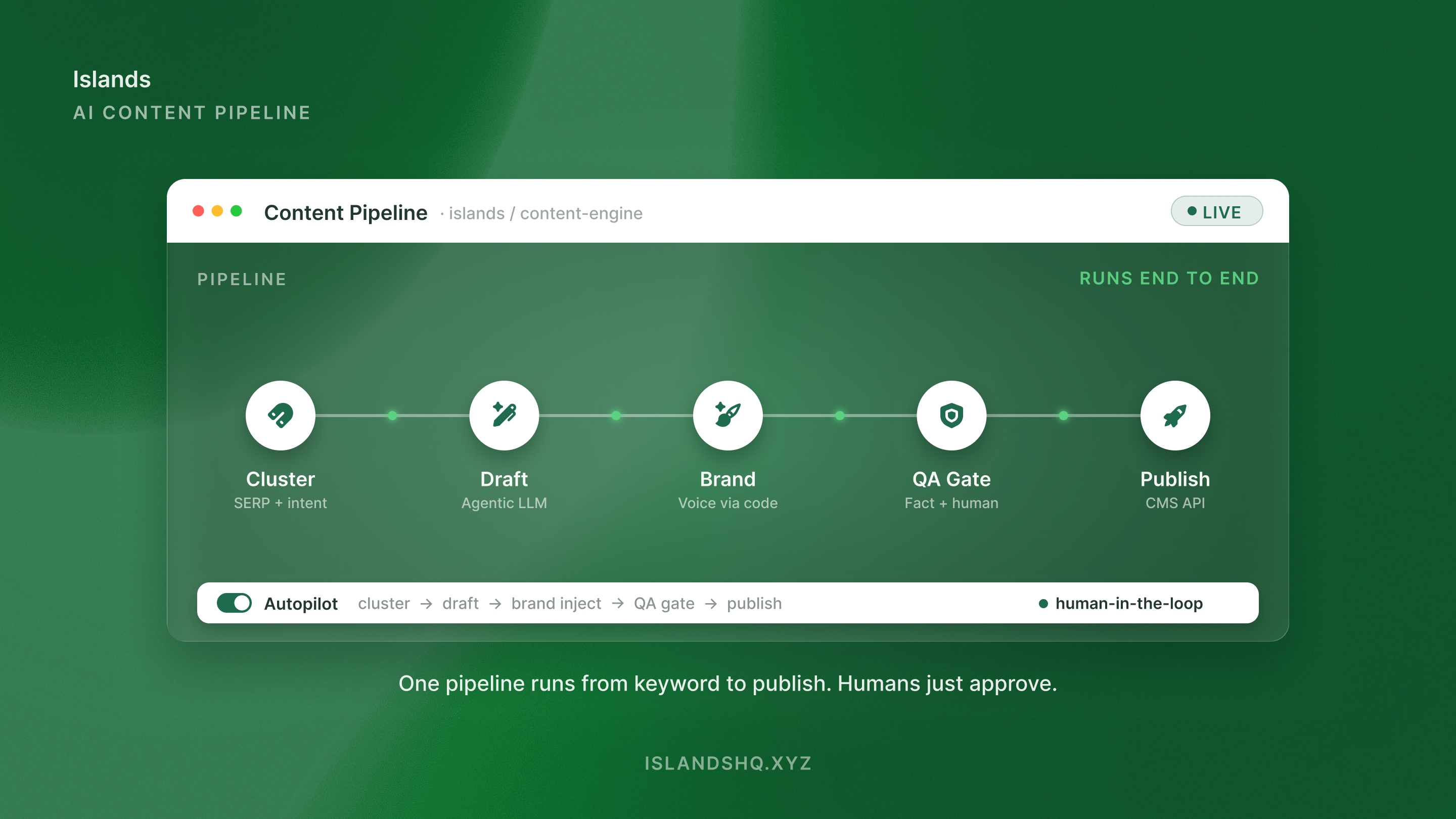
- Stage 1: The Context Analyzer. This agent ingests internal Slack conversations and meeting transcripts to identify the most relevant ideas for the week.
- Stage 2: The Voice Alignment Agent. This agent compares the draft to a vector database of the founder’s past writing. It checks that the rhythm and word choice match.
- Stage 3: The QA flow Loop. A final specialized agent checks for factual accuracy and brand compliance before the newsletter is scheduled for delivery.
Building these systems reliably requires developers to use design patterns that allow for self-correction and iterative loops. This approach transforms content production from a high-overhead task into a compounding technical asset.
Key results: moving from assistants to agents
- Elimination of the generic LLM tone through multi-stage refinement
- Significant reduction in manual editing time for senior engineering and marketing staff
- Consistent brand logic across different content topics and news cycles
- Increased stability through production-grade AI agents that complete entire work cycles without human intervention
Market demand is rapidly shifting from simple generative AI assistance to agentic autonomy. Deploying these systems ensures that these workflows remain stable at scale.
What to do next: a 30-day implementation roadmap
- Map your current manual editing process to identify discrete decision points
- Create a vector database of your best performing past content for voice alignment
- Build a three-stage agentic pipeline using a dedicated orchestration layer
- Implement an automated accuracy threshold to catch hallucinations early
- Run a 14-day A/B test comparing agentic output to your previous manual workflow
The bottom line
Brand authenticity is an architectural problem. If your AI strategy depends on a human fixing every sentence, you have not built an autonomous system. Transitioning to integrated content workflows protects your brand equity while you scale. For organizations that want to offload the full stack, moving to managed, expert-led assets can help. It can turn internal conversations into high-performing growth channels.
Ready to scale your content without losing your voice? Book a call with Islands today.
Success Stories
Read more

.svg)
