.svg)
The workflow of modern AI content automation: moving from prompting to pipelines

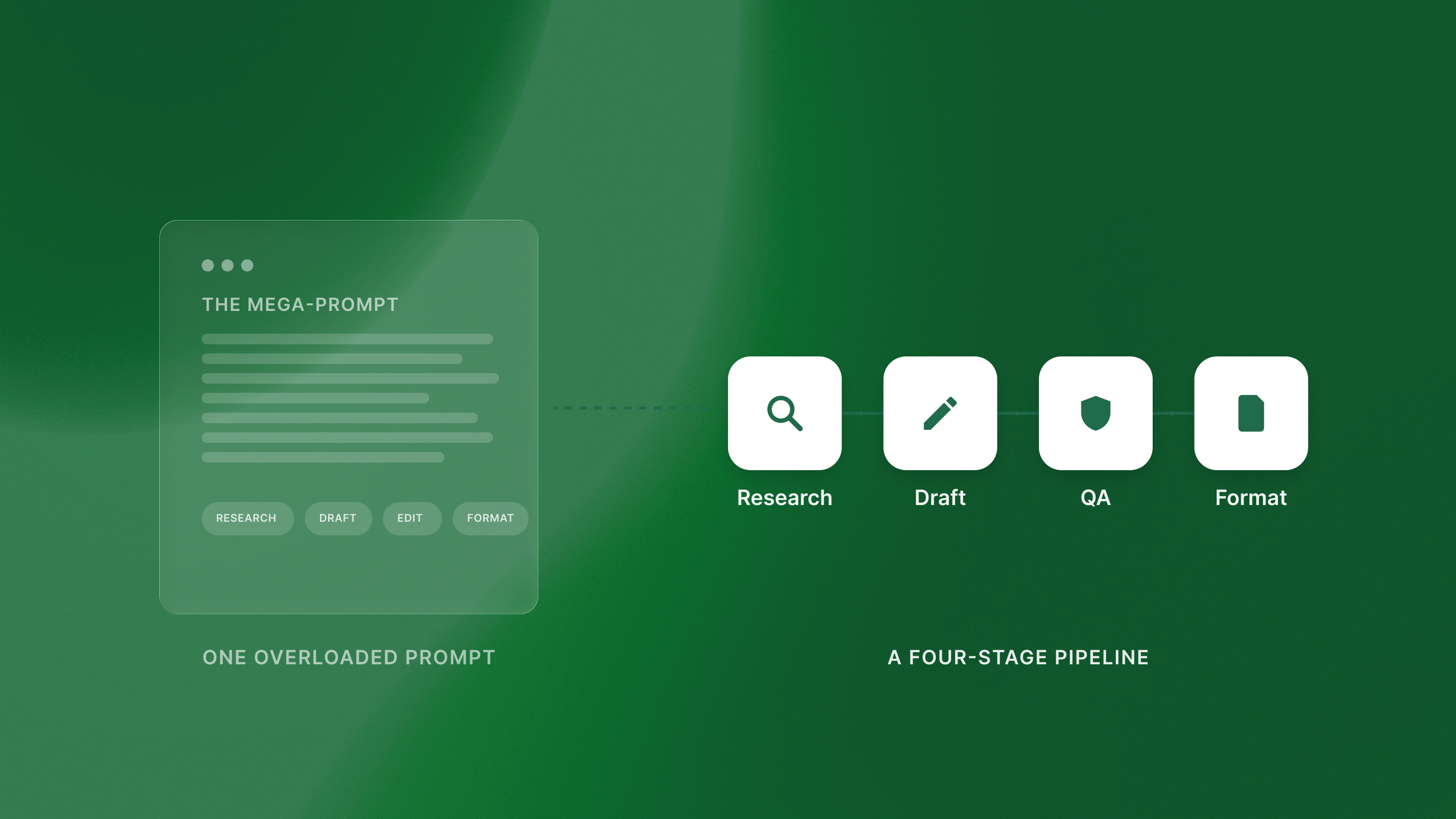
A VP of Engineering at a Series B startup recently shared their internal content stack. They had spent three weeks trying to perfect a 2,000-word prompt for their technical blog. This approach creates a fragile glass tower rather than a production system. The prompting trap limits scalability because single-prompt workflows are prone to hallucinations and require constant manual oversight. Reliability in AI content automation comes from multi-stage pipelines rather than descriptive adjectives in a chat box. Systems perform best when engineers treat agents as distinct users within a specialized agentic AI system.
Jensen Huang, Nvidia's CEO, often shares an important point with technical founders. The system's architecture matters most. It matters more than the model. This perspective is vital when moving from experimental tools to enterprise operations.
Scaling with AI content automation
The gap between hobbyist prompting and enterprise-grade pipelines is widening. Companies relying on single-shot generation hit a ceiling where human editing costs erase the ROI of automation. Teams are moving toward a compounding asset model where the system itself is the product. Reaching this stage requires an agentic pipeline architecture that distributes tasks across specialized models.
Key results include:
- Reduction in hallucination rates through multi-agent validation loops
- Decreased latency for long-form technical assets
- Elimination of brand voice drift across multi-channel distribution
- Higher unit economics efficiency by removing senior editors from the drafting phase
Why single-prompt workflows fail at scale
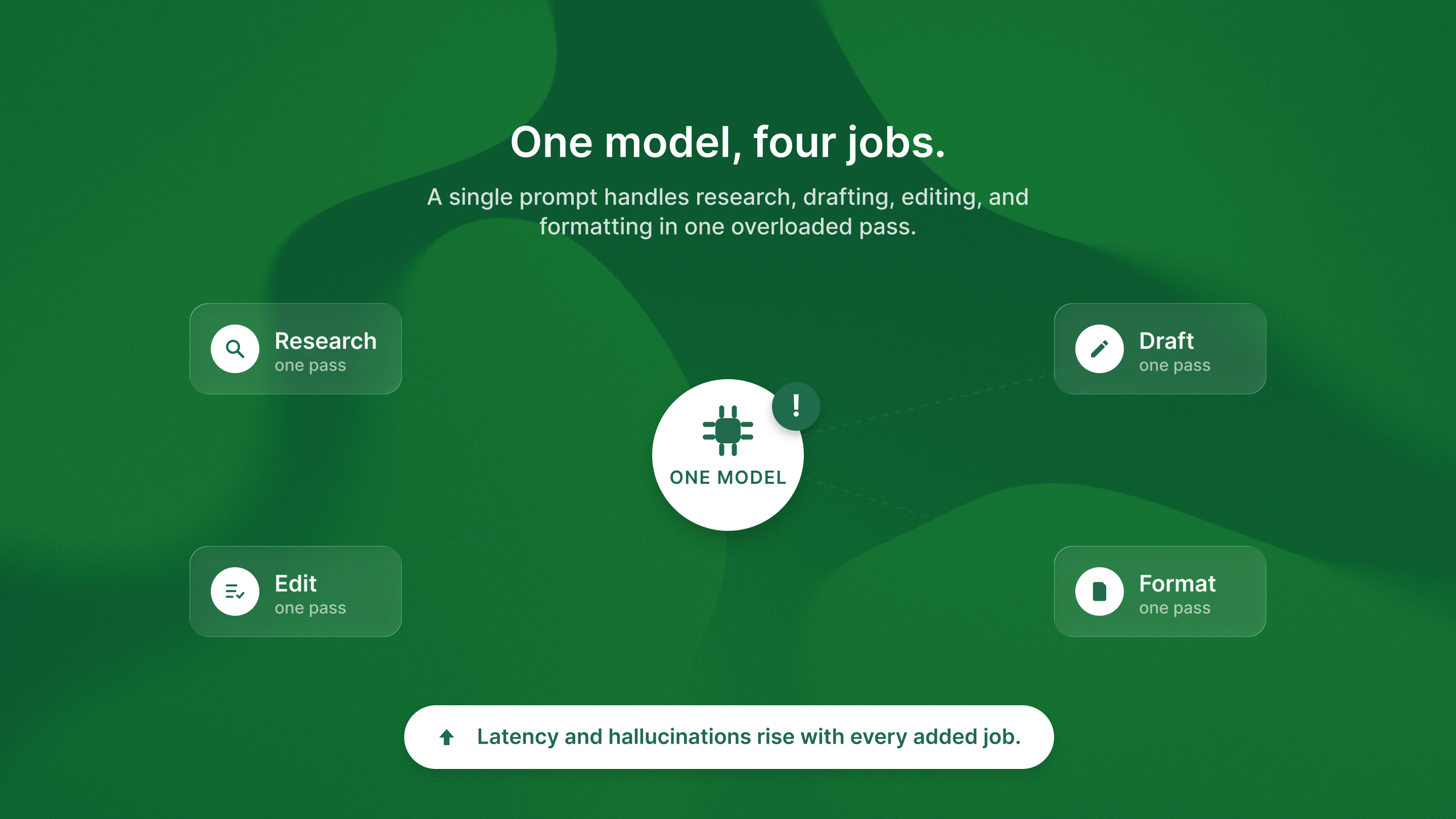
The latency and hallucination tax
Asking a single model to research, draft, and edit content maximizes the chance for errors. The model often loses track of the original intent halfway through the generation, leading to factual hallucinations. Generating long-form content in one pass is slow, which makes real-time applications impossible. Breaking the task into a pipeline reduces the cognitive load on each model call. This allows for true content automation that handles the entire production lifecycle.
The architectural trap of better prompting
Hobbyists focus on prompting;engineers focus on architecture. A better prompt may give a slightly better result once. But it will not solve the scaling problem in content work. It also will not prevent manual bottlenecks. Production systems require a sophisticated AI workflow orchestration layer to manage data flow between specialized agents. This ensures that every piece of content meets a quality threshold before it reaches a human editor.
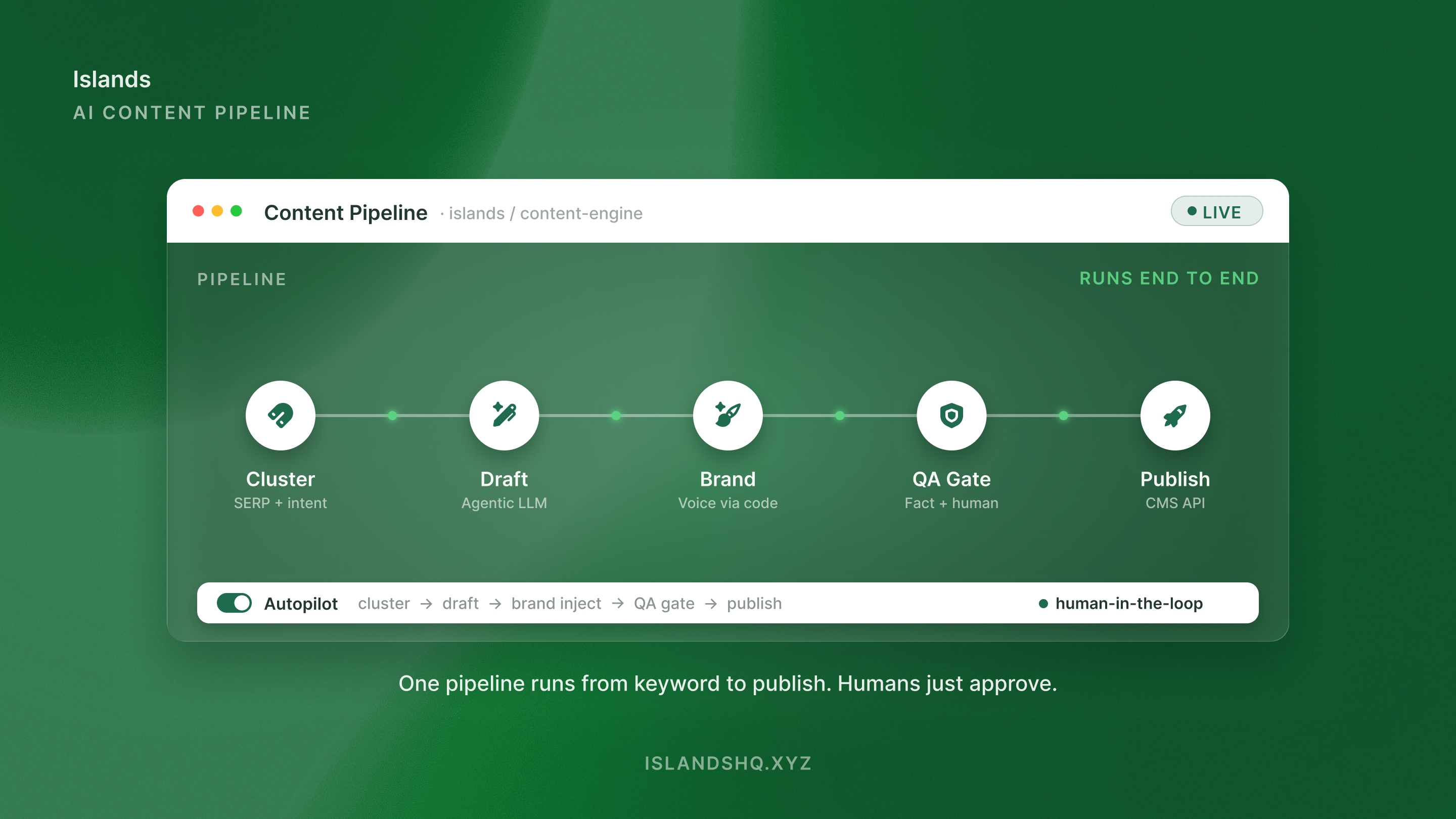
The pipeline architecture: research, draft, and QA flow
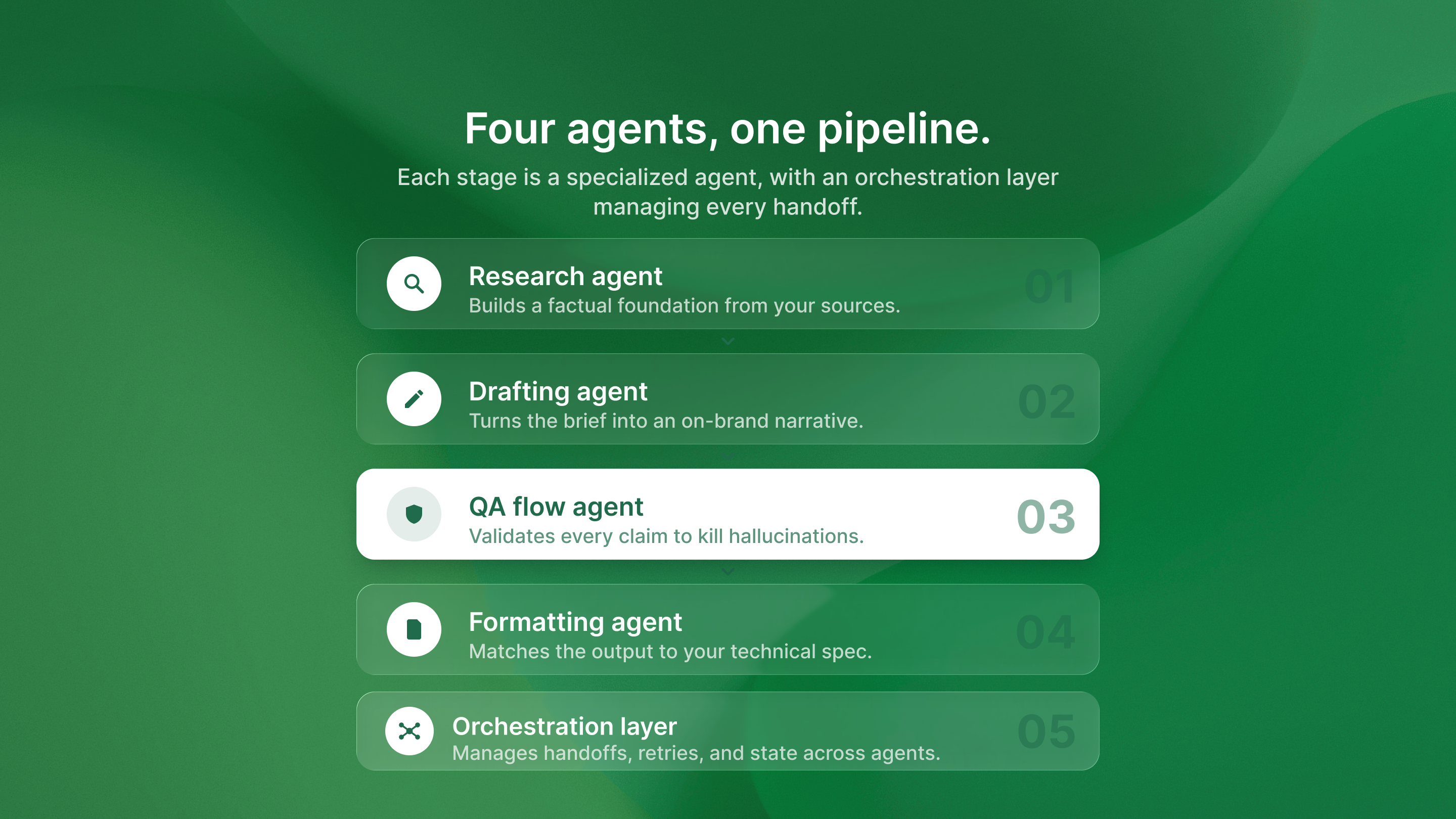
- Research Agent: Scans internal documents and external sources to build a factual foundation.
- Drafting Agent: Transforms the research brief into a structured narrative following brand guidelines.
- QA flow Agent: Validates every claim against the source data to eliminate hallucinations. Integrating qaflow automation at this stage is critical for maintaining technical accuracy.
- Formatting Agent: Ensures the final output matches the required technical specifications.
Building for agentic UX
Agentic UX is the discipline of designing software for agents as primary users according to Medium. It requires moving from manual click-and-wait interfaces to steering-and-supervision models. In these models, humans manage autonomous background tasks. They also keep human-in-the-loop checkpoints for compliance and brand voice. Production-grade AI agents ensure the system remains stable under heavy load. This shift allows for integrated LinkedIn workflows and other complex distribution strategies that preserve strategic judgment.
What to do next: your 30-day pipeline roadmap
- Deconstruct your current content process into discrete, repeatable steps.
- Assign a specialized agent to handle the highest-volume manual task.
- Build a data-synthesis pipeline that connects your internal knowledge to your agents.
- Implement an automated QA loop to catch errors before they reach production.
- Shift your senior editors from writing to supervising the hybrid AI content architecture.
The bottom line
If your AI strategy relies on a human prompt, you have built a digital intern, not an autonomous system. Shift to pipelines to create a compounding asset that functions without executive overhead. Moving toward autonomous agentic systems is the best way to increase long-term ROI. This will matter most in the next era of automation.
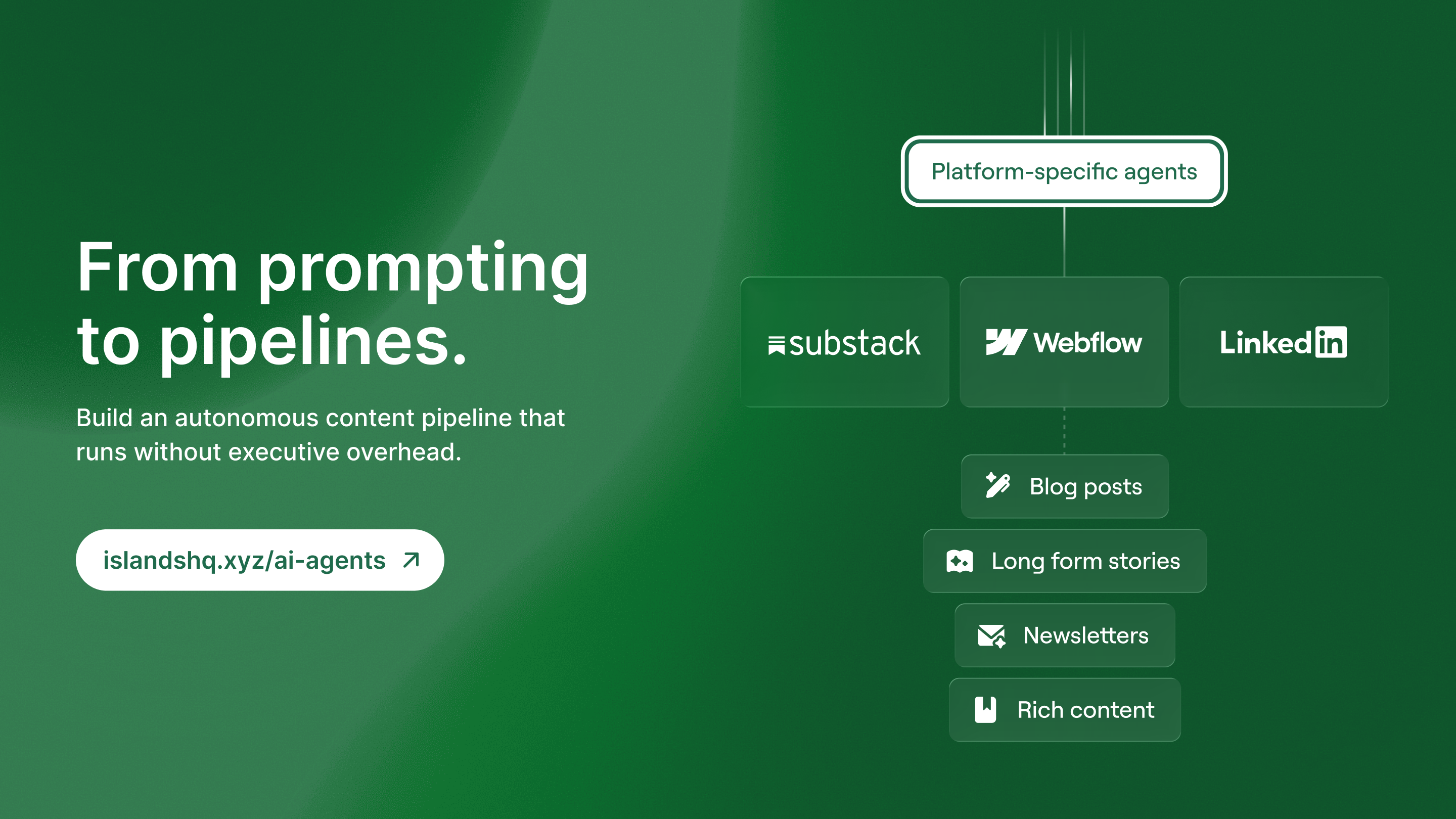
Ready to scale your operations? Reach out for a system audit to see how our orchestration layer can optimize your output.
Success Stories
Read more

.svg)
