.svg)


Stop hitting "generate" on ChatGPT and hoping for a marketing miracle. If your content sounds like every other LLM result, you aren't building authority. You're just contributing to the digital noise. I've spent the last quarter watching marketing teams waste six-figure token budgets on "AI slop." No human will ever actually read it. The pattern is clear: automation without personalization is just faster garbage.
At Islands, we hit this wall in late April 2026. We had the high-bandwidth N8N workflows and the Slack integrations. We were extracting topics from every sales call, but the output was bland and static. It lacked the hard-won wisdom that transforms a prospect into a partner. This isn't theoretical. It is the difference between a bot-written summary and a documented victory.
Key results:
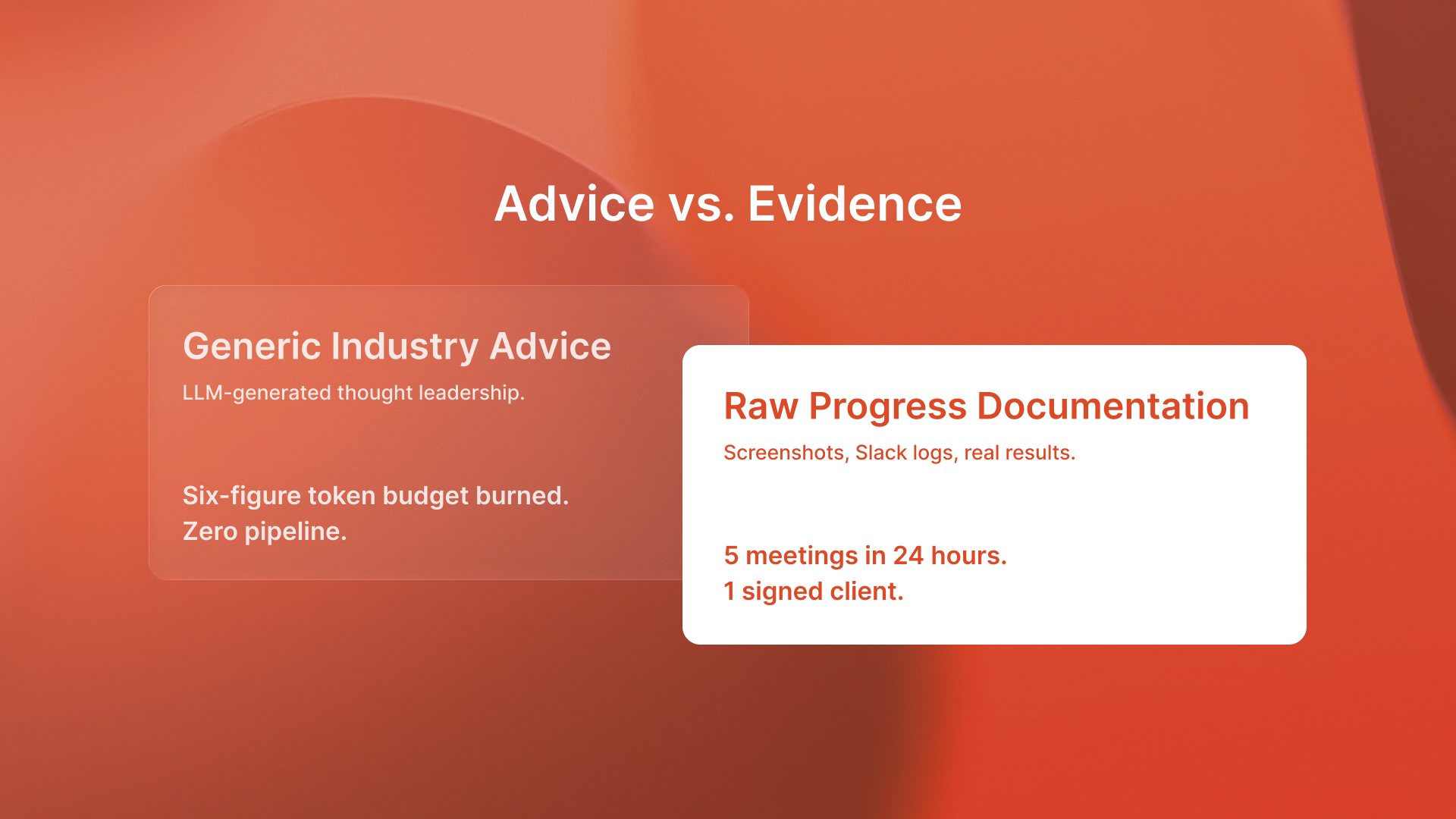
- 5 meetings in 24 hours : generated from a single authentic progress post
- 3 active pilots : converted directly from personalized storytelling
- 1 signed customer : attributed to documentation of internal studio operations
The model selection mistake and the ChatGPT trap
Most founders are trapped in a cycle of prompt-engineering themselves into irrelevance. They use standard LLMs to build content based on generalities. Standard AI content is boring because it lacks context. If I can get the same answer by typing a query into a search bar, your blog is obsolete before it's published. This is why founder-led content automation must rely on proprietary data that competitors cannot scrape.
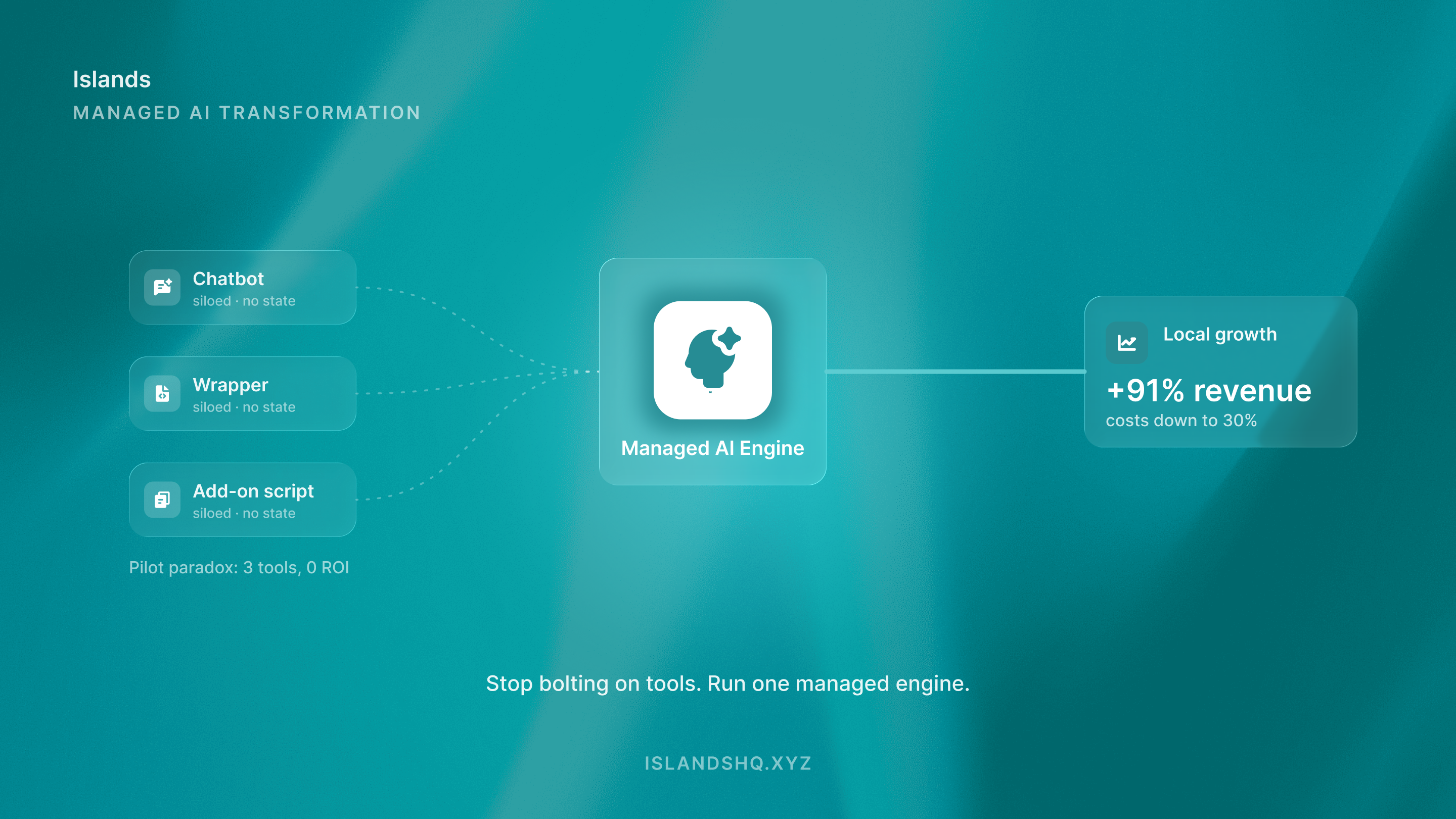
Standard automation often fails because it misses the nuance of a real interaction. Teams using ReachSocial or QA flow need more than just automated updates. They need to show their work. High-ROI content relies on internal logs to create a defensive moat in a world of commoditized text. Scaling a program on generic summaries is expensive and ineffective. As we've seen with teams attempting sustainable AI LinkedIn workflows, fragmented tools create friction that kills strategic judgment. The ROI disappears when the content fails to build authority.
From transcript to story: the personalization element
Our internal pivot at Islands involved moving from simple topic extraction to genuine story conversion. We stopped asking our agents to "summarize this meeting."We started asking them to "extract the technical friction and the exact solution we built." We connected transcripts and Slack threads to provide concrete evidence of technical competence.
When we spoke with a client about building an agentic AI pipeline, we talked about the design. The agent asked why we chose our architecture. It didn't just summarize a call. It documented how we converted a problem into a solution. This is how we move from 80% accuracy that costs more than it saves to 100% authoritative narratives.
Scaling GTM pipelines with evidence
Personalization is the only way to scale GTM pipelines in an era of AI search visibility. If your team is struggling with technical hire evaluations or margin loss on projects, you must document the process.
Leveraging operational logs
We use Shoreline and Timecapsule to track these real-world transformations in our own operations. Then we turn those logs into stories.
Measurable conversion via authenticity
The market responds to evidence. In May 2026, we ran a test. We stopped posting generic industry advice and started posting raw screenshots of our progress. We shared how we connected SEMrush MCP servers to our content engine. We shared how QA flow detected technical failures that manual audits missed.
The results of documenting the work
These authentic posts led to five meetings in a single cycle. One signed client came specifically because they saw a screenshot of our internal Slack notification. They didn't want a generic agency. They wanted the team that was already solving the problem for themselves. It matches the pattern we see where technical errors kill traffic and only direct evidence fixes the trust gap.
The solution:
- Connect your sources : pull transcripts and logs from Slack
- Identify entities : extract the specific technical concepts discussed
- Reverse engineer the story : find the tension and the resolution
- Mask PII : hide names but keep the technical data to build trus
The strategic implication
If you continue to publish generic SEO filler, you will be buried by AI research engines. Generative engine optimization requires high-density, original data that an LLM has not already ingested. Only your internal conversations provide that data. The window of opportunity for scaling these systems is now. Companies that document their day-to-day interactions build lasting authority. If you pivot to documented stories, you build a moat. If you don't, you stay part of the noise.
Ready to transform your internal documentation into a high-performance growth engine? Discover how Islands can automate your authority building and turn daily operations into your most valuable marketing asset.
Success Stories
Read more

.svg)
