.svg)
How Much is the SR&ED Tax Credit? Calculating Your 2026 AI R&D Refund

I recently looked at a Series B company where millions in engineering spend were being treated purely as operating costs. That can mean overlooking potentially eligible SR&ED expenditures. That classification becomes an expensive mistake in 2026. AI engineering costs keep climbing. Most CTOs leave millions unreclaimed because they haven't adjusted to the recent SR&ED expansion. You can't afford to treat R&D spending as a cost to minimize. The 2026 update gives a structural advantage to founders who categorize their work correctly.
The 2026 SR&ED expansion: Why $6 million changes the math
Breaking down the new expenditure limits
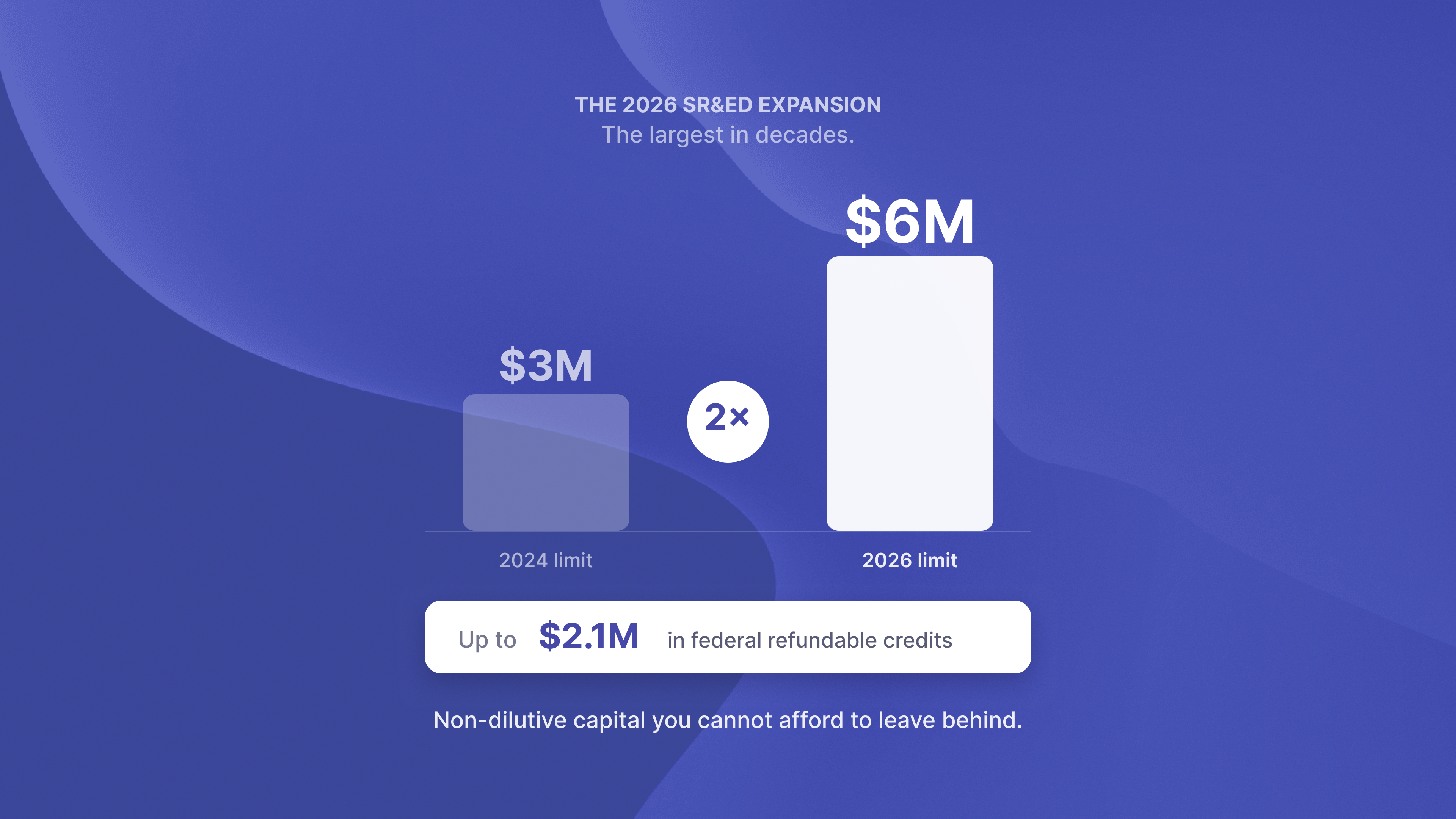
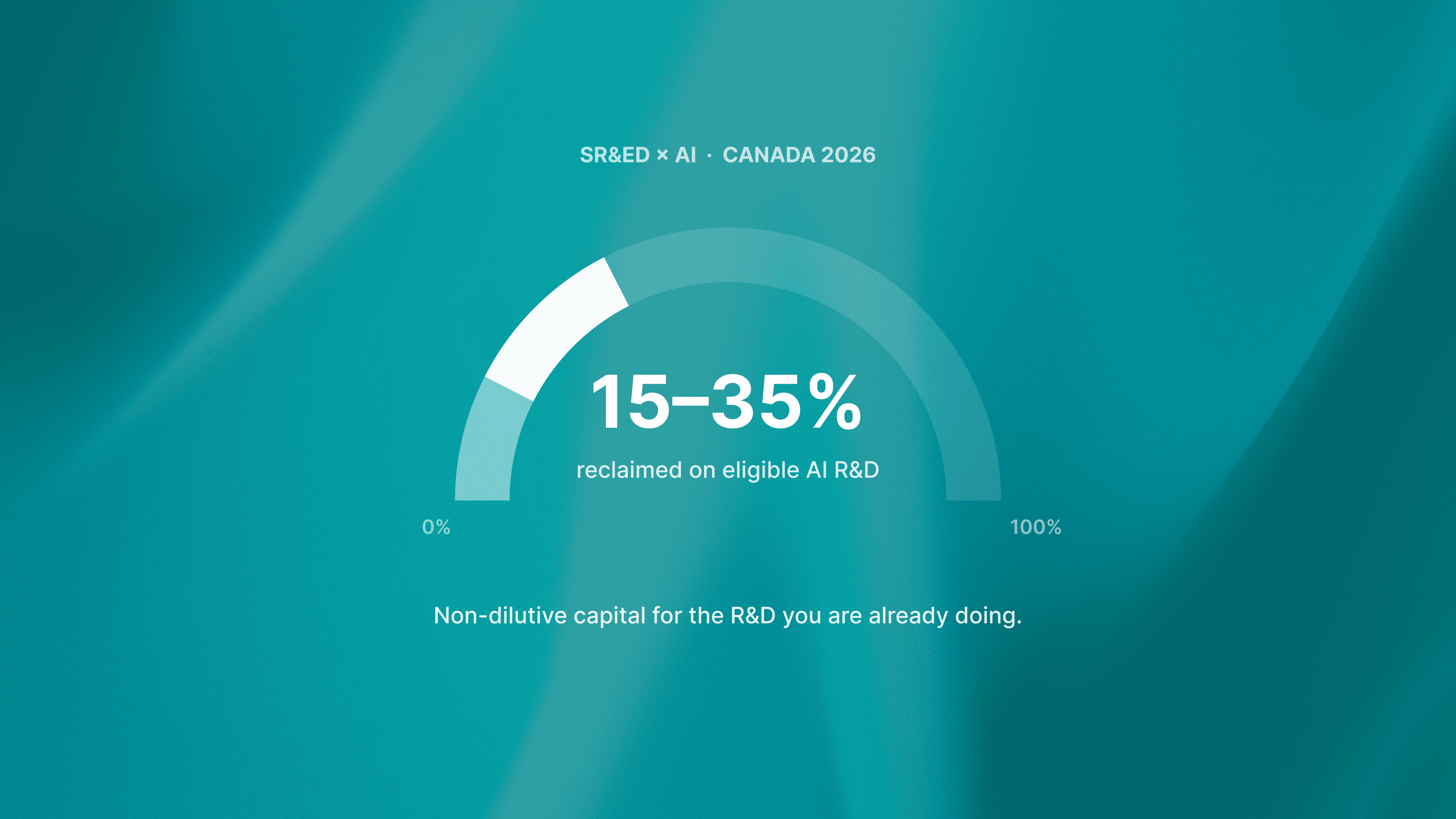
The 2026 fiscal landscape is fundamentally different for Canadian innovation. According to Welch LLP, the federal expenditure limit for the enhanced 35% refundable credit doubled from $3 million to $6 million. An eligible startup can now claim up to $2.1 million in federal refundable credits alone. For a Series B company scaling an autonomous agent engineering team, that is non-dilutive capital you can't afford to leave behind.
The 35% refundable credit threshold
The $6 million limit targets high-growth companies before they reach massive scale. In the past, the phase-out kicked in much earlier, forcing a choice between taking public investment and keeping R&D support. Now the taxable capital phase-out thresholds are higher. Even well-funded AI startups can hold onto the enhanced 35% rate. If you build production-grade autonomous QA agents, your engineering spend is probably your biggest expense. Not capturing this credit means you are effectively paying a 35% tax on your own innovation.
What qualifies: Mapping autonomous agent work to SR&ED
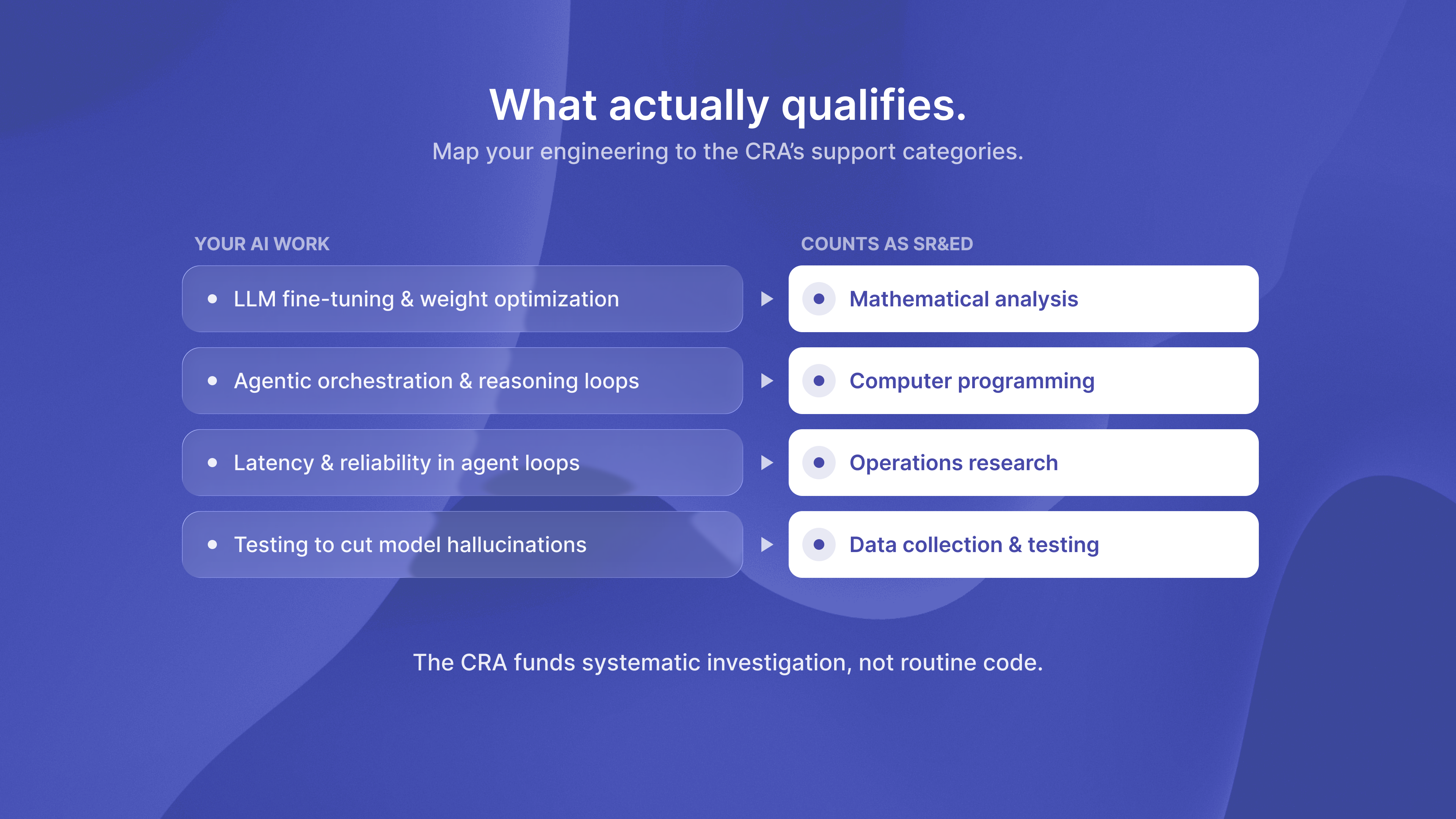
Most generalist accountants miss what qualifies as R&D in the age of LLMs. You have to demonstrate technological uncertainty and a systematic investigation. For AI-native teams, Leyton identifies specific support categories: mathematical analysis for LLM fine-tuning and weight optimization, computer programming for complex agentic orchestration layers, operations research to solve for latency and reliability in autonomous loops, and data collection with experimental testing of model performance.
T4 salaries vs. contractors: Optimizing the refund rate
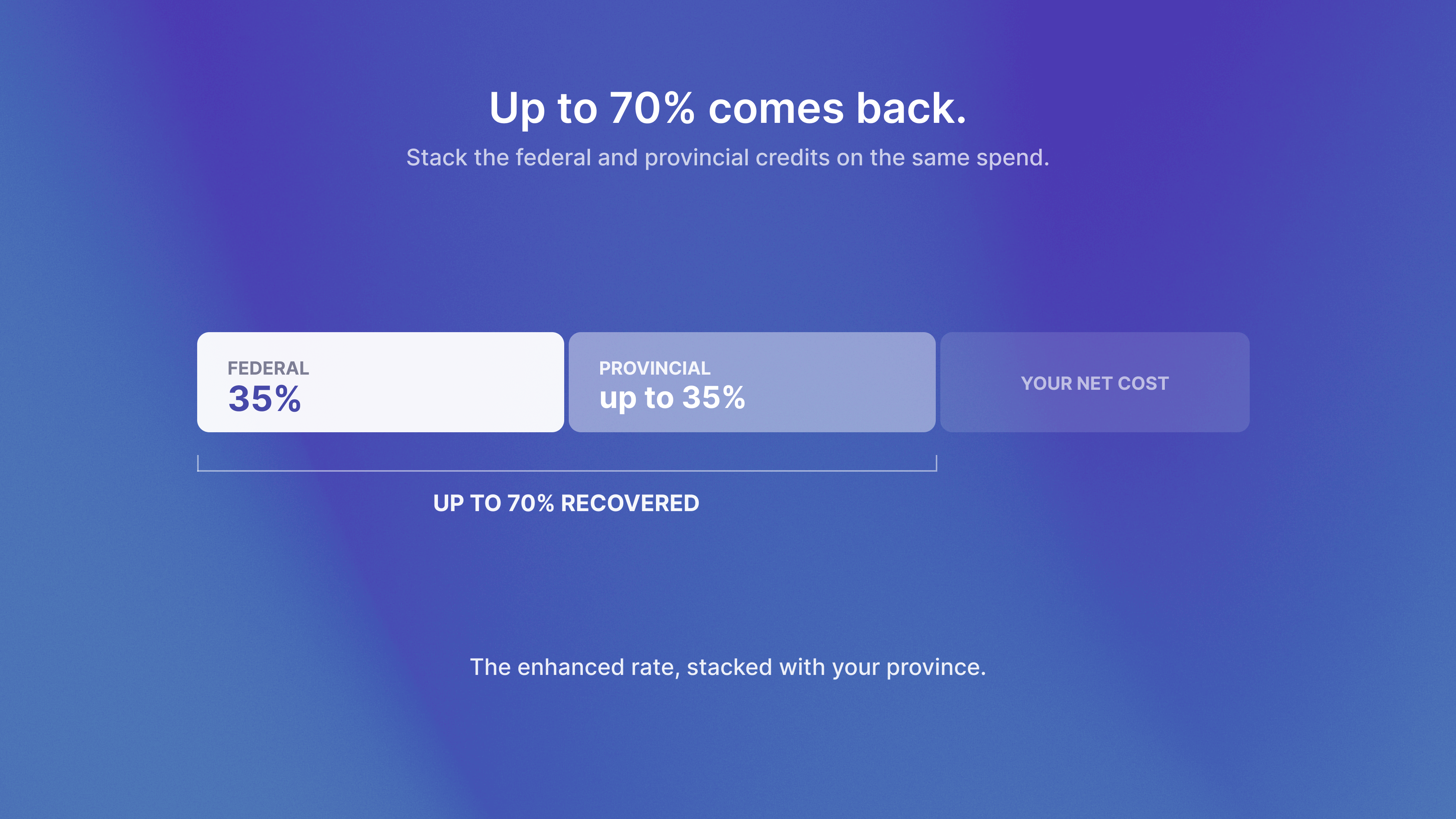
Where you hire changes how much you recover. Third-party contractors are eligible, but T4 employees give you a higher return because of overhead calculations. Combined federal and provincial programs can return up to 70% of qualifying expenditures for eligible Canadian startups, according to GrantOps.
Refund Rate Comparison
Internal T4 salaries get a 35% refundable federal credit and an estimated combined refund of 60-70%. Canadian contractors receive 35% of 80% of the fee, for a combined refund of 40-50%. Capital expenditures are eligible under the 2026 update, with refunds varying by asset type.
Avoiding the architectural trap: Tracking high-velocity R&D
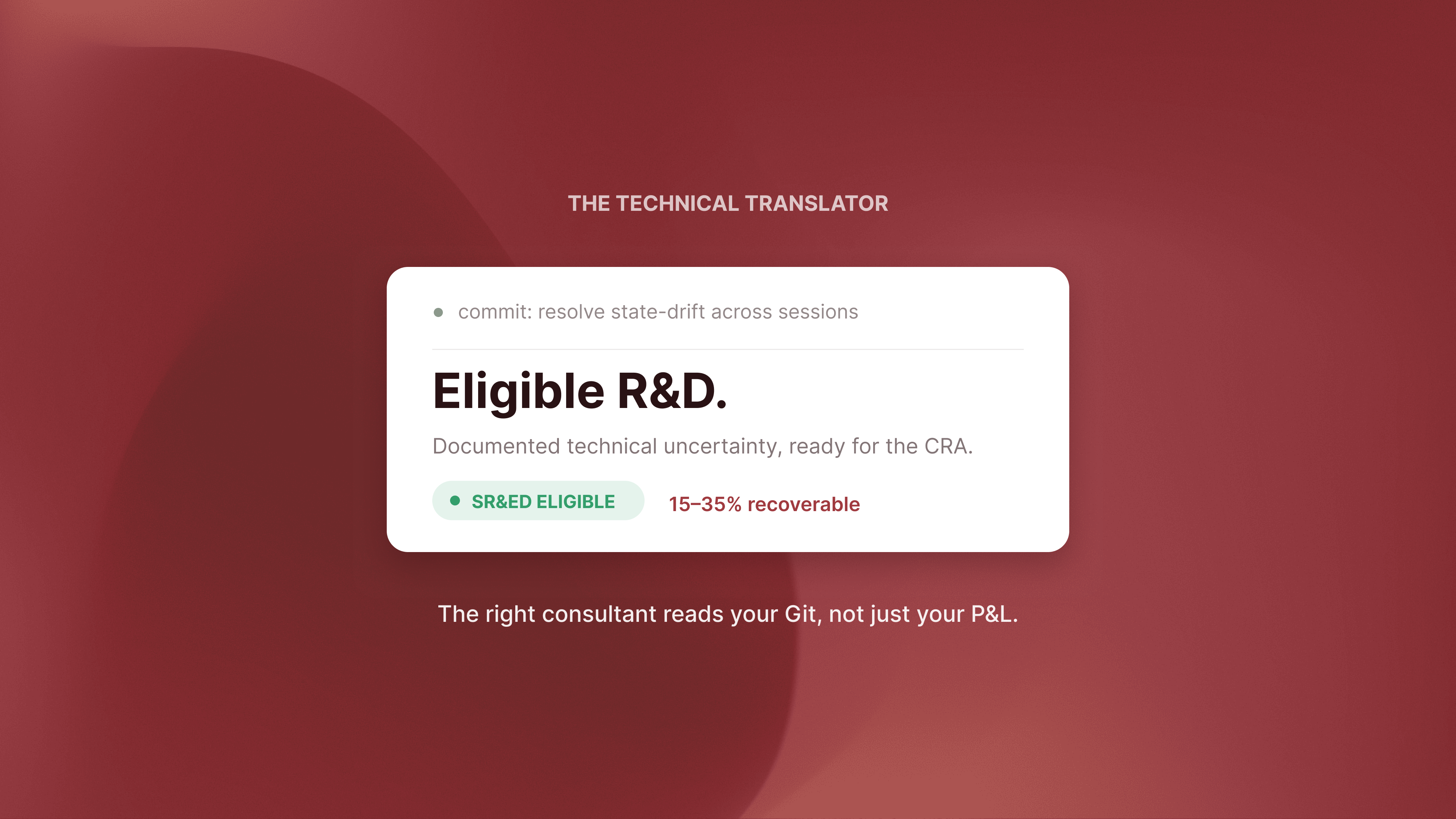
Many CTOs fall into an architectural trap: they don't document the "why" behind engineering pivots. If your team is fine-tuning a model to solve a specific reasoning failure, that counts as systematic investigation. If they're just trying things without logging the technological uncertainty, the CRA will likely deny the claim. By formalizing those experiments, startups can recover a significant portion of autonomous agent development costs through the 2026 expenditure limits.
Translate agentic loops and LLM fine-tuning into the specific language of mathematical analysis the CRA requires. Engaging a specialized SR&ED tax credit consultant helps defend those technical nuances during an audit. Rigorous documentation can be the difference between a denied claim and a $2 million runway extension.
What to do next: Your 2026 SR&ED audit
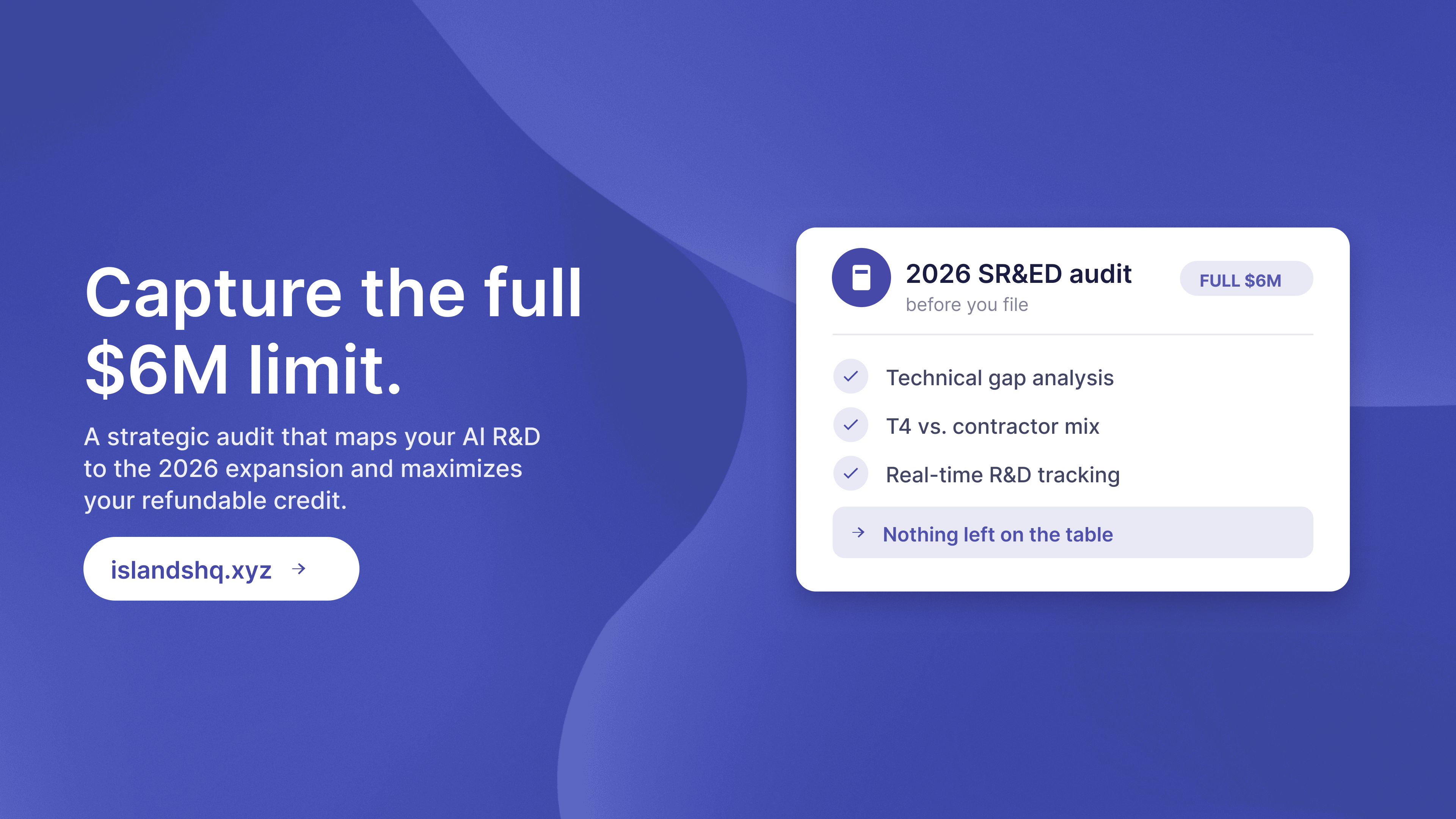
Your 2026 SR&ED audit starts with a review of your engineering roadmap for specific technological uncertainties in agentic workflows. Separate your T4 salary data from contractor invoices to calculate your projected recovery. Then bring in an AI R&D tax credits Canada specialist to audit your technical documentation. File your T661 and T2SCH31 forms to capture the full $6 million limit. The 2026 expansion rewards founders who see R&D as a strategic investment. Engineering leaders who adapt will outpace those who don't. Audit your workflows now.
Success Stories

.svg)
