.svg)
Transitioning to Managed AI Transformation for Local Business Growth

- Move beyond disconnected AI tools: Multiple standalone pilots can create fragmented workflows, duplicated costs, and inconsistent oversight.
- Build an integrated AI architecture: Connecting models, business systems, and workflows helps organizations move from experimentation toward scalable AI operations.
- Use managed AI services to support scale: Ongoing monitoring, security, governance, and model optimization help businesses maintain reliable AI systems.
- Deploy AI agents where they add measurable value: Autonomous agents can support multi-step workflows when the necessary integrations, permissions, and human oversight are in place.
- Measure business outcomes, not tool adoption: Track metrics such as workflow completion time, cost per task, error rates, customer response times, and revenue impact.
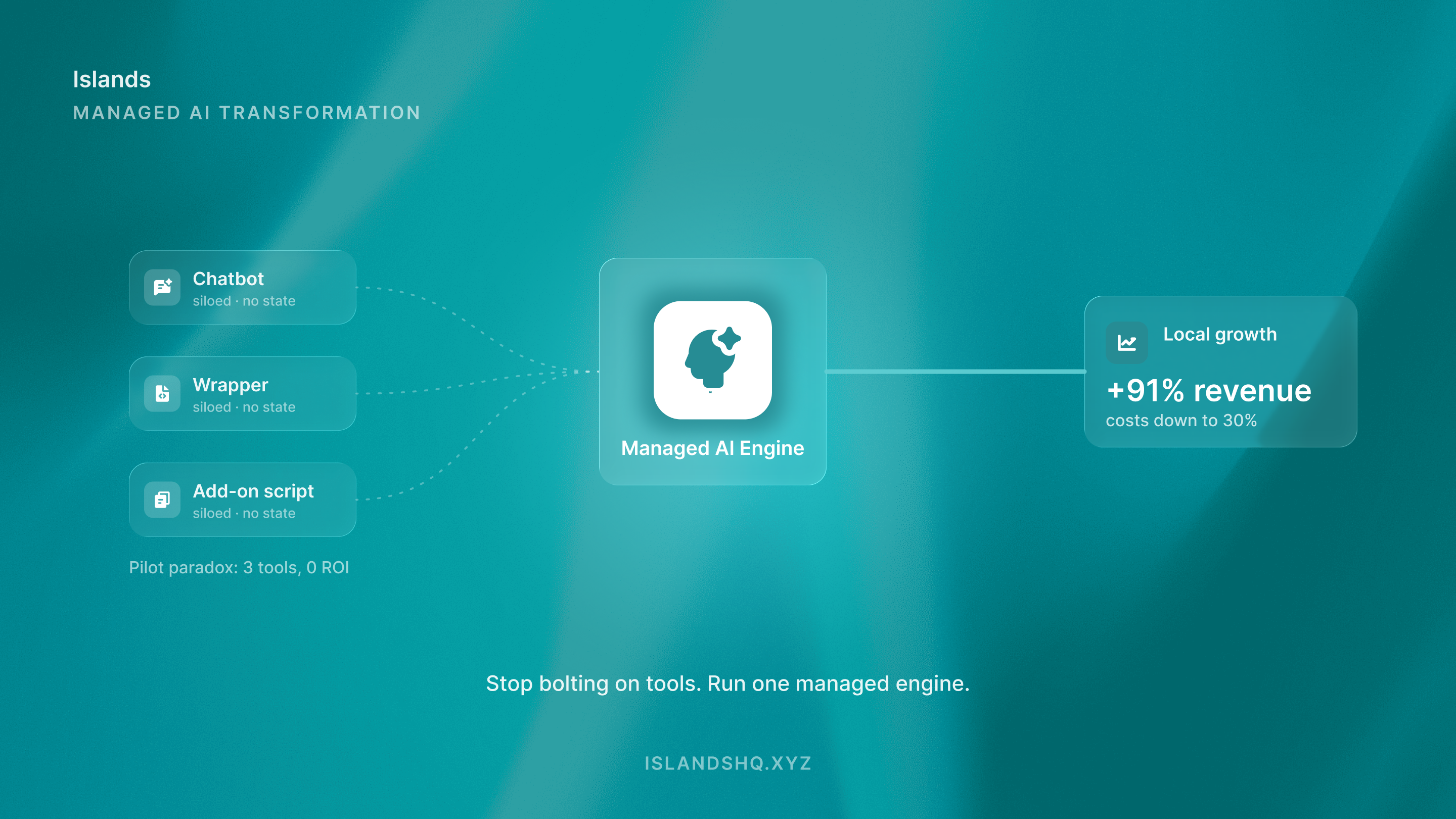
Last week I went through a local leader's tech stack and found the same 'Pilot Paradox' I keep running into: three different chatbots, zero ROI. They were playing with tools when they needed an engine. Tactical experimentation is a trap for local businesses. The individual tools are cheap;the architecture to run them at scale is not. Ignore unit economics and you're not building anything, just accumulating technical debt.
For mid-market leaders, the question is no longer whether to test the waters but how to rewire the foundation without losing local values in the shuffle. A managed model answers it. Architecture wins. Tools alone fail.
The Architectural Trap of Off-the-Shelf AI
Why wrappers fail at scale
Most businesses start with simple LLM wrappers, thin layers of code sitting on top of generic models. Demos look great. Production-grade pressure is another story. A founder I spoke with recently built a customer-support wrapper that handled ten queries like a champ and fell over at a thousand. Without a custom orchestration layer, there's no memory and no state management, nothing complex B2B workflows demand. Those systems aren't engines. They're masks.
The hidden cost of technical debt
Every unmanaged AI tool you bolt onto the stack creates another silo. Pretty soon the silos stop talking to each other, and the resulting architectural debt costs more to fix later than it would have cost to build right the first time. Local businesses worry about disruption;the real threat is fragmented infrastructure that can't scale. Bring in senior architectural guidance early and those systems add to the bottom line instead of draining resources through maintenance fires.
Managed AI Transformation: The Execution Layer
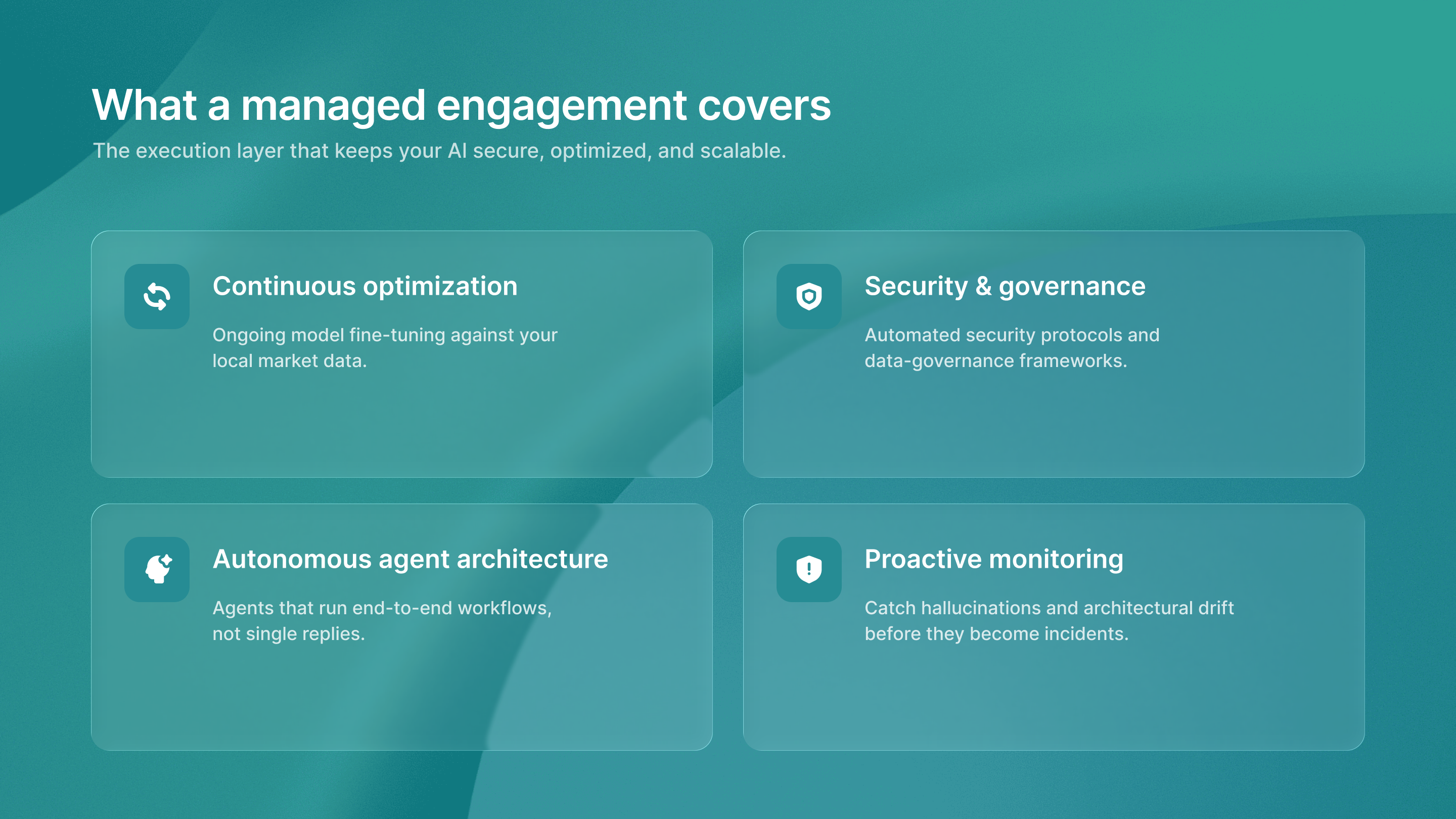
Internal teams rarely have the time to keep infrastructure stable;a managed services model exists precisely to handle that. Security and governance shift to specialists, and your people get to do high-value work while the platform stays secure and scalable. KPMG puts it plainly: managed services are the essential execution layer for sustainable enterprise AI.
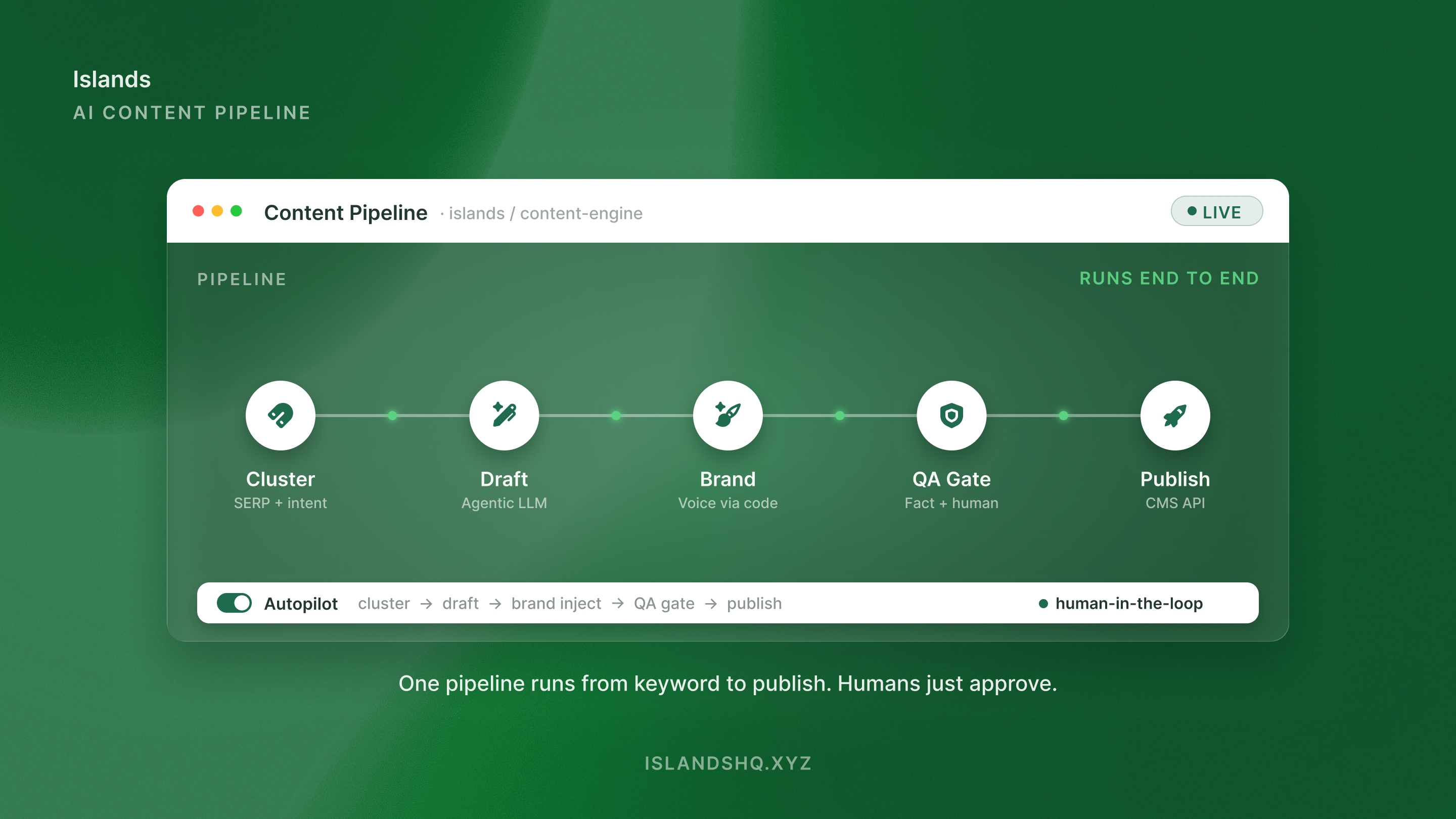
A managed engagement covers continuous model optimization and fine-tuning against local market data, automated security protocols and data governance frameworks, integration of autonomous agent architecture to handle end-to-end workflows, and proactive monitoring that catches hallucinations and architectural drift before they become incidents.
Economic Impact: Revenue Growth vs. Cost Reduction
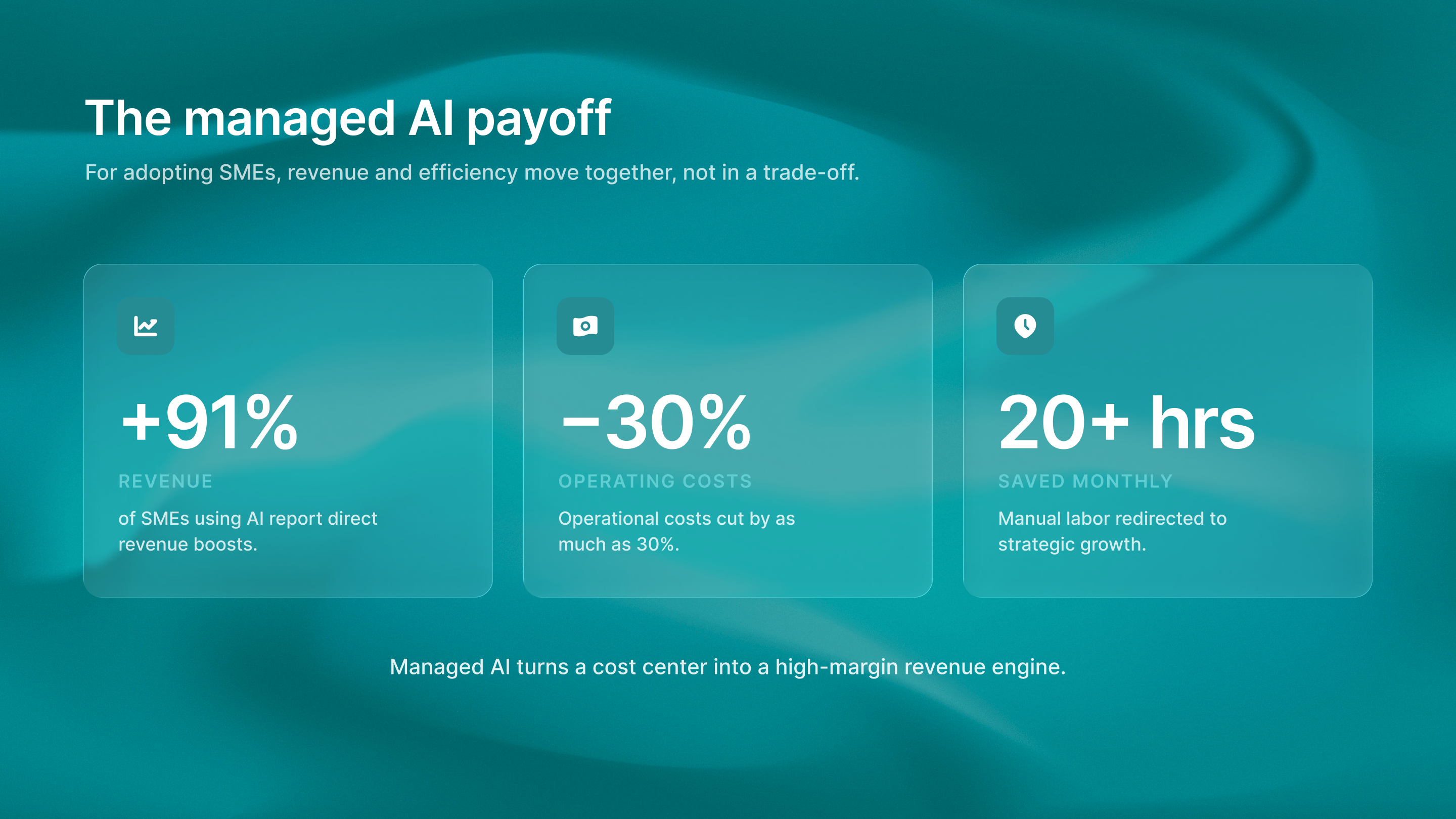
The numbers for adopting SMEs are striking: revenue up 91%, operational costs down as much as 30%. Save more than 20 hours of manual labor a month and you can point talent at strategic growth instead of busywork. AI stops being a cost center and becomes a high-margin revenue engine.
The transformations I've seen work best focus on EBIT impact, not vanity metrics. arXiv research backs that up, reporting that 91% of small and medium-sized enterprises using AI see direct revenue boosts. Efficiency is only part of the story. Long-term survival in an automated economy is the real prize, whether you scale marketing with white-label AI content or roll out complex E-commerce solutions. Protect your margins;that's the whole game.
Roadmap to Regional Market Dominance
The path to regional dominance starts with an audit of legacy workflows, hunting for the high-volume, rule-based processes that automation can swallow whole. Autonomous agents then take over middle-management bottlenecks and manual routing. Managed governance is what lets you scale the whole thing without security or production stability cracking under load.
The bottom line
Managed AI is the key to longevity, but only if you treat it as a rewiring of the business rather than a switch you flip. A stack of disconnected tools means you're building on sand. Audit your infrastructure, move to a managed architecture that actually scales, then do the work: build, run, maintain.

Success Stories
Read more

.svg)
