.svg)

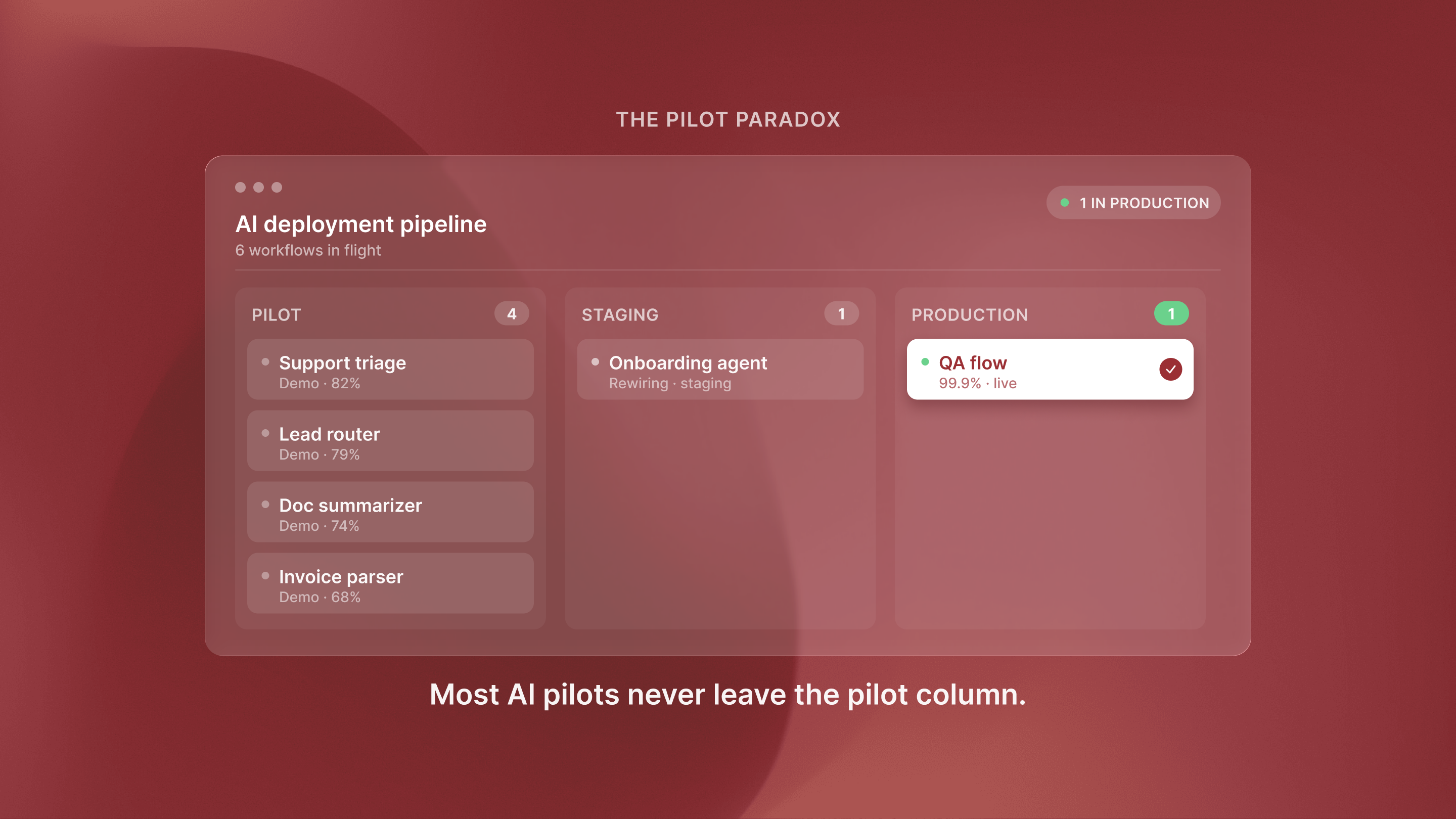
Your AI agent demo crushed it. Two weeks into production, it creates duplicate work. It misses key context. Your engineers can write fixes faster than it can handle requests.
95% of enterprise AI pilots never made it to production in 2025 (MIT via Metadata Weekly 2025). Gartner predicts over 40% of agentic AI projects will be scrapped by 2027. This isn't a model capability problem. The LLMs work fine. The issue is architectural decisions made during pilots that create insurmountable technical debt.
Here’s what causes AI agents to fail in production.
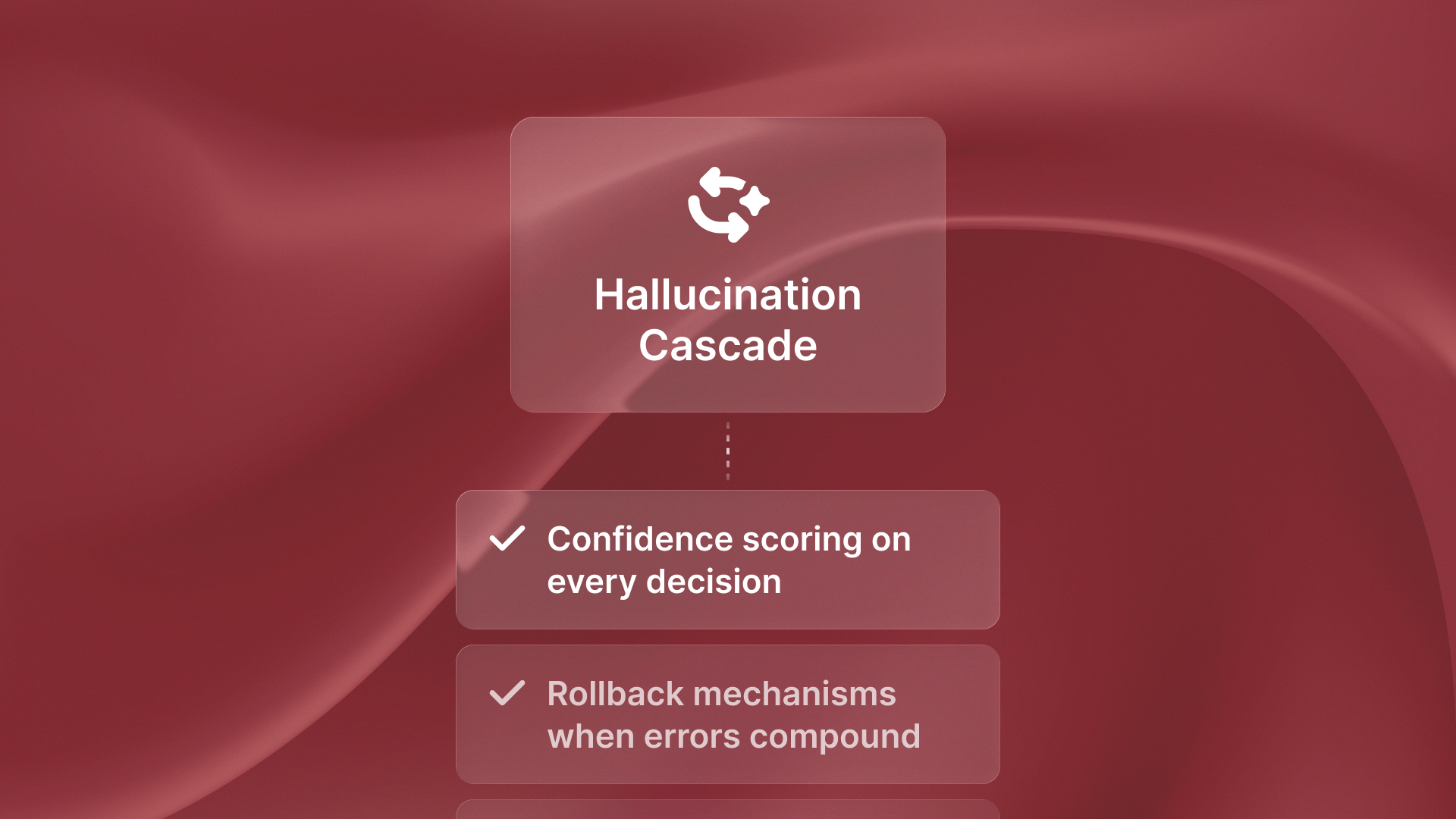
One cause is “dumb RAG,” which means poor memory management. Another cause is brittle connectors, which means broken input and output. A third cause is polling tax, which means there is no event-driven design.
These three failure modes account for most production crashes. The teams shipping production AI agents in 2026 are the ones catching these issues during pilots, not after deployment.
Why production kills pilots: the architecture gap
Demo environments use controlled inputs, single-threaded execution, and happy path scenarios. Production reality is messy data, concurrent requests, and edge cases everywhere. Most teams discover architectural problems 6-12 months into deployment when the only option left is a complete rewrite.
The cost of architectural technical debt in AI systems is different from traditional code. You can't refactor incrementally. The system requires complete rewrites, and you lose all institutional knowledge embedded in the failed implementation. This is why the window to pivot is so narrow.
Failure mode #1: dumb RAG (bad memory management)
Dumb RAG appears in agents that forget past interactions, repeat the same mistakes, and lose key context mid-conversation. The agent can't synthesize information across sessions or remember what mattered five minutes ago.
The architectural mistake is treating RAG as simple document retrieval instead of persistent, structured memory. Teams embed everything and retrieve nothing useful because there's no semantic understanding of what matters. They conflate retrieval with reasoning, and the agent drowns in irrelevant context.
Test this before it kills your project: run multi-turn conversations and measure context retention across sessions. Audit what the agent actually remembers versus what it retrieves. Production-grade memory requires structured state management, hierarchical memory systems, and semantic filtering before retrieval.
Failure mode #2: Brittle connectors (Broken I/O)
Brittle Connectors are agents that break when APIs change. They can't handle service outages. They fail when response formats are unexpected. Every external service update requires manual intervention and emergency patches.
The mistake is hard-coding integrations and assuming external services are stable. Direct API calls without abstraction layers, no retry logic, and no circuit breakers can break systems.
Brittle response parsing can also fail. These systems may work in demos but break in production. The system scales linearly with cost because every action requires constant polling of external services. The architectural mistake is building request-response systems when autonomous operation requires event-driven patterns. No webhooks or message queues means synchronous processing of async workflows, which kills both performance and economics at scale.
Calculate API calls per agent action and measure response time to external events. Project your costs at 10x scale. The math usually forces the decision. Production-grade architecture uses webhook integration, message queues, async processing, and event sourcing for auditability.
The 30-day architecture audit
Week 1-2: Memory stress testing. Run multi-session conversations, measure context retention, and audit retrieval quality.
Week 2-3: Integration resilience testing. Test API version changes, simulate service outages, and validate schema evolution handling.
Week 3-4: Event-driven migration assessment. Project polling costs, benchmark latency, and map async workflow requirements.
The decision framework is simple. Compare the cost to fix architectural debt now with the cost of a full rebuild. Factor in your timeline to production-ready and competitive pressure. Most teams realize the fix-now option is cheaper than they thought.
What this means for 2026
The teams shipping production AI agents in 2026 caught these failure modes during pilots, not after deployment. This isn't about model capability. It's about architectural discipline. Companies that fix these issues now get 18 months of production learning ahead of competitors still debugging brittle pilots.
Avoid becoming part of the 40% that scraps projects by 2027. Build production-grade architecture from day one.
Success Stories
Read more

.png)
.svg)
