.svg)

Everyone's celebrating the AI spending surge to $37 billion. Almost no one's talking about whether those dollars actually survive production.
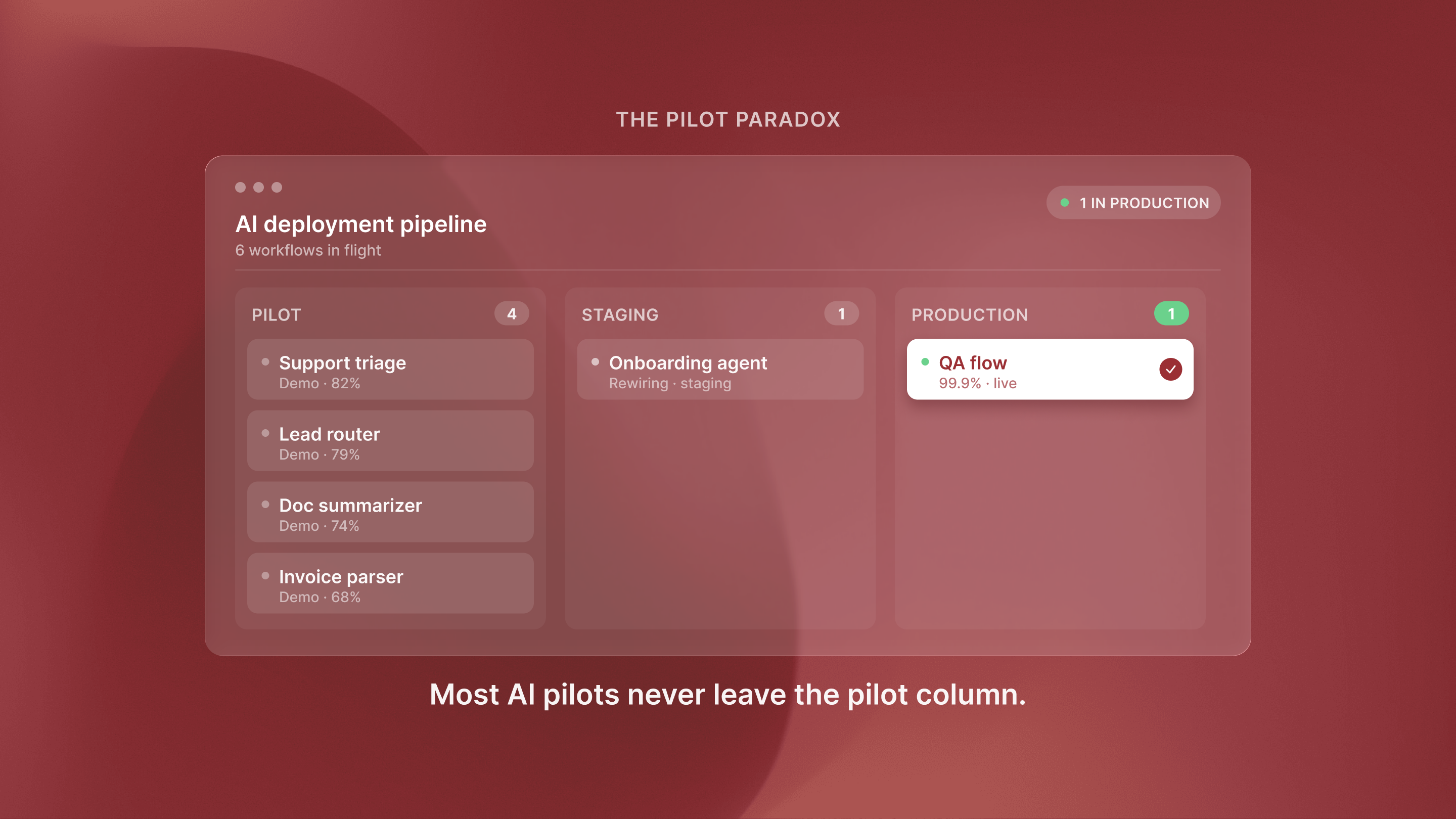
Enterprise AI spending jumped 3.2x year-over-year as companies moved from proofs-of-concept to production deployments (Menlo Ventures State of Generative AI 2025). The problem is that most technical leaders are flying blind on production AI agent costs because consultants sold demos, not sustainable systems. Here's the reality: 59% of enterprise leaders expect measurable ROI within 12 months (KPMG Q4 2025 AI Pulse Survey), but only 16% of deployments are true autonomous agents with planning and execution loops. The rest are fixed-sequence workflows with fundamentally different cost structures.
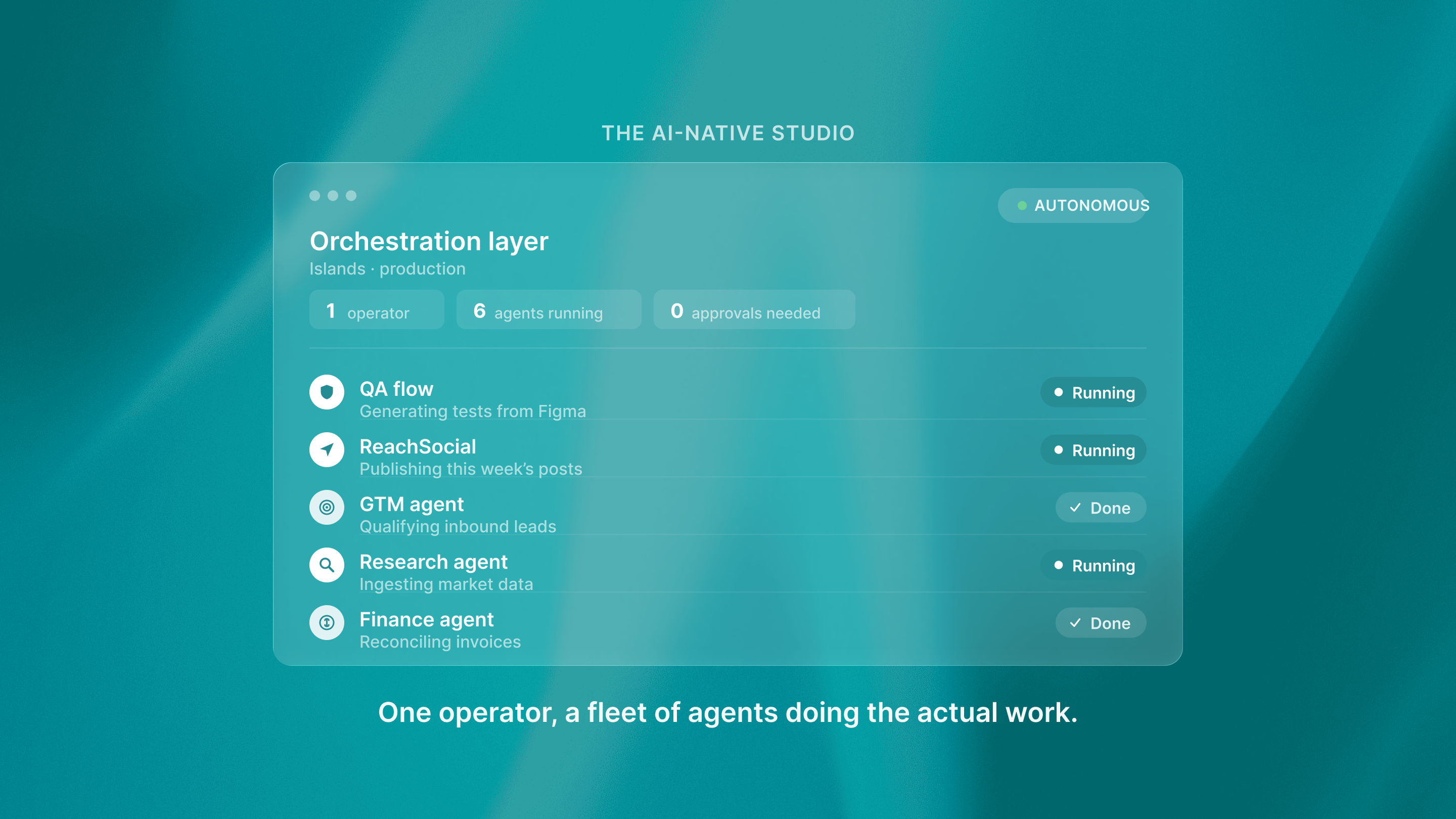
Production agent economics require different thinking than assistants or workflows. Portfolio experience across deployments like QA flow, Ingage, and Timecapsule reveals specific optimization patterns that separate sustainable systems from budget disasters.
The cost structure everyone misses
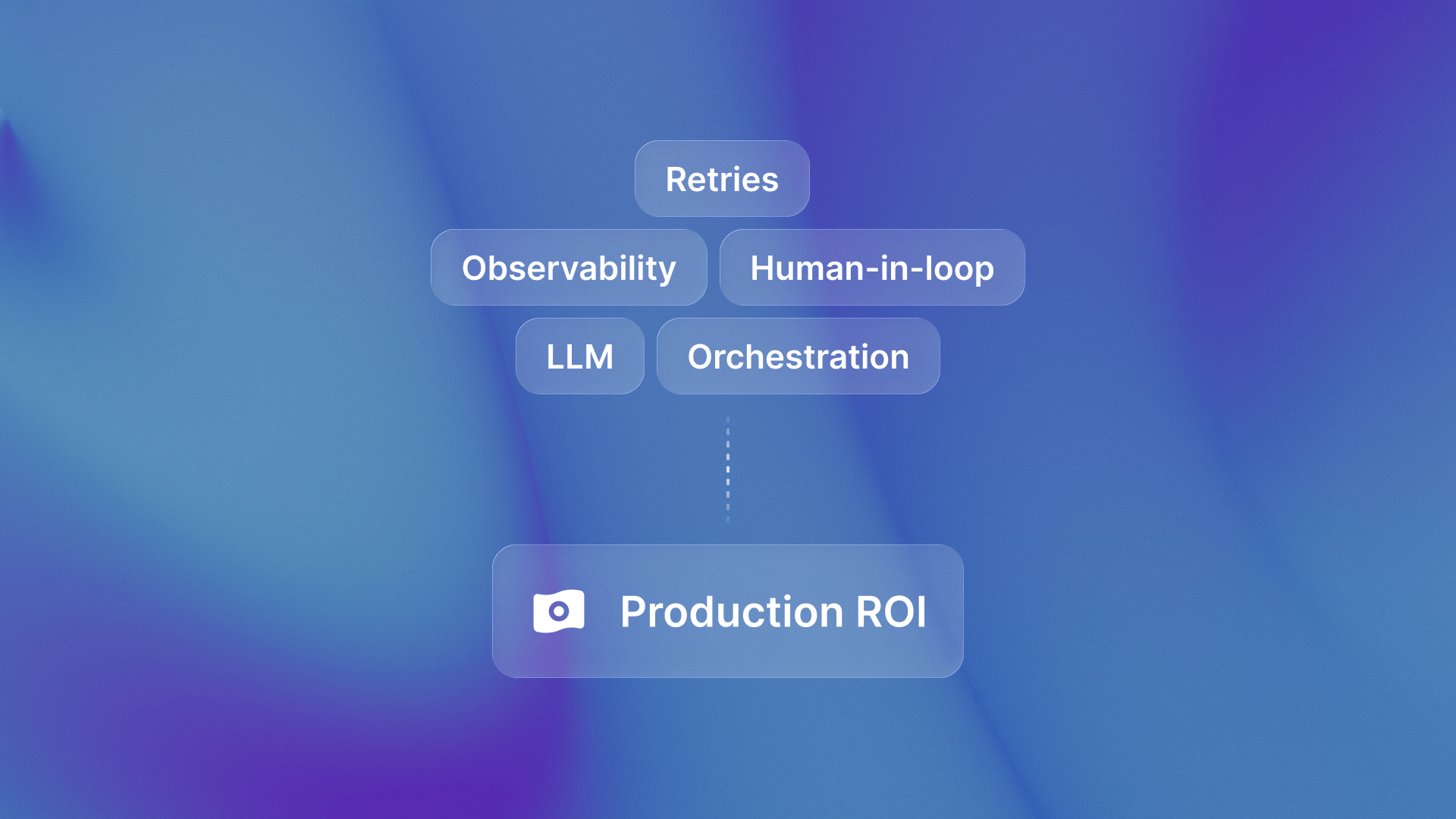
Most teams budget for LLM API costs and call it done. That's like budgeting for AWS compute and forgetting about data transfer, storage, and monitoring. Real production AI agent costs break down across five categories: LLM API consumption (40-50% of total), observability and logging (15-25%), error recovery systems (10-15%), orchestration infrastructure (10-15%), and human-in-loop interventions (5-10%).
The observability overhead surprises even experienced teams. When QA flow runs 2,400 test suites monthly, every agent decision needs logging for debugging and compliance. That's structured log storage, trace aggregation, and real-time monitoring dashboards—costs that scale with agent activity, not just LLM calls.
Error recovery is another hidden cost driver. Autonomous agents fail differently than traditional software. They need retry logic, fallback strategies, and state management to handle API timeouts, malformed responses, and context limit overruns. These recovery systems add 10-15% to infrastructure costs but prevent catastrophic failures in production.
.png)
Optimization patterns that actually work
Portfolio deployments show 40-60% cost reduction opportunities through three core strategies: strategic model selection, structured outputs, and semantic caching. The wins compound when you apply all three systematically.
Model selection matters more than most teams realize. GPT-4 costs 10-15x more than GPT-3.5 per token, but you rarely need GPT-4 for every agent decision. Split your workflow: use GPT-4 for complex reasoning and planning, GPT-3.5 for routine execution and validation. This hybrid approach cuts API costs 35-45% while maintaining output quality.
Structured outputs eliminate the retry tax. When agents output unstructured text, parsing failures trigger expensive retry loops. Force JSON schema validation at the API level—Claude and GPT-4 both support this natively. Teams using structured outputs report 50% fewer retry calls and 25-30% lower total API spend.
Semantic caching cuts redundant calls in half. Many agent workflows repeat similar queries (checking status, validating inputs, retrieving context). Cache embeddings of common queries and return cached responses for semantic matches above 0.95 similarity. This works especially well for retrieval-augmented generation patterns where context rarely changes.
The 12-month ROI pressure
Leadership expects fast returns, and that expectation creates both pressure and opportunity. Companies that build realistic cost models now will justify continued investment while competitors face budget cuts. The key is transparency: show the full cost breakdown, demonstrate optimization efforts, and tie spend directly to business outcomes.
For more on connecting agent costs to measurable ROI, see our breakdown of AI agent economics. The framework there maps technical optimizations to financial impact in terms leadership understands.
What this means for 2025-2026
The competitive implication is clear: companies that master production agent economics in 2025-2026 will scale autonomous systems while competitors stall on budget objections. The winners won't be those who spend the most on AI transformation—they'll be those who optimize the fastest. That 12-month ROI expectation isn't just pressure; it's the forcing function that separates sustainable deployments from abandoned pilots.
Start with one high-impact workflow, instrument it completely, and optimize ruthlessly. The cost framework above gives you the categories to track and the patterns to apply. The companies that survive the spending surge will be the ones who prove their AI agents earn their keep.
Success Stories
Read more

.png)
.svg)
