.svg)
Will AI replace auditors? Data from 40+ audit firms (2025)

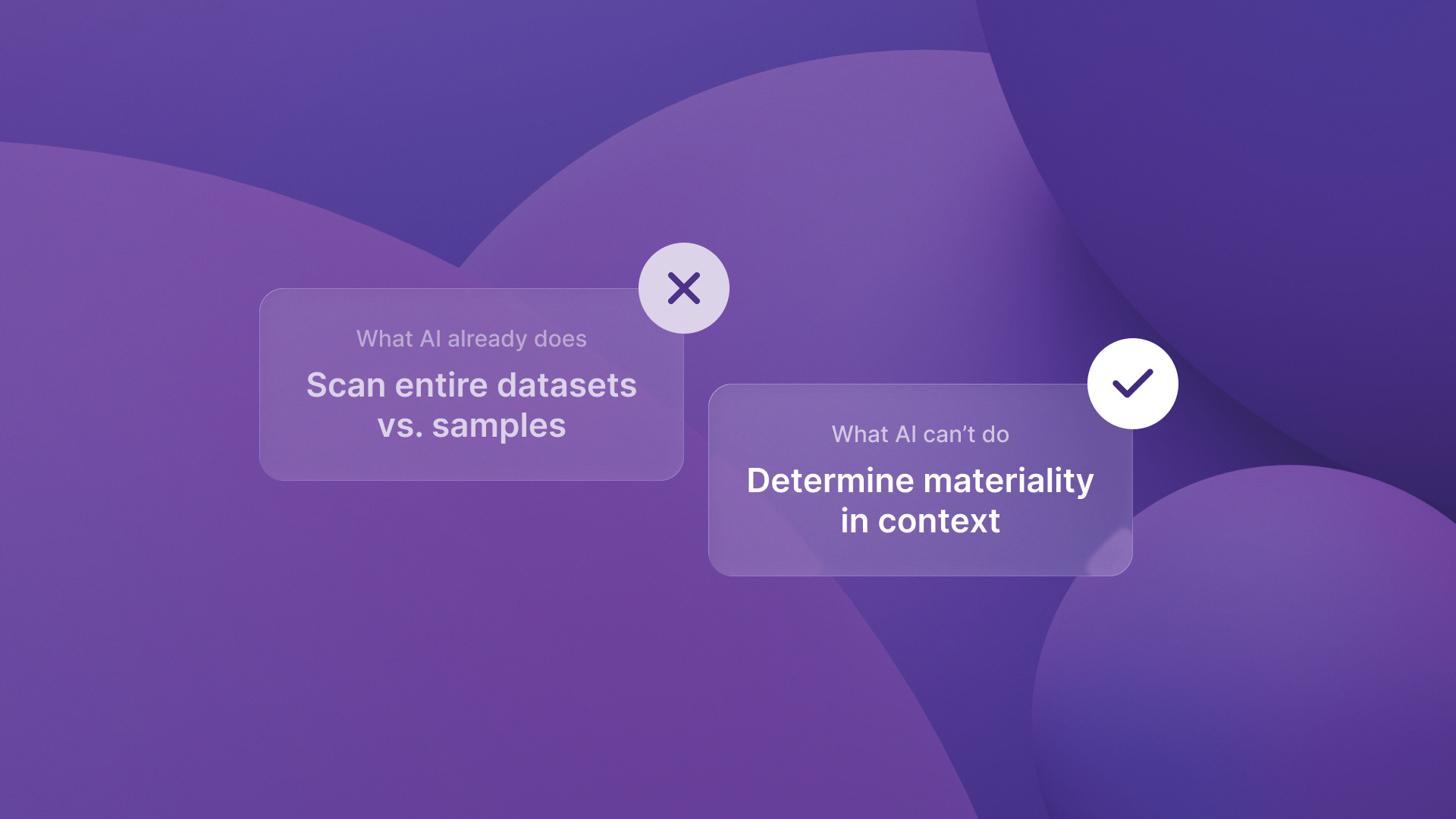
The short answer: no. But your job will change dramatically.
Here's what's actually happening based on data from 40+ audit firms we work with.
What AI is already doing in auditing
1. Data validation (80% adoption)
- Scanning entire datasets vs samples
- Identifying anomalies automatically
- Flagging unusual transactions
- Cross-referencing across systems
2. Risk assessment (60% adoption)
- Analyzing risk patterns
- Prioritizing high-risk areas
- Suggesting focus areas
- Predicting likely issues
3. Document review (45% adoption)
- Reading contracts and agreements
- Extracting key terms automatically
- Identifying non-standard clauses
- Summarizing complex documents
4. Compliance checking (70% adoption)
- Monitoring regulatory changes
- Checking adherence to rules
- Generating compliance reports
- Flagging potential violations
What AI can't do (and won't for years)
1. Professional judgment
- Determining materiality in context
- Assessing management intent
- Evaluating qualitative factors
- Making final audit opinions
2. Client relationships
- Building trust with stakeholders
- Navigating sensitive conversations
- Understanding organizational culture
- Providing strategic advice
3. Complex reasoning
- Connecting disparate issues
- Applying judgment to edge cases
- Understanding business nuance
- Adapting to novel situations
4. Ethical oversight
- Maintaining independence
- Resolving conflicts of interest
- Balancing competing pressures
- Upholding professional standards
The augmentation model (what's actually happening)
Traditional audit:
- 70% data gathering and validation
- 20% analysis and risk assessment
- 10% judgment and reporting
AI-augmented audit:
- 20% data gathering (AI does most)
- 30% analysis (AI-assisted)
- 50% judgment and client advisory
Real impact on audit jobs
Based on our data from 40+ firms:
Entry-level roles: -30% (routine work automated)
Mid-level roles: Stable (shifting to oversight and complex analysis)
Senior roles: +15% (more time for advisory and judgment)
Skills auditors need in 2025
Technical skills:
- Understanding AI/ML basics
- Data analytics proficiency
- Knowing when to trust AI vs when to override
- Prompt engineering for AI tools
Soft skills:
- Critical thinking and professional skepticism
- Client relationship management
- Strategic advisory capabilities
- Change management and communication
The firms winning
What they're doing:
- Investing in AI training for all auditors
- Redeploying entry-level staff to higher-value work
- Building AI-augmented workflows
- Offering new AI-related services
The results:
- 40% faster audit completion
- 25% cost reduction
- Higher quality (more thorough coverage)
- Better client satisfaction
The firms struggling
What they're doing wrong:
- Resisting technology adoption
- Not retraining workforce
- Viewing AI as threat vs tool
- Maintaining status quo
The results:
- Losing clients to faster competitors
- Declining margins
- Difficulty attracting young talent
- Market share erosion
Our prediction for 2026
AI won't replace auditors. But auditors who use AI will replace auditors who don't. The profession isn't disappearing. It's evolving. And the auditors who embrace that evolution will thrive.
The career transition path
For entry-level auditors:
- Learn data analytics tools
- Develop AI literacy
- Build advisory skills
- Prepare to move up faster
For mid-level auditors:
- Master AI-augmented workflows
- Develop complex analysis capabilities
- Build client relationship skills
- Position for advisory roles
For senior auditors:
- Lead AI transformation initiatives
- Develop new service offerings
- Build strategic advisory practice
- Mentor next generation
What audit firms should do now
Q1 2025:
- Assess current AI capabilities
- Identify high-value use cases
- Start pilot programs
- Train first wave of staff
Q2-Q3 2025:
- Scale successful pilots
- Redeploy entry-level staff
- Build new service offerings
- Market AI-augmented capabilities
Q4 2025:
- Full AI-augmented workflow
- New pricing models
- Advanced analytics services
- Competitive differentiation
The bottom line
The audit profession in 2026 will be more strategic, more advisory, more analytical, and more valuable — but only for those who adapt.
The choice is yours: embrace AI or get left behind.
Audit firm looking to adopt AI? Islands helps professional services firms transform.
Success Stories
Read more

.png)
.svg)
