.svg)
Why autonomous news agents require rigorous maintenance plans


I've been talking to Series B CTOs lately who are hitting a wall with autonomous AI agents for news. They see LLMs can process huge datasets, but demos are easy, and most teams fail in production. Shipping an autonomous agent that processes 200,000 articles at 94% accuracy requires more than a clever prompt. It requires an architectural blueprint that handles high-volume data without constant human oversight. Most teams fail because they ignore the reliability gap until it's too late.
Moving beyond simple prompts to orchestration
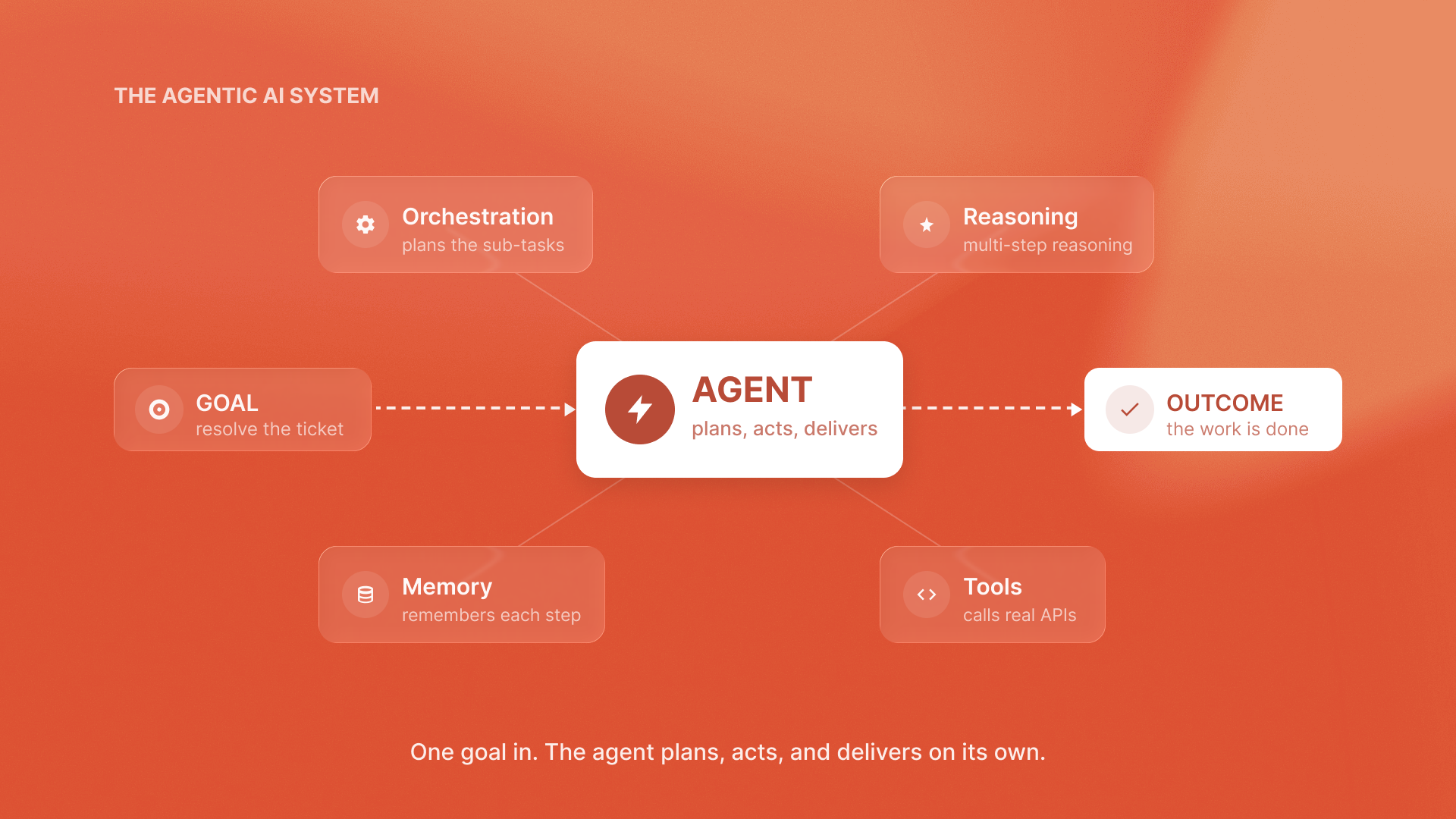
Scaling to 200,000+ articles requires moving beyond simple LLM prompts to a specialized orchestration layer. When we built the autonomous news engine for Goodable, we didn't wrap a model in a basic script. We built a system that manages state and handles failure recovery at every checkpoint.
This is the difference between a toy and a tool:
- The goal is to make sure that production-ready AI agents can recover from API timeouts.
- They should also be able to recover from rate limits. They should not lose context.
This architecture prevents the common trap where monolithic AI systems replicate 2010-era software failures. By separating tasks into discrete steps, we can isolate errors and maintain performance. The Goodable AI architecture relies on this modularity to process high-volume news feeds while maintaining narrative integrity.
Solving the AI hallucination management problem
In a high-volume environment, a 5% error rate is a brand crisis. Maintaining 94% accuracy is an economic decision. We use specialized QA flow protocols to ensure that high accuracy AI classification remains consistent as data volume scales. Without these checkpoints, the cost of manual review eventually exceeds the savings of automation. Effective AI hallucination management must be baked into the code, not added as a filter after the fact.
Key strategic insights
- Accuracy floor: 90%+ is required for true autonomy
- Volume: 200,000+ articles require state management
- Risk: Hallucination management must be part of the architecture
- Hiring: Structured loops are needed to find technical talent capable of building these layers
The maintenance tax on autonomous systems
Production-ready agents require ongoing refinement to stay performant. I call this the maintenance tax. It is the only way to avoid the architectural trap of failing prototypes. AI agent maintenance plans are not optional line items. They are the core of the system's longevity. For example, ReachSocial uses similar outbound automation logic. It needs constant monitoring to stay viable. We explored this in our guide on sustainable AI LinkedIn workflows.
Why 80% accuracy is a liability
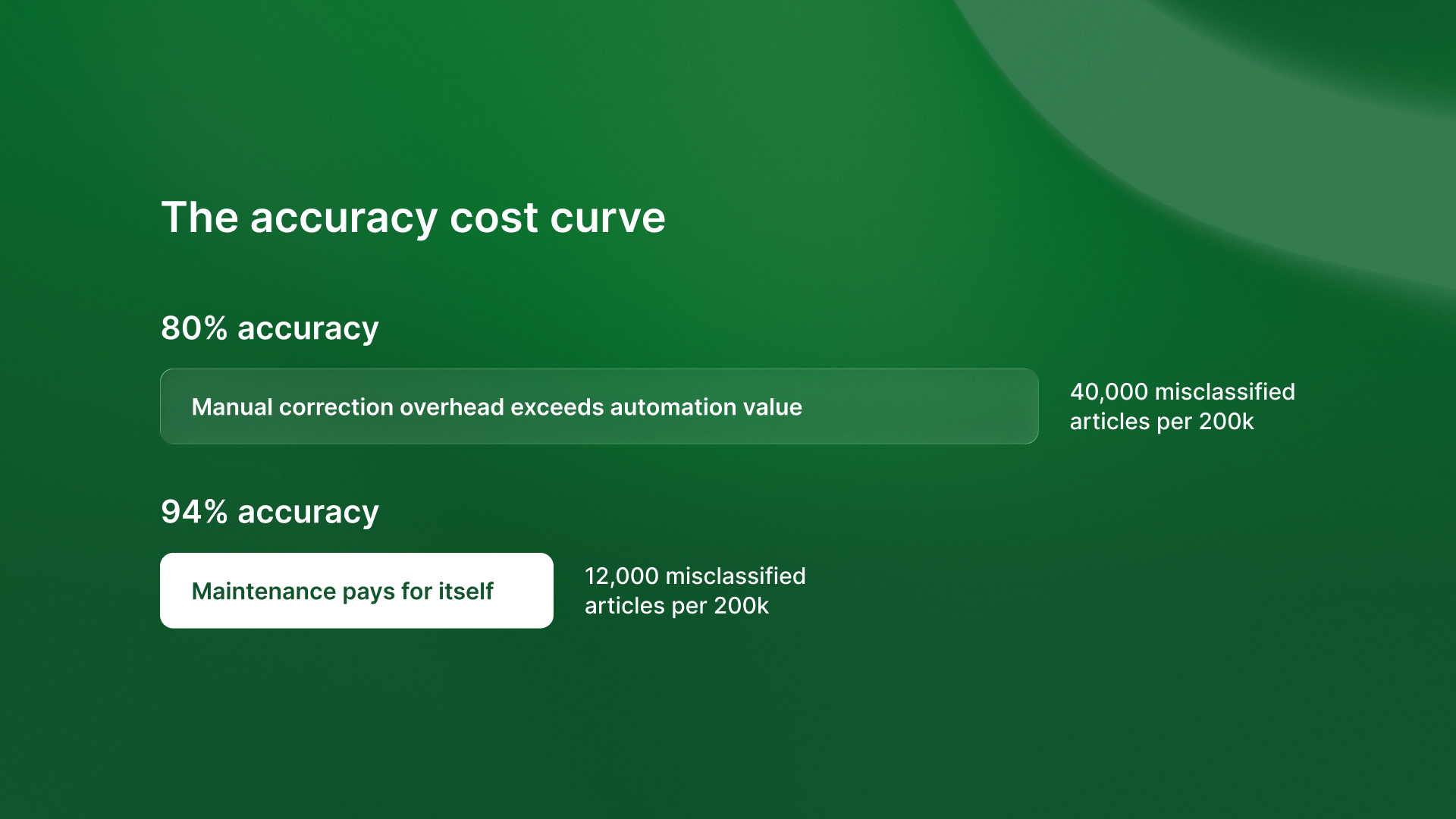
Here's the thing: 80% accuracy in automated systems costs more than it saves. It forces manual corrections that consume billable hours. We saw this clearly in research from Timecapsule. Real-time profitability monitoring during execution is the only way to prevent margin loss. If your agent needs a human to fix every fifth output, it is not autonomous. It is a high-maintenance assistant.
Choose your architecture wisely
The window for building these AI layers as a competitive advantage is closing. The penalty for shipping unreliable systems is higher than ever. Maintenance isn't an afterthought. It's the architecture. For teams looking to scale, Islands provides the technical bedrock needed to ship production-ready agents. You must also plan how people will find these systems later. That is why specialized GEO expertise is now needed for modern content engines. Even in the beauty sector, consumer trust is won through the consistency that only rigorous systems provide. Choose accordingly.
Ready to build a system that scales without breaking? Partner with Islands to deploy production-ready autonomous agents today.
Success Stories
Read more

.png)
.svg)
