.svg)
Why autonomous agents in performance marketing are non-negotiable


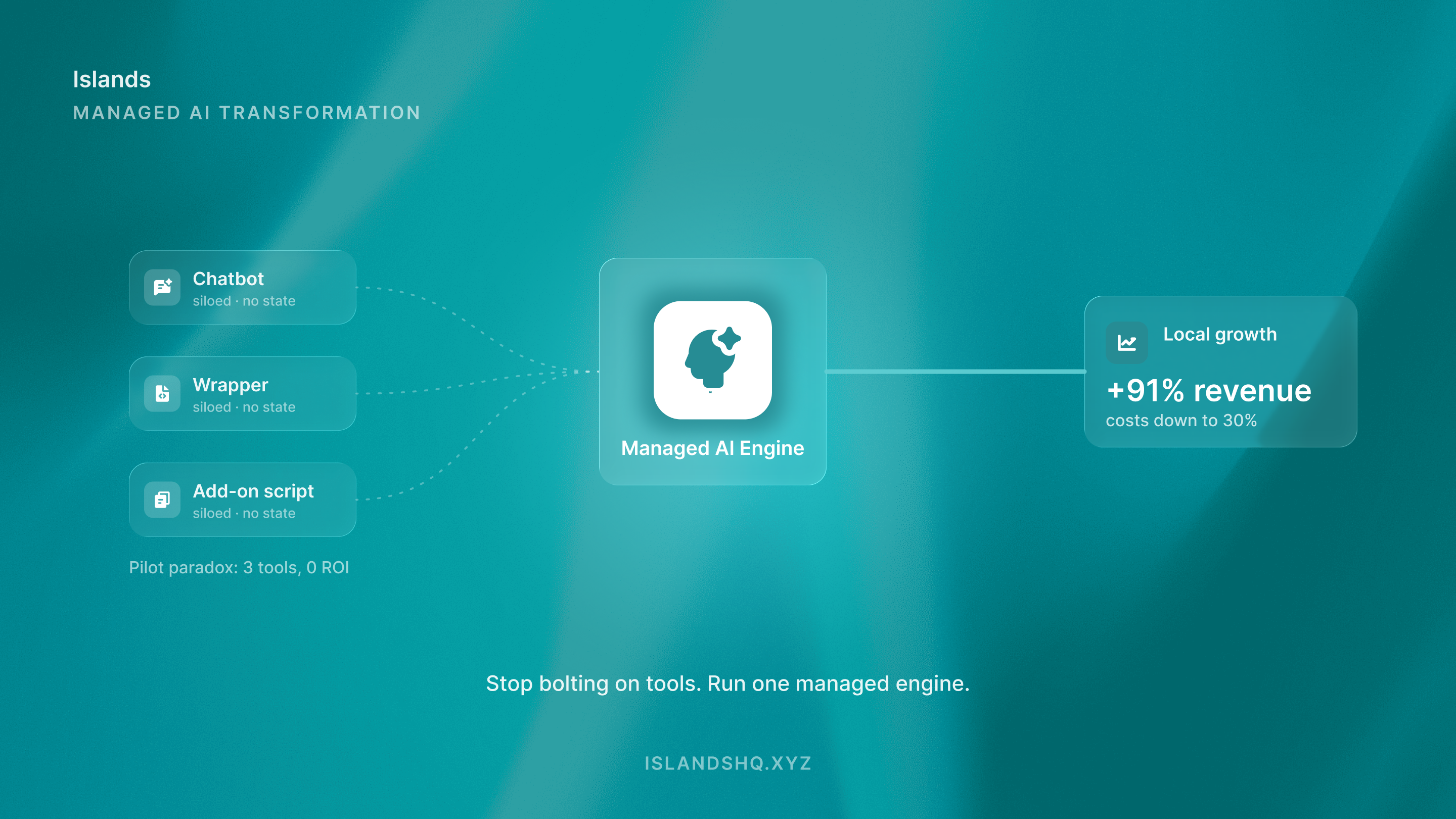
I have been talking to a lot of Series B founders lately who are trapped in the Assistant Paradox. They have deployed AI, yet their headcount is still growing alongside their tactical backlog. They bought into the promise of productivity, but they built an architectural trap.
For any startup entering the scale-up phase, moving to autonomous agents in performance marketing is not a luxury. It is a technical necessity. Manual workflows simply break under the weight of Series B growth. By focusing on chat interfaces that still need human oversight, they created extra work. This extra work reduces the ROI of AI initiatives.
Moving from productivity gains to workflow replacement
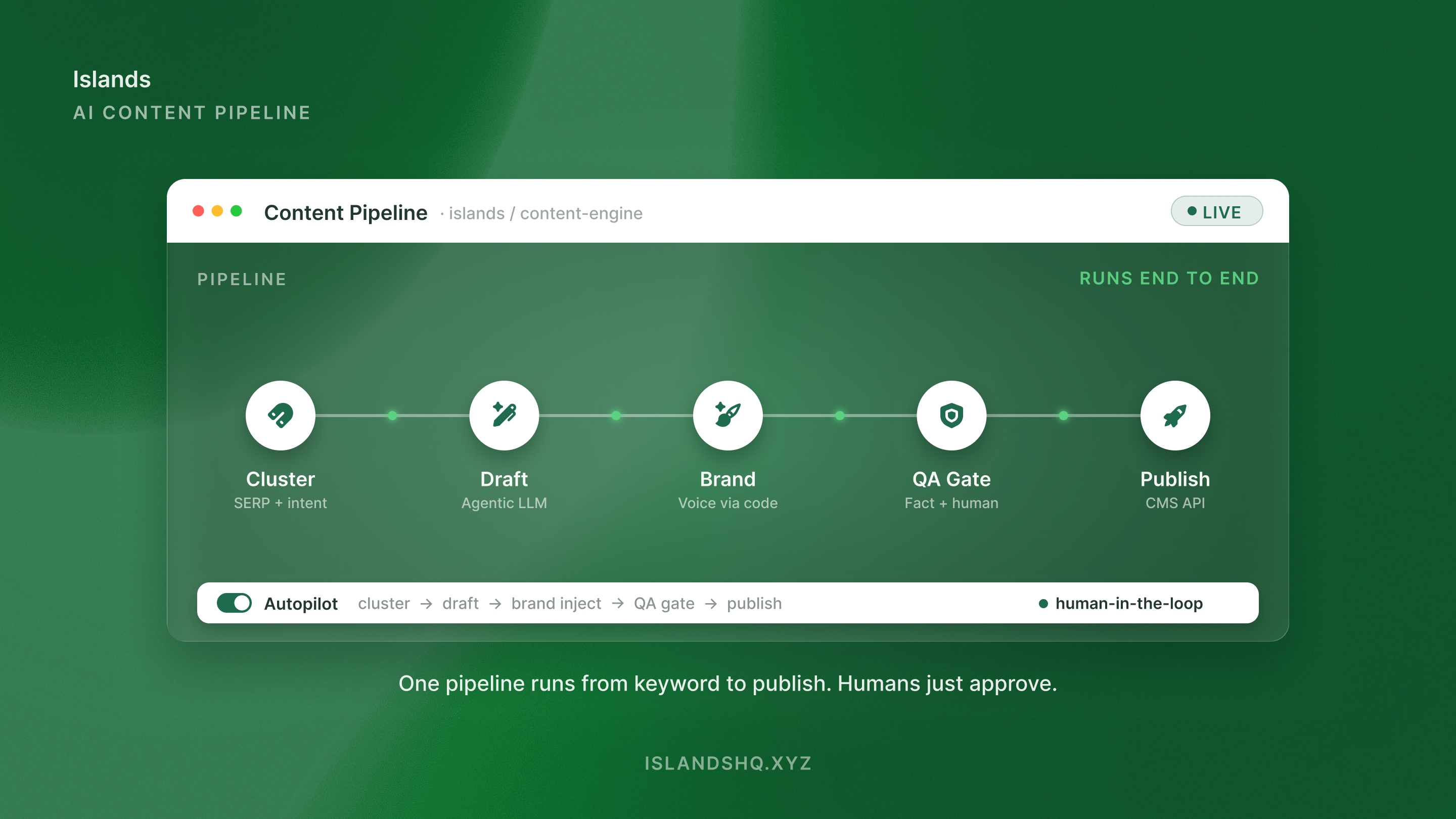
The transition from assistants to autonomous agents is a fundamental shift in system design. Most teams are currently building human-in-the-loop systems where AI helps a person do a task. That is not enough. To scale, you must move toward agentic workflows. These workflows replace the human component of the execution layer entirely. This is how smart companies avoid the headcount trap while maintaining high output volume.
Marketing organizations are shifting toward autonomous analytics and authoritative content creation. This helps them reclaim control over their digital presence (BKA Content). When you build systems that can analyze data and act without a prompt, you go beyond human speed limits. This approach prevents the common Series B scaling traps that occur when you hire for roles you cannot yet manage.

The data infrastructure requirement
Modern marketing execution relies on data-driven logic rather than creative intuition alone. Industry benchmarks from HubSpot confirm that data-driven decision making is now the core driver of competitive marketing strategy. This foundation allows for a total AI marketing transformation. In this model, agents act as independent operators within the stack.
At Islands, we have seen technical leaders build stronger systems when they treat data as infrastructure, not just reporting. If you are waiting for clean data to start this process, you are making a resource allocation error. The cost of lost lifetime value exceeds the cost of hiring a specialist to fix and build simultaneously.
Solving for reliability in production execution
Reliability in production requires moving beyond human-in-the-loop dependencies. These dependencies create systemic bottlenecks that prevent real-time scaling. At ReachSocial, we found that autonomous systems beat manual oversight in fast, frequent tasks once unit economics are stable.
We have seen this same pattern with QA flow. When engineering teams move from manual scripts to autonomous testing, they remove the velocity wall that stalls roadmaps. The same principle applies to your marketing stack. If your workflow replacement strategy still needs a person to click “approve” for every social post, you have not built an agent.
If it still needs a person to click “approve” for every lead reply, you have not built an agent.
You have just built a faster typewriter.
Indicators of agentic potential
How do you know which workflows are ready for full autonomy? I look for these three markers:
- High-frequency tasks with clearly defined success metrics
- Processes that rely on structured data inputs from a CRM or analytics tool
- Tactical execution loops that do not require subjective brand judgment for every iteration
The strategic choice for scale
You are facing a choice between scaling headcount or scaling architecture. Continuing to hire for tactical execution is a liability. It may slow you down as you move toward Series C. Switching to autonomous agents lets your team focus on strategy. The agents can handle high-volume execution work. Without this shift, your agency utilization benchmarks will remain structurally capped by manual inefficiencies.
Takeaway summary
- Assistants increase productivity but agents replace workflows
- Human-in-the-loop is a bottleneck for high-frequency execution
- Data infrastructure is the prerequisite for agentic success
- Avoiding scaling traps requires an architectural shift
Ready to move beyond basic automation and scale your marketing architecture? Explore how Islands builds autonomous AI agents to replace your broken legacy workflows today.

Success Stories
Read more


.svg)
