.svg)
What AI venture capital firms look for in 2026: beyond the wrapper

I recently watched a Series B founder pitch an AI interface. The lead partner told them they don't fund wrappers anymore. The market has moved. The difference between an assistant and an autonomous agent can decide your next seed round. Or it can cause a shutdown. Attracting AI venture capital in 2026 requires technical depth and workflow replacement over simple UI improvements.
The death of the thin wrapper in 2026
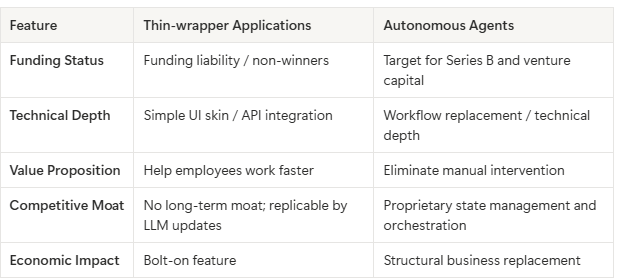
Thin-wrapper applications are no longer winners. Investors have realized that a UI skin on a third-party model offers no long-term moat. If a system update from OpenAI or Anthropic can replicate your value, you are a funding liability. Many of these initiatives struggle. They miss hidden costs. These costs come from rebuilding architecture and ongoing maintenance. Basic business cases often leave these costs out. According to TechTimes, thin wrappers are consistently identified as non-winners despite the sector's growth.
The funding paradox
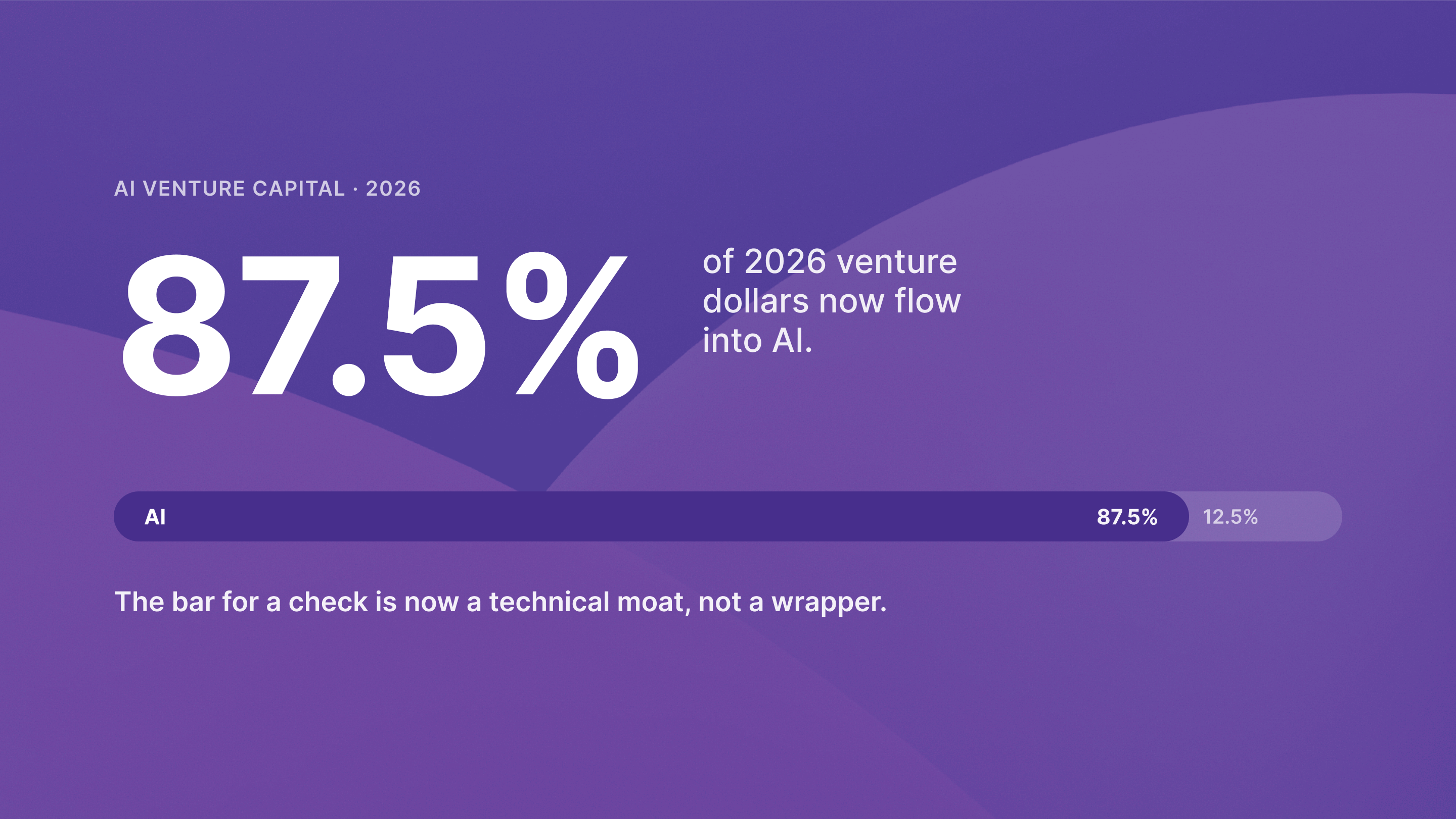
Recent data shows that a large amount of capital has flowed into the AI sector. This raises the bar for standing out. AI venture capital firms are no longer looking for LLM-integrated products. They want companies that have rewired their entire architecture for autonomy. With 87.5% of all venture dollars flowing into the AI sector (Fortune), simple API integrations no longer qualify as a competitive advantage. To reach this level of technical maturity, some startups use a fractional CTO and shared orchestration layer. This can cut deployment timelines from months to weeks.
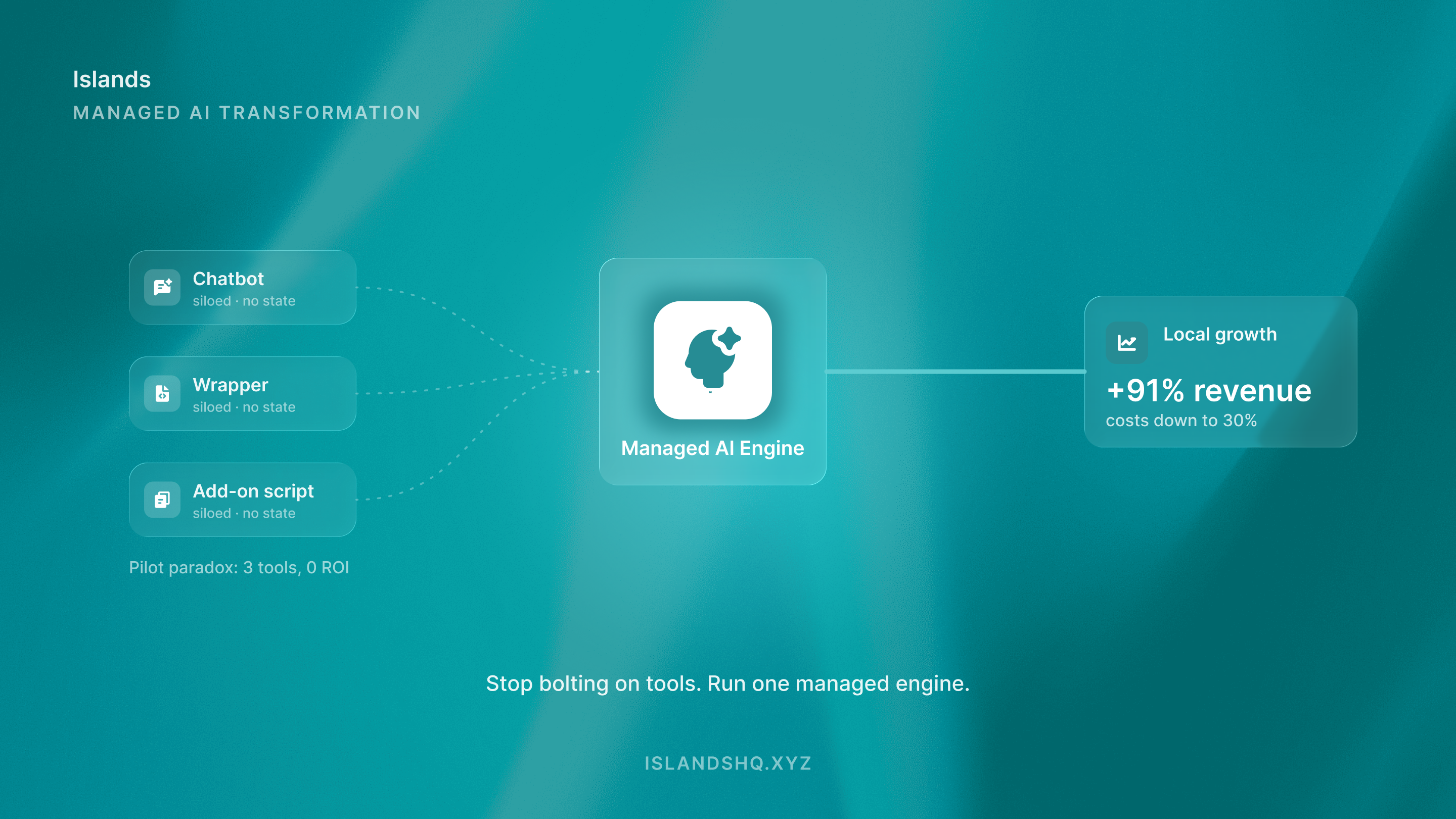
Comparison of AI wrappers versus autonomous agents
What AI venture capital actually wants: the three moats
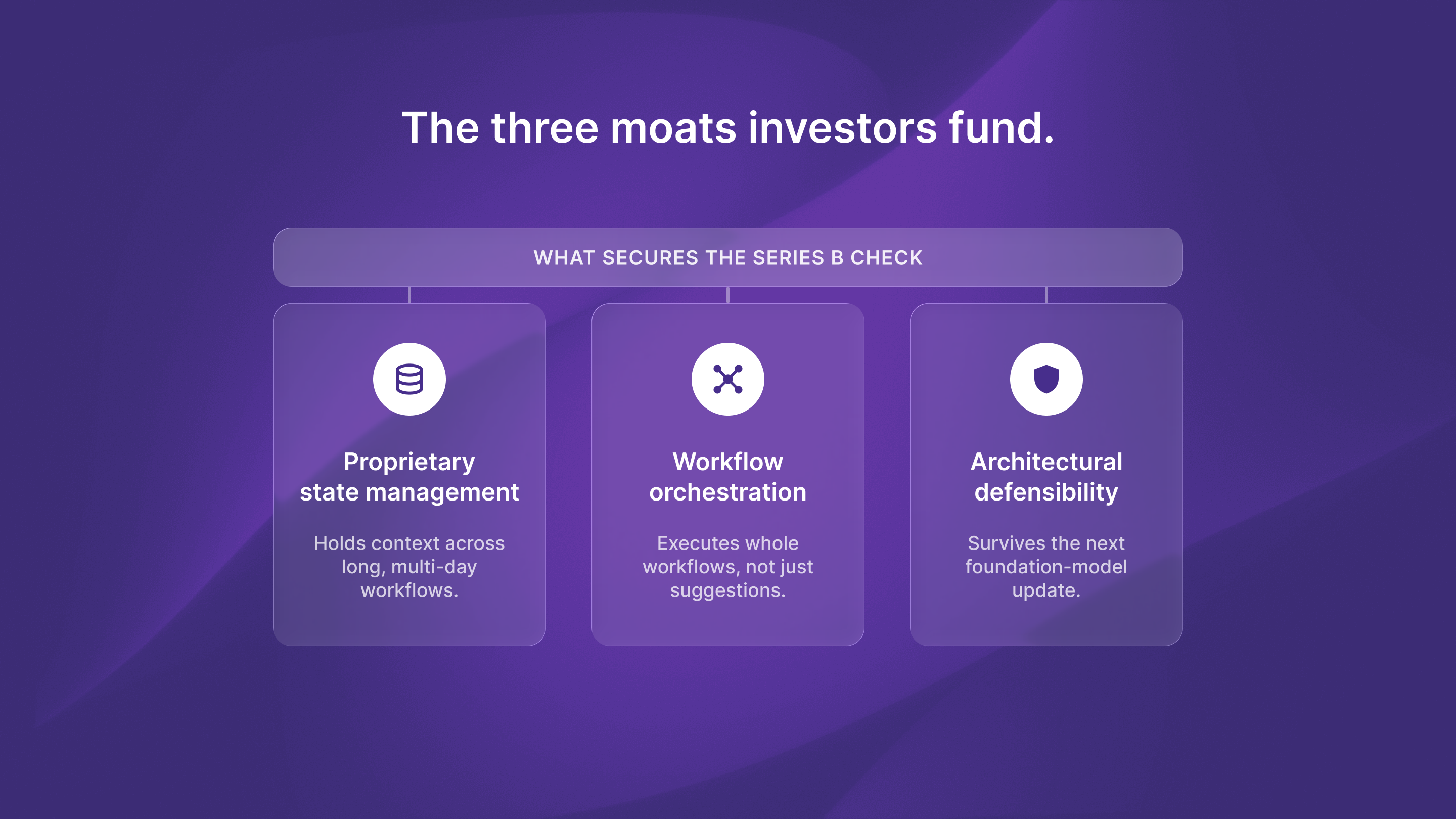
To secure backing, founders must show AI technical moats that go beyond prompt engineering. Investors prioritize systems that can handle entire workflows independently. This shifts the economics from hiring more people to increasing system capacity.
- Proprietary state management that maintains context across complex, multi-day tasks.
- Workflow-level orchestration that connects disparate APIs into a cohesive autonomous loop.
- Verifiable workflow automation ROI through the replacement of high-cost manual labor cycles.
- Architectural resilience that prevents vendor lock-in with a specific LLM.
From assistants to agents: the architectural shift
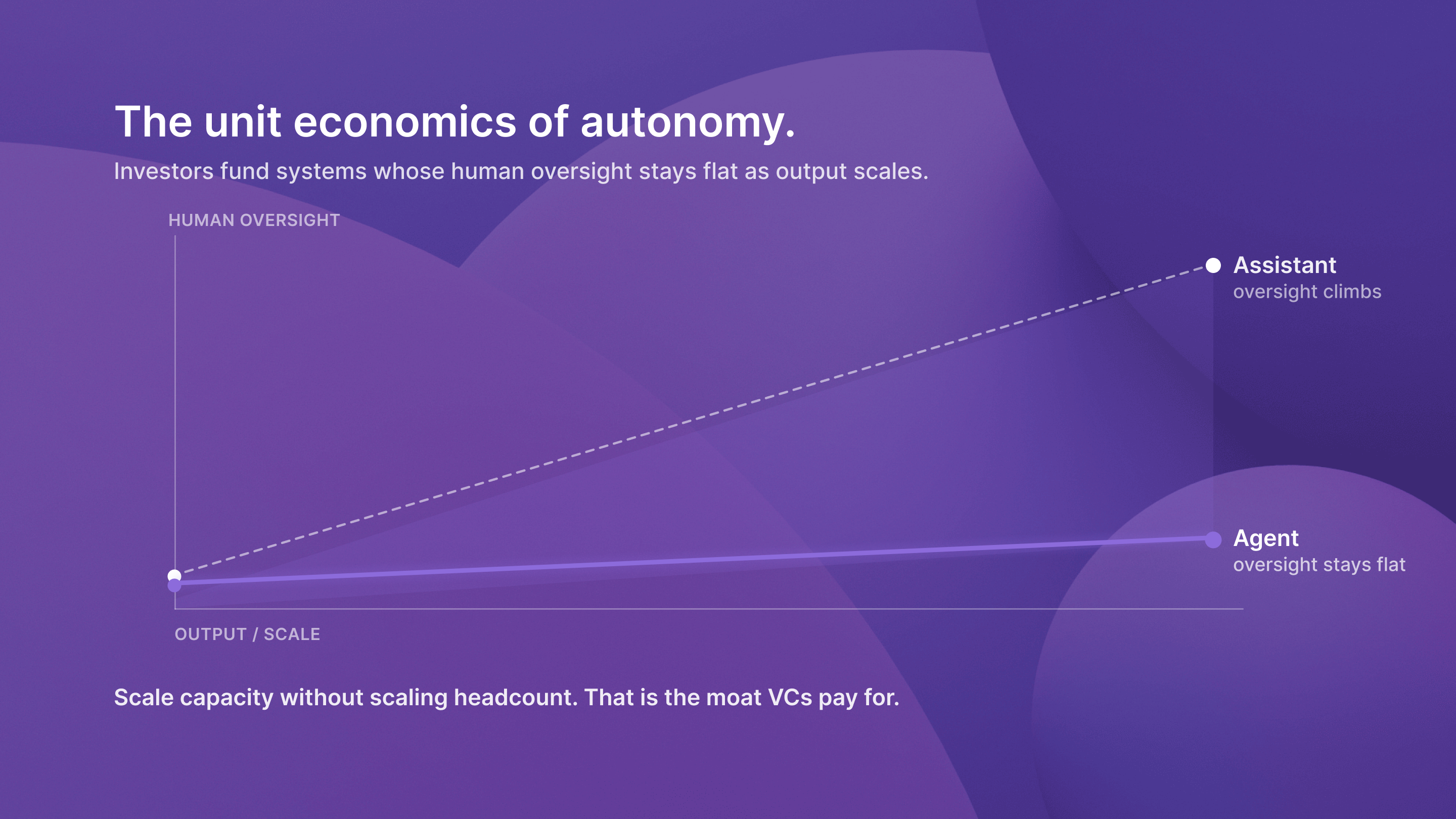
The most successful founders are skipping the assistant phase entirely. Instead of building tools that help employees work faster, they are building autonomous testing platforms like QA flow. These platforms use autonomous agents and reduce the need for manual work. They are moving from prose to plumbing. This ensures the AI is a structural part of the business rather than a bolt-on feature.
Founders who prioritize venture studio partnerships often move faster. They use pre-built agent architectures to avoid building infrastructure from scratch. This speed is a sustainable moat when experimentation costs are dropping. You must build for production reliability, not just an impressive demo. Before committing to this model, founders should use a venture studio evaluation framework. This helps ensure the partner's technical infrastructure meets production-ready standards.
Action steps: auditing your AI architecture
- Map every human touchpoint in your current AI workflow to identify oversight taxes.
- Replace passive chat interfaces with proactive agents that execute tasks independently.
- Audit your data layer to ensure it supports proprietary state management.
- Document the Series B AI strategy shift in unit economics. As you move from assistants to autonomous systems, review critical orchestration layer questions.
The bottom line
AI venture capital in 2026 rewards architectural rigor and the replacement of entire workflows. If your product is a wrapper, you are building on borrowed time. Focus on the plumbing to build a lasting moat.

Ready to build technical moats that attract investors? Book a call with Islands today.
Success Stories
Read more


.svg)
