.svg)

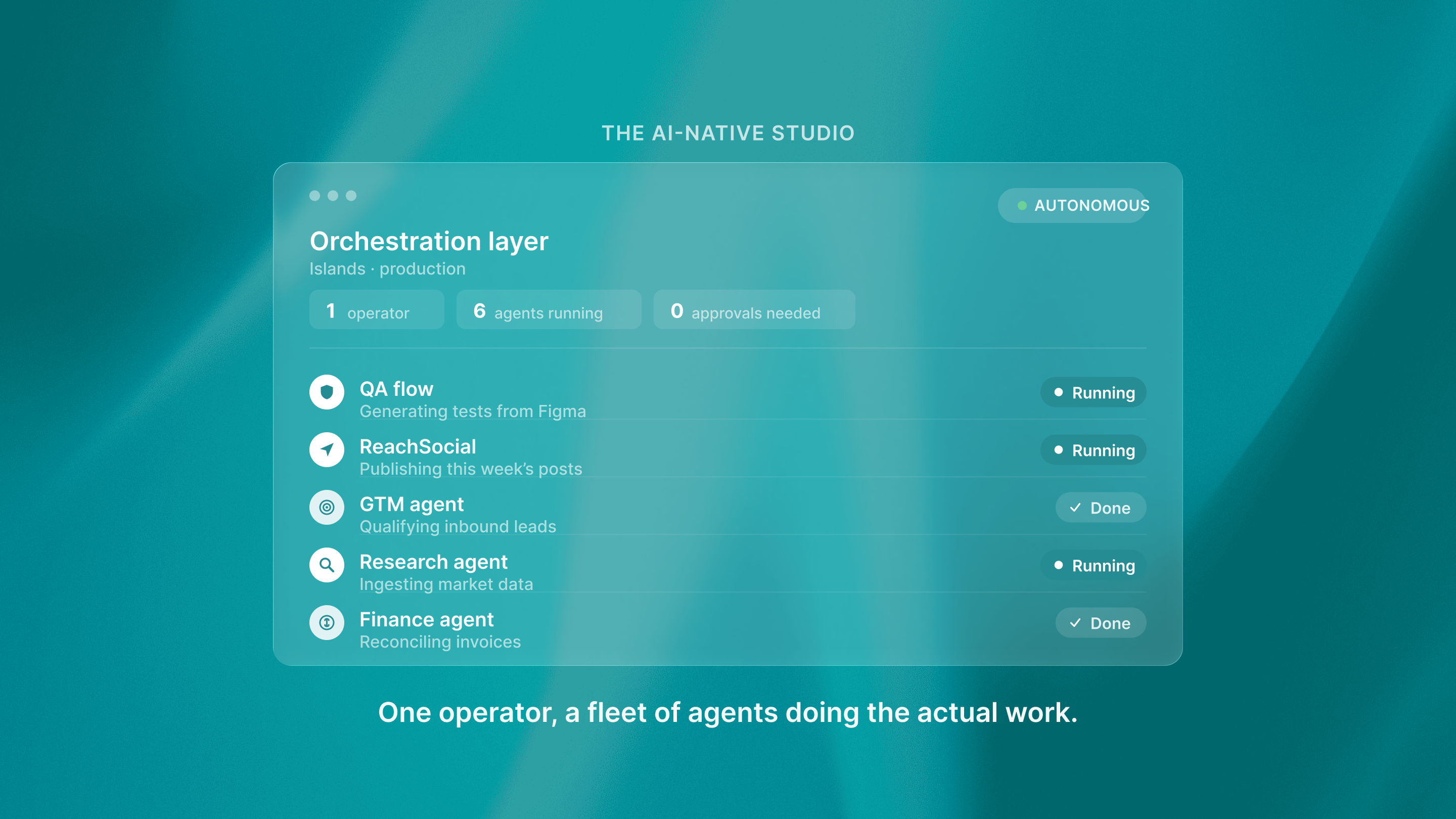
I recently watched a Series B founder struggle to justify a huge AI spend. It only made their chatbot a bit faster. They were caught in the assistant trap. They thought adding an LLM API to a legacy workflow made them AI-powered. In reality, they paid extra for a fancy interface that still needed human oversight for every meaningful task. Understanding what an AI-native studio is, is the first step for leaders who want to avoid technical debt.
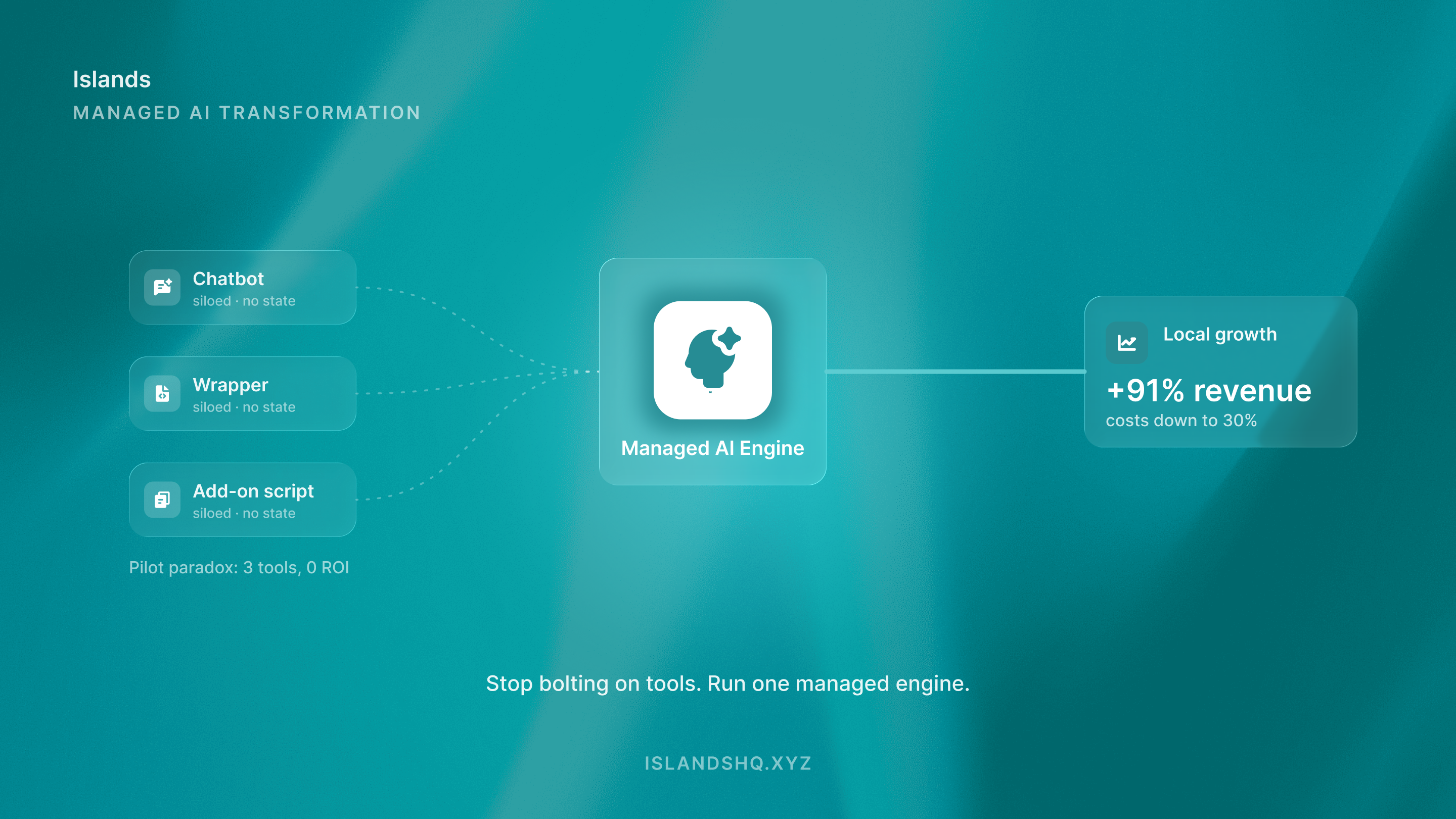
A true architectural evolution requires more than a skin on a model. Many current market offerings fall short because they prioritize surface-level prompts over production-grade infrastructure (Islands). If the AI isn't in your plumbing, it is just prose.
Infrastructure vs. integration
A venture builder that uses autonomous agents as the basic building blocks of a business defines this new model. Traditional agencies provide human services or thin-wrapper integrations. These studios build systems where AI runs end-to-end workflows on its own. This helps companies scale without adding headcount, using a specialized AI venture studio model.
For technical founders and VPs of Engineering, this shift is significant. Leaders are partnering more with studios. These studios offer fast access to pre-built architectures. They can ship production-ready systems in weeks, not months (Islands). The goal is replacing the headcount trap with an orchestration layer. According to Padiso, this is a new operating model. It weaves AI into how companies are built and scaled from day one.
The autonomous workflow core
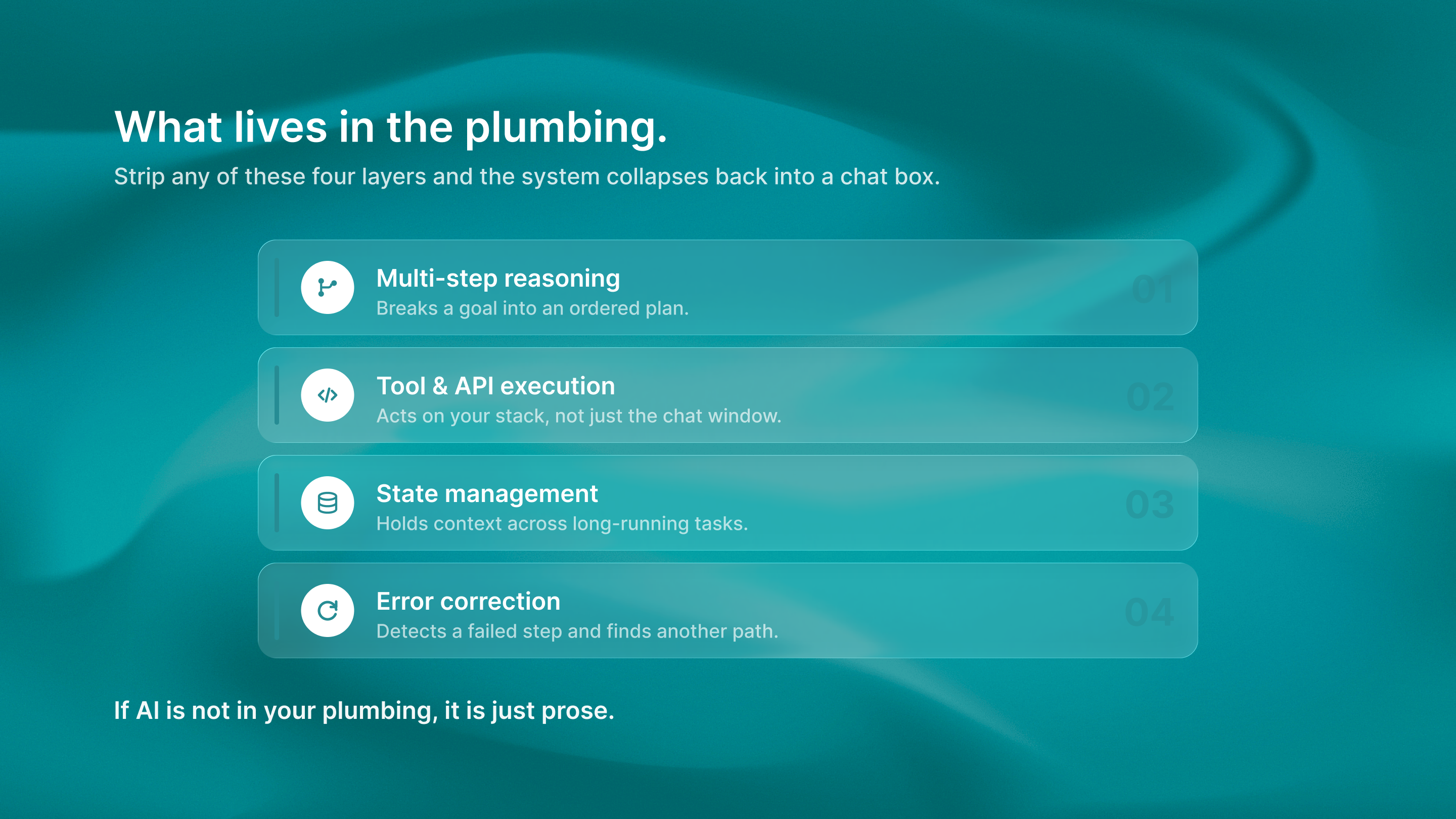
Most startups today are building wrappers that function as assistants. These tools require a human to verify every output, creating an oversight tax that slows down progress. An AI-native product studio focuses on the autonomous workflow core. This involves building systems that manage their own state and execute API calls using a specialized AI agent architecture.
Only 16% of enterprise AI deployments qualify as true autonomous agents (Islands). The rest remain stuck in perception-only architectures that require costly future rebuilds. J. C. R. Licklider defined man-computer symbiosis in 1960. He said machines should support formulative thinking, not just solve formulated problems.
Assistants vs. agents: the architectural divide
.png)
The gap between an AI assistant and an autonomous agent is a matter of state management and orchestration. Assistants are reactive. They wait for a prompt and provide a response. Agents are proactive. They understand a goal and break it down into steps. They also interact with external tools to complete the mission, creating true autonomous workflows.
The technical requirements of autonomy
- Multi-step reasoning capabilities that allow the system to plan ahead
- Independent API execution to interact with existing software stacks
- Search-awareness to retrieve and process real-time data dynamically
- State management to maintain context across long-running tasks
Lessons from the portfolio
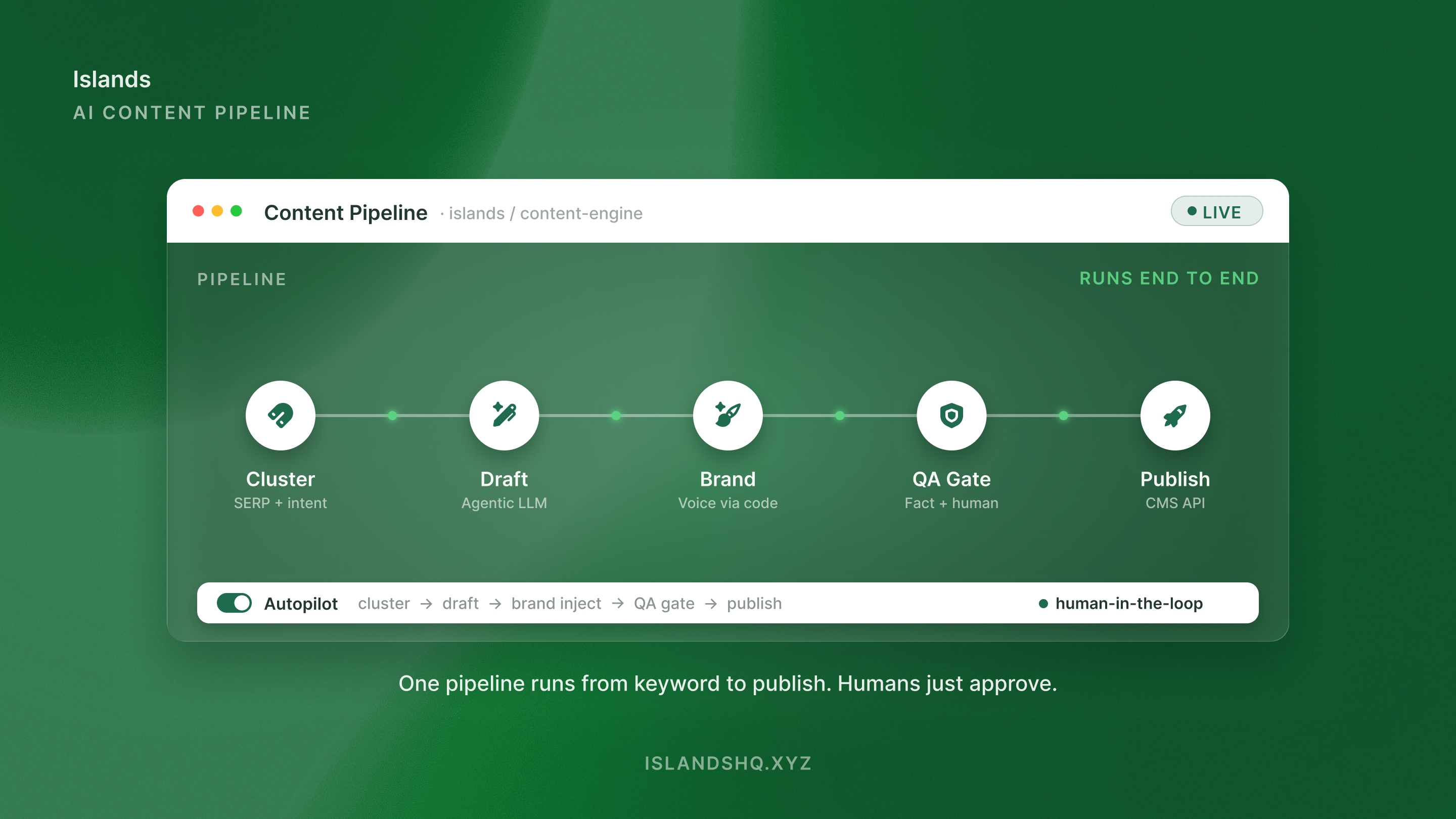
This shift is evident in the development of autonomous QA agents like QA flow. Instead of helping a human write a test script, these systems read design artifacts and generate tests independently. They replace the manual bottleneck of test case creation entirely.
Similarly, using agentic AI systems for performance marketing shifts the goal. It moves from better writing tools to an autonomous loop (Islands). The system handles data ingestion, creative generation, and budget optimization. The system becomes the worker. This architectural rigor separates sustainable moats from temporary hype.
The AI-native product studio roadmap
- Audit existing plumbing to identify high-volume, rule-based bottlenecks.
- Identify autonomous workflow candidates where the human oversight tax is highest.
- Deploy the orchestration layer to manage agentic state and tool integration.
The bottom line
Transforming into an AI-native entity requires a structural evolution (Islands). You must move from linear solutions to exponential systems. To maximize ROI, you must build for autonomy to survive the next era of competition.
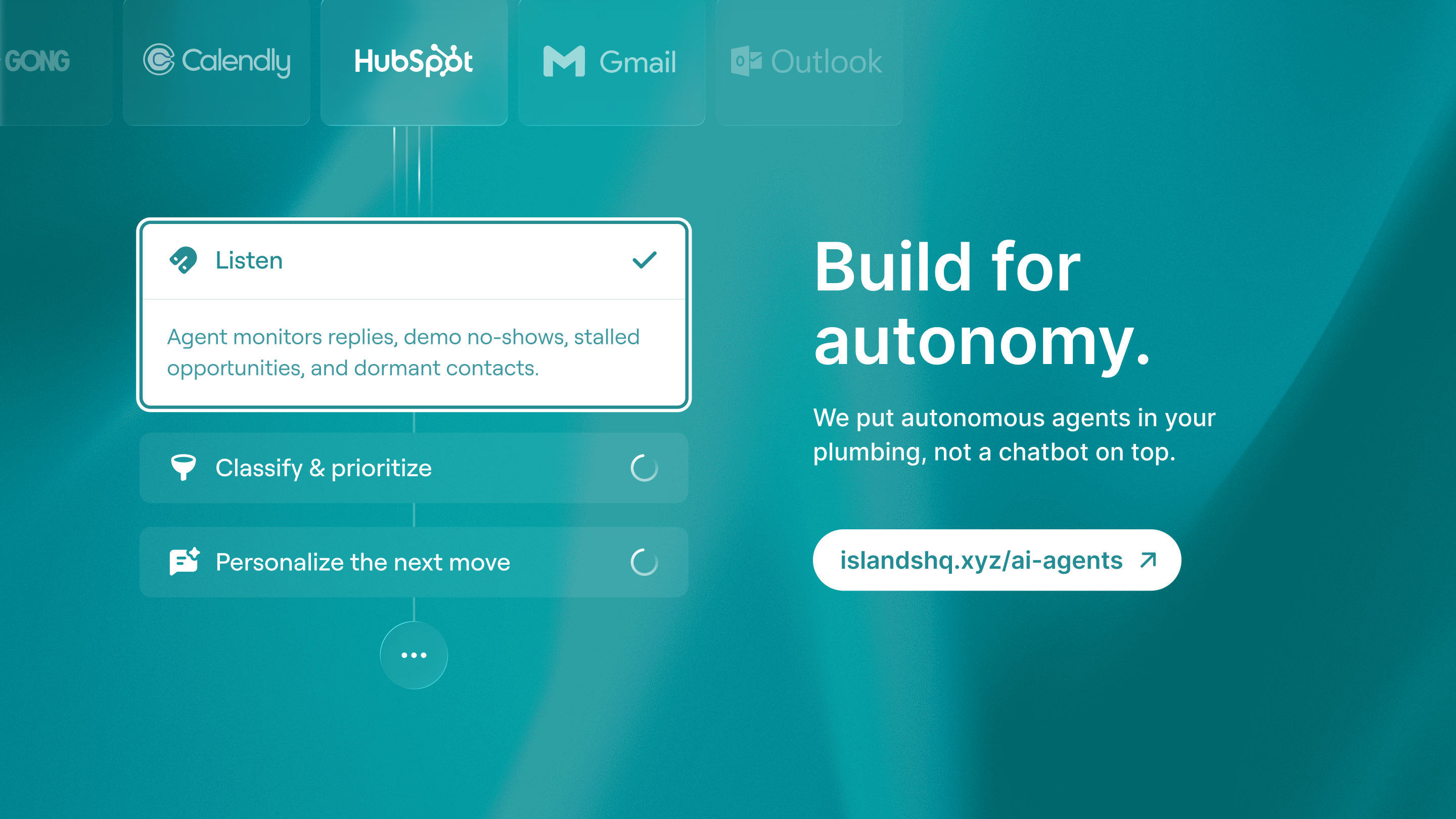
Ready to build your own autonomous infrastructure? Book a call with Islands today.
Success Stories
Read more


.svg)
