.svg)
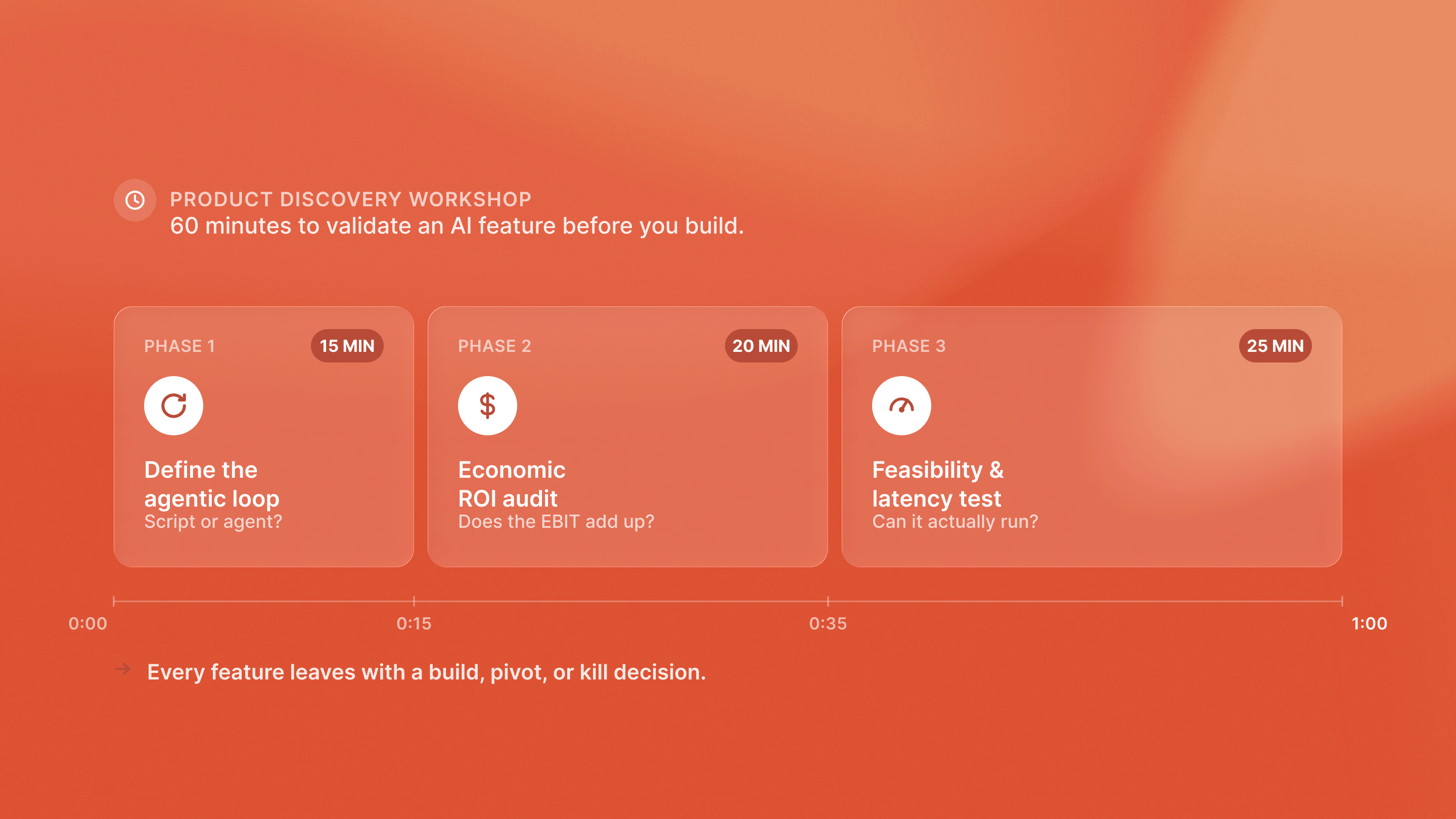
The 60-minute product discovery workshop: validating AI features before you build

A founder at a Series B fintech startup admitted they spent six months building an AI assistant. Nobody uses it. The issue was not the code;it was the discovery process. A rigorous product discovery workshop saves months of wasted engineering effort. While many teams build simple productivity tools, fast-growing companies build autonomous agent systems. Validation acts as a compounding asset. It prevents capital waste on features that fail to solve user intent.
Current trends in product discovery
- A move from simple LLM prompting toward autonomous orchestration layers
- High failure rates for features lacking a clear unit economics audit
- Increased focus on latency boundaries during the prototyping phase
The 60-minute product discovery workshop framework
Phase 1: Defining the agentic loop (15 min)
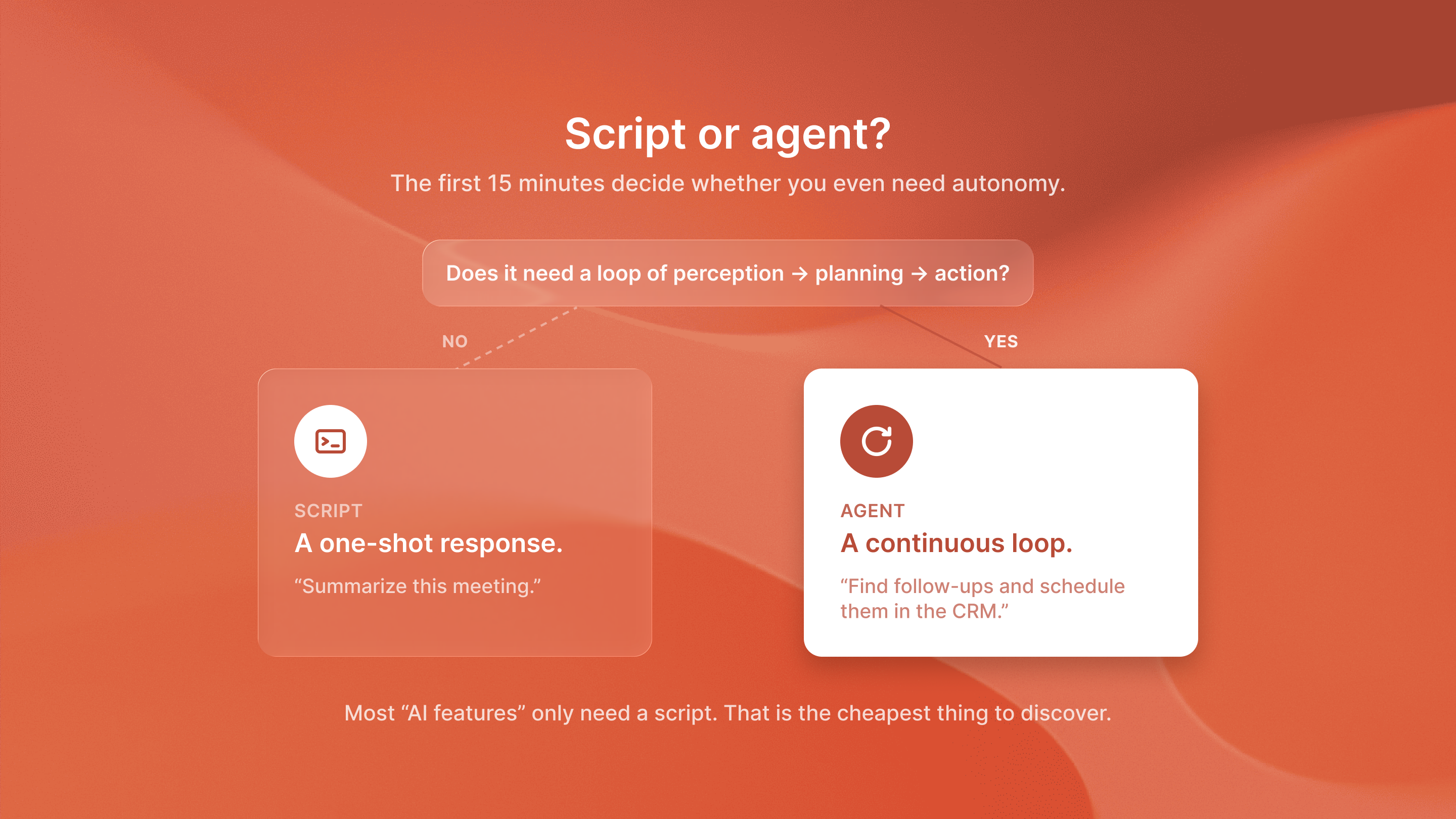
Identify if the feature requires a simple response or a continuous loop of action. Discovery for agentic AI systems requires specific principles to ensure features solve user intent without excessive oversight (UX Matters). If the user must prompt the AI for every step, the result is an assistant, not an agent. Focus on identifying intent-based steering parameters that allow for autonomous, intent-based testing and execution.
Phase 2: The economic ROI audit (20 min)
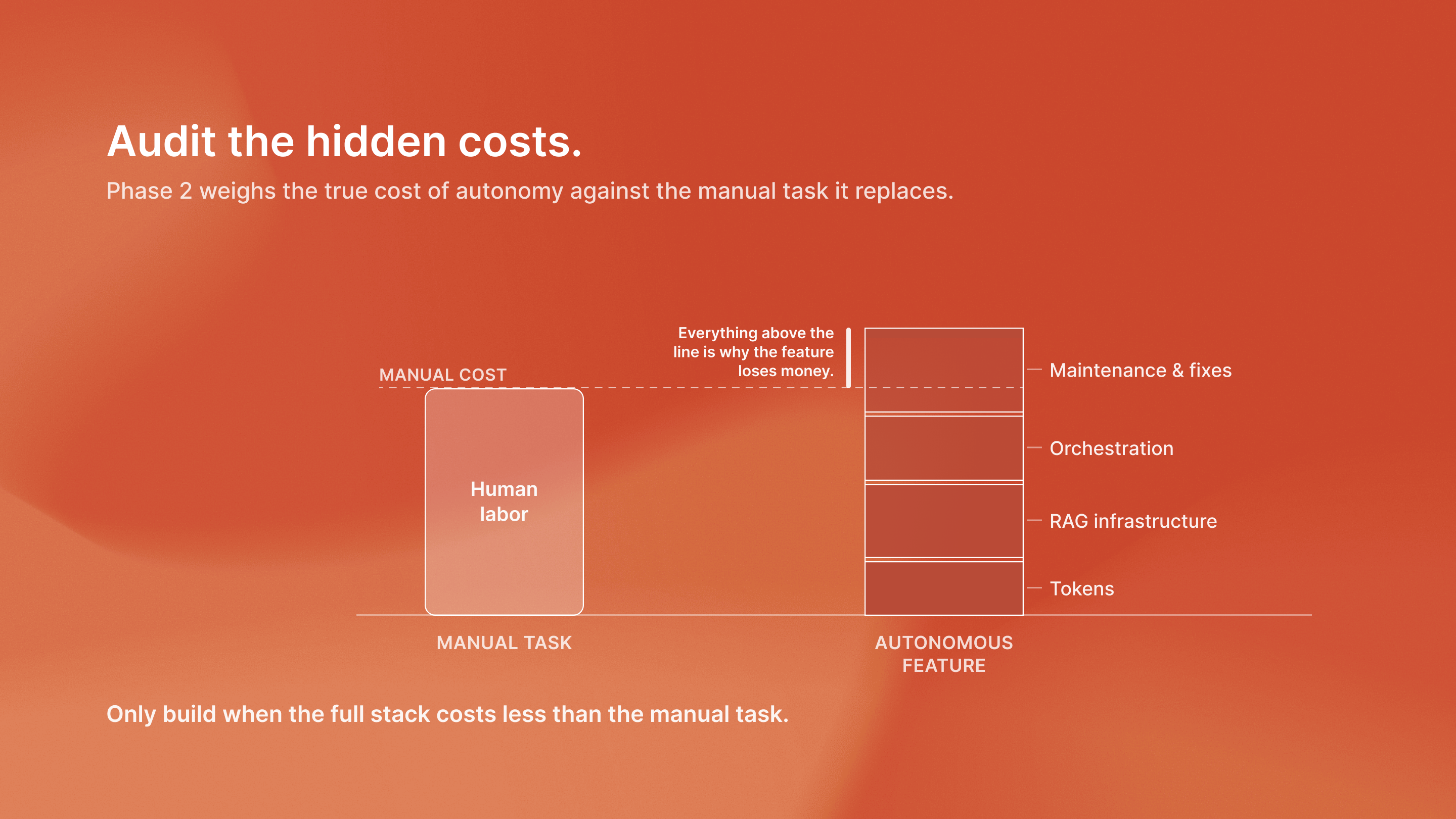
Series B founders must prioritize features that provide measurable EBIT impact. A coherent AI strategy involves mapping workflow replacement economics accurately. This requires accounting for hidden costs like architecture rebuilds and maintenance. Successful deployment relies on validating technical feasibility and unit economics before investing in engineering. If the cost of human oversight exceeds the cost of the manual task, the feature is a liability. It is critical to build AI business cases that account for real production costs rather than vanity metrics.
Phase 3: Feasibility and latency stress test (25 min)
Distinguishing between a simple RAG assistant and an autonomous agentic loop is vital for technical success. During AI agent validation, teams stress test orchestration layer requirements and check latency impact on the user experience. If a workflow needs real-time precision that the current model cannot provide, the system remains fragile. Use technical feasibility gates to determine if an agent can actually replace the manual workflow. A rigorous economic model ensures these projects survive scrutiny beyond the demo phase.
Strategic implementation of autonomy
Key principles for designing autonomy
- Prioritize intent-based steering over granular task prompting
- Build for asynchronous supervision rather than click-and-wait interactions
- Ensure the system provides transparency into its decision-making process
- Include clear intervention points for high-stakes autonomous actions
Avoiding the architectural trap
Moving from assistants to agents requires a fundamental shift in software design. The software becomes a digital employee that performs work rather than just a tool a human uses. Implementing an autonomous architecture ensures the system handles edge cases without constant human intervention. Production-grade AI requires reliability and documented economics from day one. Focusing on unit economics and the agentic loop maintains the architectural rigor required at the Series B level.
Execution and next steps
Your 30-day validation roadmap
- Run the 60-minute discovery workshop for your top three AI feature ideas.
- Stop work on any feature that lacks a clear path to autonomous ROI.
- Build a low-fidelity prototype of the orchestration layer using production-ready workflows.
- Stress test latency and error boundaries with a small user group.
- Implement the validated feature into your next two-week engineering sprint.
The bottom line
Validation moves speculative AI projects into production-grade systems. Auditing ideas for autonomy and economics prevents the accumulation of technical debt. Apply this playbook to transition from assistants to agents.
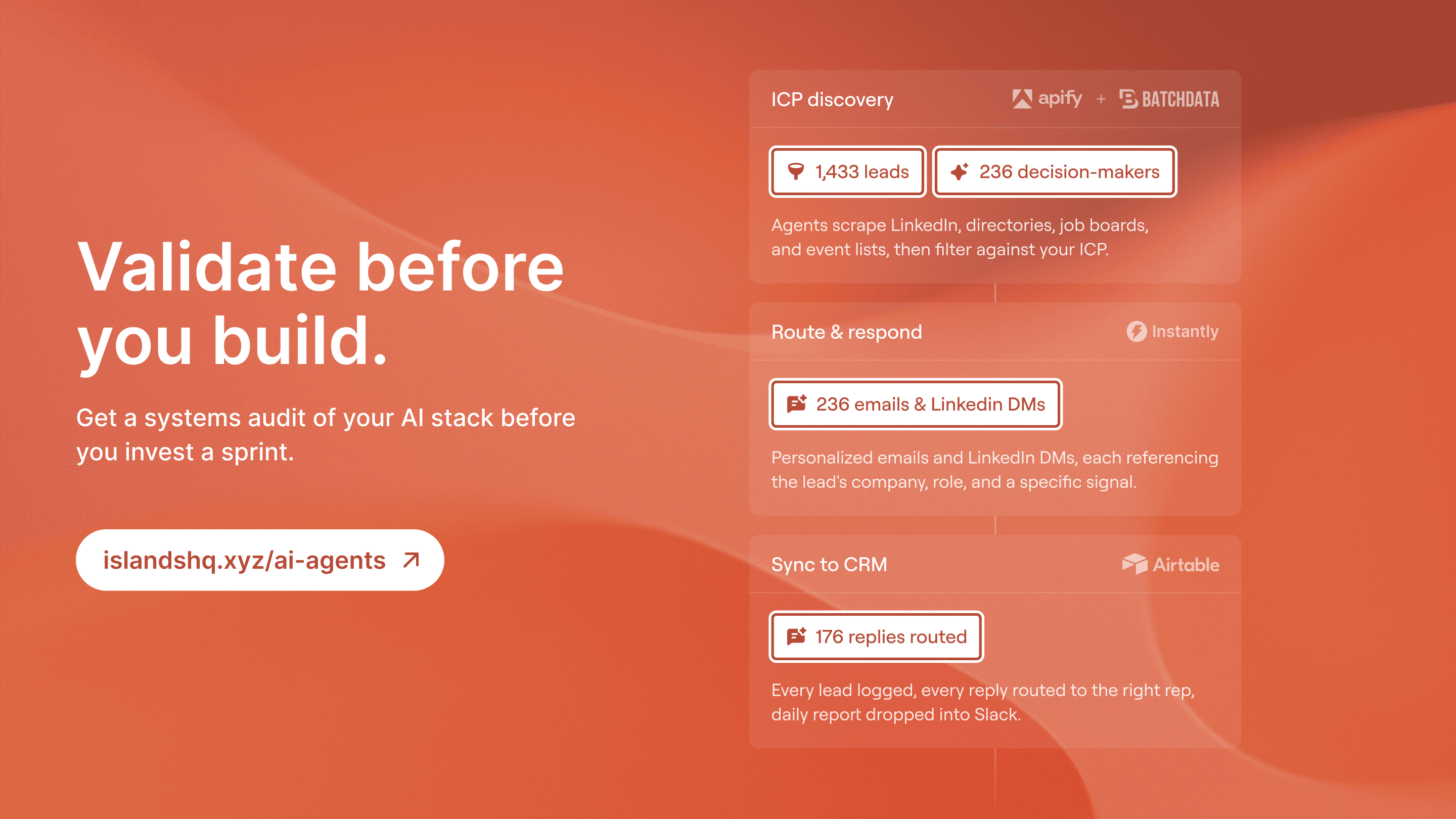
Reach out to Islands if you need to book a call for a full systems audit of your current AI stack.
Success Stories
Read more

.svg)
