.svg)

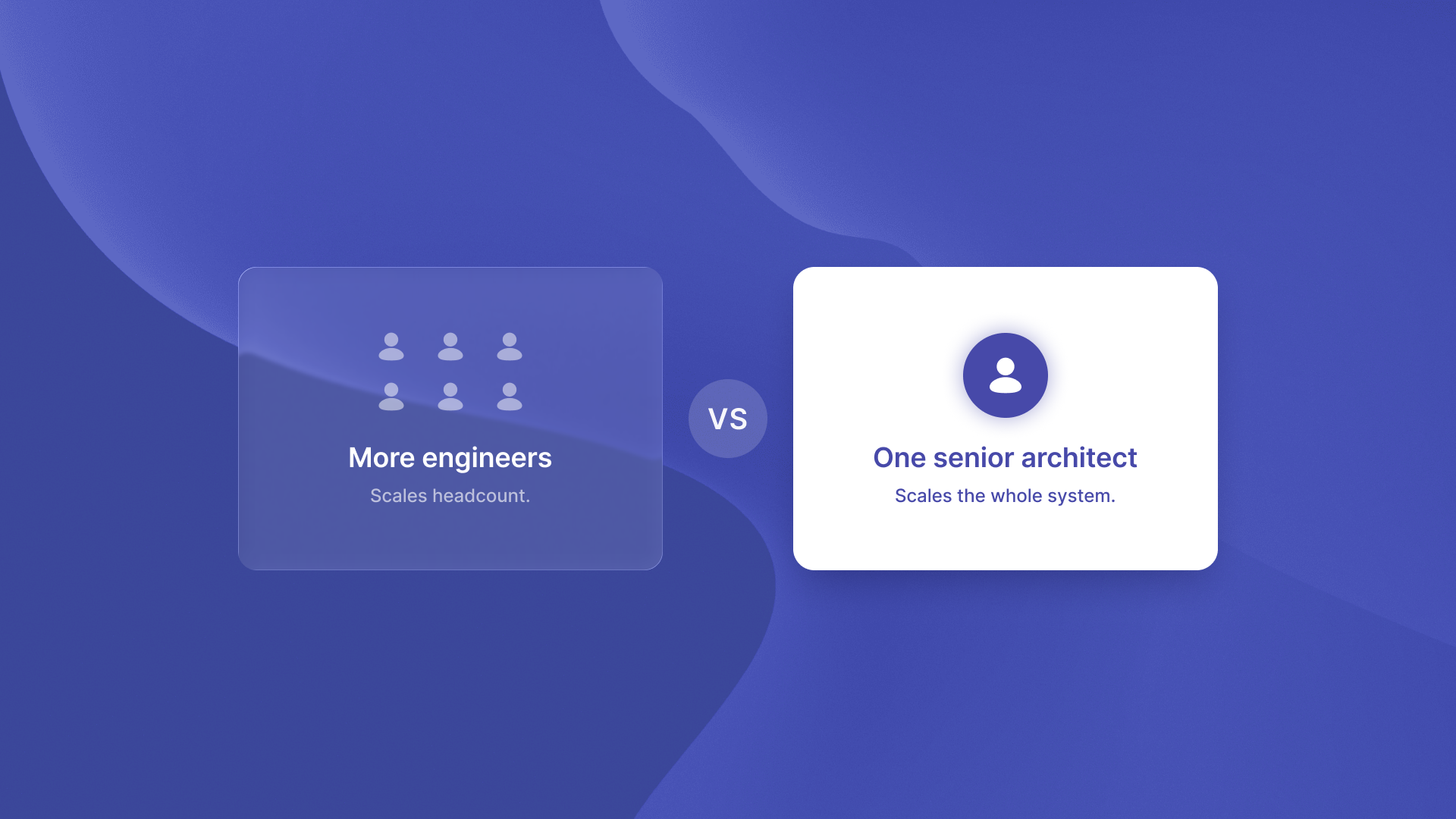
I talked to a Series B founder last week. They had a brilliant AI demo. But their production setup looked like a house of cards. They did not need more engineers. They needed an architect. Many startups fail when transitioning from basic LLM wrappers to autonomous agents that require complex infrastructure. Fractional CTO services become essential when the gap between a prototype and a reliable product grows too wide.
Using fractional CTO services to scale AI systems
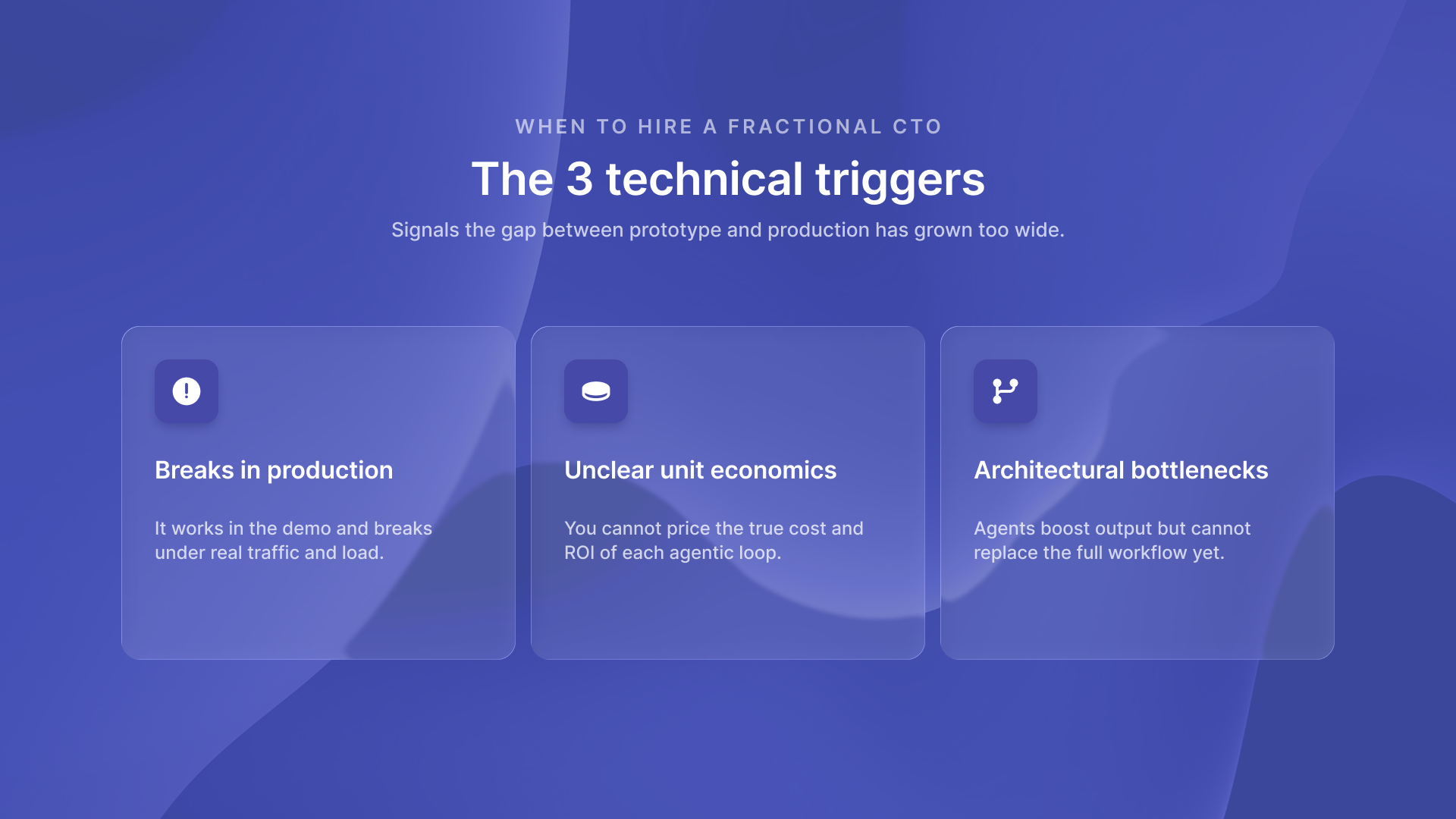
The 3 technical triggers for fractional AI leadership
Failed demo-to-production transitions
Prototypes are easy, but production is hard. If your AI features work in a controlled environment but fail in the wild, you have an architectural gap. A fractional CTO provides the senior oversight needed to build reliability monitoring and state management into your agents. You need a system that performs under pressure rather than just during a pitch.
Unclear unit economics for autonomous agents
If you cannot tell me the exact cost and ROI of every agentic loop in your product, your scaling is dangerous. Senior leadership is required to map out the unit economics of autonomous systems. This ensures you are building a profitable technical asset. Implementing an AI transformation strategy is the only way to ensure these systems remain sustainable as you grow.
Architectural bottlenecks in workflow replacement
When your AI only provides productivity boosts rather than replacing entire workflows, you are hitting a velocity wall. A fractional lead helps you redesign your infrastructure to support true autonomy. Enterprise-grade technical leadership is vital for managing modern AI development complexity. This is according to Arun Chandrasekaran, Distinguished VP Analyst at Gartner.
Why Series B+ startups fall into the architectural trap
- Over-reliance on simple API wrappers without proprietary logic.
- Ignoring latency and reliability issues until they become critical.
- Lack of autonomous testing for core features leading to regression debt.
- Hiring junior talent to solve senior architectural problems.
- Failing to integrate agents into the core business logic.
To avoid these pitfalls, securing high-level technical leadership for startups is often the missing piece of the puzzle.
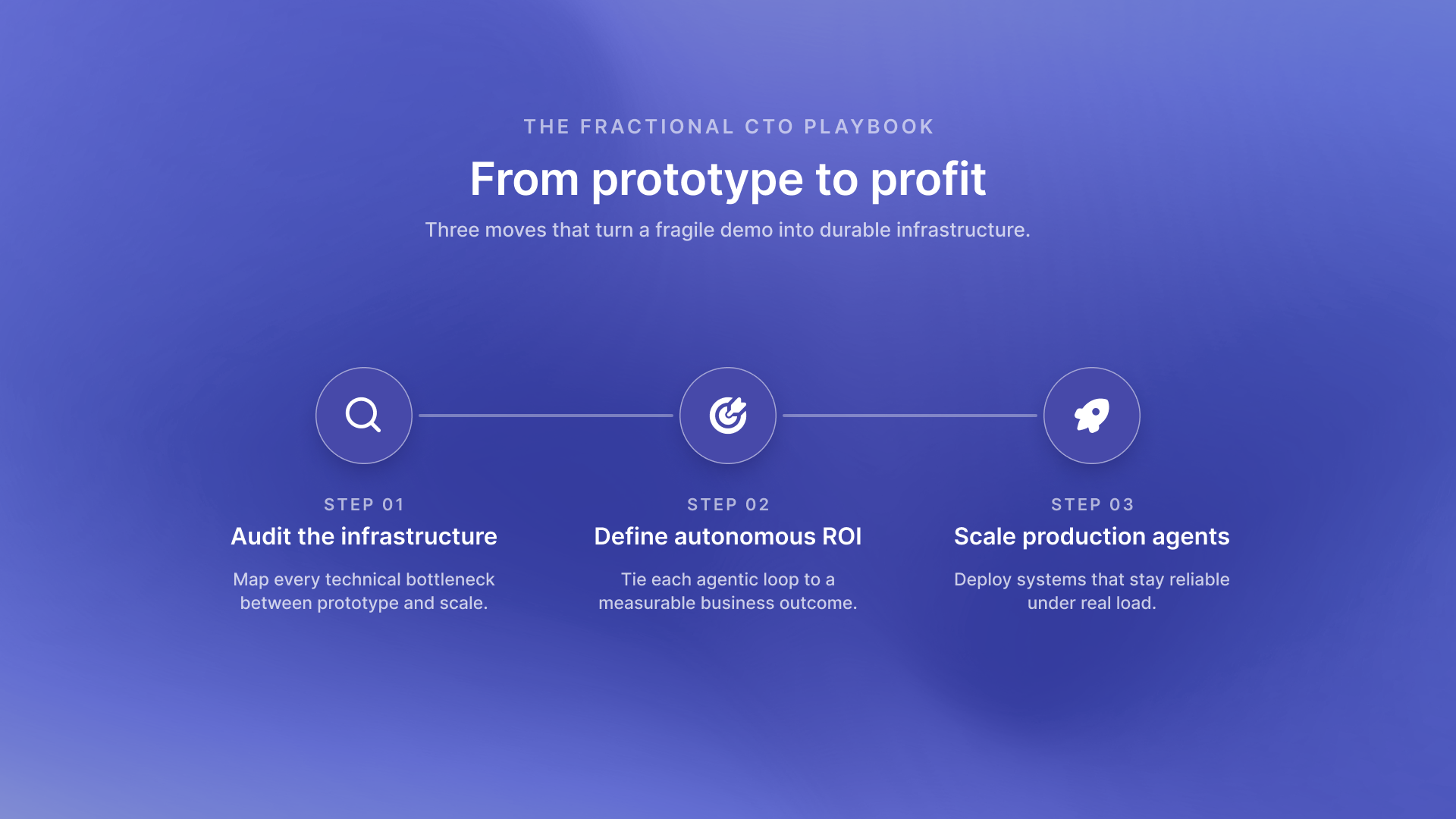
The fractional CTO playbook for AI transition
- Conduct an AI infrastructure audit to identify technical bottlenecks.
- Define autonomous workflow ROI by mapping agentic goals to business value.
- Scale production-ready agents using fractional AI deployment strategies.
Evaluating your readiness
- Does our current AI stack require human intervention for every output?
- Can we measure the profitability of our agentic workflows in real-time?
- Is our QA process automated or is it a manual bottleneck?
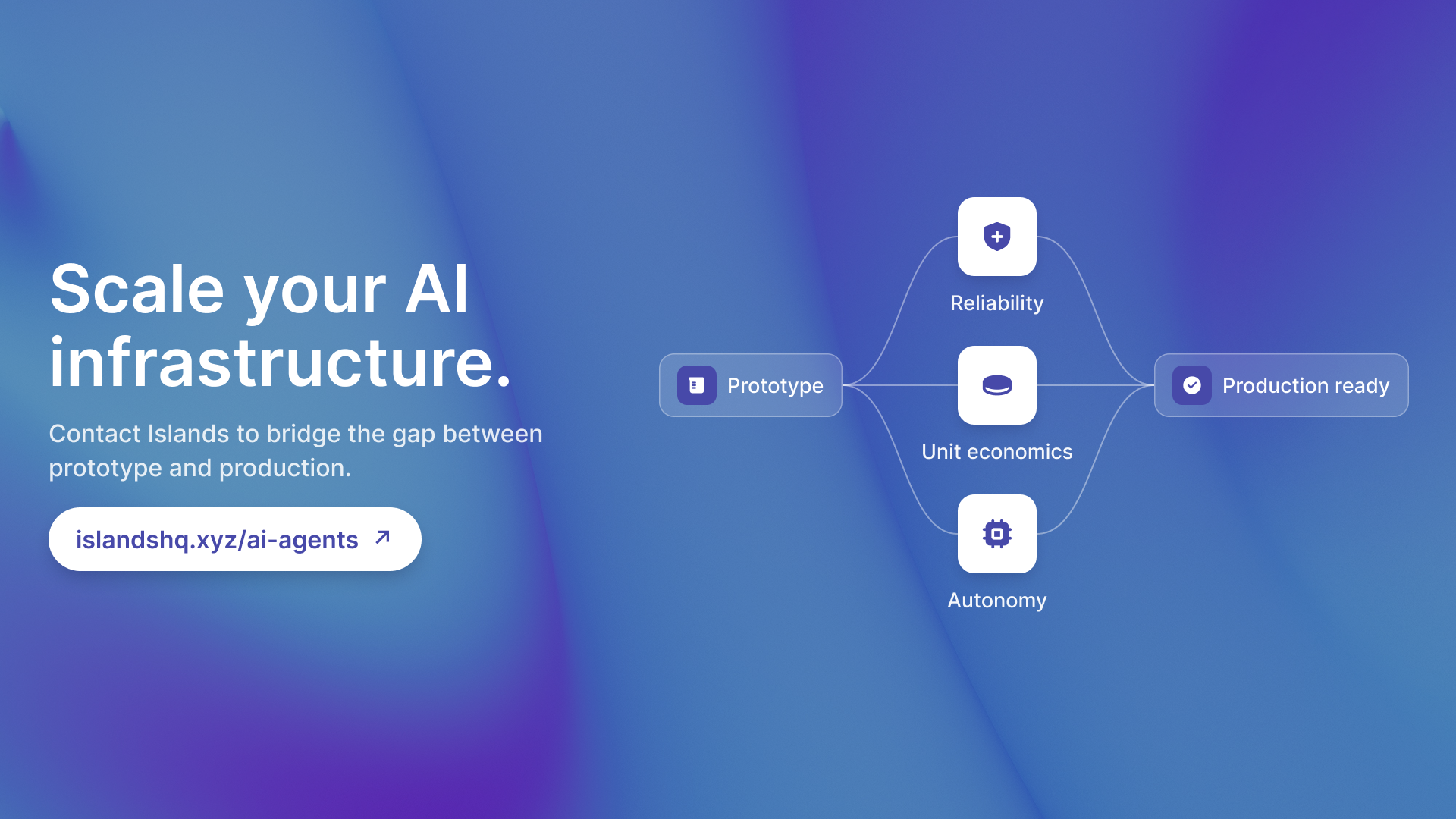
The bottom line: The move to AI agents is an architectural shift, not a feature update. Senior guidance is about building infrastructure that lasts. Build, run, and maintain. Hire a fractional CTO today to bridge the gap between prototype and profit.
Ready to scale your infrastructure? Book a call with Islands today.
Success Stories


.svg)
