- AI agent fleet management helps startups scale beyond isolated AI assistants using a centralized control plane for governance, security, and execution.
- AI agent development requires tiered autonomy, automated guardrails, and audit trails to prevent review bottlenecks and improve reliability.
- Plan-and-execute architectures can reduce per-task costs by up to 90%, while predictive maintenance can reduce unexpected failures by 55%, according to cited sources.
- A four-stage deployment roadmap moves from reasoning loops to autonomous, production-ready agent fleets.
- Centralized agent management enables compute-based scaling, faster workflows, and growth without proportional headcount increases.
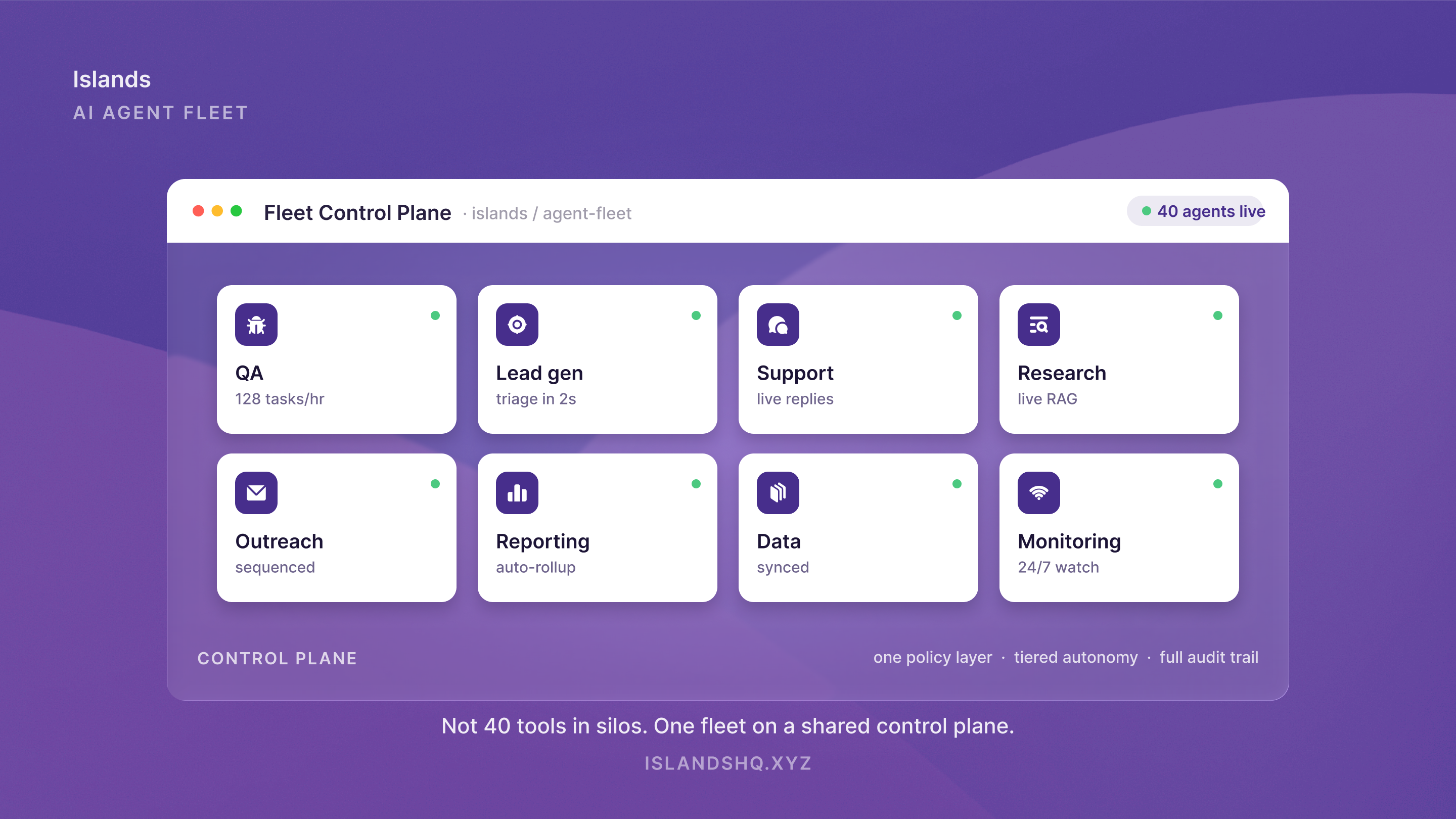
A Series B founder told me he had 40 different AI assistants running in silos. His engineering team was still drowning in manual QA and lead gen triage. He'd built a collection of tools. What he needed was a fleet of workers. High-growth startups do this all the time, rushing to implement LLM wrappers without thinking about long-term architectural debt. Then agent output exceeds human capacity, and the team hits a review collapse. The management tax of checking AI work eats up the productivity gains. A structured approach to AI agent development can reclaim operational sanity. Leadership needs to understand the technical trade-offs between speed and safety, and founders now seek AI coaching to navigate these complexities.
Scaling means moving from simple wrappers to autonomous agentic systems that shift the focus from reactive chat to state management and policy enforcement. That evolution demands a fundamental change in how you view headcount and infrastructure. Build. Run. Maintain.
The architectural trap: why 90% of AI experiments fail to scale
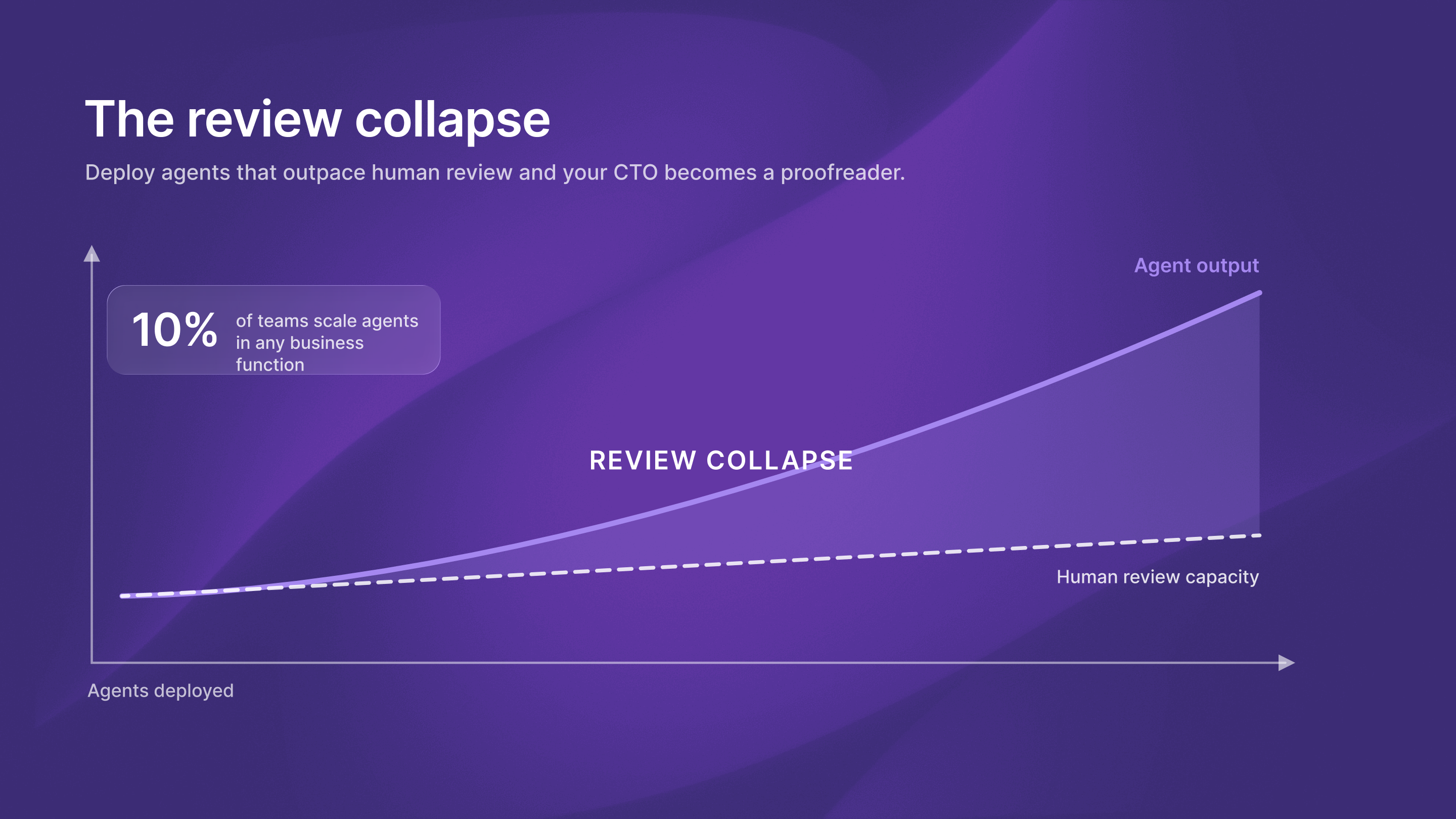
Most startups stall because they design for human-paced output. Deploy agents that can perform thousands of tasks per hour, and traditional human-in-the-loop models become the primary bottleneck. Only 10% of teams report scaling agents in any individual business function;they lack the governance controls to manage autonomous units at scale (Galileo). That calls for deep architectural rewiring to bridge the reliability gap between prototypes and production systems.
The review collapse phenomenon
Review collapse happens when the volume of AI-generated content or code exceeds the engineering team's ability to verify it. Without automated guardrails, the CTO turns into a glorified proofreader. Avoid that by implementing tiered autonomy: agents gated by trust signals. For teams managing financial data, this transition enables autonomous financial guidance and real-time variance detection to protect margins without manual oversight.
From wrappers to agentic AI systems
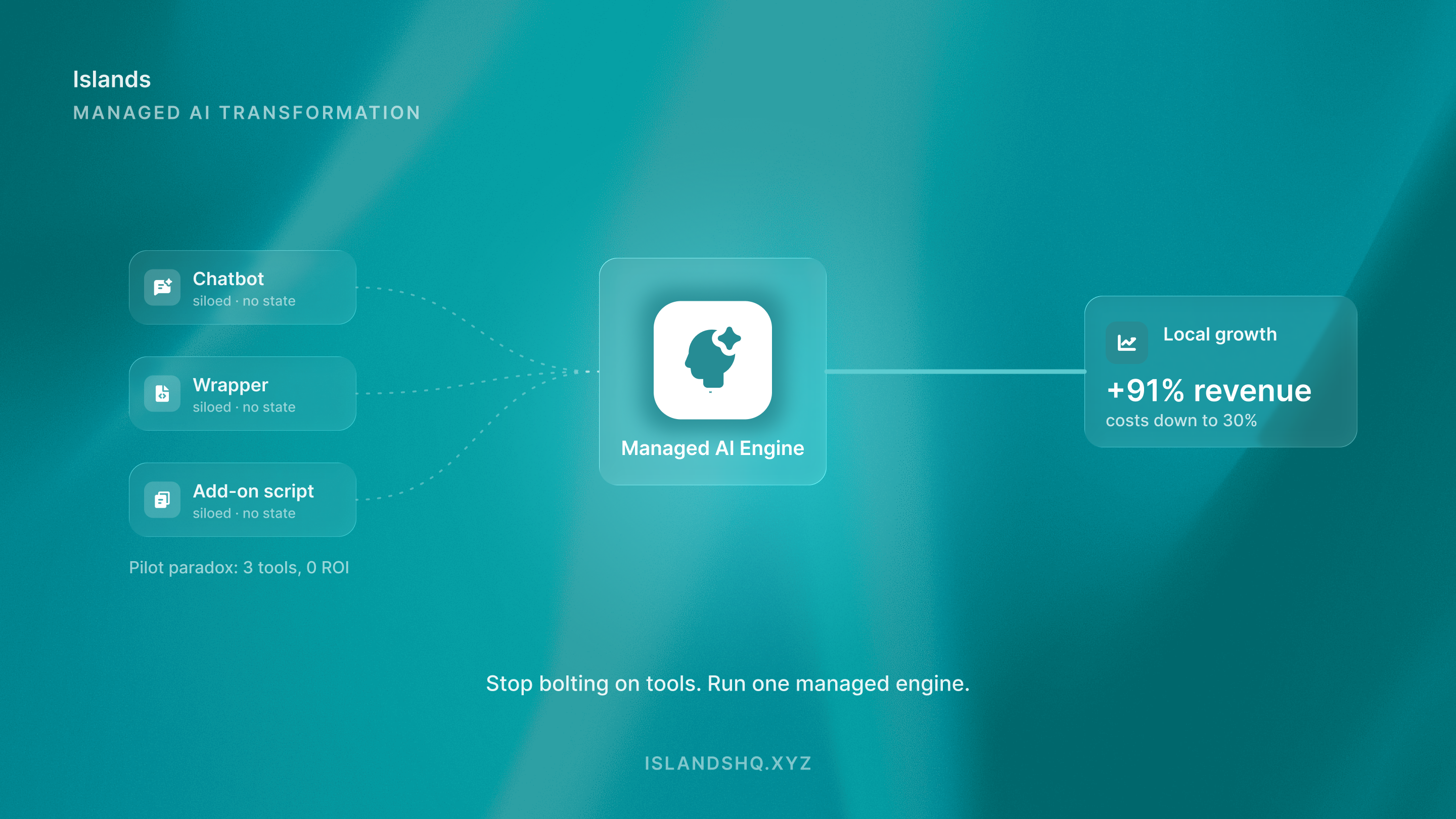
Moving beyond wrappers means building a centralized control plane. That architecture separates policy enforcement from execution logic, letting you update security protocols across your entire fleet instantly. If your agents run on individual configurations, you are managing a mess. High-velocity engineering needs disciplined architectural infrastructure that treats every agent identity as a managed asset.
Comparison of AI implementation approaches
Best practices for AI agent development and deployment
Transitioning to autonomous operations needs a structured approach that ensures reliability while managing costs. A modern startup engineering team should prioritize modularity to avoid lock-in to a single provider. Understanding the technical trade-offs between speed and safety is essential for leadership.
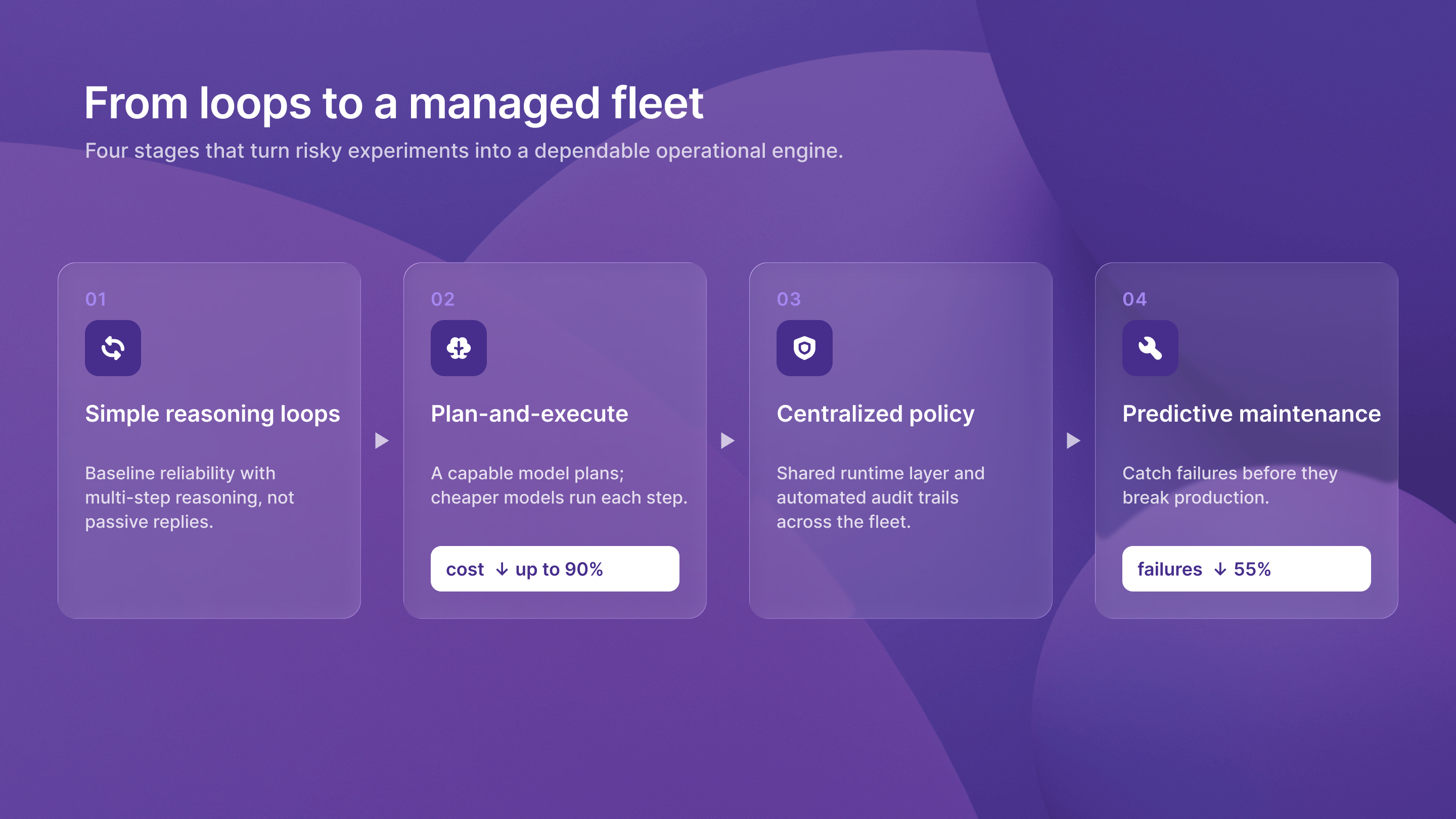
- Stage 1: Simple reasoning loops. Establish baseline reliability for active agentic systems that use multi-step reasoning instead of just passive responses.
- Stage 2: The plan-and-execute pattern. A capable model plans complex tasks;cheaper models execute individual steps. According to Zylos, that can reduce per-task costs by up to 90%. Further optimize it by integrating production-grade RAG pipelines to ensure agents work with accurate, live data.
- Stage 3: Centralized policy enforcement. Standardize operations using a shared runtime layer and automated audit trails. For organizations with high-volume back-office needs, that means transitioning to autonomous reporting to eliminate information lags.
- Stage 4: Predictive maintenance. Managed agent fleet operations cut unexpected failures by 55% (Fastio). Predictive maintenance transforms AI from a risky experiment into a dependable operational engine.
Building for reliability
Reliability is the biggest objection to autonomy. Yet it's often a symptom of fragmented development. Teams succeed when they invest in shared infrastructure and reusable agentic workflows instead of building isolated, non-reusable systems for every new initiative. You want a non-dilutive engine, not a series of one-off scripts.
Operational velocity: human-led vs. agent-augmented teams
Strategic deployment of agent fleets lets founders maintain growth velocity without the overhead of massive headcount. To avoid the management tax that stalls Series B growth, companies must transition from simple human-in-the-loop assistants to autonomous agentic workflows that handle execution independently.
- Linear hiring gets replaced by compute-based scaling for repetitive tasks.
- Blast-radius limits prevent a single compromised agent from impacting the entire database.
- Audit trails give 100% transparency into autonomous decision-making processes.
- Response times shrink from days to seconds in lead generation and customer triage.
- State management keeps context across multi-day tasks.
Real-world deployment: lessons from QA modernization
The clearest success I've seen is in the testing space. Traditional script-based automation creates a maintenance debt that eventually stalls development. Shift to intent-based testing systems and startups scale their validation efforts without increasing headcount.
These autonomous QA agents act as a specialized fleet within the engineering organization. They provide a continuous reliability signal that lets the rest of the team ship faster. The goal: build a non-dilutive engine that scales with compute, not headcount.
Roadmap: how to deploy your first fleet
- Audit your current AI stack: identify isolated assistants and prompt-heavy wrappers.
- Implement a plan-and-execute architecture to decouple reasoning from high-volume execution.
- Deploy a centralized control plane to manage agent identities and permission boundaries.
- Establish shadow-mode gates where agents must reach 85% agreement with human experts before full autonomy (Augment).
The bottom line
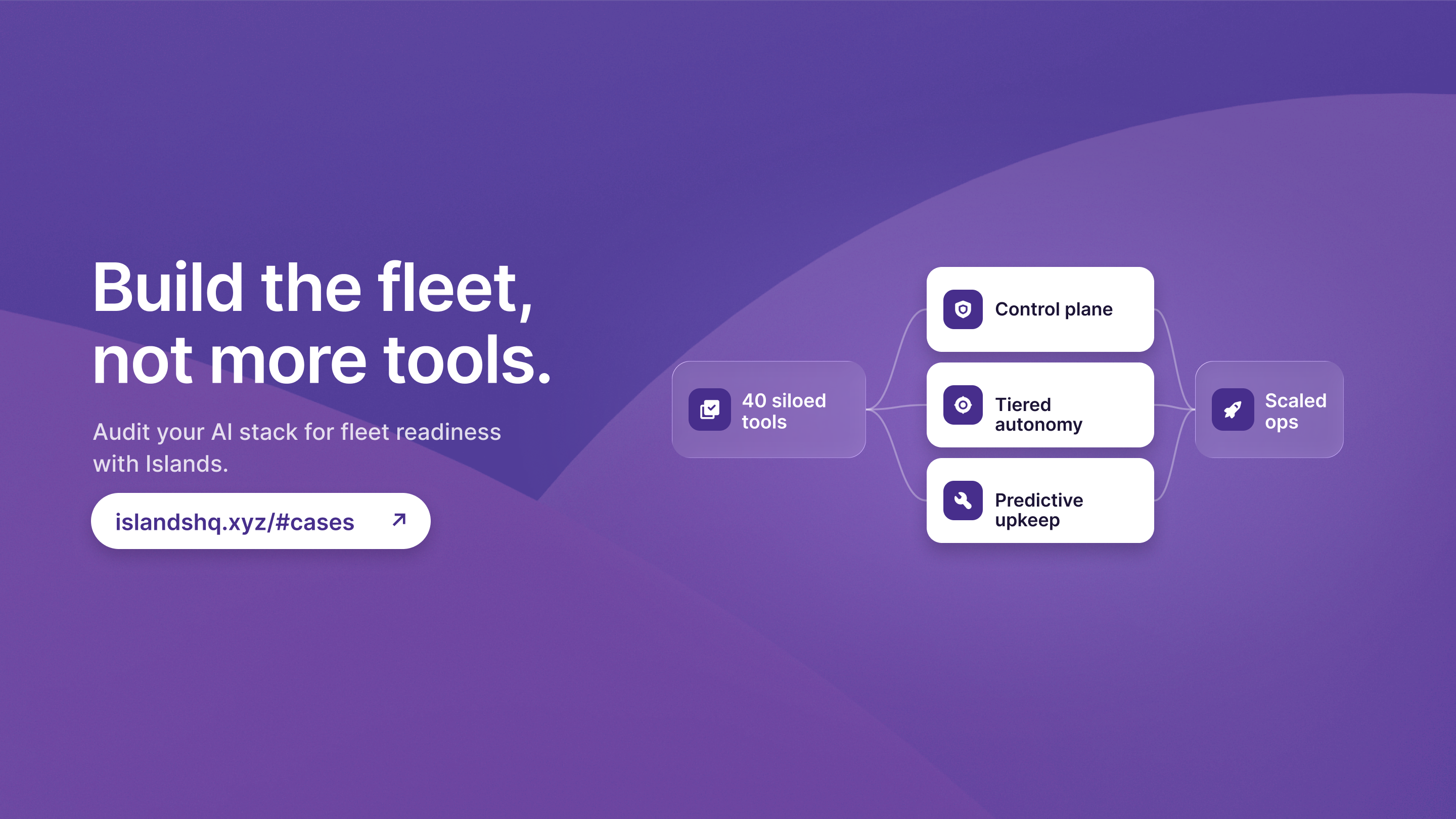
Scaling a startup demands a shift in how you view headcount. Don't just build assistants: build infrastructure. Build. Run. Maintain. If you want to audit your current AI stack for fleet readiness, reach out for a technical review by booking a call with Islands today.
Success Stories
Read more