How we turned Hometown’s blog into an AI-citation engine
Hometown had a blog, but it read as a list of disconnected posts and AI search rarely picked it up. In 90 days Islands rebuilt it into a linked content network that Google and AI engines now cite across ticketing, school activities and fundraising.

42.5%
Of 80 buyer questions now cite Hometown in AI answers
9 → 97
Internal links across the blog, built from scratch in 90 days
+44%
Ranking keywords, up from 670 to 963
TL;DR
Hometown’s blog was a static archive of disconnected posts, and it was close to invisible in AI search.
Over 90 days you got an AI-first content engine: 21+ posts at a four-per-week cadence, a blog wired into a linked network (9 to 97 internal links), and a technical cleanup that lifted indexing to 92.6%.
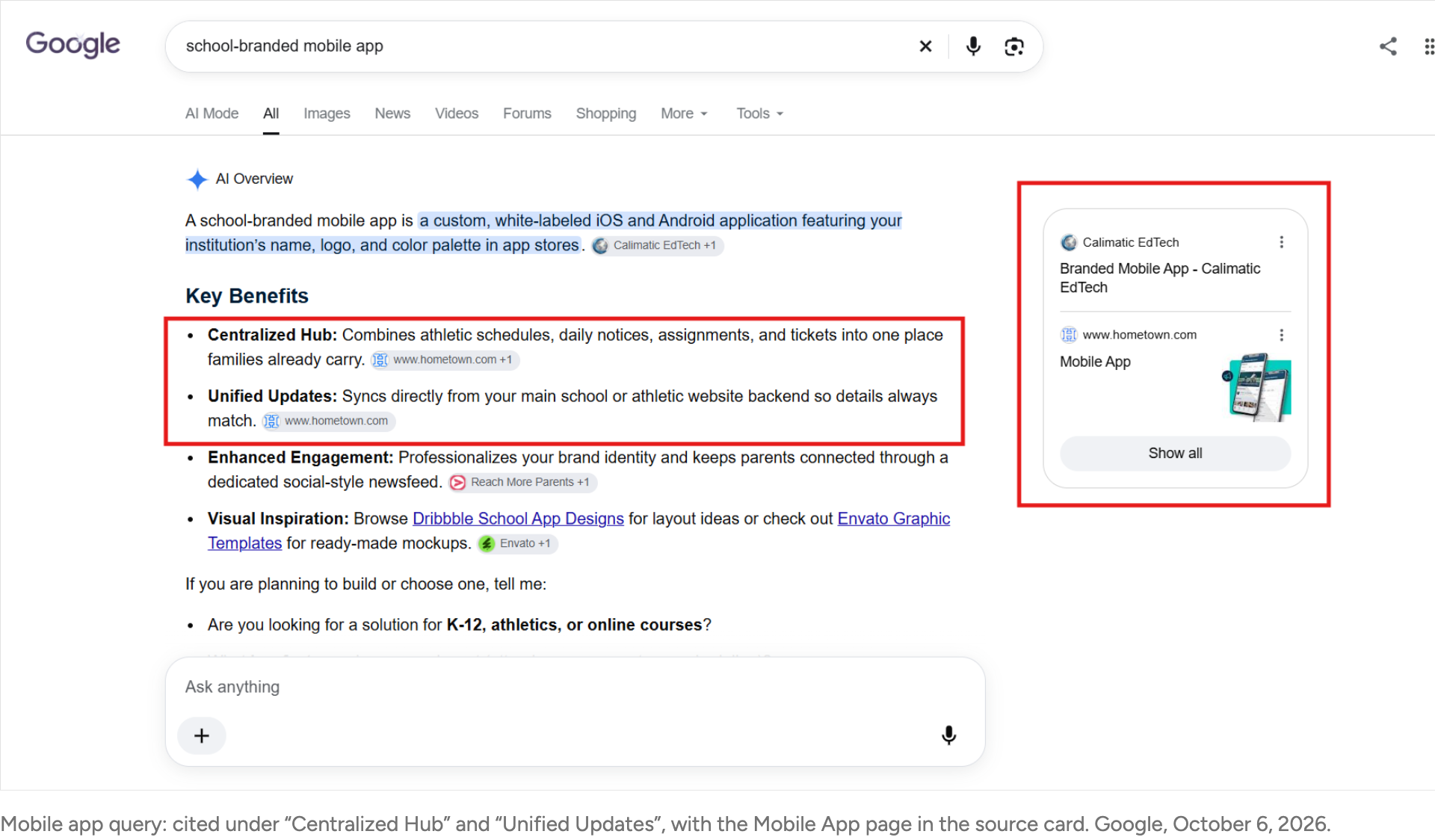
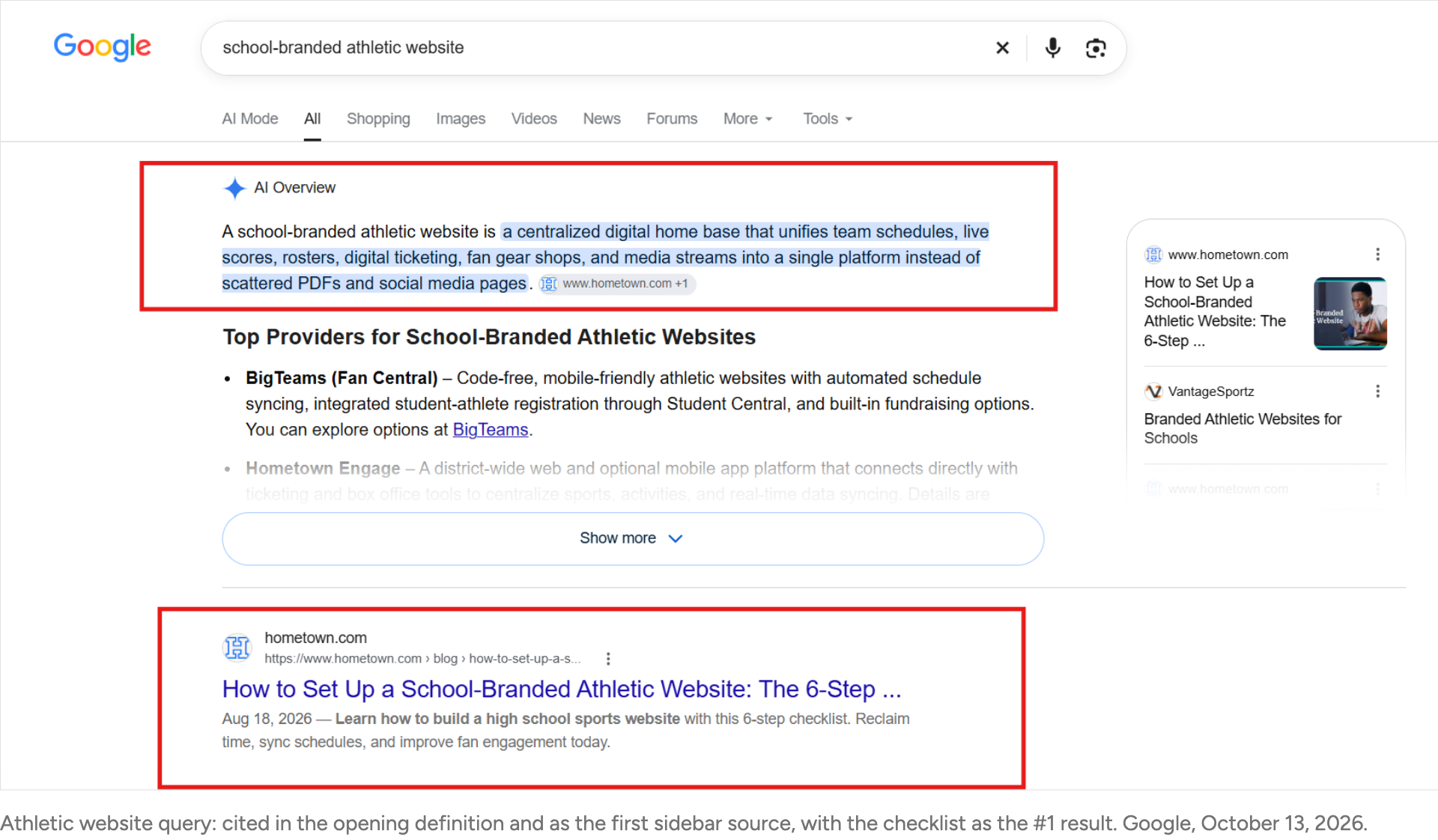
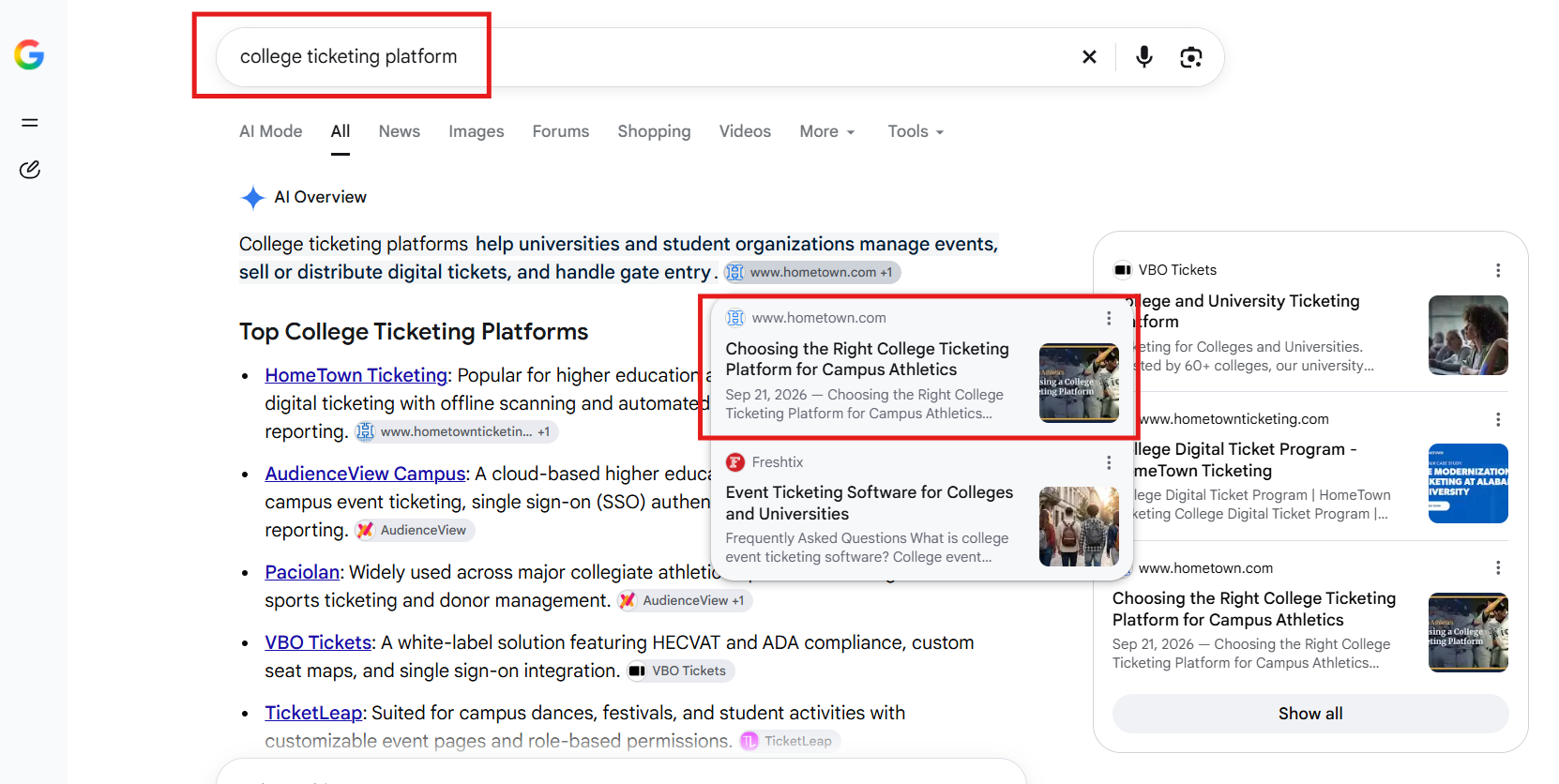
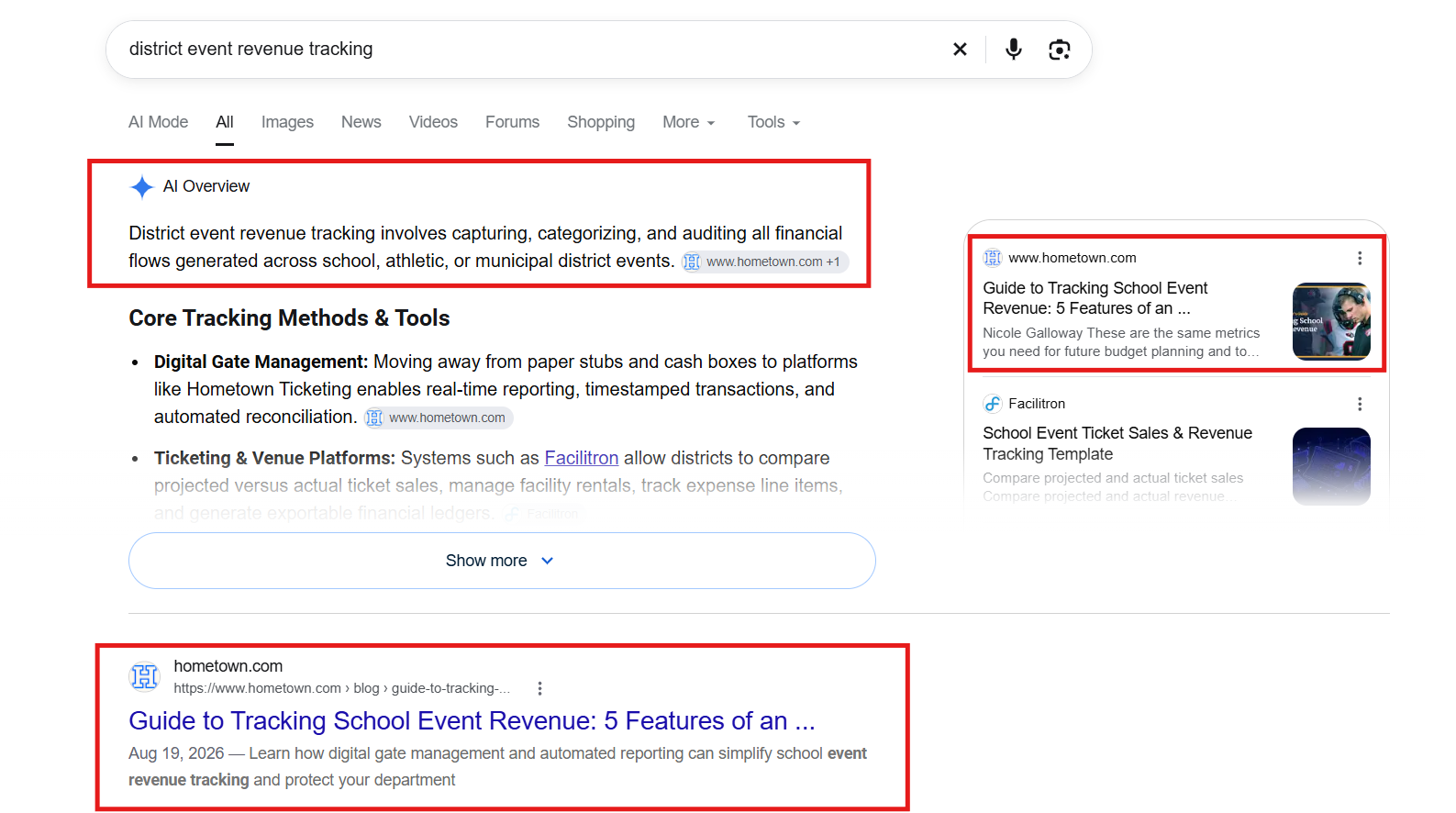
AI answer engines now cite Hometown far more often. 34 of 80 buyer questions cite it, nearly double the start, with Google AI Overviews up from 8 to 16 and Gemini from 17 to 31.
Hometown (hometown.com) runs ticketing, school activities and fundraising for K-12 and college programs across three product lines: Box Office, Engage and Schoolfundr. Islands took over content in late July 2026 and onboarded on September 14 with a single brief: make the blog work for AI search, not just for a human skimming an archive.
By Week 9 the blog had moved from a list of articles to a content network that both Google and AI engines read as an authority on school event software.
A blog that existed, but wasn’t working for search or AI
1. A blog that wasn’t a network
9 internal links across the entire blog. Posts sat as a disconnected list, with no topical authority for Google or AI engines to follow.
2. Thin AI visibility
Across 80 buyer questions, Hometown was cited in far fewer AI answers than today, and product lines like Engage barely surfaced at all.
3. Indexing gaps and a domain conflict
Pages were missing from Google’s index, and hometownticketing.com was competing with hometown.com for authority on the same terms.
Three moves, in the order the results needed
1. An AI-first content engine across three product lines
You got 21+ posts and a four-per-week cadence, each one mapped to a real buyer question across Box Office, Engage and Schoolfundr, so the blog answers what prospects actually ask AI.
2. A blog rebuilt into a linked network
Internal links went from 9 to 97, with 16 added in a single week at the peak. Posts now cluster by product line and point to pillar pages, which is what hands Google and AI engines a topical authority to follow. Full map below.
3. A technical cleanup that got pages indexed
6 URLs were excluded from Google’s index. You got a full technical audit to find the root cause, and the migration onto one domain consolidated authority. Indexing rose from 44 to 64 pages, a 92.6% rate.
Proof it’s working
We turned a list of posts into a link network
Internal linking, or sublinking, is the clearest win in the data. We built the structure from scratch: 9 links at the start, 97 by Week 9, and 127 today as the program keeps publishing. Of 189 posts, 82 are now woven into the network (43.4%), anchored by a handful of hub articles the rest point to. That structure is what Google and AI engines follow to decide what a site is an authority on.
External backlinks
Hometown was part of a 21-backlink commitment across 11 brands in August 2026. The internal network above is the win we can show from the data in hand.
What we wrote, and how fast it showed up
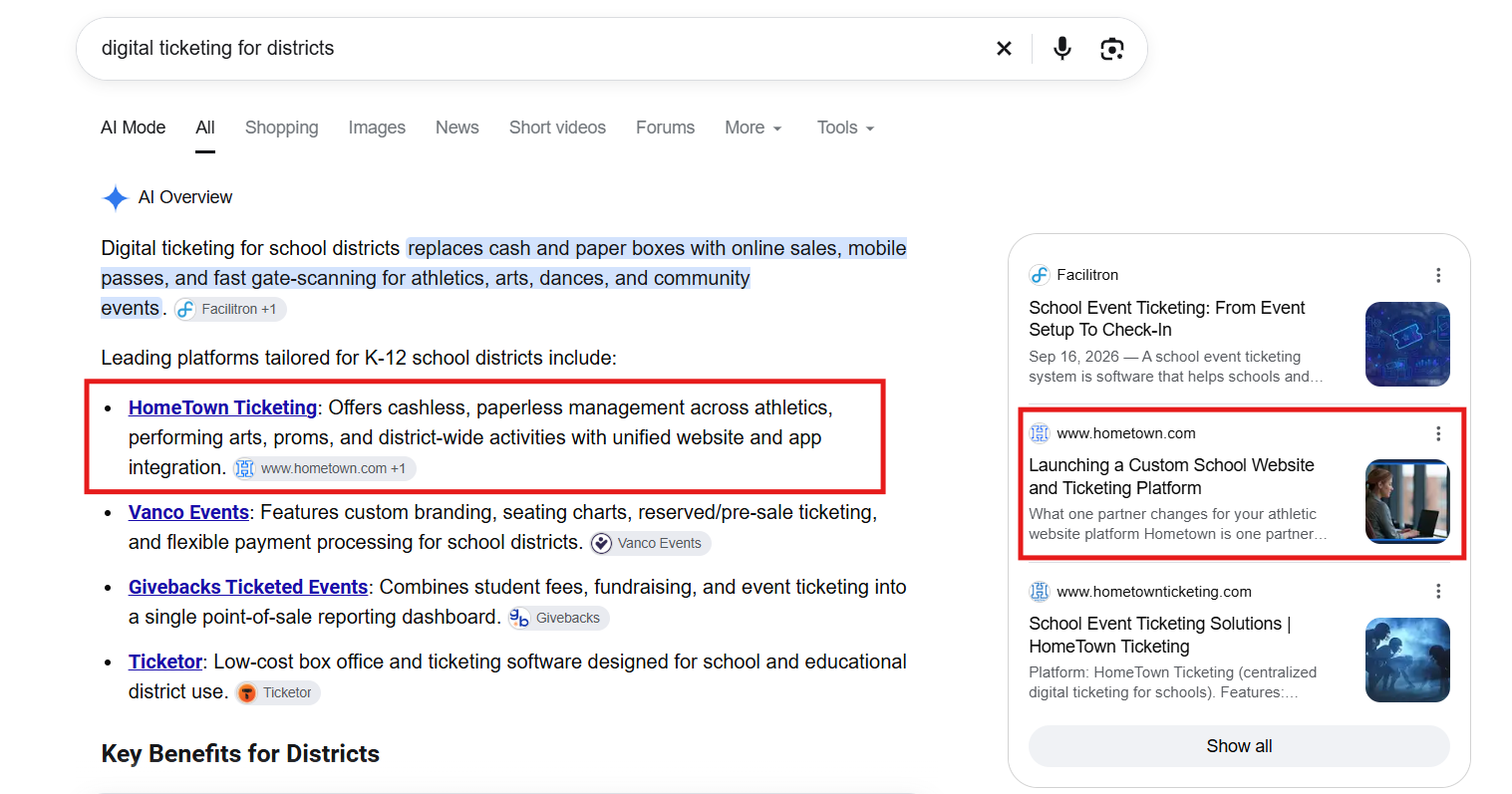
21+ posts went live by late October, moving to a four-per-week cadence. Some were indexed within days. The post now cited in Google’s AI Overview for “digital ticketing for districts” went live in late October and now appears in that answer.
+13 more published before Oct 28 · 21 total by Oct 20
How we got Hometown’s pages indexed
6 URLs were excluded from Google’s index, flagged in Week 3. We ran a full technical audit by September 29 to find the root cause.
The structural fix was consolidating onto one domain: hometownticketing.com now permanently redirects to hometown.com with 301s, which concentrates authority where the content lives.
Indexing rose from 44 to 64 pages, a 92.6% rate by Week 9, while the program kept publishing.
90 days, start to Week 9
Search
Engagement
AI citations
Metrics measured from onboarding (Sep 14, 2026) through Week 9 (Oct 27, 2026).
Ready to grow your revenue? We build the same content engine for brands ready to own their category in search and AI. Explore our AI content engine.
AI search content, answered
How do you get cited by ChatGPT?
Publish content that answers the exact questions buyers ask, wire it into an internal link network so engines can follow your topical authority, and fix indexing so pages are eligible. Over 90 days Hometown’s ChatGPT citations rose from 7 to 12.
How do you get cited in Google’s AI Overview?
Give each buyer question a clear, extractable answer, then back it with internal links and clean indexing so Google trusts the page. Hometown’s AI Overview citations went from 8 to 16, and it now surfaces for queries like “digital ticketing for districts.”
How do you get your company cited by AI?
Treat content as a system: map real buyer questions, build a linked content network, and track citations across every engine. Hometown is now cited in 34 of 80 tracked buyer questions (42.5%), nearly double the start.
How long does AI-first content take to get cited?
Some posts index within days. Across 90 days Hometown reached a 92.6% indexing rate, and its content now appears in AI answers across multiple buyer queries. See the Islands blog.
What is sublinking, and why does it matter for AI search?
Sublinking is internal linking that connects related posts into clusters pointing at pillar pages. It gives search and AI engines a topical authority to follow. Hometown went from 9 to 97 internal links in 90 days.

Read more