.svg)
What are agentic AI systems? Defining the next Era of autonomy

I recently watched a Series B founder walk through their AI strategy: they had purchased a few ChatGPT seats and called it a day. Passive chatbots are insufficient for a modern digital strategy. The industry is moving toward active execution, requiring GrowTal and systems that replace traditional frameworks. Establishing a clear agentic AI definition is the first step in understanding how these systems differ from standard assistants.
Establishing an agentic AI definition
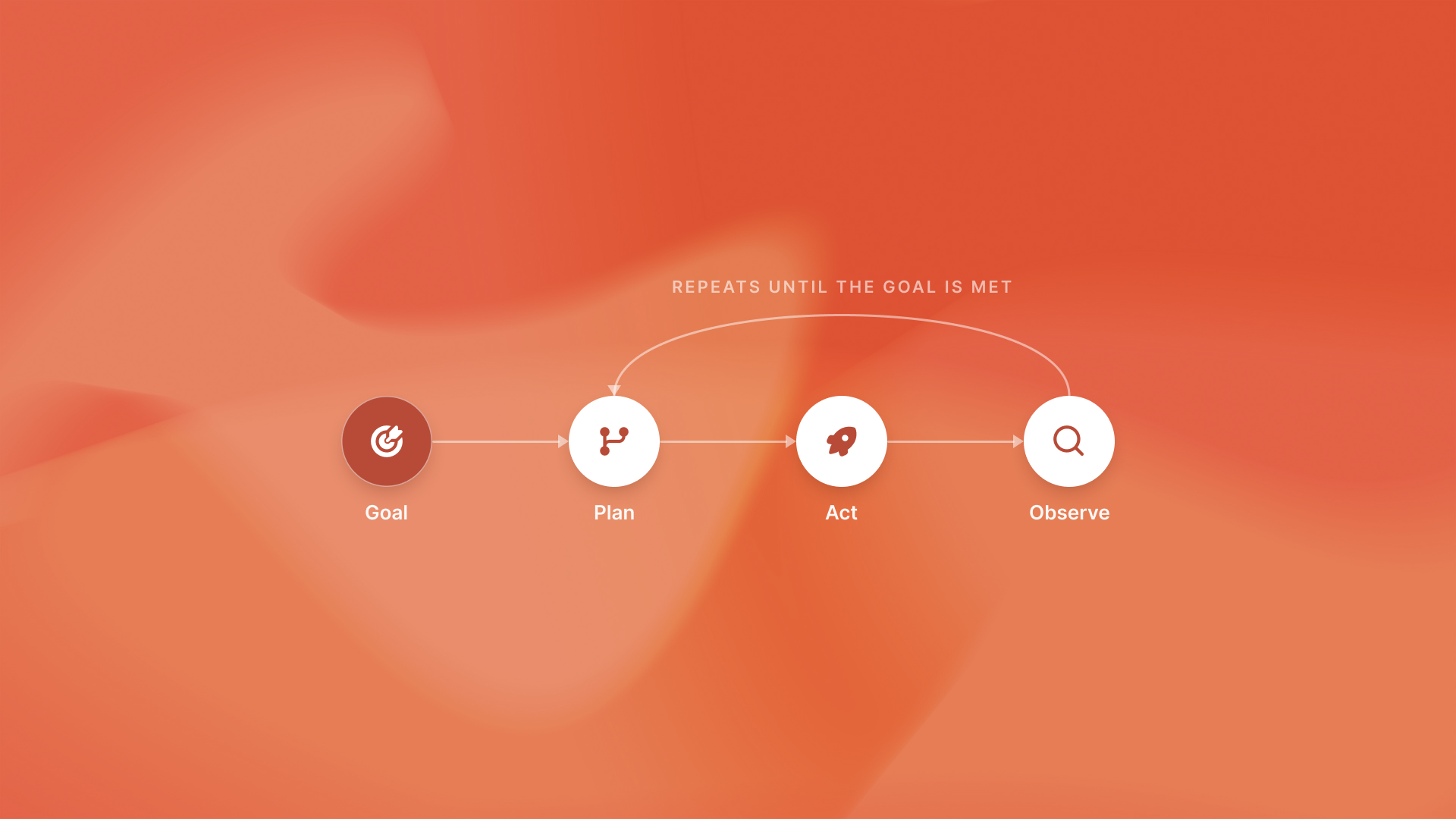
A passive assistant waits for a question. An active agent receives a goal. It determines the steps required to achieve that goal, acting as a team member rather than a tool. Agents navigate external data sources, interpret information, and act without manual prompting. The transition from simple chat to complex action is accelerating as organizations shift toward GrowTal. Most executives confuse automated with agentic. The difference is the reasoning engine.
The distinction was drawn with unusual precision in 1960. J. C. R. Licklider, who later funded the research programme that produced the internet, defined the aim of man-computer symbiosis as getting machines to:
"...facilitate formulative thinking as they now facilitate the solution of formulated problems."
J. C. R. Licklider — "Man-Computer Symbiosis," IRE Transactions on Human Factors in Electronics, March 1960
The role of autonomy in execution
True autonomy requires an architectural shift. You cannot bolt autonomy onto a chatbot. Agentic systems require a reasoning engine that can plan and execute multi-step workflows. This method works well in production, but data shows a large gap in enterprise autonomy. Many systems still rely on perception-only architectures. Development of autonomous AI systems allows for continuous operations without constant human oversight. Developers often look to an openclaw AI agent to handle these complex browser-based tasks.
Build. Run. Maintain.
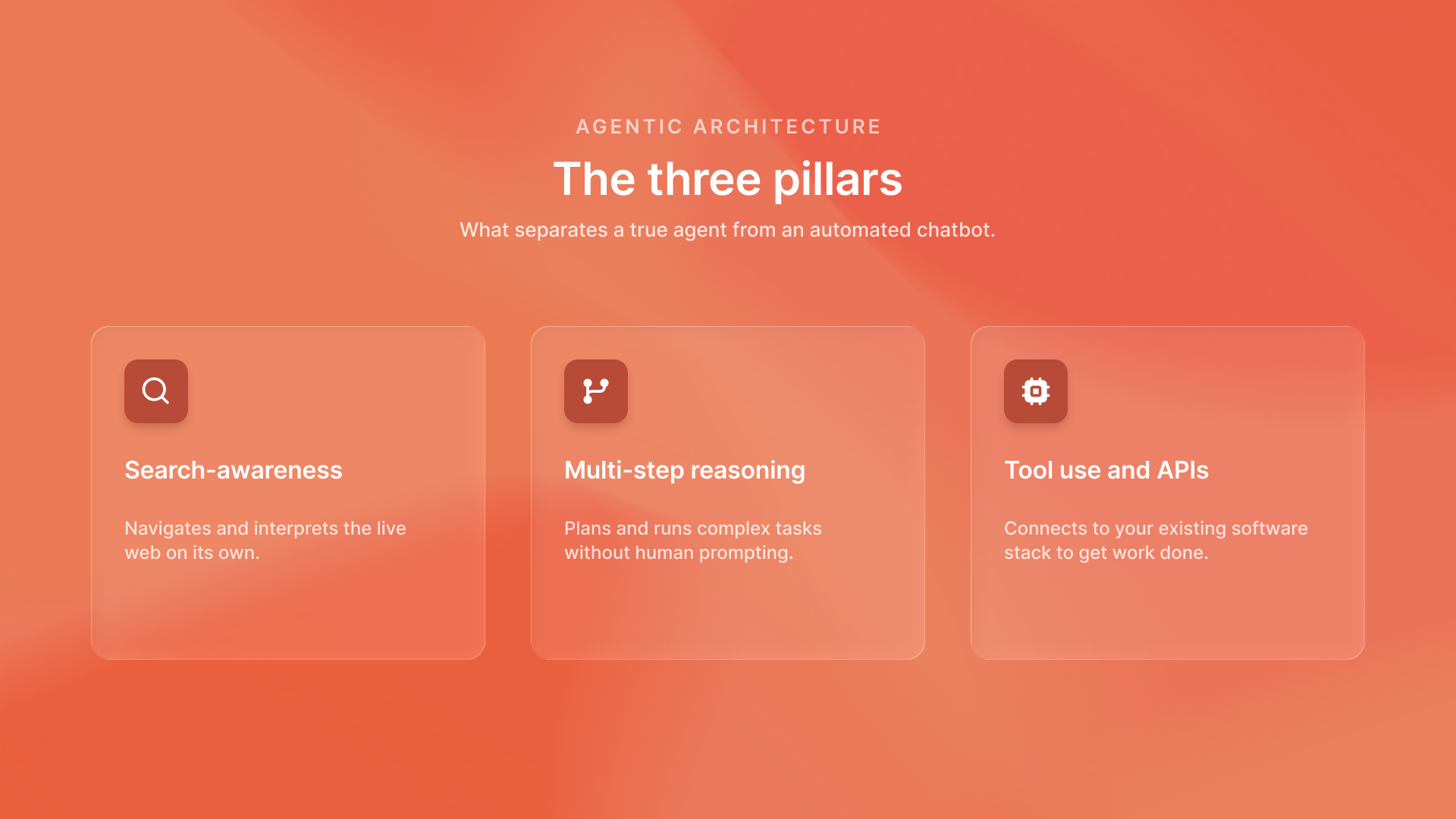
The three pillars of agentic architecture
- Search-awareness: The ability to navigate and interpret the live web independently.
- Multi-step reasoning: Planning and executing complex tasks without human intervention.
- Tool use and API integration: Interacting with your existing software stack to complete work.
Why search-aware frameworks matter
Modern frameworks represent a fundamental transition in software development. These systems are search-aware, meaning they are not limited by training data. They retrieve real-time information to inform their actions. Industry analysis shows demand for SEO is higher than ever. Visibility now requires feeding these active engines. Staying updated on agentic AI news is essential for maintaining a competitive edge in this evolving landscape.
Building for autonomy secures long-term ROI. If your AI cannot interact with the world, it functions as an expensive encyclopedia. Digital strategy now requires a shift toward these autonomous, search-aware systems (DesignRevision). You need systems that act on your behalf as core infrastructure.
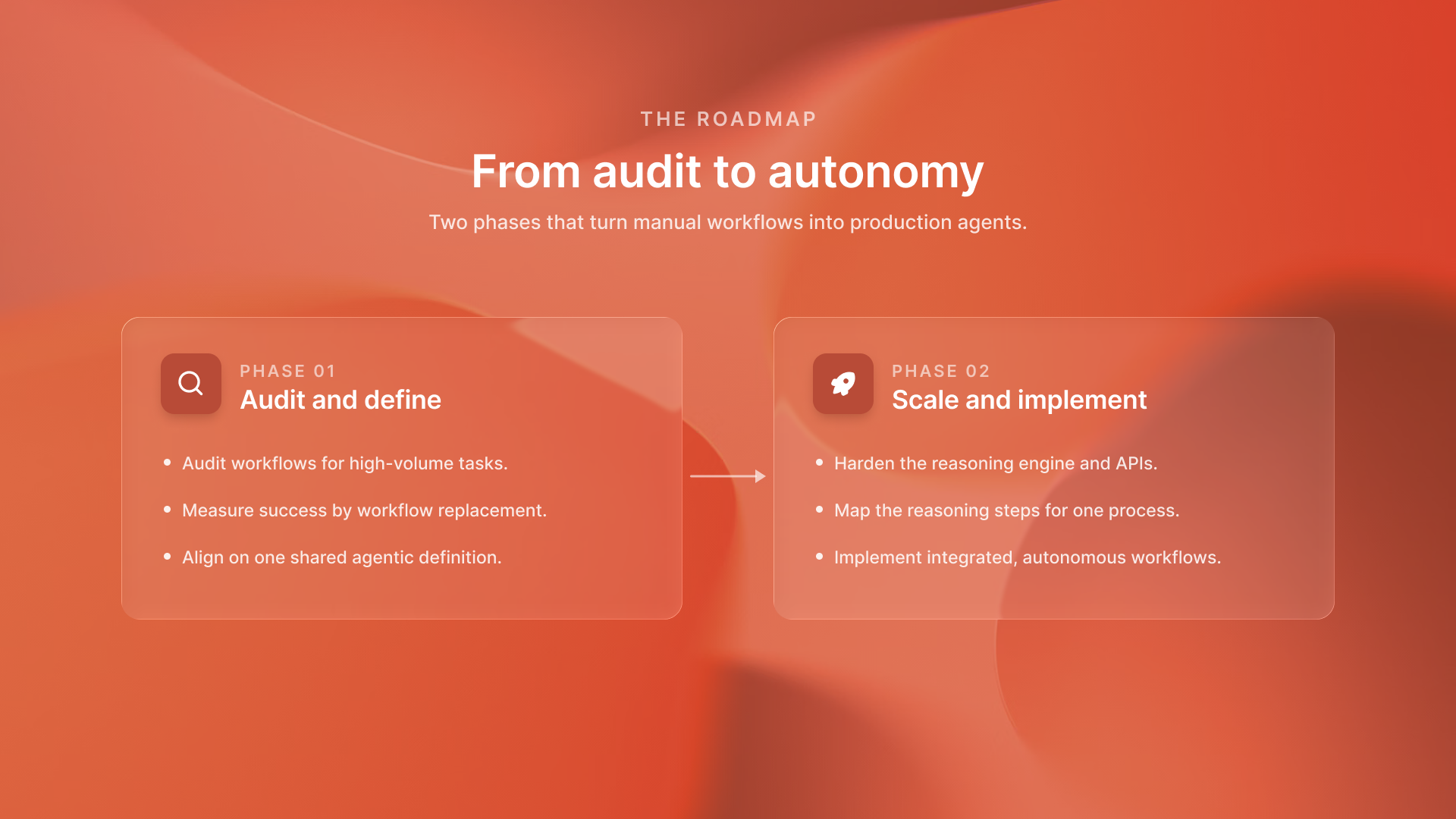
The roadmap to production-ready autonomy
Audit and define
Audit your workflows to identify high-volume tasks suitable for autonomous generation. Define success metrics based on workflow replacement rather than chat volume. Everyone should agree on the same agentic AI definition before starting development.
Scale and implement
Scale from demo to production by hardening the reasoning engine and API integrations. Identify one manual process in your engineering or marketing stack that takes several steps. Then map the reasoning steps an agent would need to finish the task. Implement integrated AI workflows to reduce operational overhead while preserving strategic judgment.
The bottom line
Building for autonomy is the only way to secure long-term ROI in a search-aware digital economy. To maximize your output, move beyond passive chatbots and build the infrastructure of the future.
Ready to transform your operations? Book a call with Islands to start building your autonomous agent strategy today.
.png)
Success Stories


.svg)
