.svg)
Visual AI for marketing: why most CMOs are buying the wrong architecture

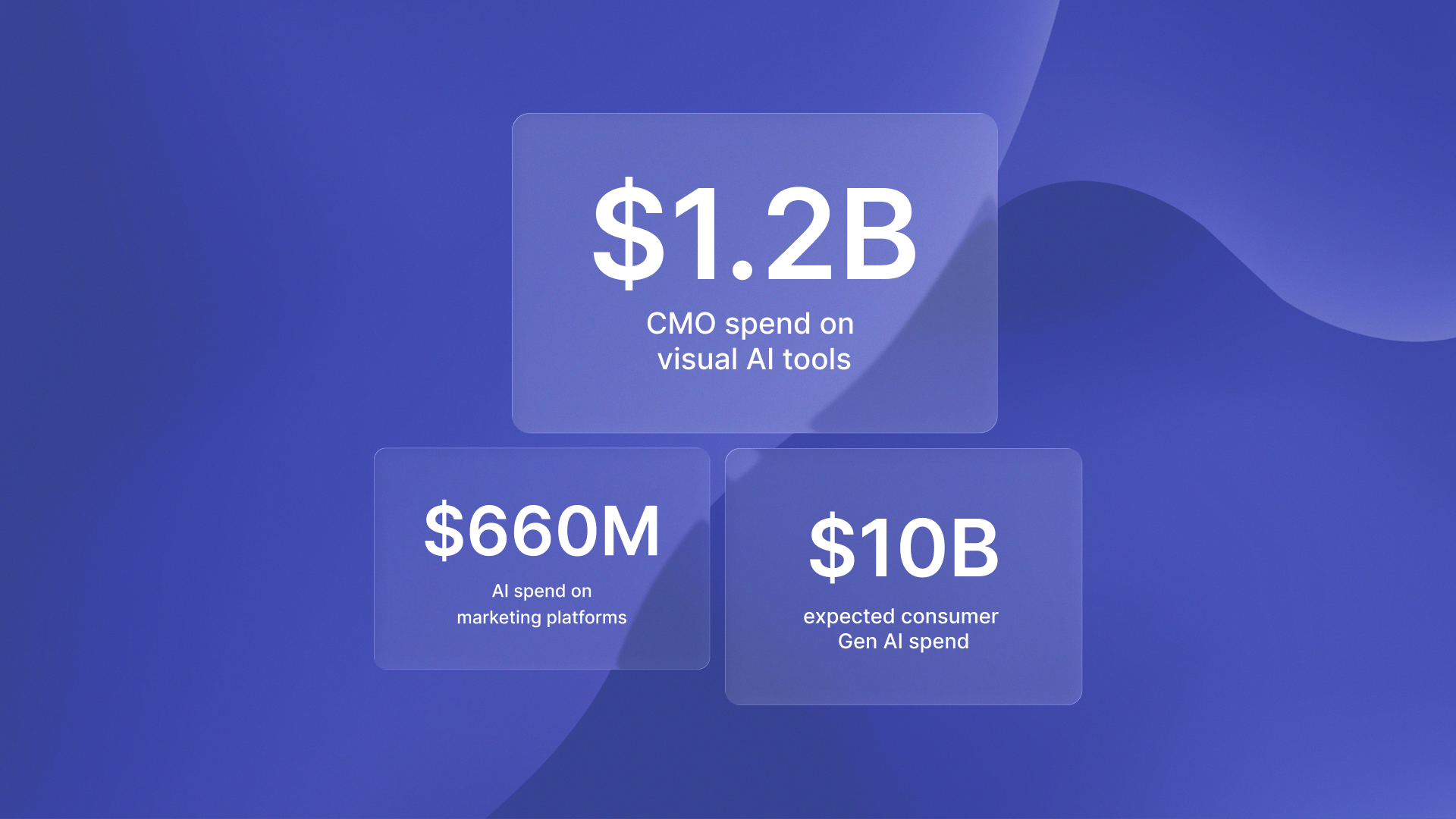
Marketing teams will spend $1.2 billion on visual AI tools in 2026. But most CMOs are buying the wrong setup for their real workflows. Consumer spending on Gen AI apps is expected to exceed $10 billion in 2026. This would make it one of the top-earning mobile categories. (Sensor Tower via Visual Capitalist, 2026). But there's a problem: most visual AI tools still can't reliably execute specific creative briefs in production.
The decision facing CMOs isn't about which tool generates prettier images. It is about understanding the main design differences between artist-focused generators, photorealistic engines, and open-source platforms. This helps you decide whether to build or buy for autonomous content workflows. Marketing platforms reached $660 million in enterprise AI spend in 2025. Source: Menlo Ventures, State of Enterprise AI 2025.Yet most tools are productivity assistants for designers. They improve workflows instead of replacing designers with autonomous agents.
The critical capability shift: from aesthetics to compositional reasoning
For images, the focus has shifted from pure aesthetics to compositional reasoning. The new frontier is models that correctly interpret prompts like "blue bench left of green car" (Pluralsight AI Models 2026 Report). This represents the difference between tools that generate pretty images and systems that execute specific creative briefs reliably.
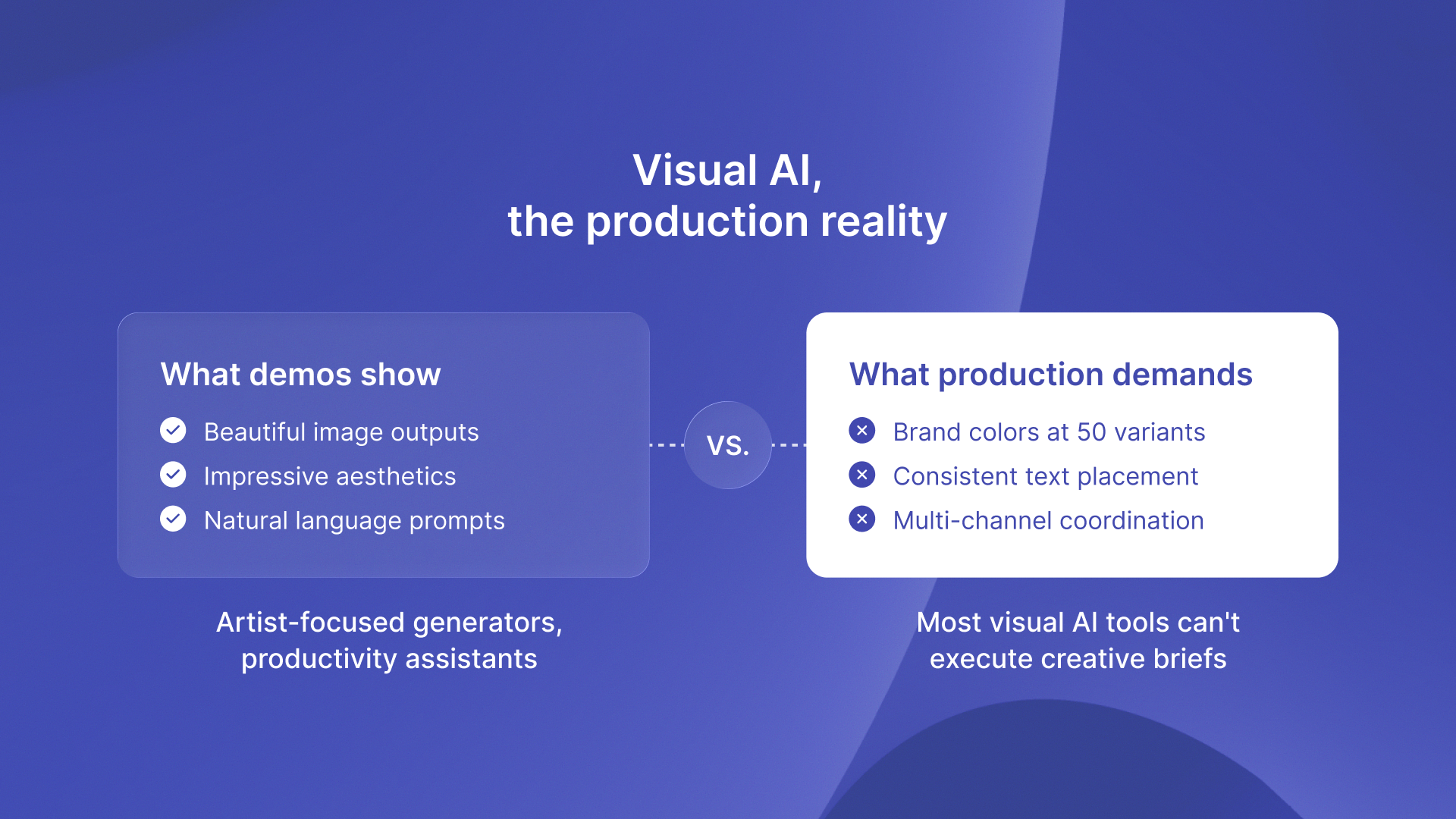
Most visual AI tools fail this test. They produce beautiful outputs but can't consistently follow spatial relationships, brand guidelines, or multi-element compositions. That's fine for inspiration boards but catastrophic for production workflows where campaign assets must match exact specifications. The compositional reasoning gap means you're still paying designers to iterate outputs until they match requirements.
Three architectures serve three different use cases
Midjourney optimizes for artistic expression and creative exploration. It's artist-focused, excellent for mood boards and conceptual work, but struggles with precise brand consistency. Imagen 4 delivers photorealistic outputs for brand campaigns, prioritizing accuracy over artistic interpretation. Stable Diffusion supports custom training for brand assets using its open-source design. It offers more control, but it adds technical complexity.
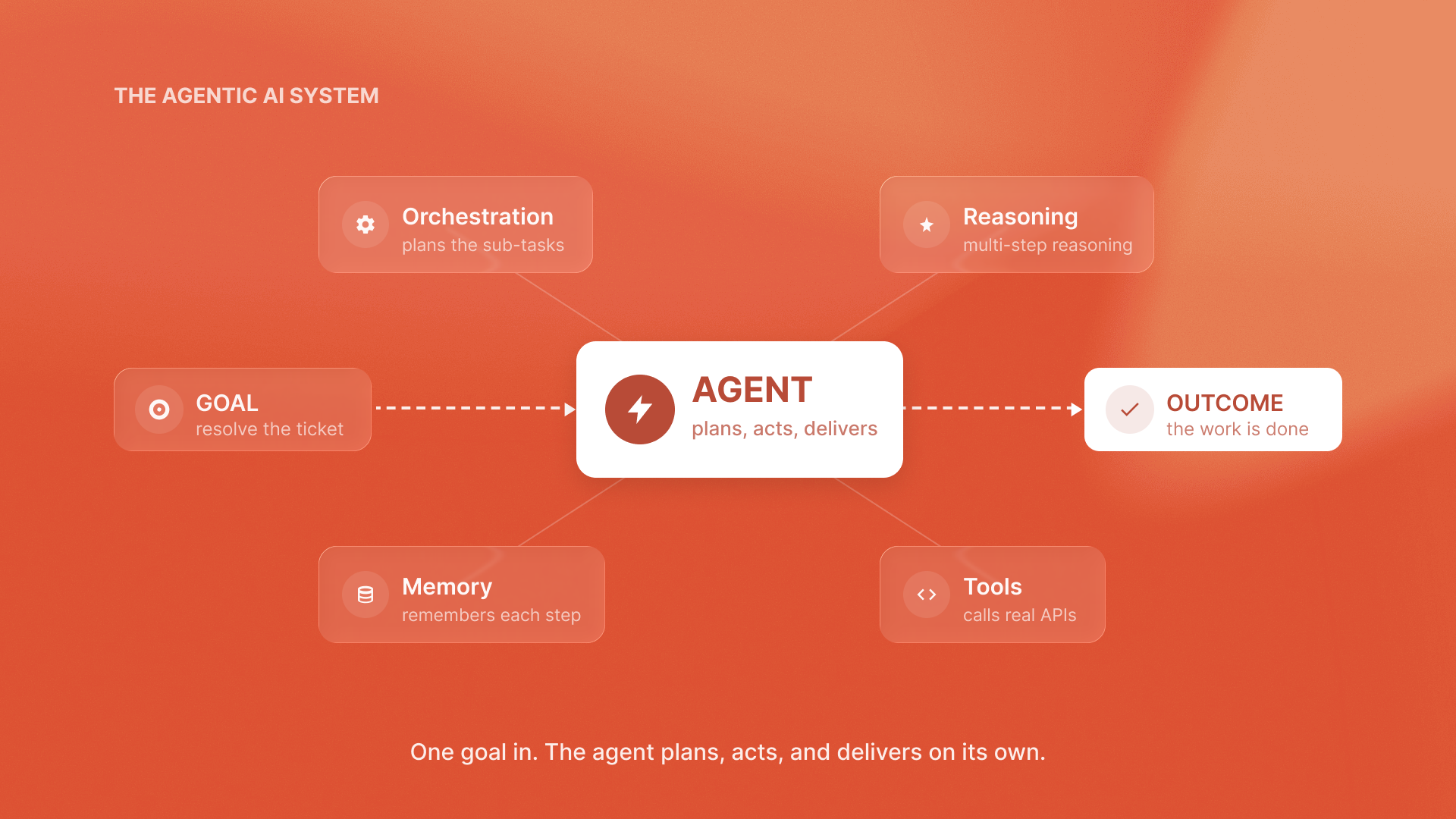
The architecture choice determines whether you're building an assistant that enhances designer productivity or an agent that autonomously executes campaign workflows. Assistants enhance productivity. Agents replace workflows. Most CMOs don’t realize they pay premium prices for assistants. Their content volume and brand consistency needs require agents.
Build vs Buy requires understanding production deployment costs
Marketing platforms are the fastest-growing enterprise AI spend category. Spending will reach $660 million in 2025. But demos can hide the real costs of deploying to production. Real marketing workflows demand batch processing, brand guideline enforcement, multi-asset coordination, and revision management. These capabilities determine total cost of ownership beyond per-image pricing.
The shift from demo to production reveals whether compositional reasoning actually works at scale. Can the system maintain brand colors across 50 social media variants? Does it handle text placement consistently? Will it generate coordinated assets for multi-channel campaigns without human iteration? Most visual AI tools can't answer yes to all three questions yet.
What CMOs should do next
Audit your content production volume, brand consistency requirements, and workflow complexity against the three architectural approaches. If you produce many campaign assets with strict brand rules, artist tools will not meet your needs. No matter how good the demos look. If you need custom training for proprietary brand assets, you may want to use open-source architectures. They give you more control.However, they also require engineering resources. Most marketing teams do not have those resources.
Fractional CTO expertise from Islands helps CMOs bridge the gap between marketing needs and engineering design. This happens before they commit to multi-year platform investments or custom development paths. The wrong architecture decision today costs more than just money. It locks you into productivity tools when competitors are deploying workflow-replacing agents.
Success Stories
Read more

.svg)
