.svg)
Finding a SR&ED Tax Credit Consultant for Your AI R&D Projects

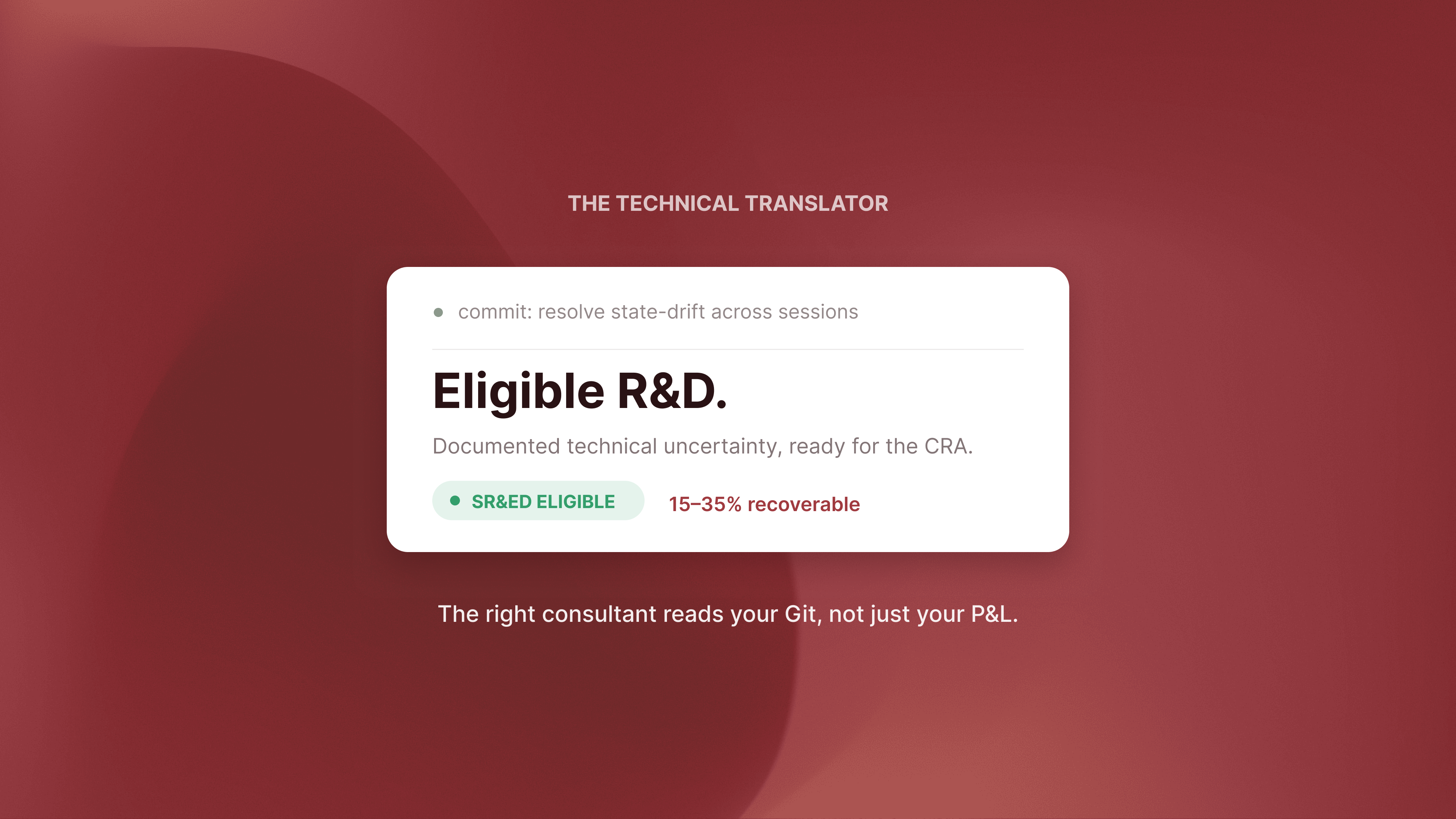
I was talking to a Series B founder last week who realized their generalist accountant missed nearly six figures in SR&ED credits. The reason was simple: they could not explain the technical uncertainty of their LLM fine-tuning to the CRA. While SR&ED is a massive opportunity for Canadian AI startups, the new era of compliance requires a partner who understands the difference between a simple wrapper and a production-grade system. Many founders ask, "How to get SR&ED tax credits for AI in Canada?" and the answer starts with hiring a qualified SR&ED tax credit consultant who can bridge the gap between compliance.
The high stakes of the Canadian AI R&D landscape and finding a SR&ED tax credit consultant
Why SR&ED is your primary non-dilutive engine
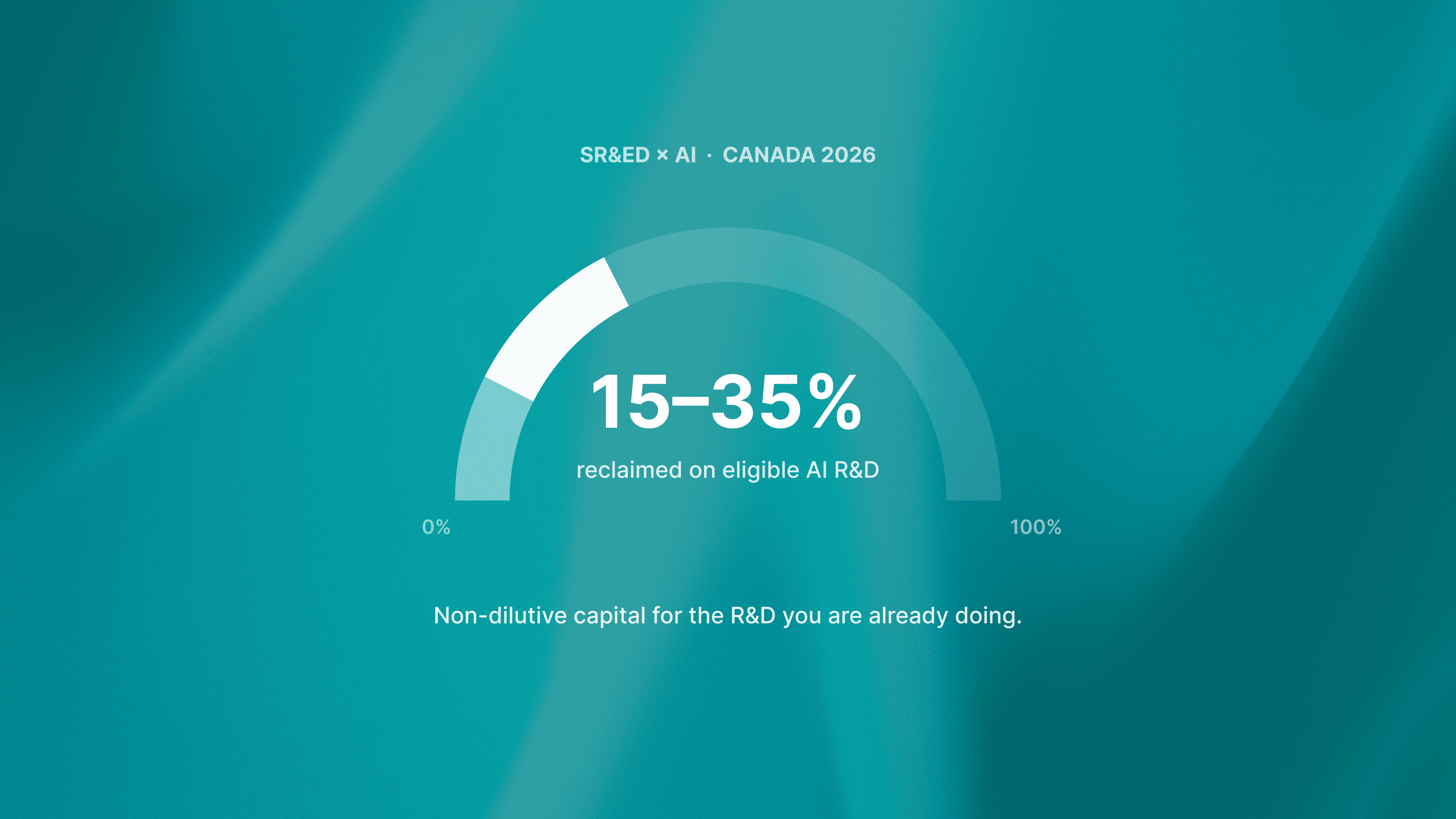
The SR&ED program is the single largest provider of federal support for R&D in Canada. For AI-native founders, SR&ED can help recover eligible costs associated with qualifying R&D work, including certain labor, materials, contracts and other allowable expenditures. Leveraging Canadian startup tax credits is essential for maintaining a healthy runway while scaling technical operations.
Choosing the wrong consultant is not just a tax mistake: it is a strategic failure that drains your engineering budget. This is especially true when you are already navigating the senior software engineer salary landscape in Canada.
The cost of 'standard' accounting errors
Generalist accountants often treat AI development like standard software engineering. They fail to document the scientific uncertainty required for a successful claim. Beyond just tax credits, US-based companies often leverage Canadian talent through an EOR to maximize these AI R&D tax incentives.
You need a consultant who can translate your Git commits into a story that proves technical advancement. They must acknowledge that Canadian developers often cost less than LATAM when these credits are factored in.
Comparison of generalist accountants and qualified SR&ED consultants
4 Questions to ask a SR&ED tax credit consultant
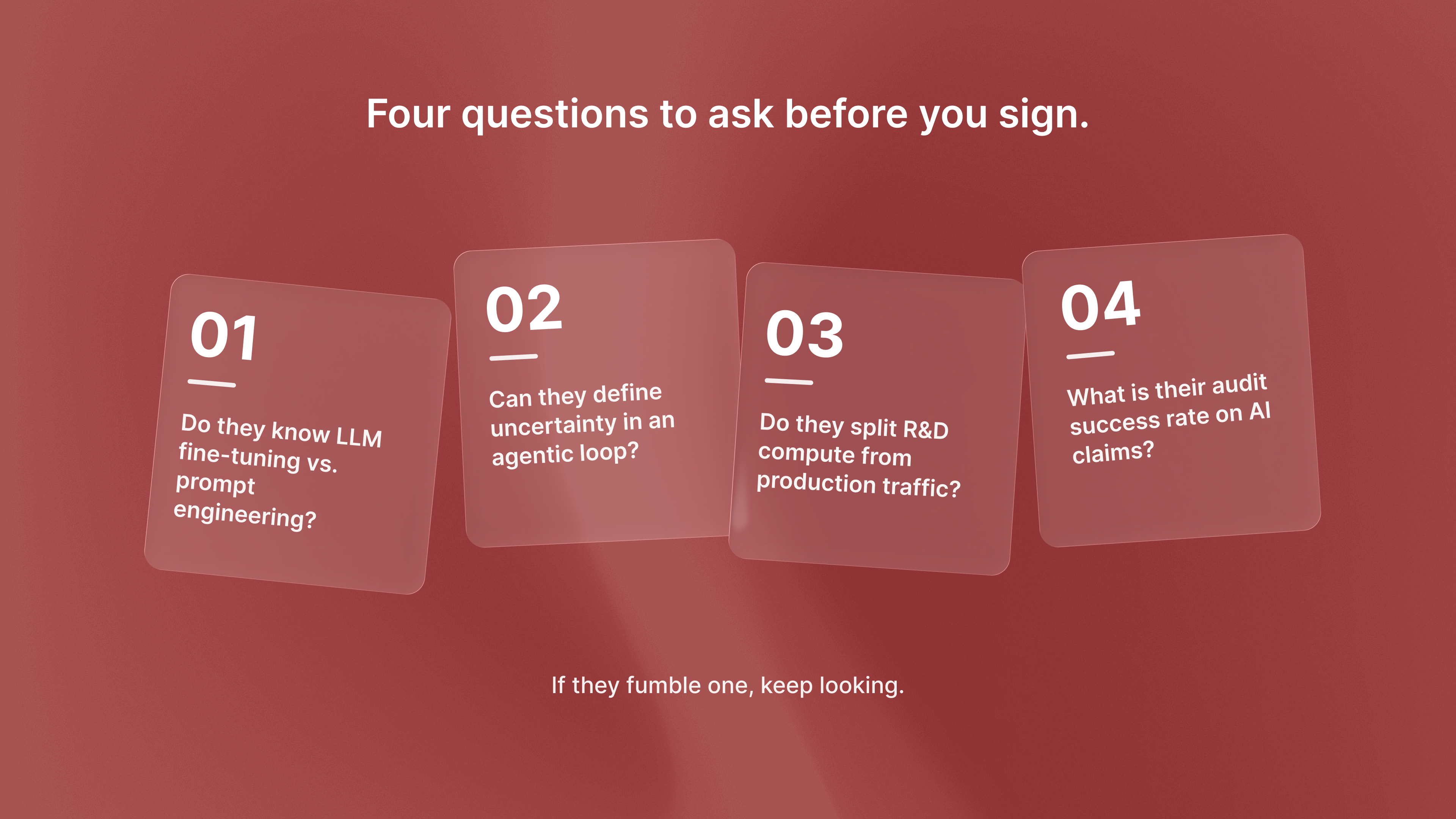
- Do they understand the difference between LLM fine-tuning and simple prompt engineering?
- Can they define technical uncertainty in an agentic loop architecture?
- How do they distinguish between routine bug fixing and qualifying R&D?
- What is their process for tracking technical advancement and AI ROI throughout the year?
Red flag answers to watch for
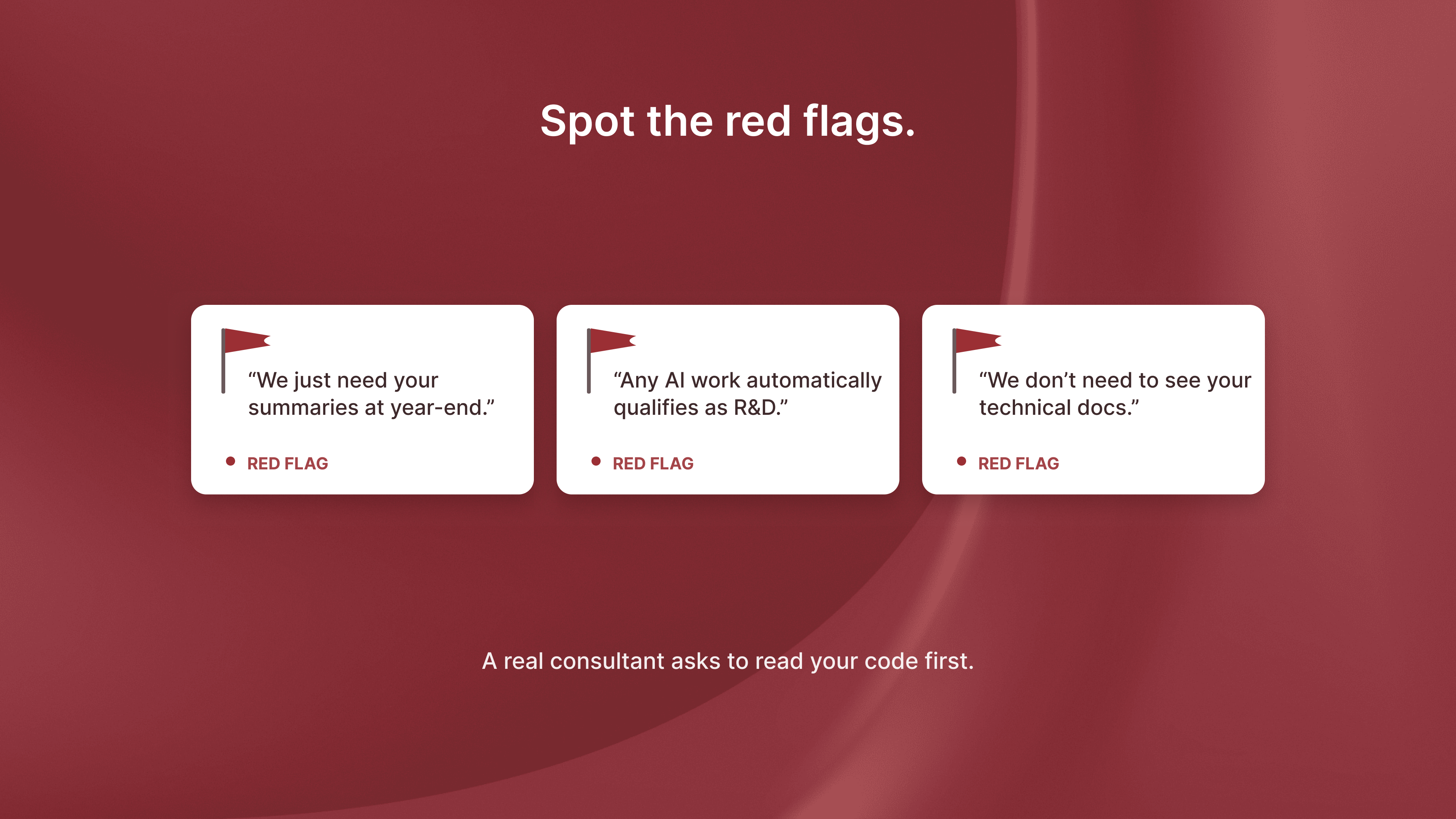
- "We just need your high-level project summaries at the end of the year."
- "Any work with AI automatically qualifies as R&D."
- "We do not need to look at your technical documentation or ."
Documentation: The bridge between engineering and compliance
To secure your claim, you must have a system for capturing R&D data in real-time. This is critical for building AI agent business cases that survive audit scrutiny. When documenting SR&ED for software development, the focus must remain on the technical challenges encountered rather than just the final product.
Automated tools create a paper trail of technical hurdles and failed iterations. These systems act as your compliance infrastructure.
- Capture failed experiments and architectural pivots as they happen.
- Link engineering hours to specific technical uncertainties.
- Maintain a real-time log of compute costs associated with R&D.
What to do next: Auditing your current R&D strategy
- Review your last SR&ED filing to identify missed opportunities in compute or infrastructure costs.
- Interview your current consultant on their specific experience with qualifying AI workloads for SR&ED.
- Implement a real-time documentation workflow for your engineering team.
The bottom line
The right SR&ED tax credit consultant acts as a technical translator. Do not let a lack of depth at the accounting level stall your innovation.
Build. Run. Maintain.
Ready to maximize your R&D returns? Reach out today for a strategic AI audit with Islands.
Success Stories
Read more

.svg)
