.svg)
Rapid prototyping for startups: validating AI features without scaling debt

.png)
I was talking to a Series B founder last week who had spent six months building an AI assistant that nobody used. It was a classic architectural trap. The system was over-engineered, under-validated, and expensive to maintain. Technical teams are increasingly using rapid prototyping to prevent this kind of long-term debt accumulation (RapiDevelopers). The goal is validation, not perfection.
The architectural trap: why AI demos fail in production
Assistant vs. agent logic
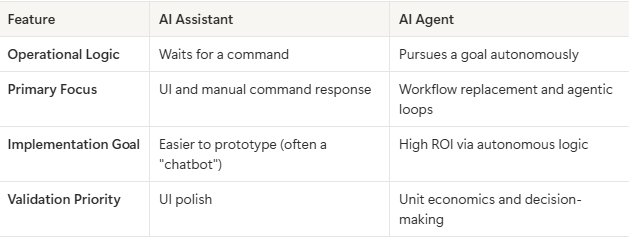
An assistant waits for a command;an agent pursues a goal. Most startups get stuck building assistants because they are easier to prototype. The real ROI comes from replacing entire manual workflows with autonomous logic. This requires testing the logic of the agent rather than the UI. Designing a reliable AI agent architecture ensures the system handles complex tasks without breaking. If you do not validate the agentic loop early, you are just building an expensive chatbot.
The cost of scaling debt
Scaling debt occurs when you build on top of unvalidated assumptions. In AI, this often looks like massive token costs for features that do not drive revenue. Addressing technical debt in AI involves identifying these inefficiencies before they become structural problems. Rapid prototyping allows you to stress-test your unit economics before you commit to a full-scale build. You need to know if the agent is profitable before you harden the infrastructure.
"The default trajectory of technology is that individual humans matter less over time." — Dario Amodei, CEO of Anthropic
The rapid prototyping playbook
- Define the autonomous workflow by identifying a high-volume, manual process.
- Build the "Thin" Agent using a modular stack to prove the concept.
- Stress-test unit economics to ensure the system scales profitably.
Defining rapid prototyping for AI
Rapid prototyping for AI is the process of building lean, goal-oriented agentic workflows. When focusing on rapid iterations, you can quickly pivot based on real-world feedback. This helps you validate technical feasibility and business ROI before you start full-stack development. It prioritizes the validation of the autonomous loop over UI polish or architectural perfection. This ensures that you use engineering resources for proven value drivers.
Lessons from the studio: validated autonomy
Successful ventures use battle-tested playbooks to deploy autonomous systems in weeks. They follow a clear methodology:
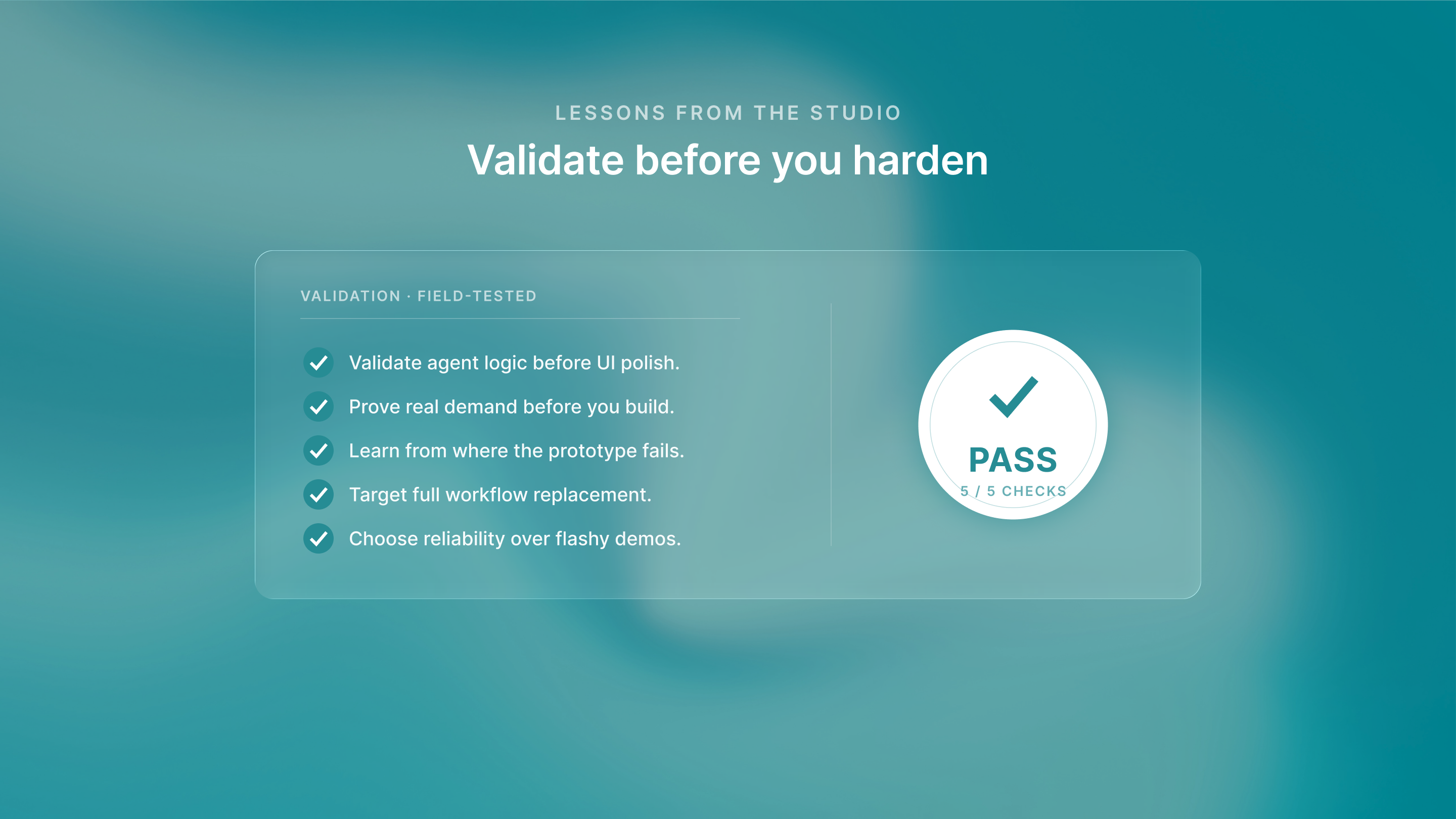
- Transition to intent-based testing (QA flow) to validate agent logic during the prototype phase and prevent QA bottlenecks.
- Use integrated distribution workflows to test market demand.
- Conduct pre- tests to ensure defensibility and data availability.
- Focus on workflow replacement rather than productivity boosts.
- Implement rigorous autonomous system validation to confirm that the agent makes the correct decisions in edge cases.
Validate the workflow first, then harden the infrastructure. The goal is a system that can evolve.
The bottom line

Rapid prototyping is not about building a faster demo. It is about testing unit economics and autonomous logic before scaling. Debt can drain your runway. Stop building assistants. Start architecting agents.
Build, run, and maintain. Start your prototype today. Book a call with Islands to secure your infrastructure.
Success Stories




.svg)
