.svg)
NRC IRAP
R&D and prototyping
Prototype
Navigating canadian tech implementation grants: a founder's guide to AI funding

Ali El Shayeb
September 16, 2026
I was talking to a Series B founder last week who was watching his compute costs swallow his R&D budget whole. We were looking at his infrastructure overhead, and the numbers looked like a typo. They were not. For Canadian startups, compute poverty is the single greatest threat to scaling.
Building autonomous agent architectures offers massive ROI, but the upfront infrastructure cost is a barrier. It requires a clinical approach to non-dilutive funding. Founders who treat grants as a bonus rather than a core part of their technical stack leave millions on the table. Identifying these vehicles is a strategic requirement for overcoming financial hurdles.
Mariana Mazzucato has spent a career arguing that the conventional framing here is backwards. Government, she writes in The Entrepreneurial State, has not only funded the riskiest research but has:
"...often been the source of the most radical, path-breaking types of innovation."
Mariana Mazzucato - The Entrepreneurial State, 2013
Her evidence is the iPhone. The internet, GPS, touchscreen displays and the speech recognition behind Siri were each publicly funded years before any of them was commercially viable. Her term for the state in that role is the investor of first resort: private capital arrives after the risk has been absorbed, not before.
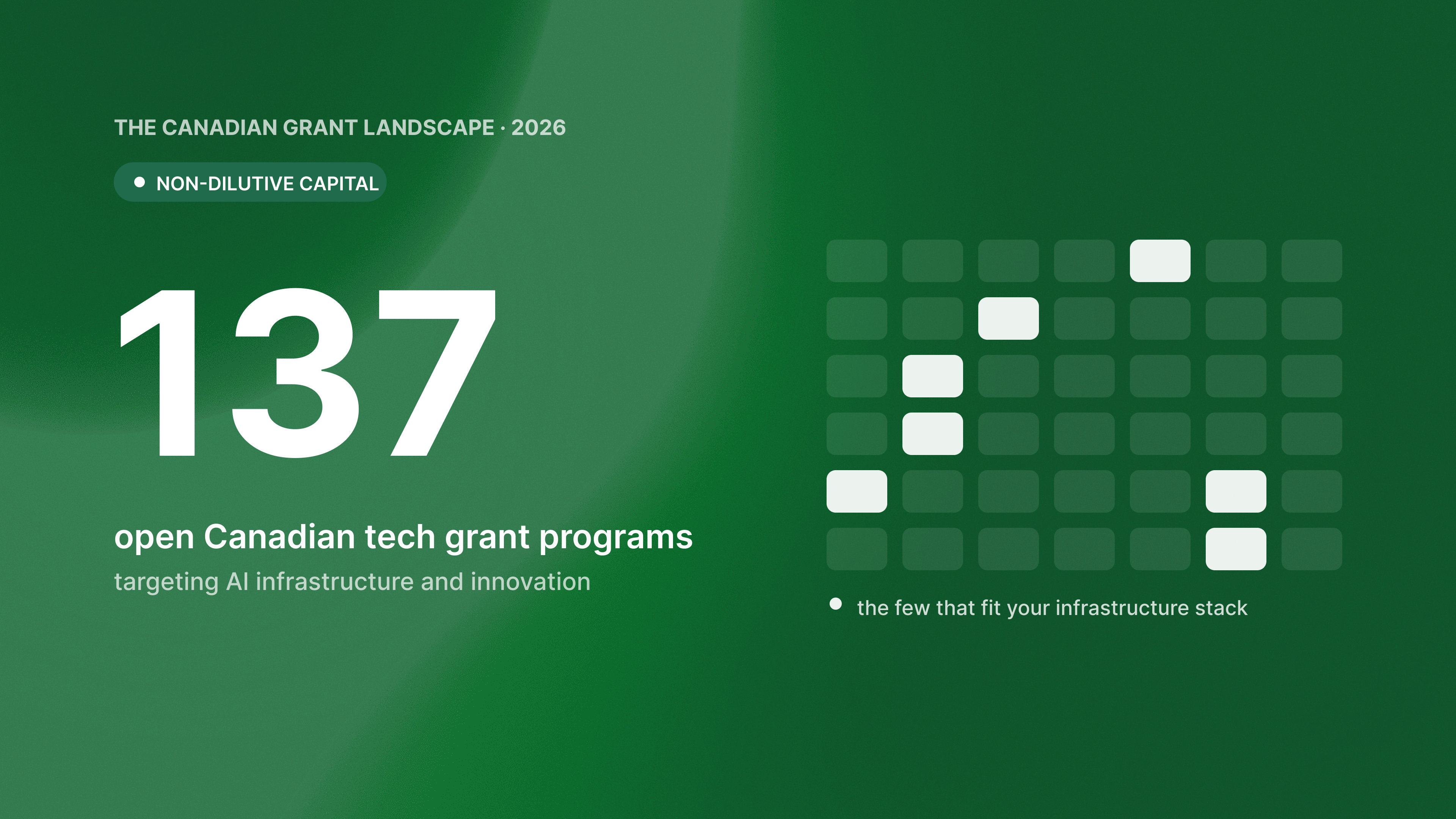
The canadian grant landscape: 137 opportunities
There are 137 open technology grant programs in Canada targeting infrastructure and innovation, according to Grant Compass. Founders must distinguish between innovation grants and implementation grants. Innovation grants fund R&D. Implementation grants fund the actual deployment of production-grade systems.
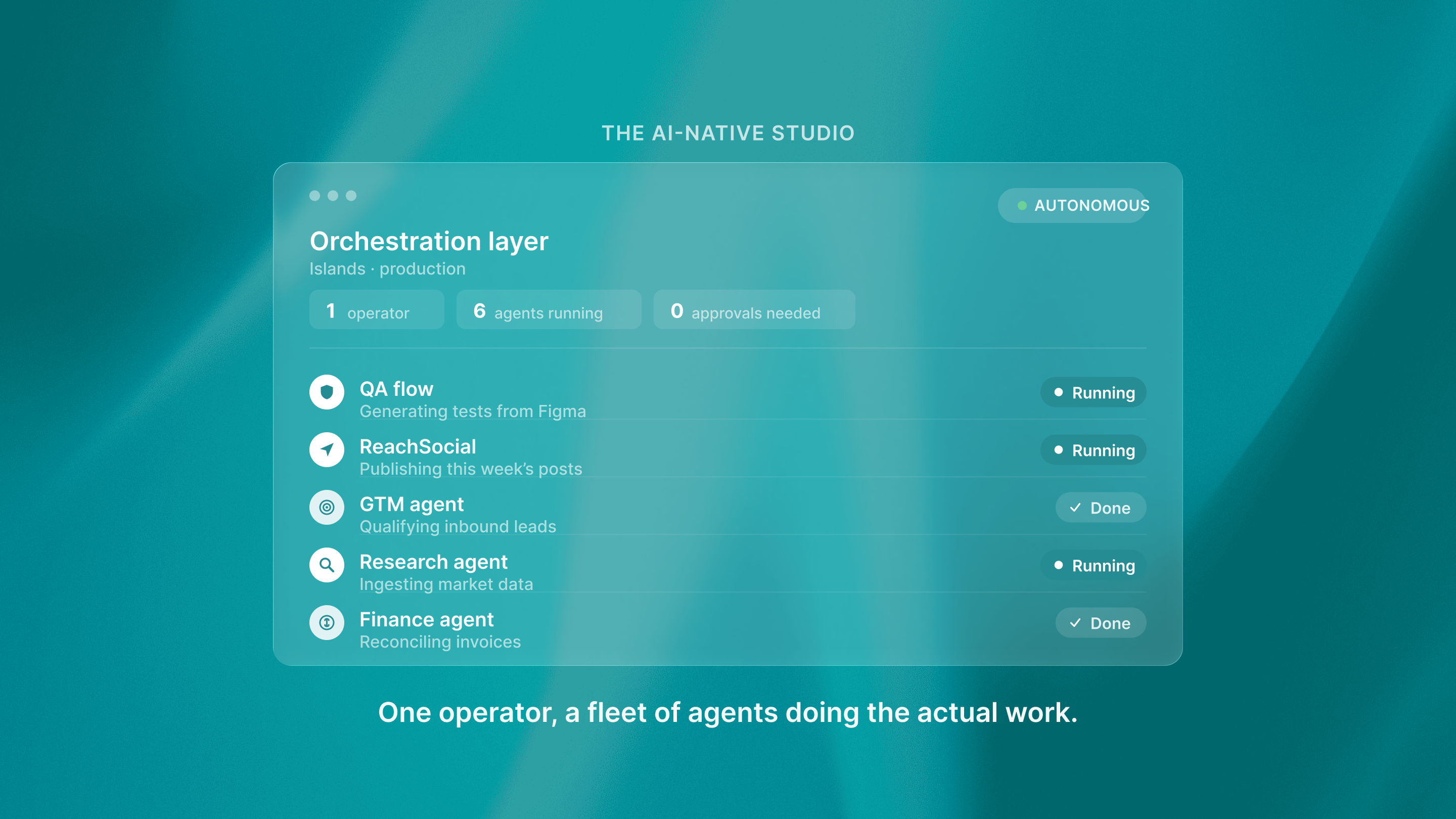
Effective execution requires a fractional CTO and shared orchestration layer. Technical alignment ensures goals meet funding requirements. This creates a shift from labor-intensive to infrastructure-led growth, forming the base of a sustainable AI operation.
Maximizing canadian tech implementation grants
Canadian funding is moving away from general software and toward specialized infrastructure. This shift makes it the right time to secure capital for the heavy lifting of AI deployment. By stacking these grants, founders de-risk their most expensive projects.
Strategic stacking helps keep equity for future rounds. This matters as more founders skip traditional seed rounds to move faster and build strong technical foundations. A strategic funding stack allows for full-lifecycle support from R&D to production.
The AI compute access fund (ACAF)
High-compute projects often face significant capital barriers that traditional grants might overlook. The AI Compute Access Fund is a key way for Canadian firms to manage high AI infrastructure costs. According to the Government of Canada. Success requires production-ready workflows to ensure the grant capital meets compliance benchmarks for high-performance computing.
The roadmap for stacking grants
- Secure NRC IRAP AI funding for the initial R&D and prototyping phase.
- Layer specialized compute-focused funds like the ACAF to cover heavy infrastructure costs.
- Implement centralized reporting to manage compliance across both funding vehicles.
- Demonstrate need for high-performance computing resources.
- Evidence technical capability to manage production-grade AI.
Moving from grant-funded demo to production
Moving from a demo to a production-ready agent requires capital and a stable architectural foundation. The transition to production depends on state management and reliability. Pre-built AI architectures allow founders to bypass the slow process of building from scratch.
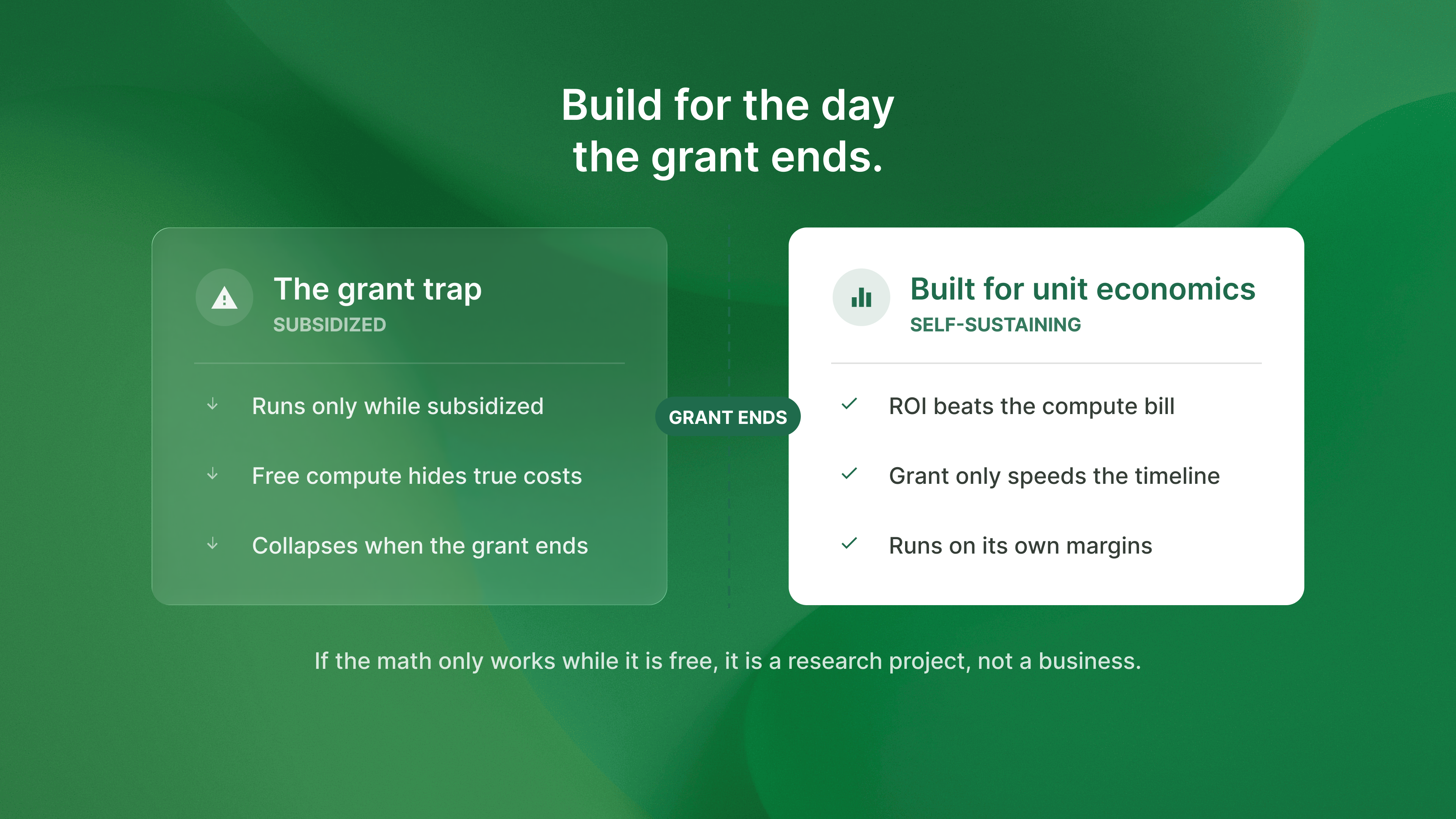
Avoid the grant trap of building for the application rather than the business. Use these funds to build systems that improve unit economics. Canadian nearshore hiring further extends the impact of these funds by extending runway through structural cost arbitrage. The goal is to build, run, and maintain a sustainable infrastructure.
The bottom line
Canadian tech implementation grants are a strategic lever. Use them to fund the bedrock of your AI systems. If you are ready to improve your funding plan, consider a strategic audit. It can help match your agent deployment with the capital you have available.
Ready to scale your infrastructure? Book a call with Islands today.
Success Stories
Read more

.png)

.svg)
