.svg)
A founder's ROI comparison: SaaS SEO content services vs In-House AI teams

.png)
I spoke with a Series B founder last week who was about to hire three full-time AI content specialists. I told him he was about to buy an expensive architectural trap. Startups treating content as a headcount problem fail to see that the real bottleneck is the workflow. For a Series B startup that is scaling, the goal is production-ready autonomous systems. These systems should drive pipeline without bloating the balance sheet. Engaging a professional SaaS SEO content service provides these systems immediately without internal overhead.
I found founders often default to hiring because it feels like building. In reality, they are building technical debt. This is the difference between an asset and a liability. The logs do not lie. Hiring people to manage prompts is not automation. It shifts manual work to higher-paid employees.
The unit economics of the build model
Building an internal team for content seems intuitive, but the Total Cost of Ownership (TCO) is often prohibitive. When evaluating a cost framework for startups, agencies can lower total cost of ownership. They do this by removing the large overhead of internal expert teams (Discovered Labs).
Internal hires require infrastructure to be effective. Recruitment fees for specialized AI talent are rising. The benefits package for a high-level engineer or AI content operator adds significant weight to the monthly burn. My analysis of growth-stage balance sheets shows these hidden costs often add 30% to 40% on top of base salary. This makes spend benchmarks difficult to hit without extreme efficiency.
.png)
Internal teams also require a suite of tools to function at a high level. These include LLM API credits, dedicated seat licenses, and SEO research platforms. Management time spent on oversight further drains resources. Agencies eliminate the heavy overhead of recruitment, benefits, and software licensing required for internal expert teams. I recently watched a Series B company spend $12k a month on the stack before a single word was written.
Why in-house AI teams often fail to scale
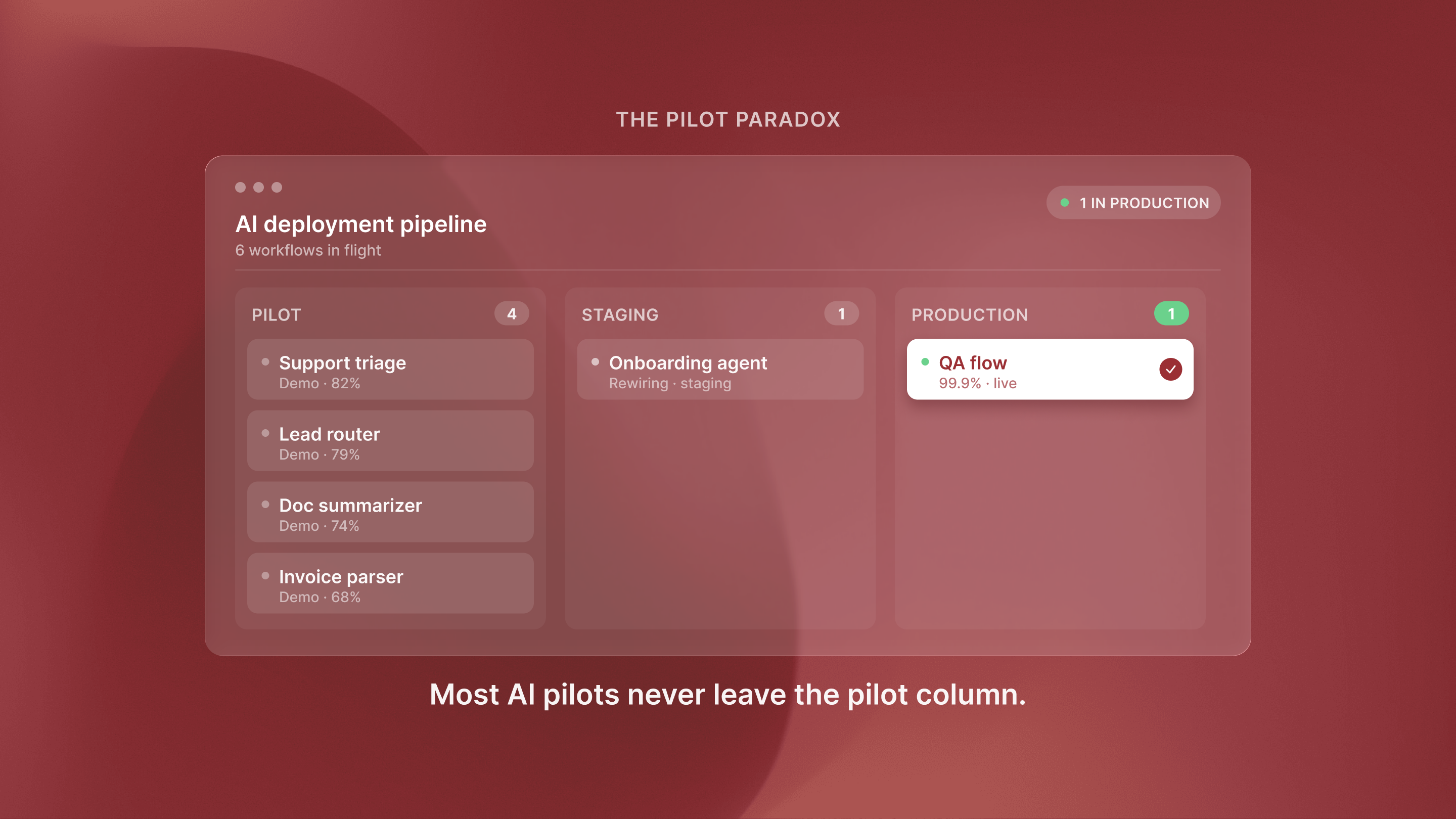
Most internal teams fall into the assistant trap. They use AI to help humans write faster, which is a linear improvement. True scale requires shifting to production-grade autonomous systems where the human manages the system, not the draft. This transition is essential as generalist content services become obsolete.
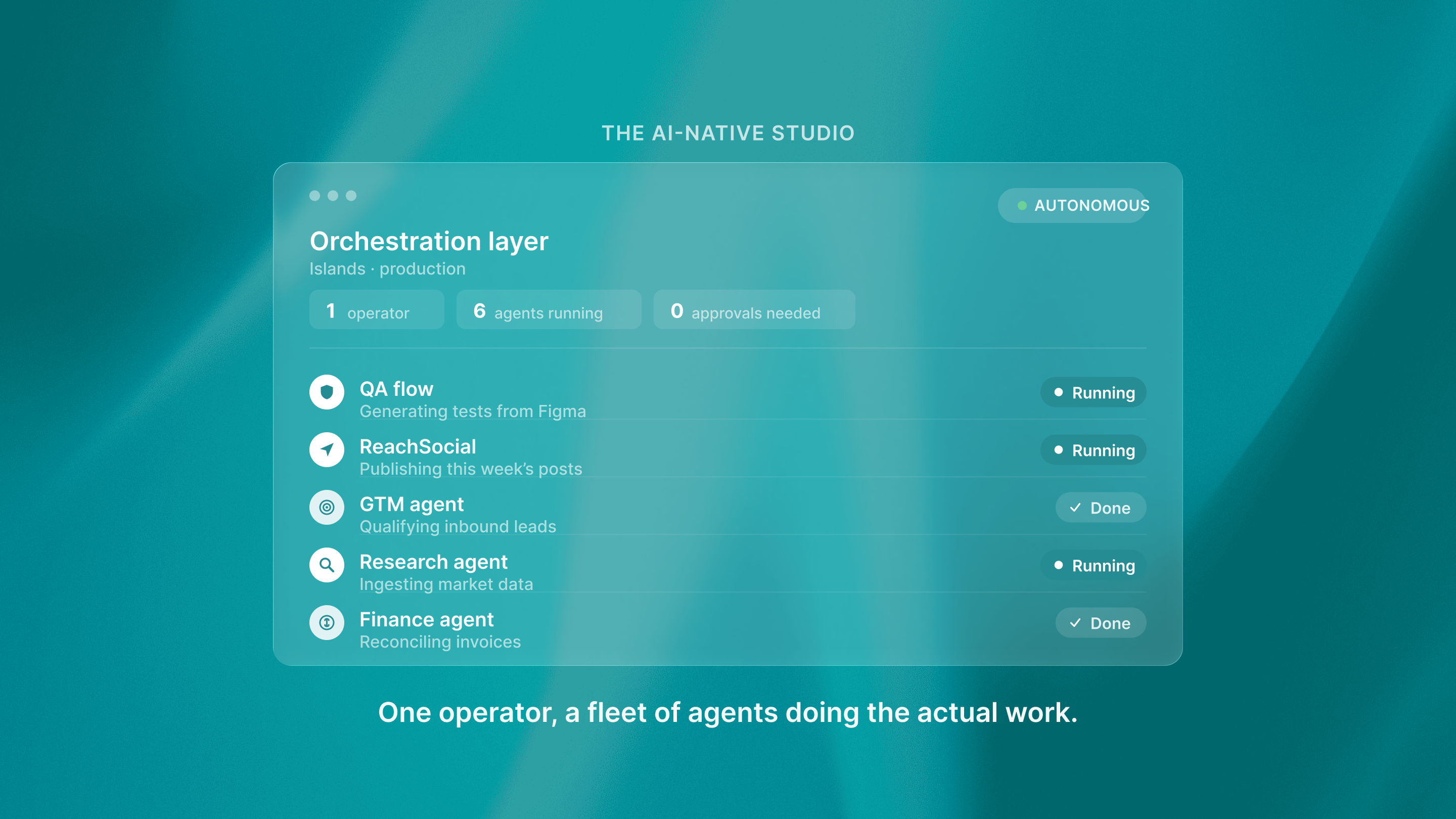
An AI assistant helps a human write a paragraph. An AI agent manages a multi-step workflow. This includes keyword research, data retrieval via RAG, drafting, and formatting without constant human intervention. In-house teams rarely have the time to build these complex autonomous AI agents and orchestration layers. This leads to a ceiling on how much they can actually ship.
Internal builds often lack technical integrity. When a team rushes to produce content, they create hard-coded prompts and brittle pipelines. These pipelines break when the underlying model updates. This creates technical debt that requires constant maintenance and distracts your engineering team from your core product. Modern scaling involves AI content operators managing LLM-driven autonomous content engines to increase output without sacrificing technical integrity (REWORK).
The SaaS SEO content service alternative
A specialized SaaS SEO content service offers performance-linked agility. Instead of a fixed overhead, you pay for outcomes. By using specialized technical infrastructure, successful programs align output directly with pipeline generation rather than search volume (Percepture). This maximizes SaaS SEO ROI by converting traffic into revenue.
Model comparison summary
FeatureIn-House AI TeamSaaS SEO Content ServiceUpfront CostHighLowScalabilityLinearExponentialTechnical DebtHigh MaintenanceZero DebtROI FocusOutput VolumePipeline Generation
Key model differences
- Upfront cost: In-house is high due to recruitment;agencies typically use a low setup fee.
- Scalability: In-house is linear and headcount dependent;services are exponential and system-led.
- Technical debt: In-house creates high internal maintenance;specialized services offer zero debt to the client.
- ROI focus: In-house often tracks output volume;services focus on pipeline generation.
The playbook
- Audit the autonomous orchestration layer to ensure it is not manual labor.
- Verify pricing models for autonomous workflows to ensure cost-efficiency.
- Review RAG architecture for data accuracy.
- Confirm they prioritize autonomous workflows over manual production models.
- Benchmark your unit economics against an external model to find the burn gap.
.png)
The bottom line
For a scaling startup, agility is the ultimate ROI. Autonomous agents beat internal headcount by offering superior unit economics and lower architectural debt. Investing in systems is the only way to avoid building for the past. A technical audit of your content systems can reveal where these efficiencies are being lost. Book a call to see how we build autonomous systems that work.
Success Stories
Read more

.svg)
