.svg)
Rewiring the enterprise for AI scale: A roadmap for venture studios

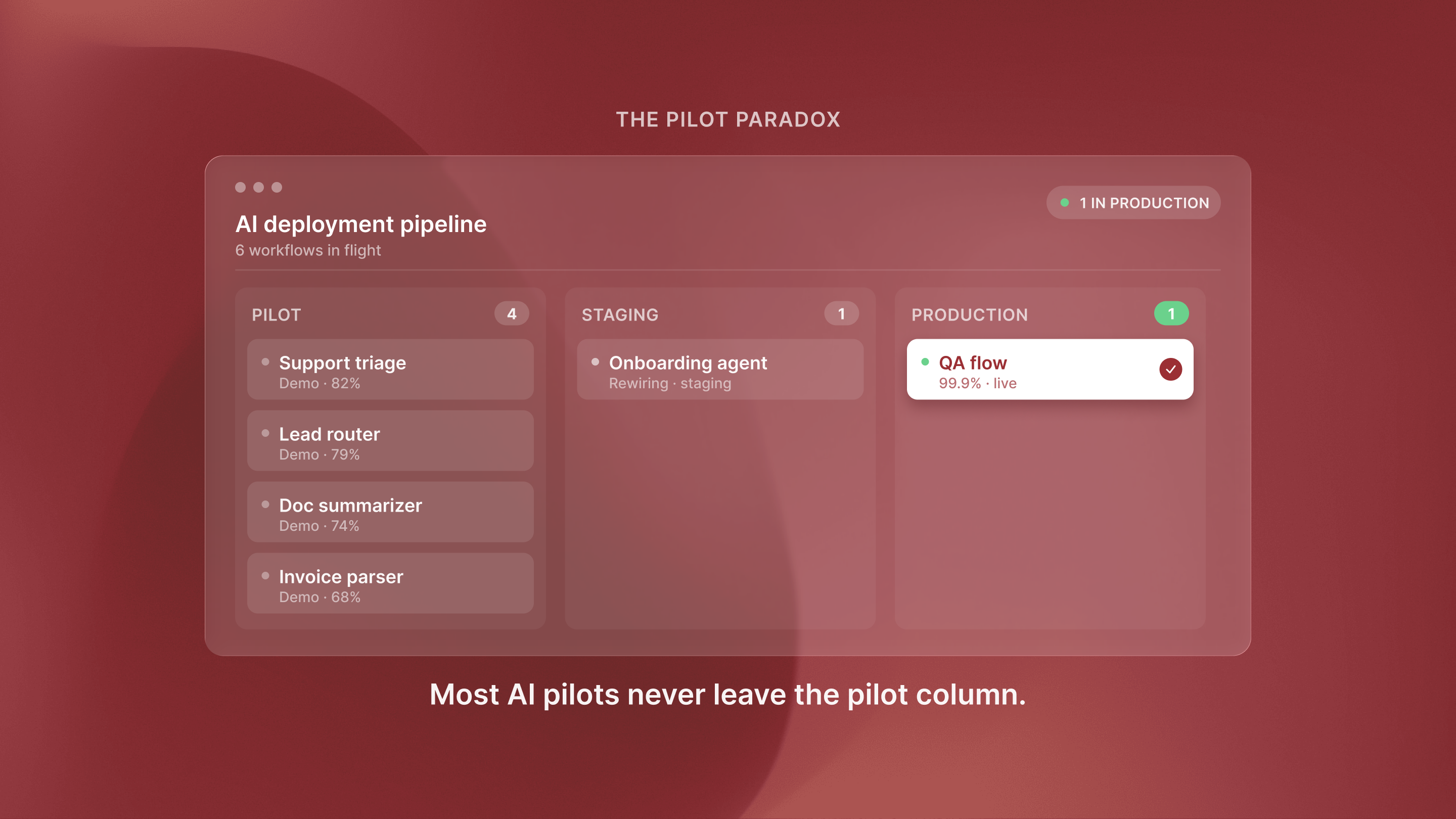
I recently watched a Series B CTO spend six months on a big architecture problem. They tried to solve it using prompt engineering. It did not work. He was trying to solve an exponential problem with a linear solution. He was building isolated pilots that could never survive the transition to production-grade infrastructure. This is the pilot paradox. It results in impressive demos that fail to scale because they lack the necessary plumbing. Partnering with a Venture studio for AI provides the architectural foundation to avoid these common pitfalls.
The pilot paradox: why Series B AI projects stall
The demo-to-production gap
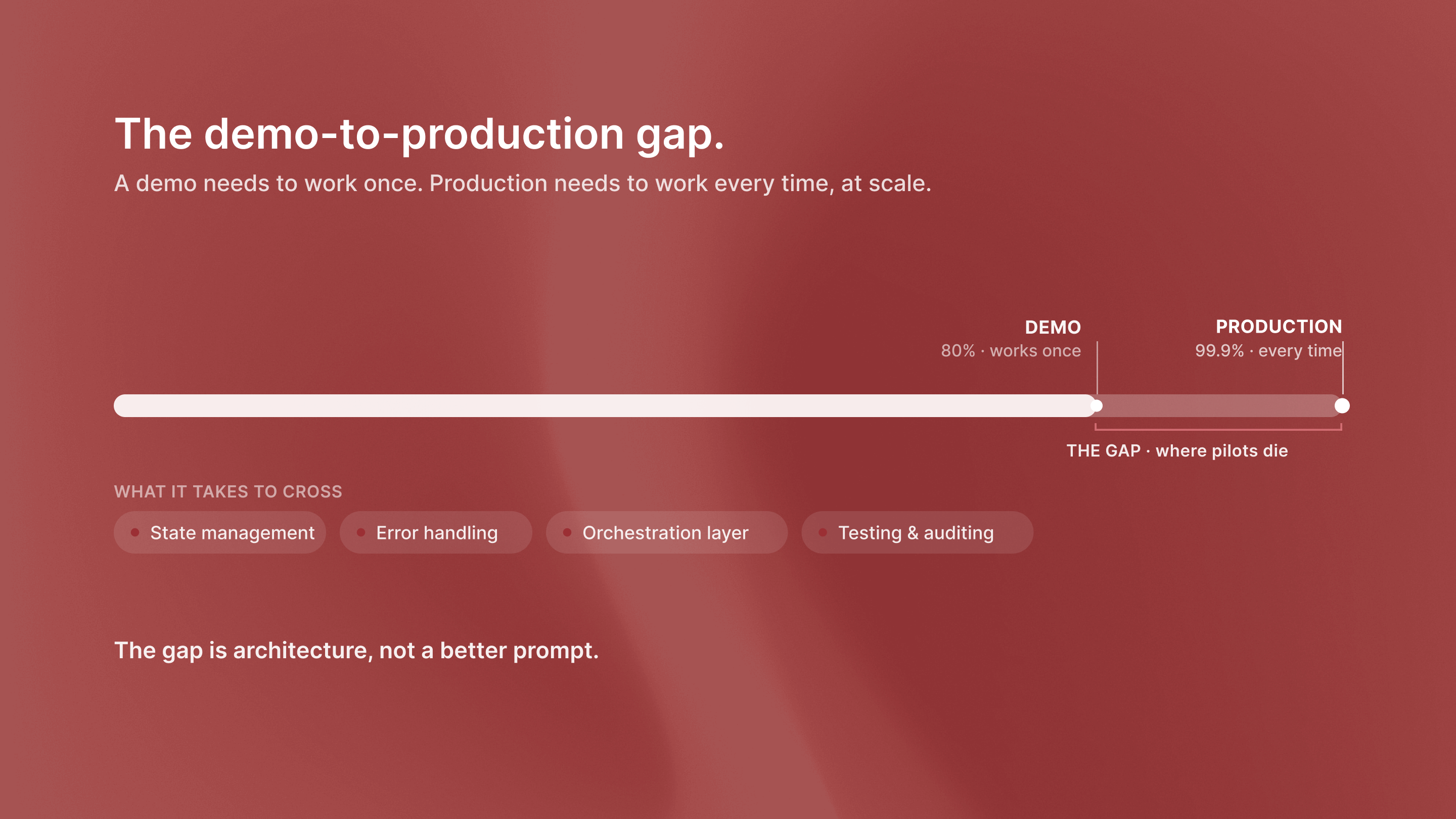
Most AI initiatives at the Series B level start as simple API integrations. While these look great in a boardroom, they quickly accrue technical debt. This happens because they lack robust state management and error handling. A venture studio partnership provides the specific playbooks necessary to navigate this high-risk build phase. This ensures that the architecture is production-ready from day one. Many startups struggle to move from human-in-the-loop assistants to fully autonomous agentic workflows. This creates a management tax that slows growth. To truly scale, organizations must invest in complex agentic AI systems that handle end-to-end reasoning.
Technical debt in agentic workflows
Technical infrastructure and production-ready workflows are critical to moving startups through the build phase efficiently. Without this foundation, companies often find themselves trapped in a cycle of constant rebuilds. You cannot scale a system that relies on brittle prompts instead of structured orchestration. Founders should prioritize a partner's technical stack and orchestration layer over network or equity terms to avoid architectural debt. Adopting a robust autonomous agent architecture ensures that these systems remain resilient as they grow.
Venture studio for AI: the infrastructure of scale
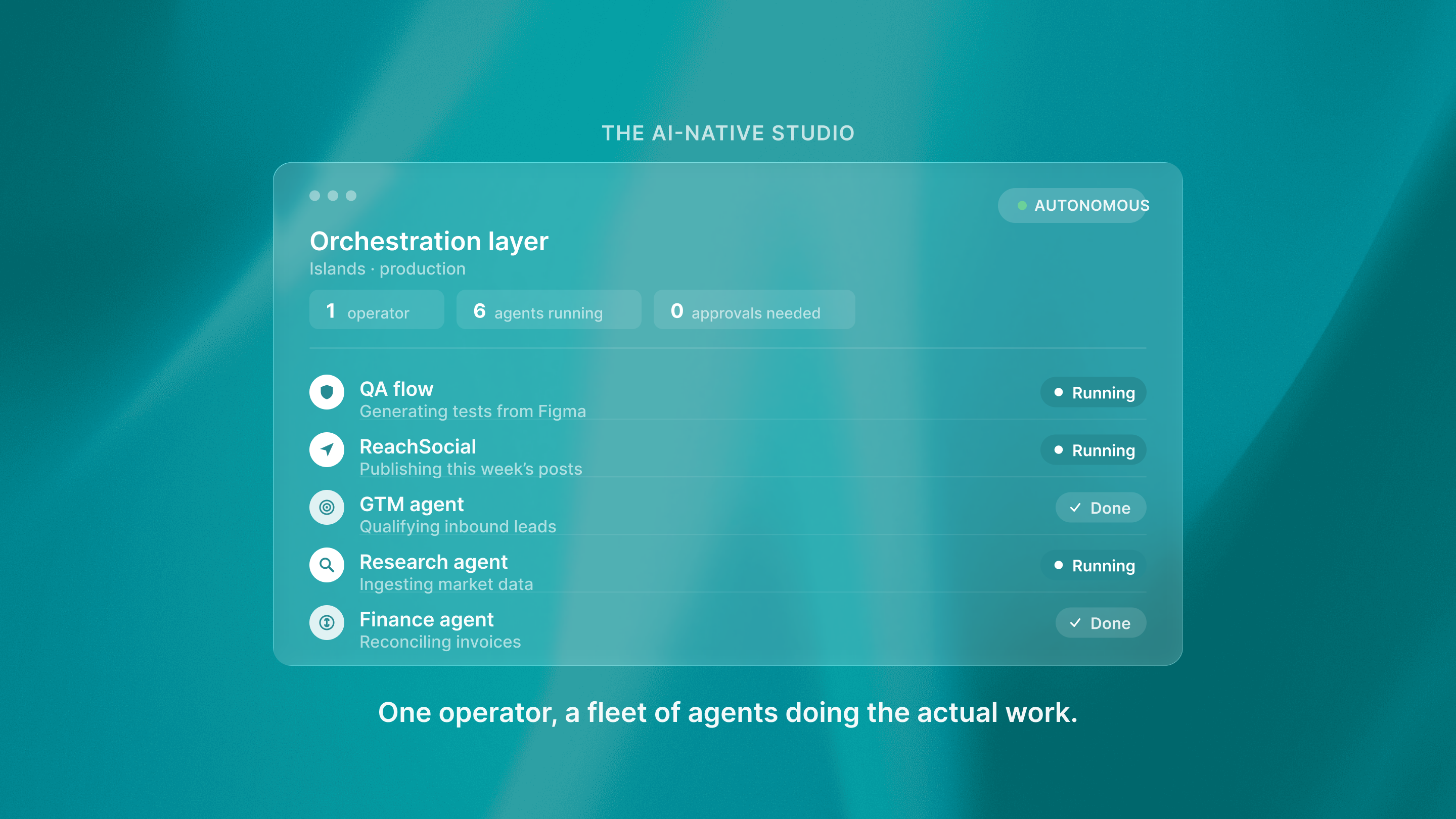
Scaling agentic ecosystems requires moving beyond experimentation toward architectural rigor. This is where the venture studio model excels. It offers a shared orchestration layer that can be recycled across multiple workflows to compress deployment timelines. By utilizing reusable agentic workflows, startups avoid building isolated, non-reusable systems for every new initiative.
Herbert Simon described the economics behind this in 1971. He won the Nobel Prize in economics seven years later
- Proven architectural playbooks that eliminate the need for foundational guesswork
- Access to senior architectural guidance to guide executive-level decisions
- Integrated testing and auditing frameworks for production reliability
- Reusable agent components that handle state, memory, and tool execution
Building the agentic ecosystem
True ROI comes from building autonomous agents that replace workflows, not just assist them. In my experience, the shift from assistants to agents requires a fundamental rewiring of the orchestration layer. Hiring a fractional CTO for AI can help bridge the gap between high-level strategy and technical execution. You must build systems that can independently navigate complex tasks. This includes moving from manual testing to autonomous QA frameworks like QA flow. This helps avoid the velocity wall that can stall engineering roadmaps.
- Multi-step reasoning for goal decomposition
- Tool integration via robust API execution layers
- Persistent memory for long-running autonomous tasks
- Autonomous validation of agent outputs
Roadmap: rewiring for 2026 and beyond
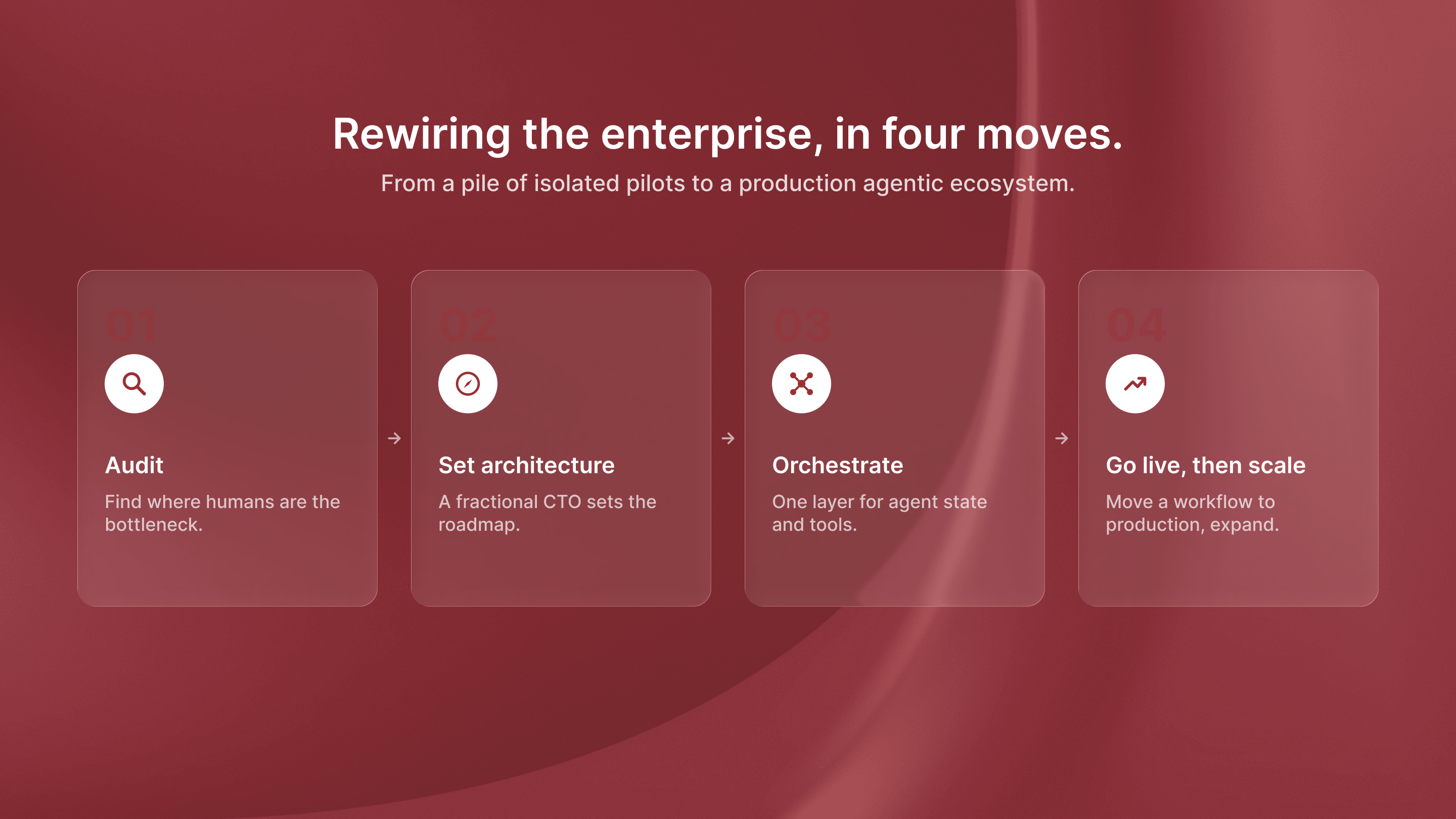
- Audit your current technical stack to identify where human-in-the-loop bottlenecks are stalling growth.
- Secure senior architectural guidance through a fractional CTO to avoid the headcount trap.
- Deploy a centralized orchestration layer to manage all agentic state and tool interactions.
- Transition from passive AI pilots to fully autonomous production workflows by evaluating your partner's technical infrastructure.
The bottom line
Scaling AI in the enterprise requires a shift from prose to production-grade architecture. You must prioritize architectural rigor over experimental prompts. A venture studio roadmap provides the infrastructure to turn isolated pilots into an agentic ecosystem. By following a structured AI scale-up roadmap, teams can transition from simple bots to enterprise-grade intelligence. Build for autonomy or get left behind.
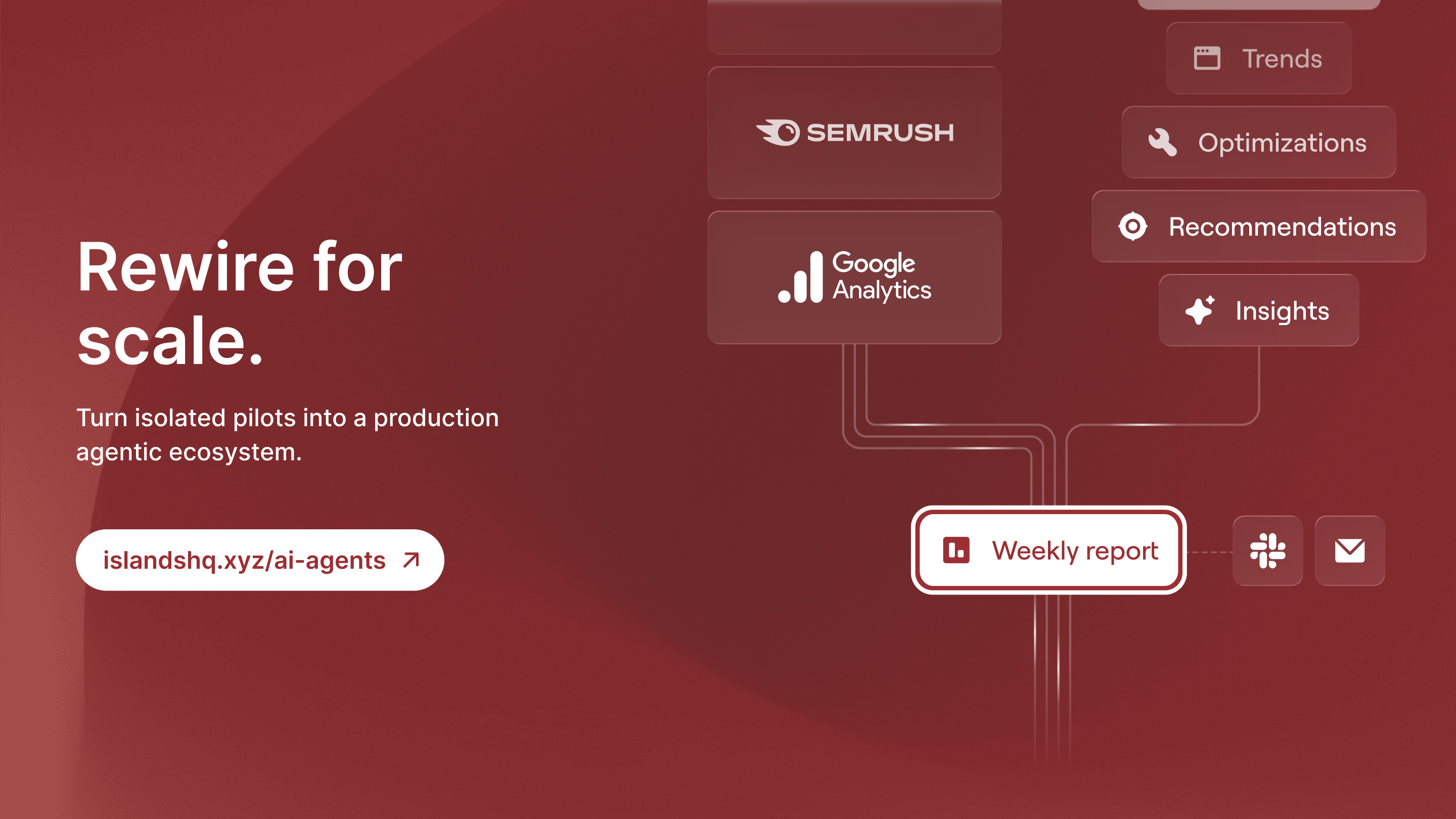
Ready to scale your infrastructure? Book a call with Islands today.
Success Stories
Read more


.svg)
