.svg)


Discover how AI employees change the workplace and how to integrate them into your business to boost productivity and drive innovation. In today’s fast-paced, tech-driven world, businesses must keep up by using the latest innovations. One of the most groundbreaking advancements is the integration of AI employees into the workforce. This guide explains how AI workers are changing industries and shares practical ways to add them to your team successfully.
The role of AI employees in the workplace
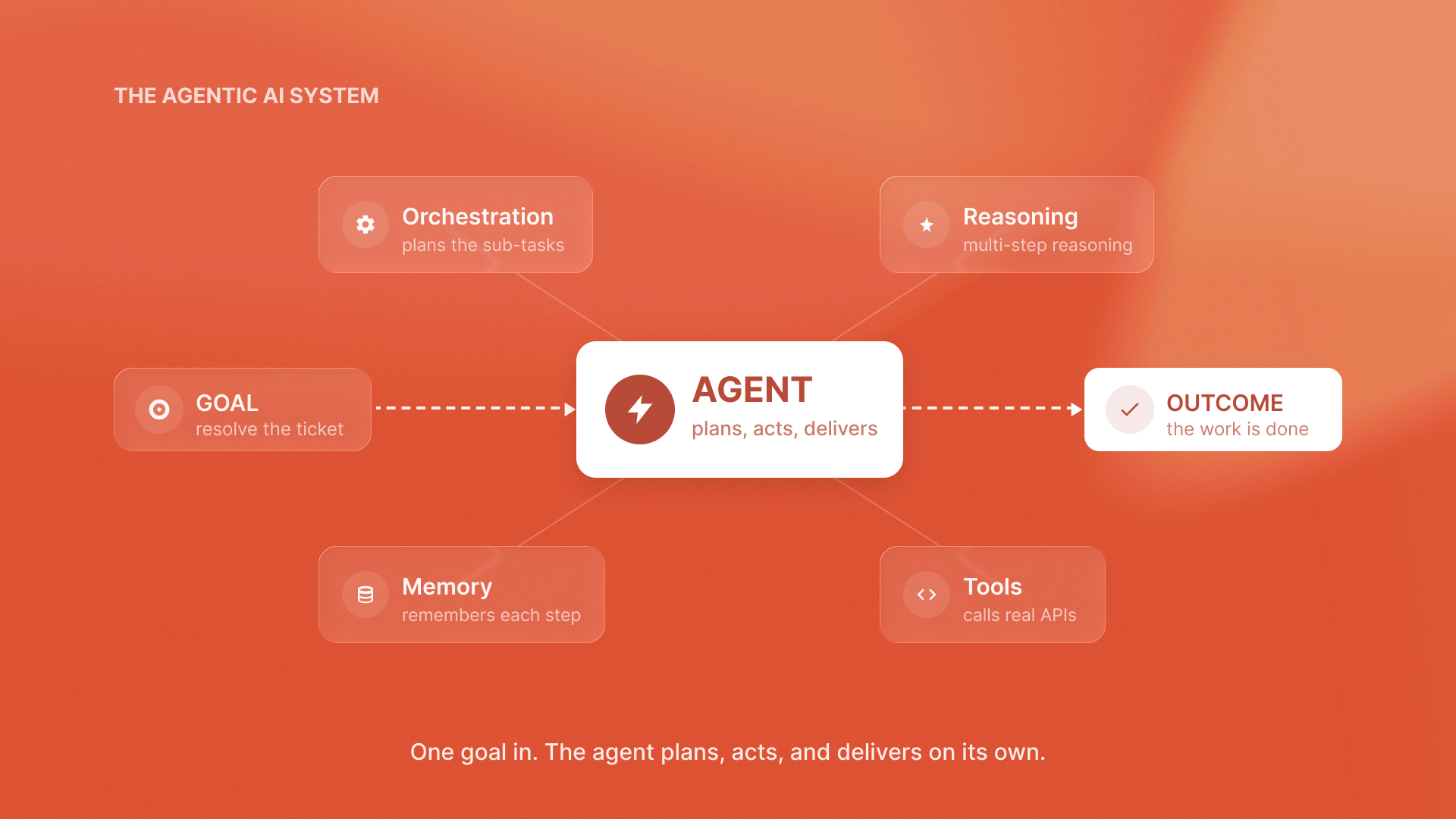
The rise of AI employees signals a profound shift in how businesses handle workflows. These autonomous AI agents are revolutionizing processes by taking over repetitive tasks, analyzing massive datasets, and assisting in strategic decisions. But AI in business isn’t about replacing humans—it’s about collaboration. The synergy between human creativity and machine efficiency can drive unparalleled growth and innovation.
AI employees free human workers to focus on higher-value tasks that require creativity, emotional intelligence, and strategic thinking. They’re already making significant contributions in key fields:
Customer support – AI chatbots deliver round-the-clock assistance, addressing common inquiries and escalating complex ones to human agents.
Finance & accounting – AI automates transaction processing, fraud detection, and report generation, streamlining operations and boosting accuracy.
Marketing & sales – AI tools predict consumer behaviors, personalize campaigns, and optimize sales funnels to maximize outcomes.
HR & recruitment – By screening resumes and streamlining onboarding, AI systems speed up hiring processes, ensuring efficiency in recruitment.
Healthcare – AI is transforming patient care by aiding in diagnostics, personalized treatment plans, and predictive analytics.
Manufacturing – In manufacturing, AI optimizes supply chain management, predicts equipment failures, and enhances quality control.
Businesses that adopt these tools will gain a strong competitive edge.
How to successfully integrate AI employees
Integrating AI workers into your team requires planning and effort to ensure a smooth transition. To leverage the full potential of AI, focus on these strategic steps:
- Redefine roles and strengths. AI performs best in structured, data-driven tasks, while humans excel in areas requiring critical thinking and creativity. Create roles that blend the strengths of both for optimal results.
- Foster human-AI collaboration. AI should complement—not isolate—human efforts. Build workflows where AI employees analyze data and share insights while humans keep oversight and make decisions using judgment and experience.
- Invest in upskilling your team. Equip your workforce with training in AI literacy, data analytics, and decision-making within AI-enabled systems. Offer workshops, online courses, and certifications to help employees develop the necessary skills.
- Commit to transparency and ethics. AI deployment can spark concerns about privacy and fairness. Clearly communicate AI’s workplace role and prioritize ethical practices to foster trust and acceptance.
- Monitor and evaluate performance. Regularly assess the performance of AI employees to ensure they are meeting organizational goals. Continuously refine AI systems based on feedback and performance data.
Overcoming challenges in AI workforce integration
Introducing AI employees comes with its share of challenges. A proactive approach can mitigate potential roadblocks and build a foundation for success.
Overcoming resistance to change. Employees may worry about job security or adapting to AI-driven roles. Encourage involvement, offer training, and reassure your team that AI complements rather than replaces their contributions.
Maintaining data privacy and security. AI uses vast amounts of data. Ensure your privacy protocols comply with regulatory standards like GDPR and CCPA to protect sensitive information.
Tackling AI bias and reliability. Regularly monitor AI-driven decisions to ensure their fairness and accuracy. Use diverse datasets and implement bias detection algorithms to minimize the risk of discriminatory outcomes.
Ensuring seamless integration with existing systems. Integrating AI with existing IT infrastructure can be complex. Work with experienced IT professionals to ensure compatibility and smooth integration. Test AI systems carefully before full deployment.
Benefits of integrating AI employees
Integrating AI employees offers many benefits that can greatly improve business performance, including:
- Increased efficiency. AI employees can do repetitive, time-consuming tasks quickly and accurately, freeing human employees to focus on strategic, creative work.
- Enhanced decision-making. AI can quickly analyze large amounts of data and provide valuable insights that help people make better decisions at all levels of an organization.
- Cost savings. Automating routine tasks reduces operational costs and minimizes human error, leading to significant financial savings over time.
- Scalability. AI systems can be scaled up or down according to business needs, providing flexibility that traditional workforce models cannot.
- Innovation. By handling data analysis and routine tasks, AI employees allow human workers to focus on new ideas and creative problem-solving.
- Improved customer experience. AI can enhance customer interactions by providing personalized recommendations, faster response times, and consistent support.
The future of work with AI employees
The future of work lies in collaborative synergy between AI and human workers. Businesses that begin integrating AI workforce solutions today are setting themselves up for long-term success.
Task specialization: AI will manage high-volume, specialized tasks, allowing humans to keep their focus on innovative, big-picture work.
Hybrid teams: AI employees will act as data-driven advisors, empowering humans to make sound, strategic decisions.
Ethical frameworks: Organizations will develop and adopt governance systems to ensure that AI tools operate with transparency and accountability.
Continuous learning: AI systems will evolve through machine learning, constantly improving their performance and adaptability in the workplace.
Global workforce transformation: As AI becomes more prevalent, businesses worldwide will adapt, creating new job roles and opportunities centered around AI technologies.
Instead of replacing workers, AI employees will help them—providing tools, insights, and efficiency that will reshape the modern workplace.
Final thoughts
AI employees are here, and they’re already reshaping how businesses operate. But their success depends on how well companies integrate them into their existing teams. By fostering collaboration, supporting workforce upskilling, and committing to ethical AI practices, organizations can unlock new levels of innovation and productivity.
The future of work lies in creating seamless partnerships between human ingenuity and AI-driven efficiency. Are you ready to shape your team’s future by welcoming AI employees? The possibilities are limitless—start today with Island's AI Transformation Services.
Success Stories
Read more

.png)
.svg)
