.svg)
AI agents in 2026: what's actually coming (beyond the hype)

Everyone's predicting AGI by 2026. We're more focused on agents that actually work in production.
Here's what we're seeing across our portfolio-and what's actually coming.
The hype vs reality
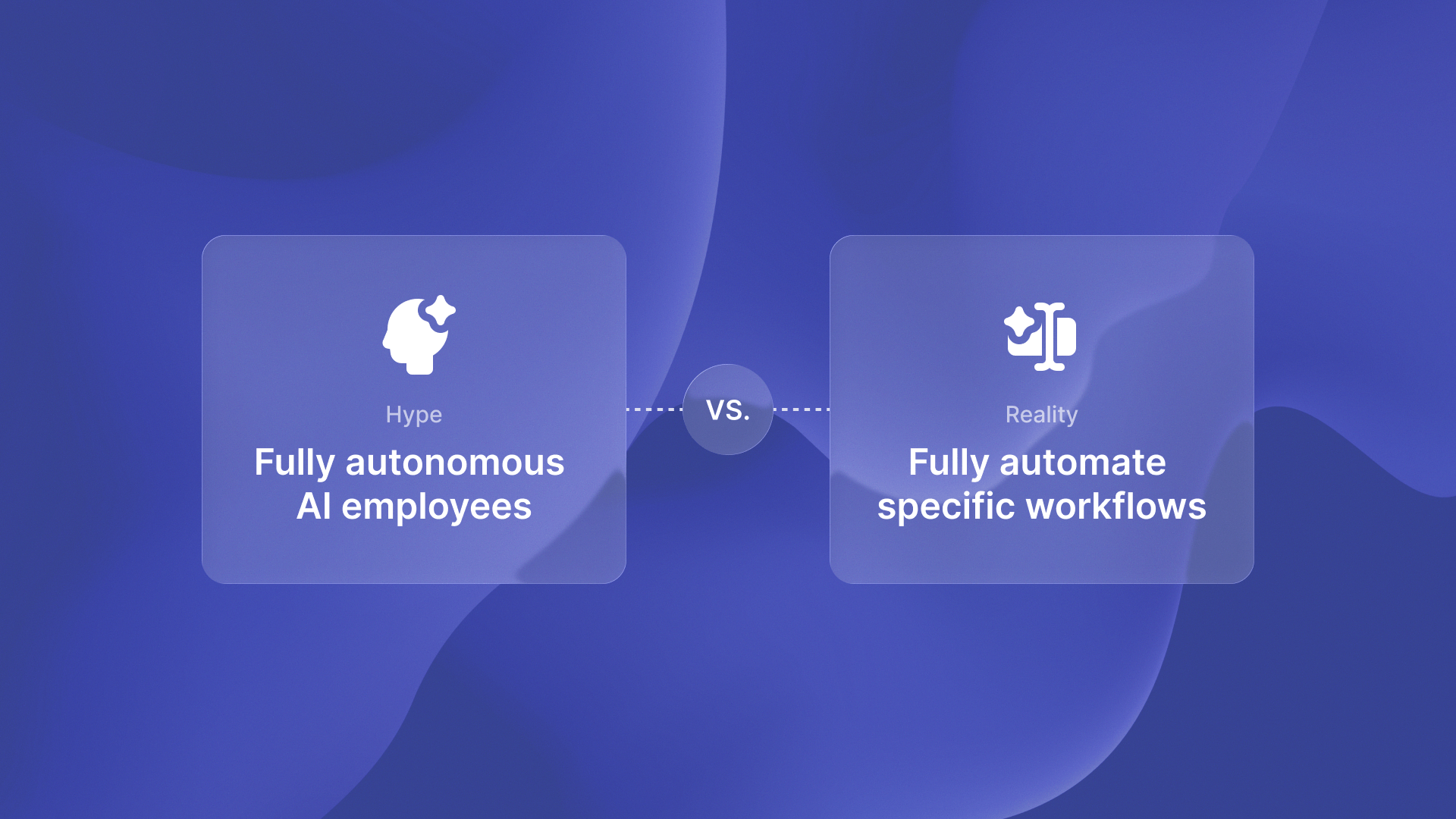
The hype: Fully autonomous AI employees replacing entire departments.
The reality: Narrow AI agents automating specific workflows within departments.
The gap between these is massive. Let's talk about what's realistic.
What's actually happening in 2025
Across our 12 portfolio companies, here's the pattern:
Agents that work reliably:
- QA testing and monitoring
- Data validation and cleanup
- Compliance checking and updates
- Sales prospecting and outreach
- Customer onboarding and education
Agents that struggle:
- Strategic decision-making
- Creative problem-solving
- Complex negotiations
- Crisis management
- Anything requiring deep empathy
The difference? Successful agents operate in structured environments with clear success criteria.
The 2026 capabilities we're betting on
Based on current trajectory and our direct experience:
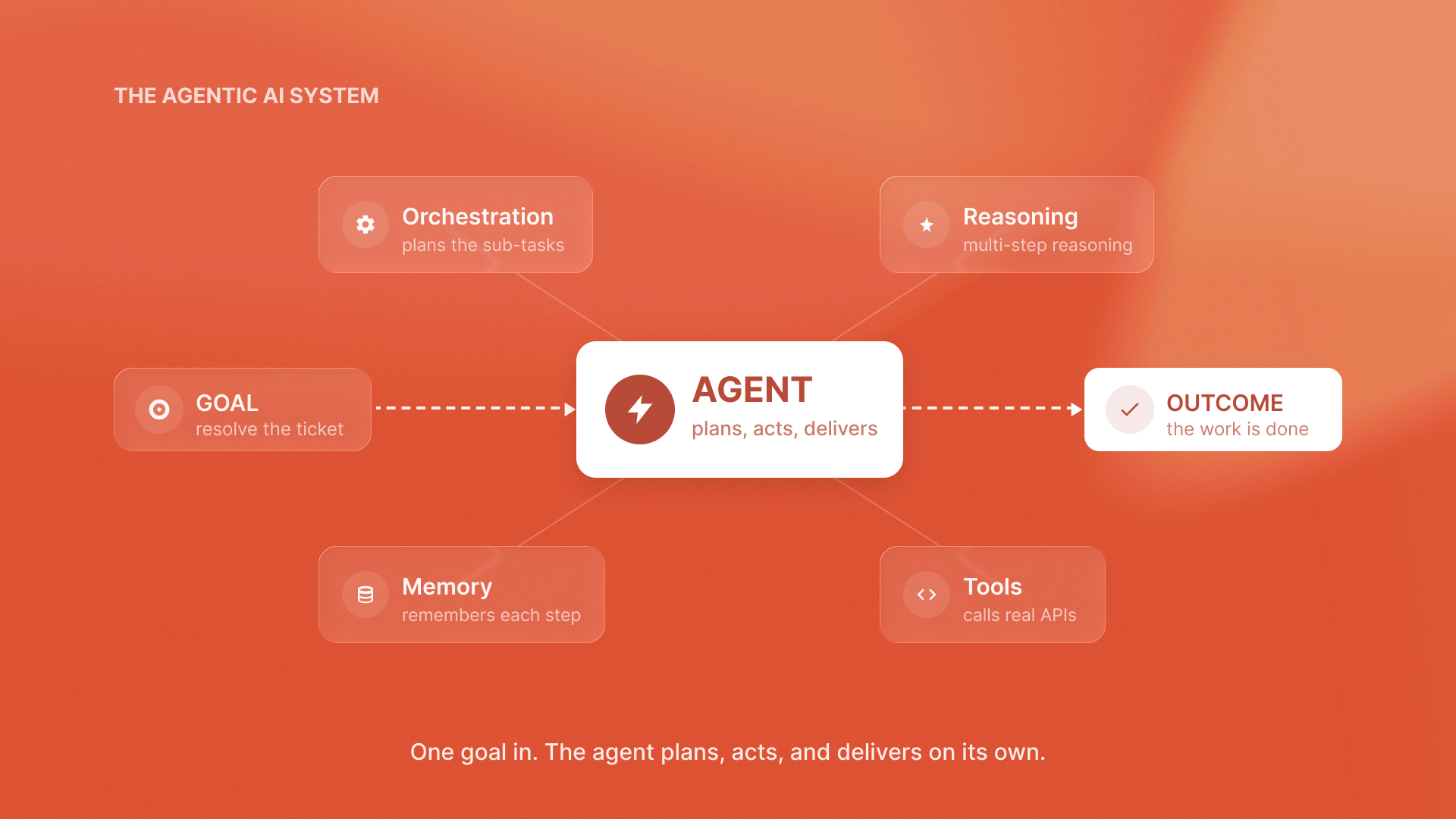
1. Multi-agent orchestration. Instead of one super-smart agent, we'll see teams of specialized agents working together.
Example: Our QA flow roadmap for Q2 2026 includes integrating the model with GitHub and pulling test case scenarios from Linear and Jira. Each agent does one thing exceptionally well. Together, they handle the full workflow.
2. Better planning and reasoning. Current agents make 1-2 step decisions. 2026 agents will handle 5-10 step plans. Our sales agent will research the prospect's company, identify pain points from news and posts, craft a personalized value prop, time the message for optimal engagement, follow up with relevant content, and warm-handoff to a human rep when qualified.
3. Persistent memory and context. Current limitation: agents lose context between sessions. 2026 improvement: agents will maintain relationships and context over weeks and months. A customer support agent will remember your last 5 interactions, your product setup, your communication preferences, and your business context.
4. Proactive problem detection. Current: agents react to events. 2026: agents predict and prevent problems. Our compliance agent today flags violations when they happen. In 2026, it'll predict likely violations based on patterns and prevent them proactively.
5. Human-agent collaboration UI. Current: agents work in the background or via API. 2026: purpose-built interfaces for working alongside agents. Design tools where AI suggests, human refines, AI implements — real-time collaboration.
The technical breakthroughs needed
What has to happen for this to work:
1. Longer context windows: Need 500K-1M tokens to maintain real business context. We're at 200K now.
2. Better tool use: Agents need reliable API calling, error handling, and recovery. Current models are ~70% reliable. Need 95%+.
3. Cheaper inference: Current costs make some use cases uneconomic. Need 10x cost reduction. This is happening fast.
4. Better reasoning: Need true multi-step planning, not just next-action prediction. Early signs in GPT-o1 are promising.
What won't change
Despite the hype, these limitations persist:
1. Agents can't replace human judgment on high-stakes decisions. Your AI agent shouldn't fire employees, sign major contracts, or make strategic pivots.
2. Agents struggle with novel situations. When something truly unprecedented happens, humans still beat AI.
3. Agents need human oversight. The autonomy spectrum goes from "suggests" to "acts with human approval" to "acts autonomously." Most agents will stay in the middle.
4. Agents amplify existing problems. If your process is broken, an AI agent will just execute the broken process faster. Fix the process first.
How to prepare (practical steps)
Now (Q1 2025):
- Build your first agent on a simple workflow
- Learn the patterns and tools
- Start collecting data for training
Q2-Q3 2025:
- Scale successful agents to more workflows
- Build infrastructure for multi-agent orchestration
- Invest in monitoring and observability
Q4 2025:
- Experiment with agent-to-agent communication
- Build persistent memory systems
- Test proactive agents on low-risk workflows
2026:
- Deploy multi-agent systems in production
- Shift from reactive to proactive agents
- Build human-agent collaboration tools
The competitive dynamics
By late 2026, we predict table stakes will include AI agents for QA, support, and basic operations. Differentiators will be custom agents for core workflows. Moats will be multi-agent systems with proprietary data.
Companies that start building now will have 18 months of learning and data collection. That's a massive head start.
The real question
Not "will AI agents replace humans?" but "how will they augment humans?" The winning companies in 2026 won't be the ones with the most autonomous agents. They'll be the ones who find the right balance. Agents will handle repetitive work. Humans will focus on strategy, creativity, and judgment.
That's what we're building toward at Islands.
Planning for 2026? Islands helps companies build AI agent roadmaps.
Success Stories
Read more

.png)
.svg)
