.svg)
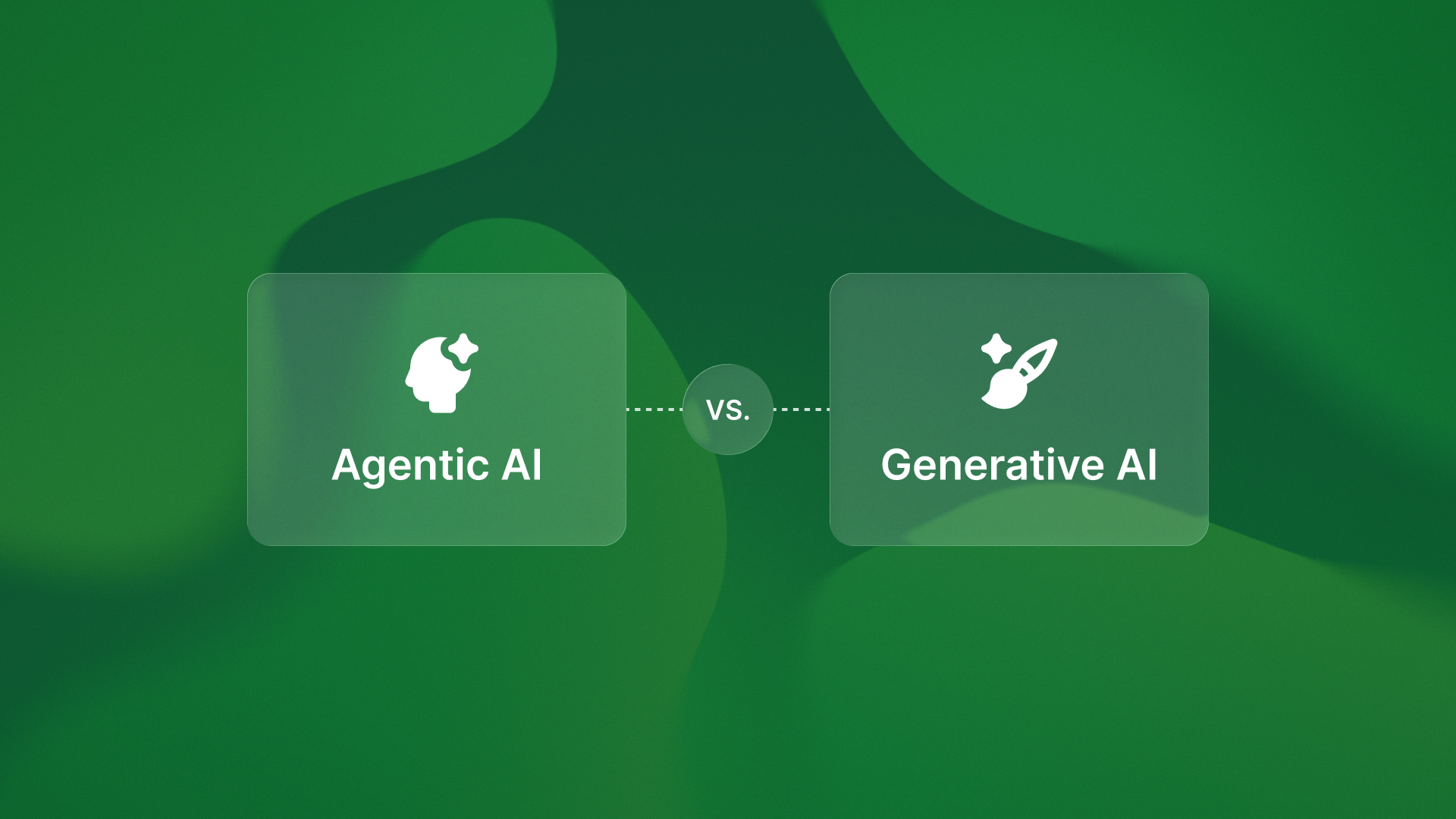
Agentic AI vs. Generative AI: what's actually different in 2025

ChatGPT writes your emails. Our AI agent sends them, follows up, tracks responses, and updates your CRM.
That's the difference between generative AI and agentic AI.
Most founders think generative AI and agentic AI are the same thing. They're not. And the distinction matters more than you think.
Generative AI: The creative assistant
What it does: Generates content on demand-text, code, images, audio.
How it works: You prompt, it responds. You're in the loop for every decision.
Examples: ChatGPT writes your blog post. GitHub Copilot suggests code. DALL-E creates images.
The key limitation: It waits. Every step requires human direction.
Agentic AI: The autonomous operator
What it does: Perceives its environment, sets goals, takes actions, learns from results.
How it works: You set objectives, it figures out how to achieve them. It operates independently.
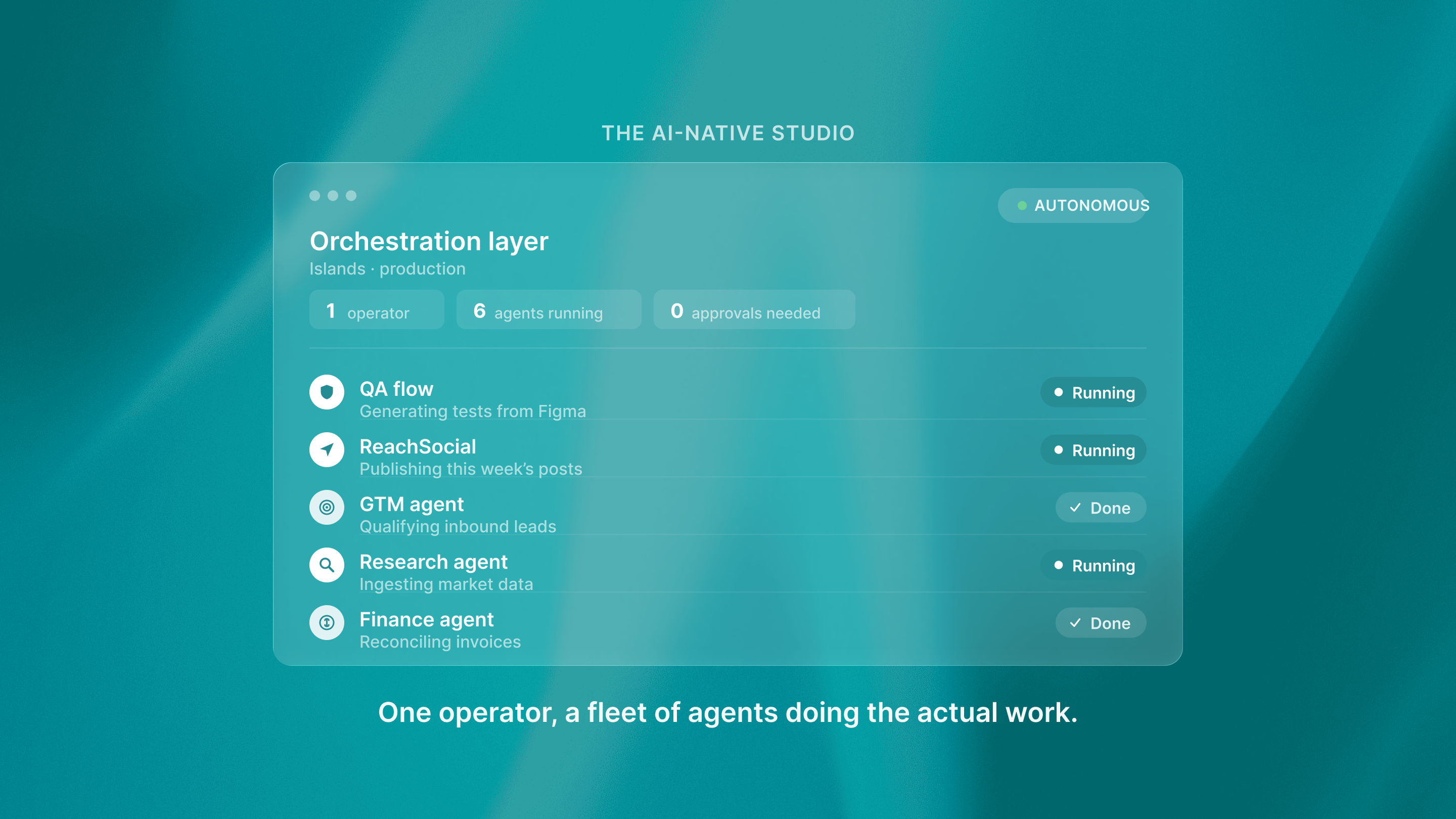
Examples: Our QA flow agent runs tests, finds bugs, and deploys fixes. Our ReachSocial agent finds prospects and nurtures relationships.
The key advantage: It acts. No prompting needed.
The technical difference
Generative AI is a model. Agentic AI is a system that uses models.
Think of it this way:
- Generative AI = The engine
- Agentic AI = The entire self-driving car
An AI agent might use GPT-4 for reasoning, but it also needs memory (to track context over time), planning (to break goals into steps), tools (to interact with systems), and feedback loops (to learn and adapt).
Why B2B SaaS needs both
Use generative AI when:
- You need creative output (writing, design, code)
- The task requires human judgment
- Context changes constantly
- One-off requests
Use agentic AI when:
- You need continuous operation
- The task is repetitive but requires judgment
- You want systems to improve over time
- Volume is too high for humans
The real power: combining them
The best B2B SaaS products use both.
Example: Our ReachSocial platform. Generative AI writes personalized outreach messages. Agentic AI decides who to contact, when to send, how to follow up.
Example: Our QA flow platform. Generative AI suggests test cases and fix proposals. Agentic AI decides which tests to run, monitors results, and deploys fixes.
The 2025 playbook
If you're building B2B SaaS: start with generative AI for customer-facing features (writing, analysis, suggestions), add agentic AI for operations (monitoring, maintenance, optimization), and combine them for workflows that need both creativity and execution.
The mistake most make
Founders think they need to choose. They don't. Generative AI makes your product smarter. Agentic AI makes it autonomous. You need both.
What's next
The convergence is happening now. OpenAI, Anthropic, and Google are all building more agentic capabilities into their models. By 2026, the line between "generative" and "agentic" will blur. Models will ship with built-in planning and tool use. But right now, in 2025, you need to build the agentic layer yourself.
The companies doing this now-like the 12 startups in our portfolio-are seeing compound advantages. Their products don't just respond faster. They operate autonomously. That's the future. And it's here.
Building agentic AI? Connect with Islands
Success Stories
Read more

.png)
.svg)
