.svg)
Why production AI agent deployment fails for 65% of organizations

.png)
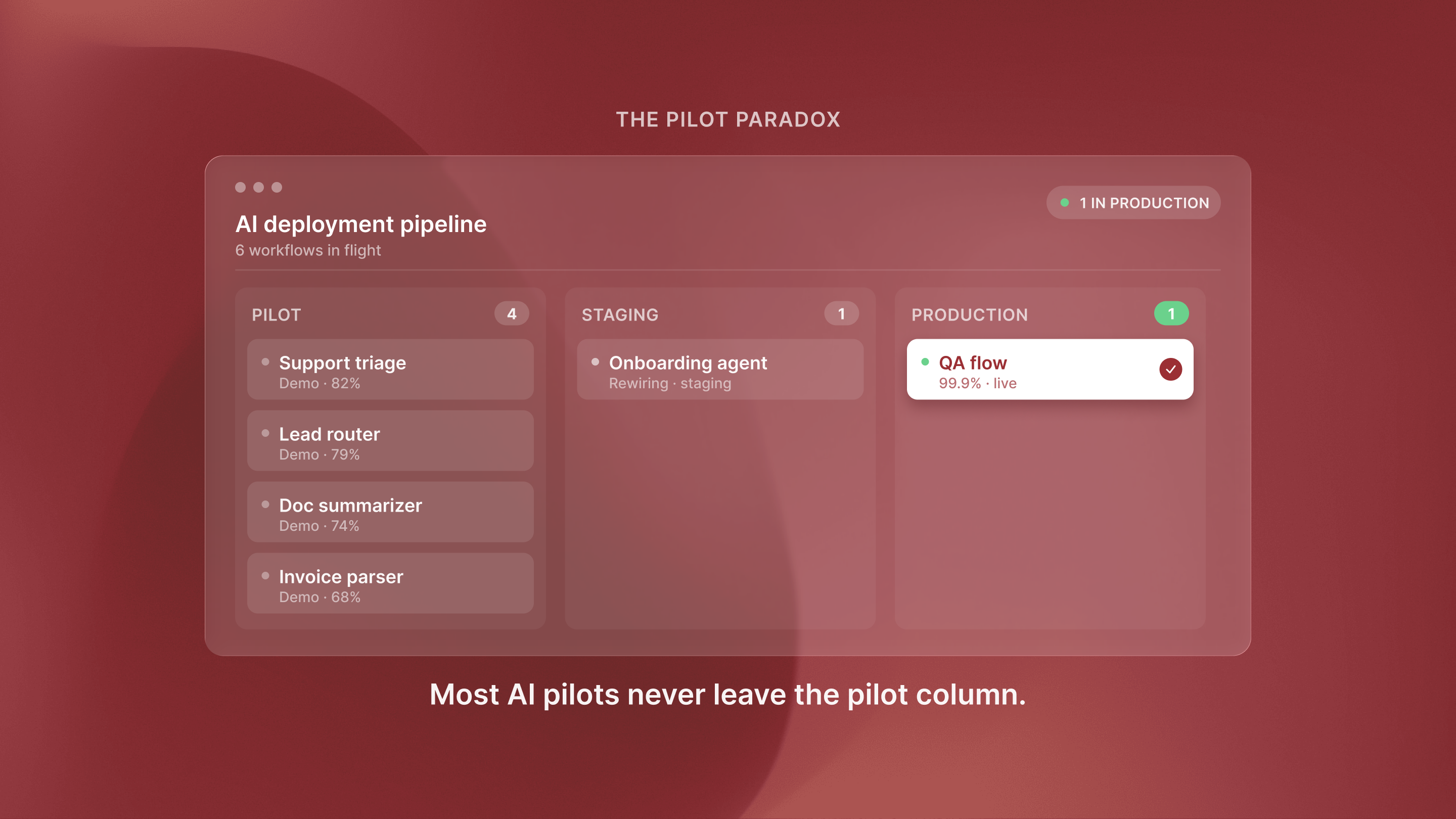
Everyone says AI agents are the future. We're focused on why 65% can't get them past the pilot stage.
McKinsey reports 23% of organizations are scaling agentic AI systems while 39% are stuck experimenting. KPMG's Q4 AI Pulse Survey found that 65% of leaders cite agentic system complexity as the top barrier for two consecutive quarters. This isn't a temporary growing pain. It's an architectural problem that kills production deployments before they ship.
The gap isn't about better models or more data. It's about orchestration infrastructure that pilot projects never build. Demos work with simple stateless architectures. Production agents require governance systems that run autonomously for months without human intervention.
Quality issues kill production at 3x the rate
LangChain's State of AI Agents Report says 57% of companies use AI agents in production. But for 32% of them, poor quality is the main reason they fail. That gap between deployed and reliably operational reveals what's missing: the governance layer that demo architectures skip entirely.
Here's the reality. Pilots prove an agent can complete a task once. Production needs that same agent to handle edge cases, recover from errors, keep state through failures, and coordinate with other systems without human oversight. The architecture that works for one successful demo collapses under production load.
.png)
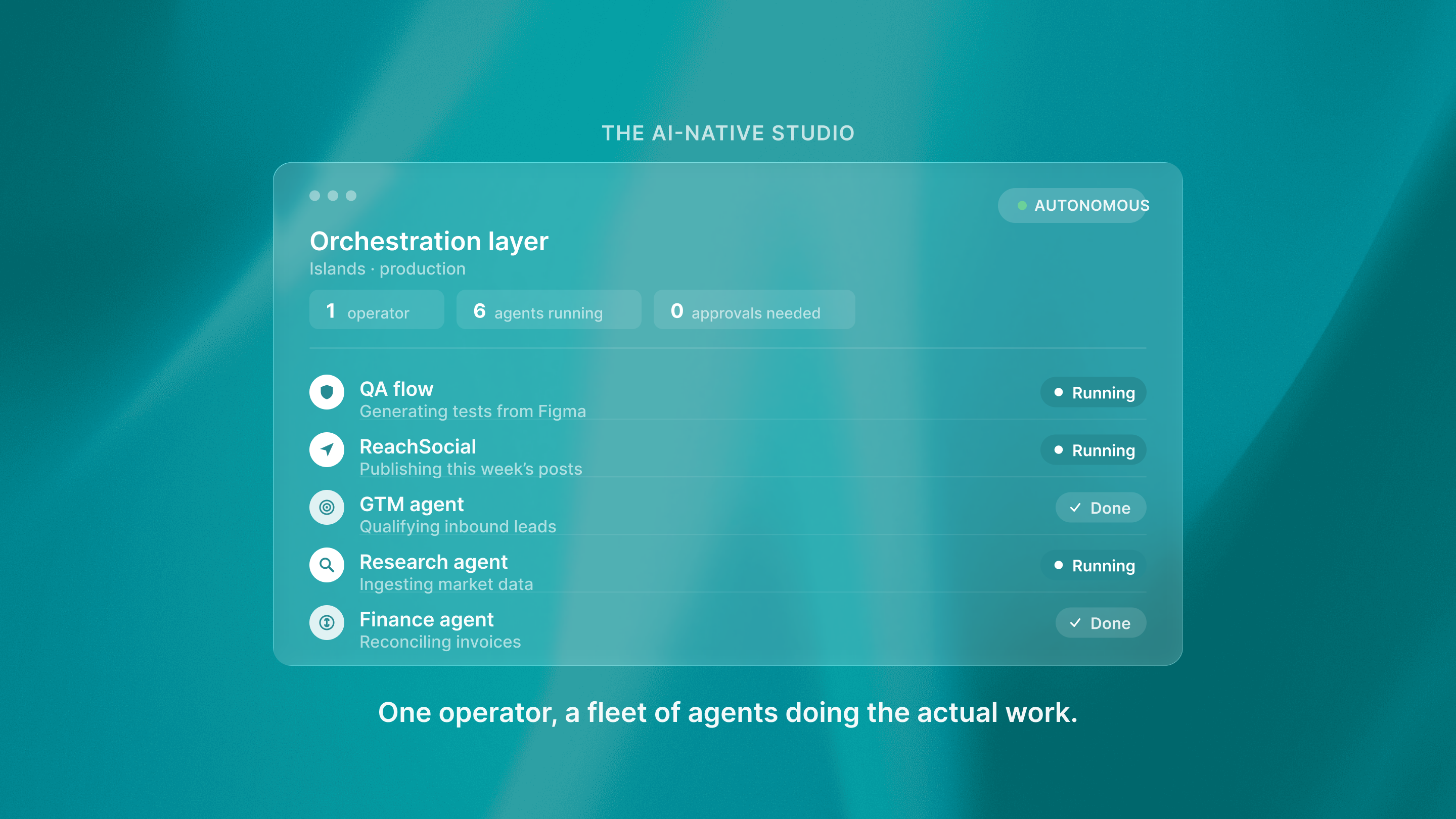
When we built QA flow, autonomous testing from Figma designs, the pilot ran Selenium scripts and caught bugs. The production system required Temporal-style workflow orchestration, persistent state management in PostgreSQL, and Datadog monitoring infrastructure. That's not bolting features onto a demo. That's rebuilding the foundation for autonomy.
The assistant vs agent architecture mistake
Most teams waste 6-12 months building the wrong architecture because the market conflates AI assistants and agents. Assistants enhance productivity with human-in-the-loop workflows. Agents replace entire workflows and require fundamentally different orchestration.
Assistants like GitHub Copilot or ChatGPT are stateless. They respond to prompts, enhance human work, and don't need error recovery because humans catch mistakes. Agents must operate autonomously, which means planning for failures, persisting state across interruptions, and logging decisions for governance.
The pattern is clear across our portfolio deployments. Ingage, which orchestrates LinkedIn campaigns, needed multi-agent coordination that pilot projects never plan for. One agent analyzes engagement patterns, another schedules posts, a third monitors performance. That's not three assistants. That's autonomous workflow orchestration with state management connecting their outputs.
What production orchestration actually requires
Planning for autonomy from day one means architecting for workflows, not tasks. Production agents need Temporal-style orchestration that handles long-running processes, retries failures, and maintains state across service restarts. They need databases like PostgreSQL for persistent state, not in-memory caches that vanish on restart. They need monitoring infrastructure like Datadog or PostHog that surfaces agent behavior before it causes production incidents.
This isn't theoretical. When Islands ships production AI systems, we build orchestration tools most pilots skip: workflow engines, state persistence, error recovery, decision logging, and monitoring dashboards. The governance gap is architectural, not technological.
The competitive timeline
Teams that wait for better AI models will still have orchestration problems and will need to change their architecture in 12 to 18 months.
The difference between pilots and production isn't marginal improvement. It's fundamental architecture designed for autonomy from day one. That's what separates the 23% scaling from the 65% stuck on complexity.
Success Stories
Read more


.svg)
