.svg)
Why AI-powered content creation for marketers requires agentic architecture


The marketing job description quietly tripled in 2025. What used to be “run a blog and a newsletter” is now much more. Now it means running a blog. It also means running a newsletter. It means managing LinkedIn, Substack, Medium, X, and Reddit. It also means posting YouTube Shorts. It means producing a podcast. And it means running an SEO program. It is built for both Google search and AI search Headcount didn't triple. Budgets didn't triple. So something had to give.
Most marketing teams gave up coverage. They picked two channels and let the rest die.
Then AI-powered content creation arrived and changed the math. One person can use an AI-powered content platform. They can publish content on every channel the marketing team uses. Not slower. Not worse. At the cadence a modern brand needs to compete.
Geoffrey Moore wrote Crossing the Chasm. He showed how technology moves from early adopters to the mainstream. He also explained why this moment is different:
"Without a sense of urgency, desire loses its value." - Geoffrey Moore
AI marketing is now foundational, not optional. This piece explains why. It also shows what AI marketing tools unlock for content teams. It explains how top AI tools are reshaping the whole production pipeline.
The shift behind the AI marketing news cycle
Every week brings new AI marketing news. New models. New launches. New "AI changes everything" headlines. Underneath the noise, three structural shifts matter.
Nate Silver built his career on separating real signal from confident noise, and he gave the principle its sharpest formulation:
"The signal is the truth. The noise is what distracts us from the truth." - Nate Silver, founder of FiveThirtyEight
Channels multiplied. Attention didn't. A founder, an agency, or an in-house marketing team now must show up on five to ten channels. Each channel has its own format, cadence, and audience expectation. No human team scales linearly to that surface area.
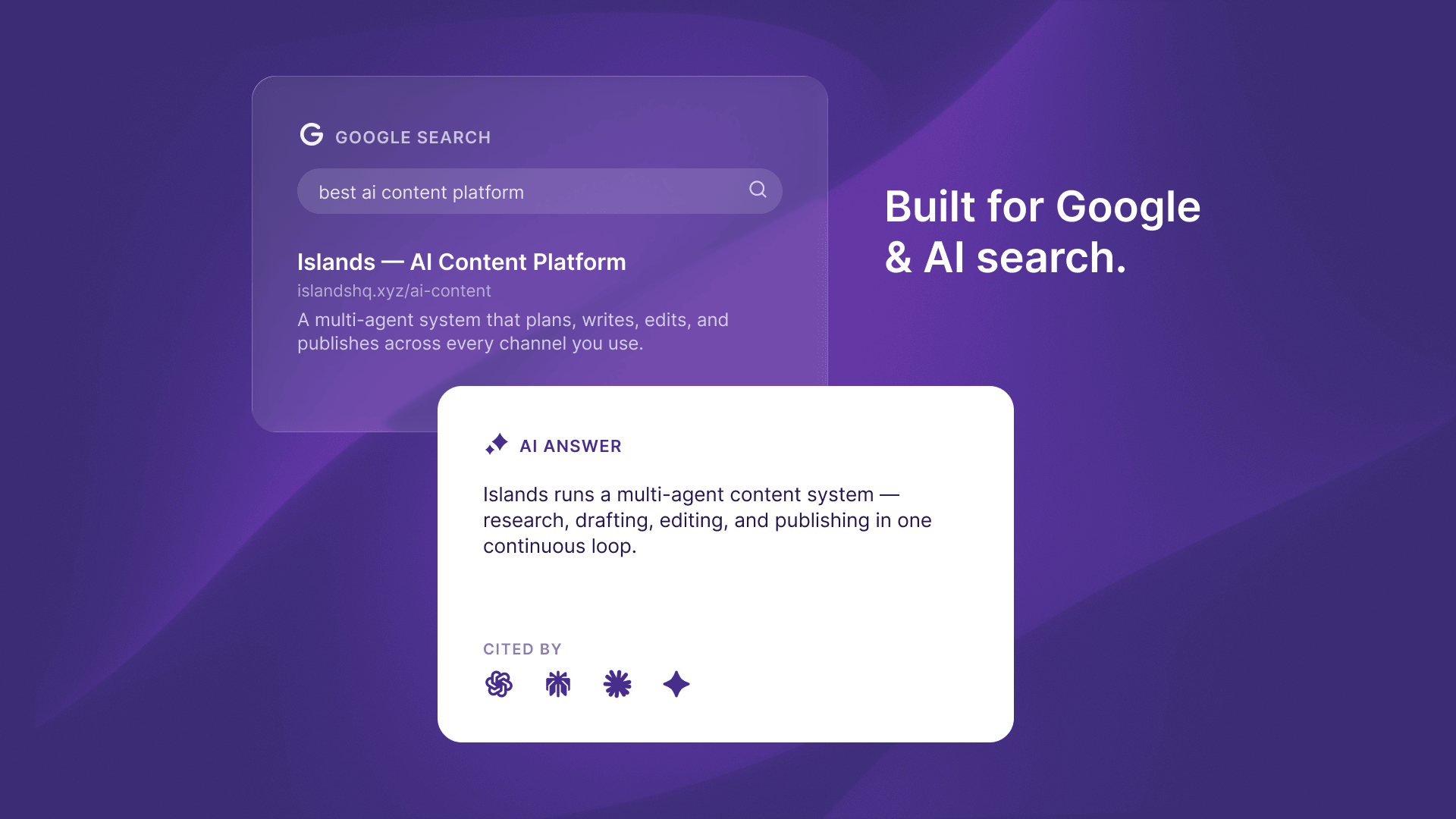
Search fractured. Half your prospects are still on Google. The other half are asking ChatGPT, Perplexity, Claude, and Google AI Overviews. You now need to create content for AI articles. These pieces are structured to be cited by language models. You also need content designed for traditional search results.
The cost of "ok" content collapsed. Anyone with an AI content generator can produce a draft. So mediocre content stopped winning attention. The bar moved up to original research, founder voice, and depth. Marketers who can't produce that quickly are getting outrun.
What AI-powered content creation actually unlocks
1. Output that scales with strategy, not headcount. A real AI-powered content creation platform does keyword research, briefs a research agent, and sends it to a writer. Then it runs an editor review and publishes to your stack. One marketer with this setup outproduces a three-person content team running the old way. Operations leaders have described the system bluntly. It costs less than one junior marketer. It ships more than the three-person content team it replaced.
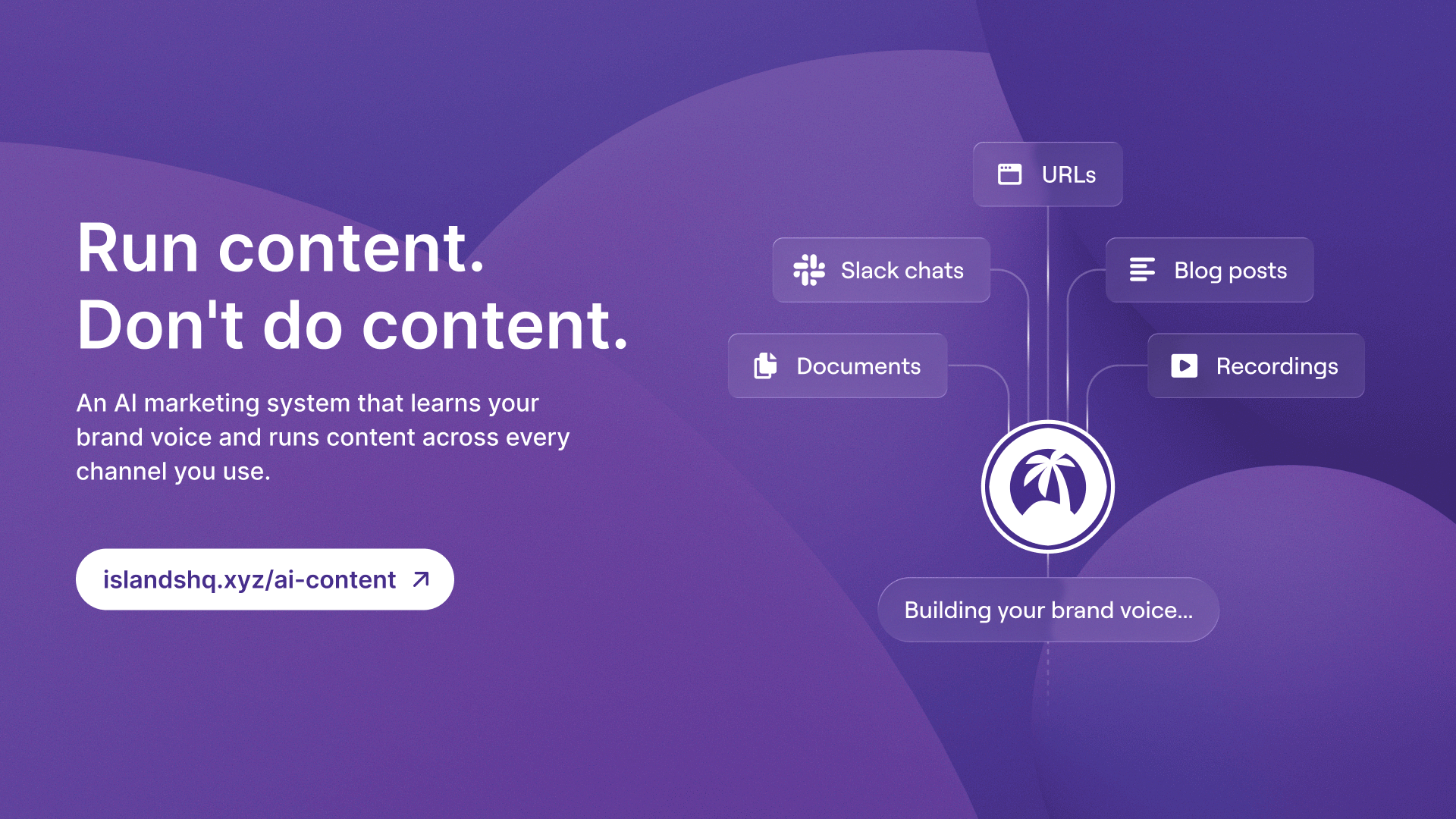
2. Brand voice that survives scale. Generic AI content generator output is what gives the category a bad name. A purpose-built platform ingests your docs, old posts, meeting recordings, and founder transcripts before writing a word. The output reads like you, not like everyone.
3. Multi-channel distribution without the copy-paste tax. The same pipeline can adapt one piece for WordPress, Substack, Medium, Shopify, customer.io, and LinkedIn distribution without anyone retyping a thing.
4. Keyword research baked in. SEMrush or Ahrefs feeds the strategy agent automatically. The system writes against real demand, not against guesses.
5. AI-search visibility on top of SEO. Modern content generation has to serve two masters: classic search engines and the LLMs answering questions on top of them. AI-powered systems structure pieces for both at the same time.
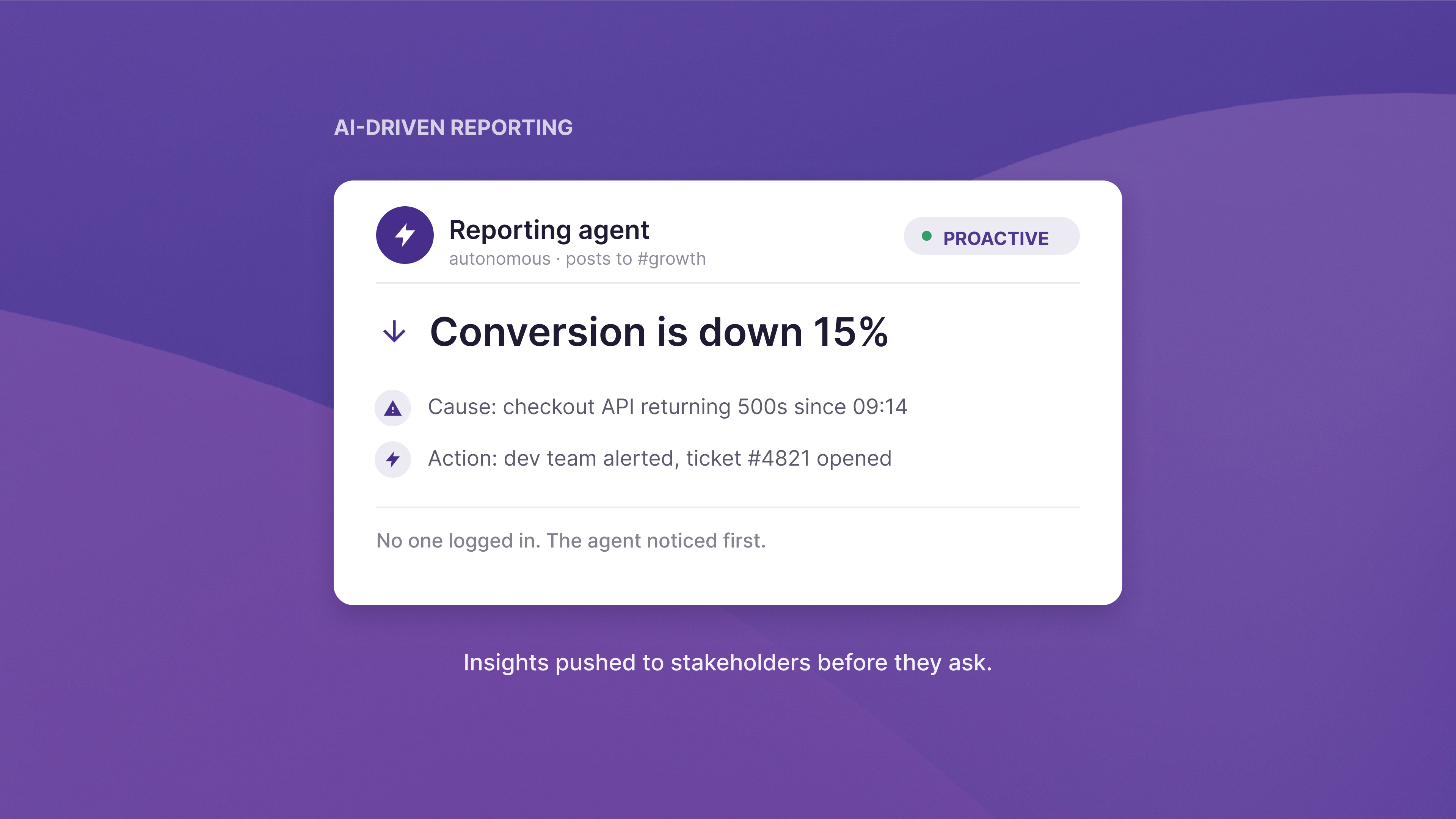
6. Real reporting on what worked. A reporting agent tracks traffic, rankings, and engagement weekly. Marketers stop guessing which content moved the needle.
What separates a game-changing setup from a noisy one
Not every AI tools for marketing pitch is the real thing. Five questions sort the operators from the demos.
1. Brand training. Does it ingest your docs, posts, and recordings, or write from a generic prompt?
2. Stack integration. Does it publish to your existing stack, or ask you to migrate?
3. Keyword research. Is SEMrush or Ahrefs feeding the system, or are you handing it topics?
4. Human review. Is a trained editor signing off on every piece, or is the AI shipping unsupervised?
5. Production results. Can the vendor show real subscriber and traffic curves from accounts that didn't exist six months ago?
If the answer to any of those is "no," that's an AI content generator, not an AI powered content creation platform.
Frequently asked questions
What is an AI powered content creation platform?
An AI-powered content creation platform is a multi-agent system. It manages keyword research, drafting, editing, distribution, and reporting from start to finish. It differs from a single AI content generator in that it covers the full production pipeline, not just the writing step.
What's the difference between an AI content generator and AI-powered content creation?
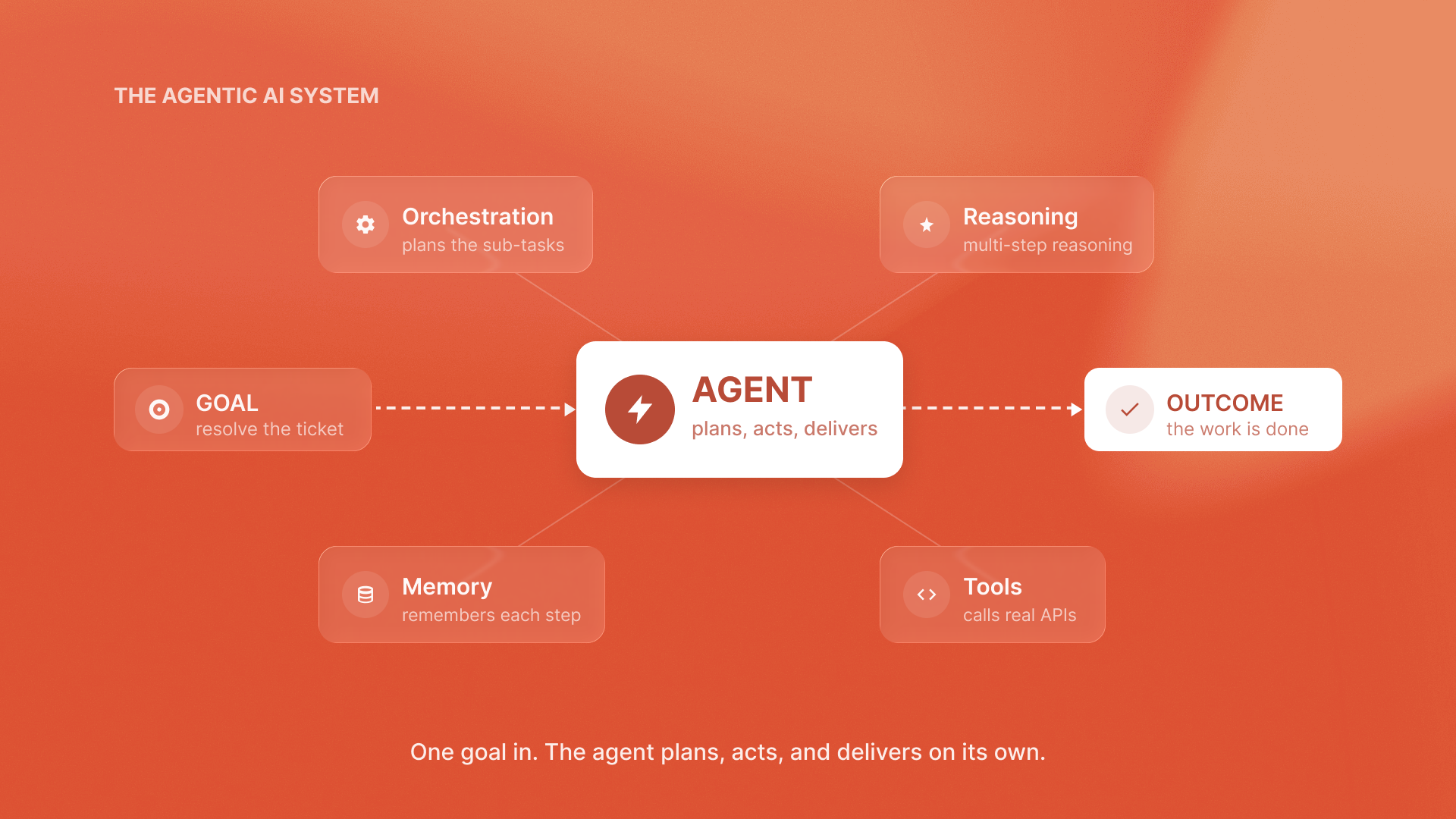
An AI content generator produces a single draft on demand. AI-powered content creation runs a full workflow. It includes a strategy agent, research agent, writer agent, editor agent, reporting agent, and platform sub-agents. The first replaces typing. The second replaces a content team's production workflow.
Can AI marketing tools replace a content team?
Not entirely. The strongest setups keep humans in the loop for review, judgment, and final approval. What AI marketing tools replace is the production tax: drafting, formatting, scheduling, and reporting. Strategy and editorial judgment stay with the team.
How does AI-powered content creation help with AI search visibility?
Modern AI marketing systems set up each piece so language models can cite it. These models include ChatGPT, Perplexity, Claude, and Google AI Overviews. That means clear question-and-answer structure, source citations, and entity-level clarity, on top of traditional SEO.
What does it cost to run an AI marketing system?
Roughly one-sixth of a traditional content agency for equivalent output, based on Islands' production benchmarks. The savings come from removing manual handoffs, not from cheaper writing.
The Islands view
Marketers who treat AI as a feature will get outrun by marketers who treat it as infrastructure. The first group will keep writing one post a week with help. The second will run a content engine across every channel, every week, without burning their team.
That's the real game-change. Not the headlines. The shift from doing content to running content.
Sign-up for free and see how an AI marketing system would run inside your stack.
Success Stories
Read more

.png)
.svg)
