.svg)
Why AI-native founders are skipping the traditional seed round

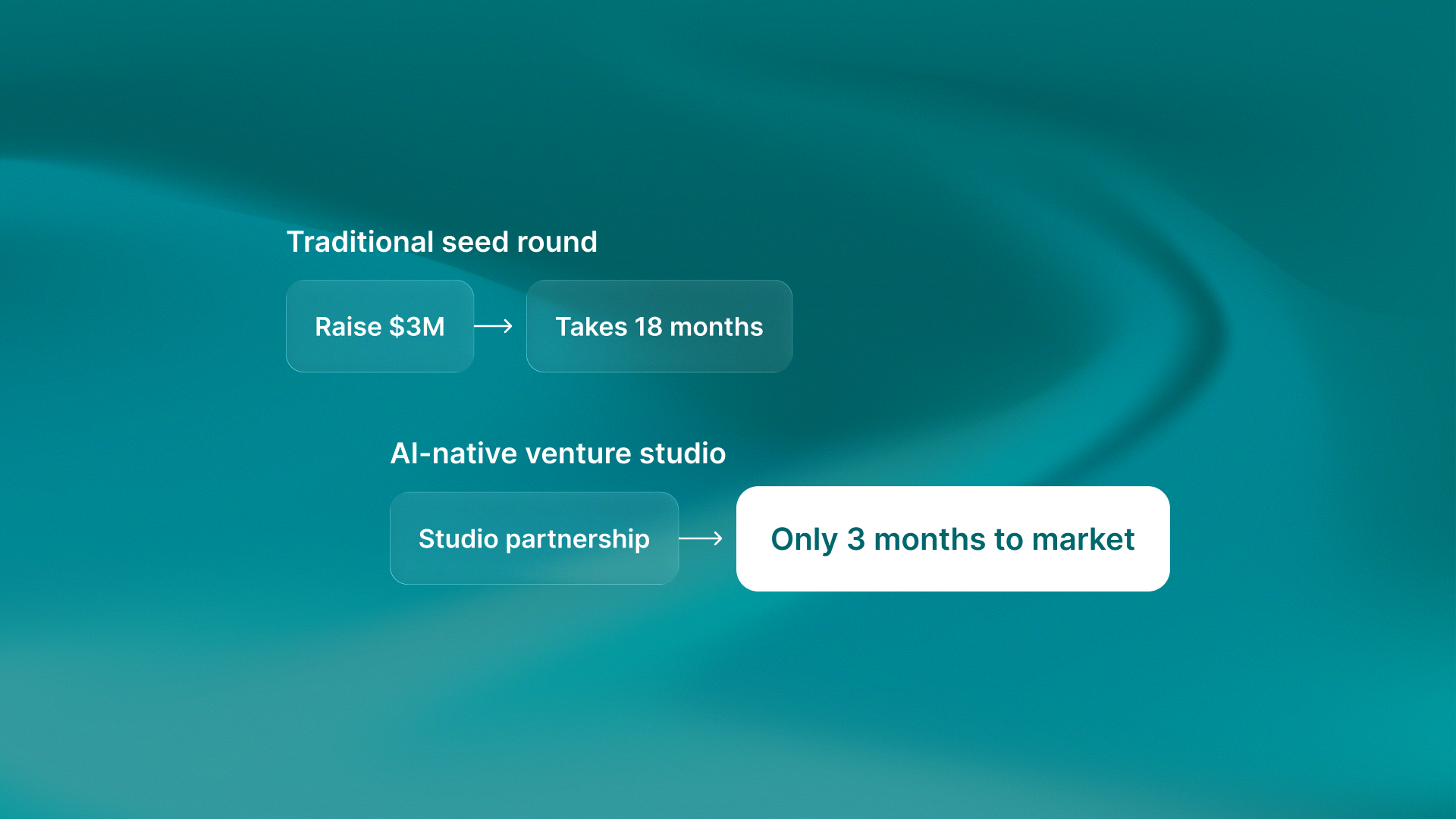
I've been talking to a lot of AI-native founders lately. They are realizing that a $3M seed check is actually a liability if it doesn't come with a production-ready architecture. In 2026, capital is a commodity. Speed is the only moat. The traditional raise first, build later mentality is too slow for a market that moves in weekly cycles. Founders who wait for a traditional seed round to start building are already six months behind the curve.
The architectural trap of the traditional seed round
Many founders waste seed capital building wrapper-style assistants that don't scale. They hire expensive engineering teams to build what Islands has already perfected. By partnering with a venture studio, you inherit a bedrock for technical growth. This allows you to deploy systems in weeks rather than months. This isn't about saving money. It's about avoiding the technical debt that kills startups before they reach Series A.
Strategic decision making
Choosing an AI-native venture studio vs seed round is the first strategic decision a founder makes. In our portfolio, we see founders who skip the hiring treadmill. They use pre-built agent architectures.They reach the market 3x faster. They aren't just building faster. They are building on a foundation designed for autonomous operations from day one.
Scaling with confidence
By leveraging existing frameworks, founders avoid the common pitfalls of early-stage development. This approach ensures the core product is strong enough to handle rapid user growth. It also avoids a full rebuild after six months.
The NAN Workflow advantage
We provide a pre-built advantage for AI integration through the NAN Workflow. This removes the blank page problem. Instead of starting from scratch, founders use established agent architectures from portfolio companies like QA flow and ReachSocial. This structural advantage allows you to focus on product-market fit while we handle the orchestration layer.
- Workflow elimination: Move from human-in-the-loop to autonomous execution.
- State management: Use proven PostgreSQL and Temporal patterns for reliability.
- Validation loops: Build automated checkpoints into every agent step.
This framework ensures that your AI startup speed to market isn't throttled by infrastructure bugs. You inherit the lessons learned from thousands of production deployments across our ecosystem.
The real economics of speed
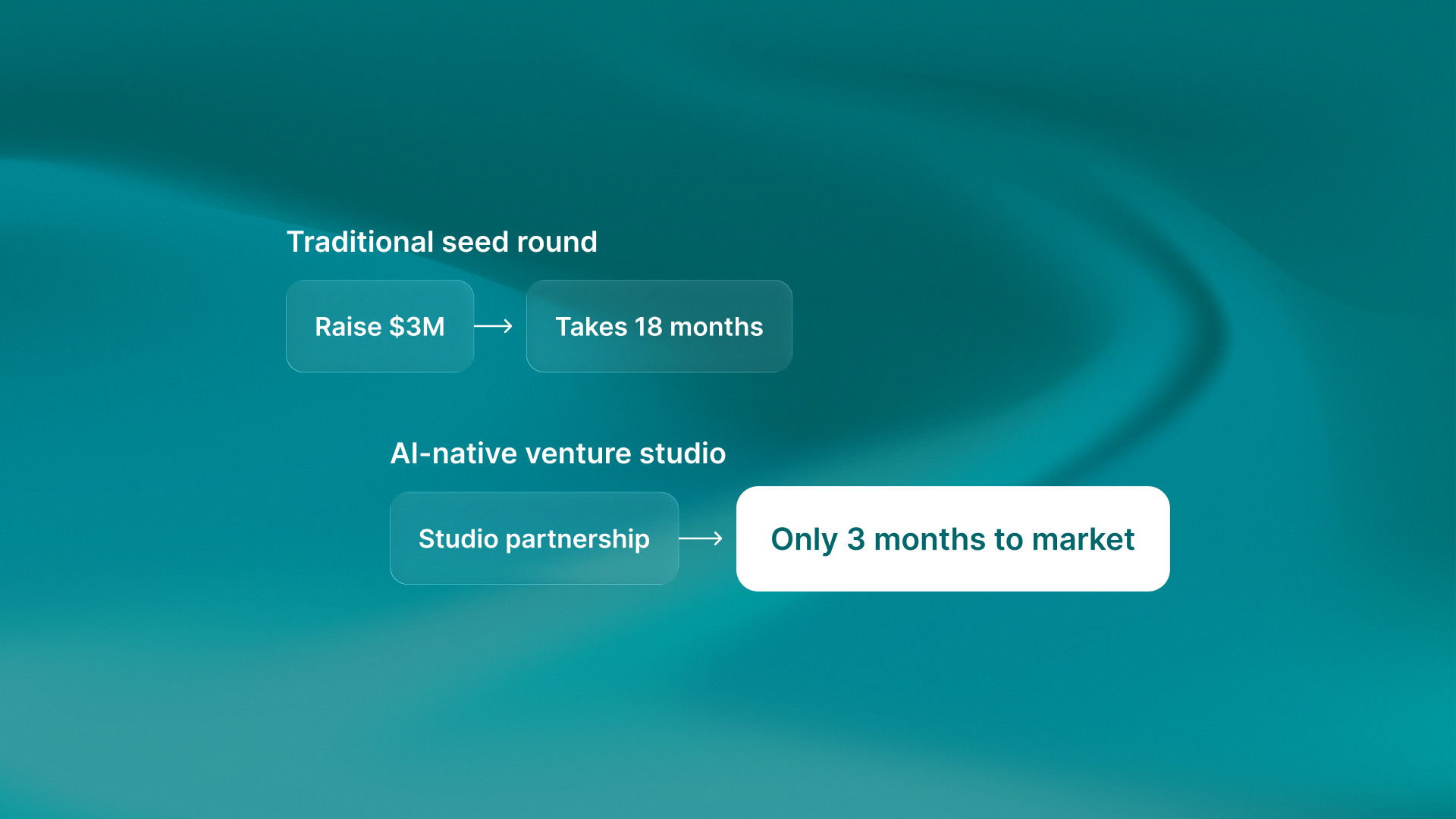
Consider the cost of a traditional technical hire. Mis-hires can cost startups up to $200K in the first year (Shoreline). By using fractional CTO for AI startups, companies compress AI deployment timelines from 13 months to 3 months. That 10-month head start is the difference between market dominance and obsolescence.
Raw capital doesn't solve architectural debt. If you build on a monolithic foundation, you will spend your Series A rewriting your core product. True autonomous agent architecture 2026 enables 200-400% ROI through labor cost elimination. A simple LLM wrapper can never achieve this. We see this clearly at Timecapsule, where 80% accuracy in tracking actually costs more than it saves. Precision requires the right architecture, not just more money.
The competitive advantage of specialized expertise
Traditional SEO strategies fail to capture visibility in AI-generated search answers. Companies need specialized GEO expertise rather than waiting 18-24 months for generalist teams to learn through trial and error. The same logic applies to your technical stack. You can spend a year hiring a team to learn how to build agents, or you can ship on a platform that already knows how.
Even in physical goods, we see this shift. Blanka 2026 allows beauty brands to launch in days by eliminating manufacturing delays. The common thread is the removal of friction. In 2026, the winner is the founder who removes the most friction in the shortest amount of time.
Choose your architecture first
The window for building foundational AI layers is closing. Founders who spend months hiring will be left behind by those who ship on day one. The hiring sequence for startups has changed. You no longer need a massive engineering team to find product-market fit. You need a massive architectural advantage. Choose your architecture before you choose your investors. Choose accordingly.
Ready to build on a foundation designed for speed? Explore how Islands makes this work.
Success Stories

.svg)
