.svg)
When vibe coding collapses: the architecture that separates prototypes from production

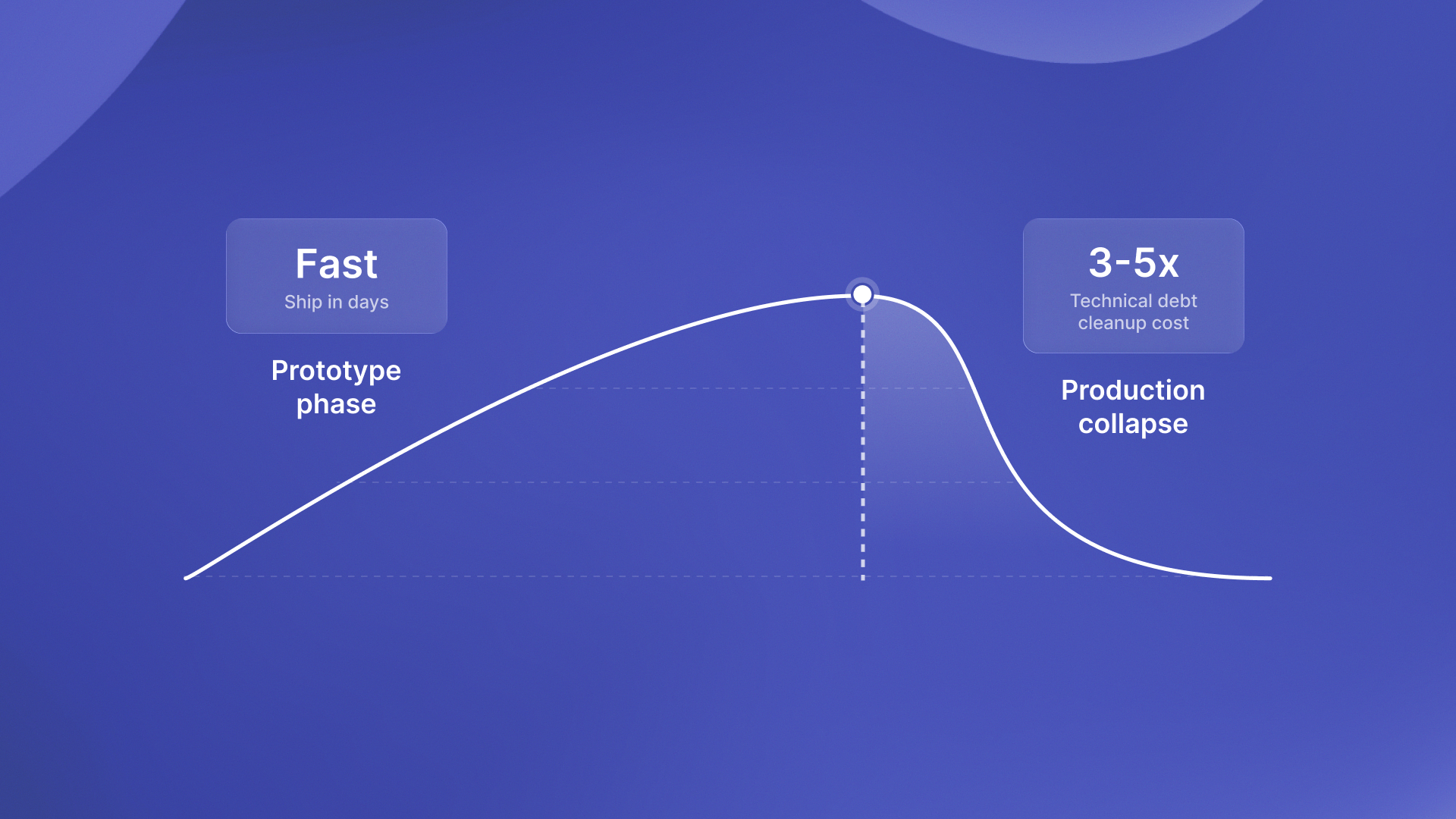
Cursor's CEO just called out the industry's dirty secret: vibe coding builds shaky foundations that crumble when complexity hits. He's right, but here's what he didn't say: when that happens and how to prevent it.
Vibe coding, the word of the year for 2025, delivers real productivity gains for prototyping. Tools like Cursor and Copilot help developers move faster, test ideas quickly, and ship proof-of-concepts in days, not weeks. The problem isn't the tool. It happens when companies use vibe coding in production systems and then pay with growing technical debt.
This isn't about assistants versus agents. It's about understanding when AI-assisted development works and when it fails catastrophically at scale. The difference comes down to architecture.
Where vibe coding excels and where it breaks
Vibe coding shines for exploration and validation. You're testing an idea, proving a concept, or building a demo for stakeholders. Speed matters more than perfect architecture because you're learning, not scaling. In this phase, AI coding assistants are genuinely valuable. They help you move fast and discover what works.
But that same approach creates technical debt when applied to production autonomous systems. Architectural patterns that work for demos can fail as complexity grows, user volume scales, or systems must run unsupervised. According to Fortune, Cursor's CEO explicitly warns that things start to crumble when you add complexity. This isn't theoretical. It's happening to companies right now.
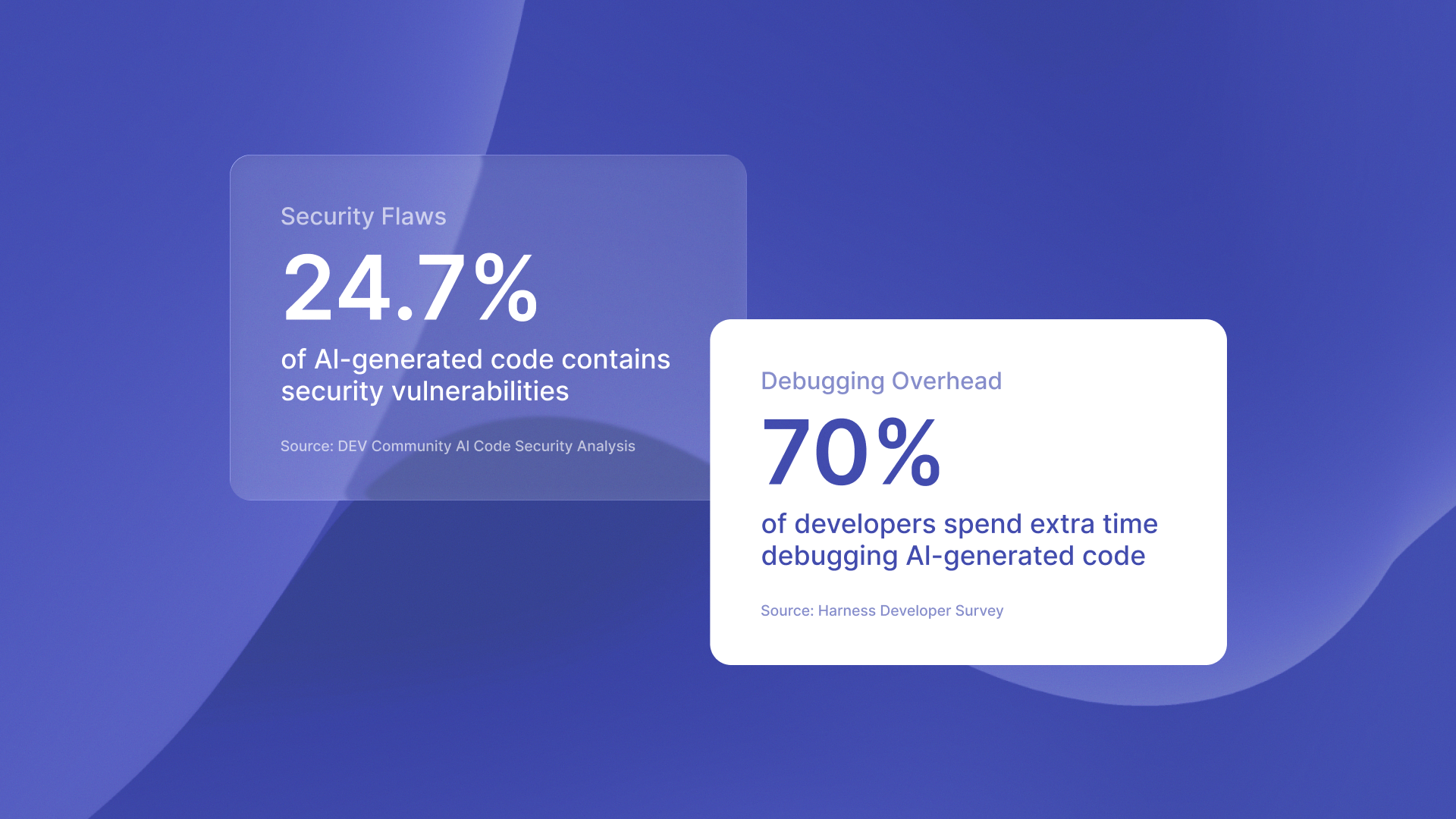
The data supports this pattern. Research from DEV Community found that 24.7% of AI-generated code has security flaws. Harness reported that 70% of developers spend extra time debugging AI-generated code. Fast iteration trades long-term maintainability for short-term velocity. That trade works for prototypes. It destroys production systems.
Production AI requires different architecture from day one
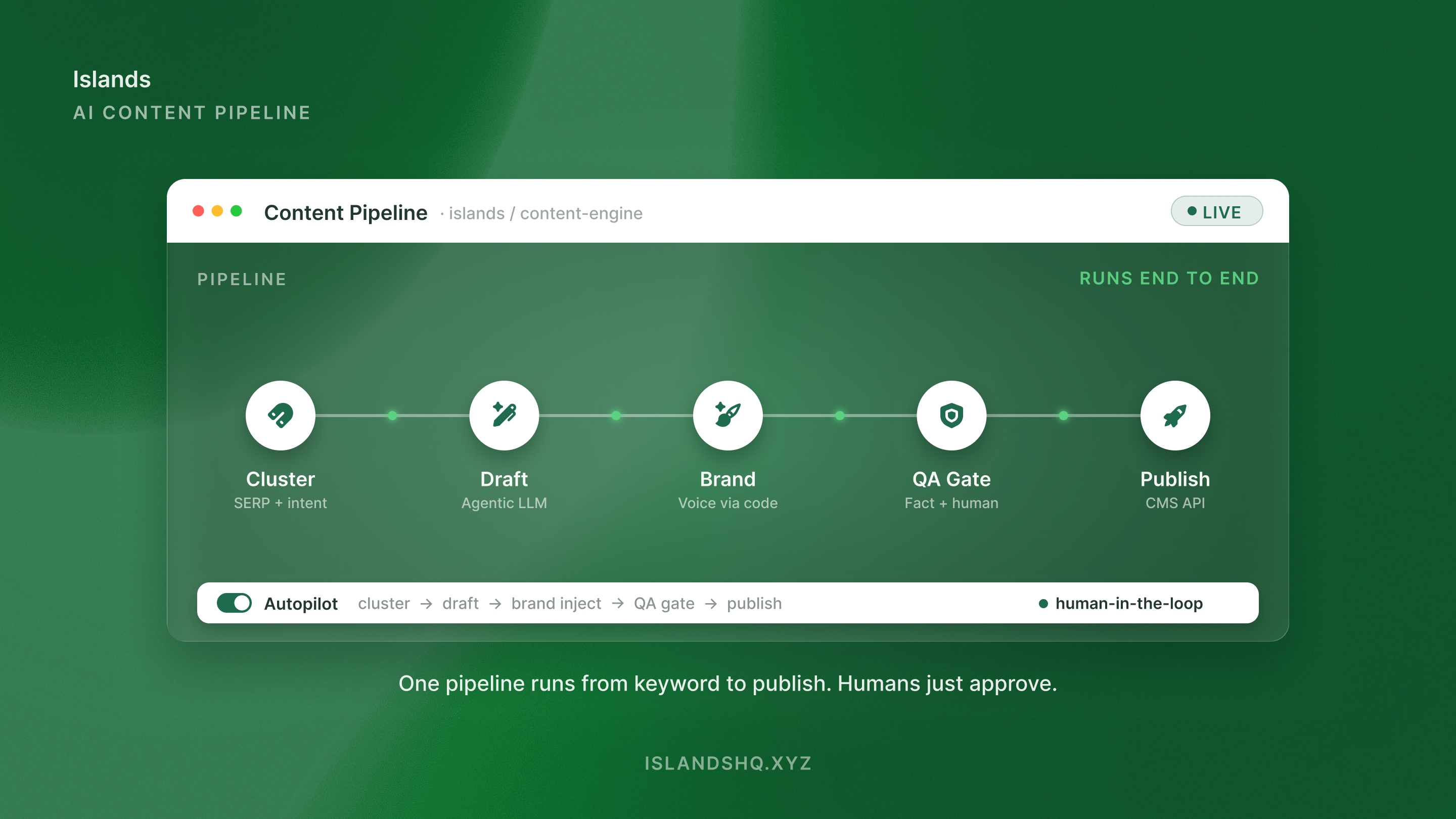
Autonomous systems in production, like QA flow for regression testing, should plan for orchestration from day one. They should also plan for error handling and state management. This includes systems like ReachSocial for LinkedIn automation. These patterns are absent in vibe coding workflows but essential for systems that operate unsupervised.
Here's the distinction that matters: AI-assisted prototyping optimizes for iteration speed. Production autonomous systems optimize for reliability under complexity. You can't retrofit the second from the first. The architectural decisions are fundamentally different.
Companies that deploy autonomous agents in production build orchestration layers that coordinate multiple agents. They also build error boundaries that contain failures without cascading. They use state management to track context across operations. They add observability hooks that surface issues before they compound. Vibe coding workflows skip these patterns because they slow down iteration. That's fine for exploration. It's catastrophic for production.
The real question: when to switch playbooks
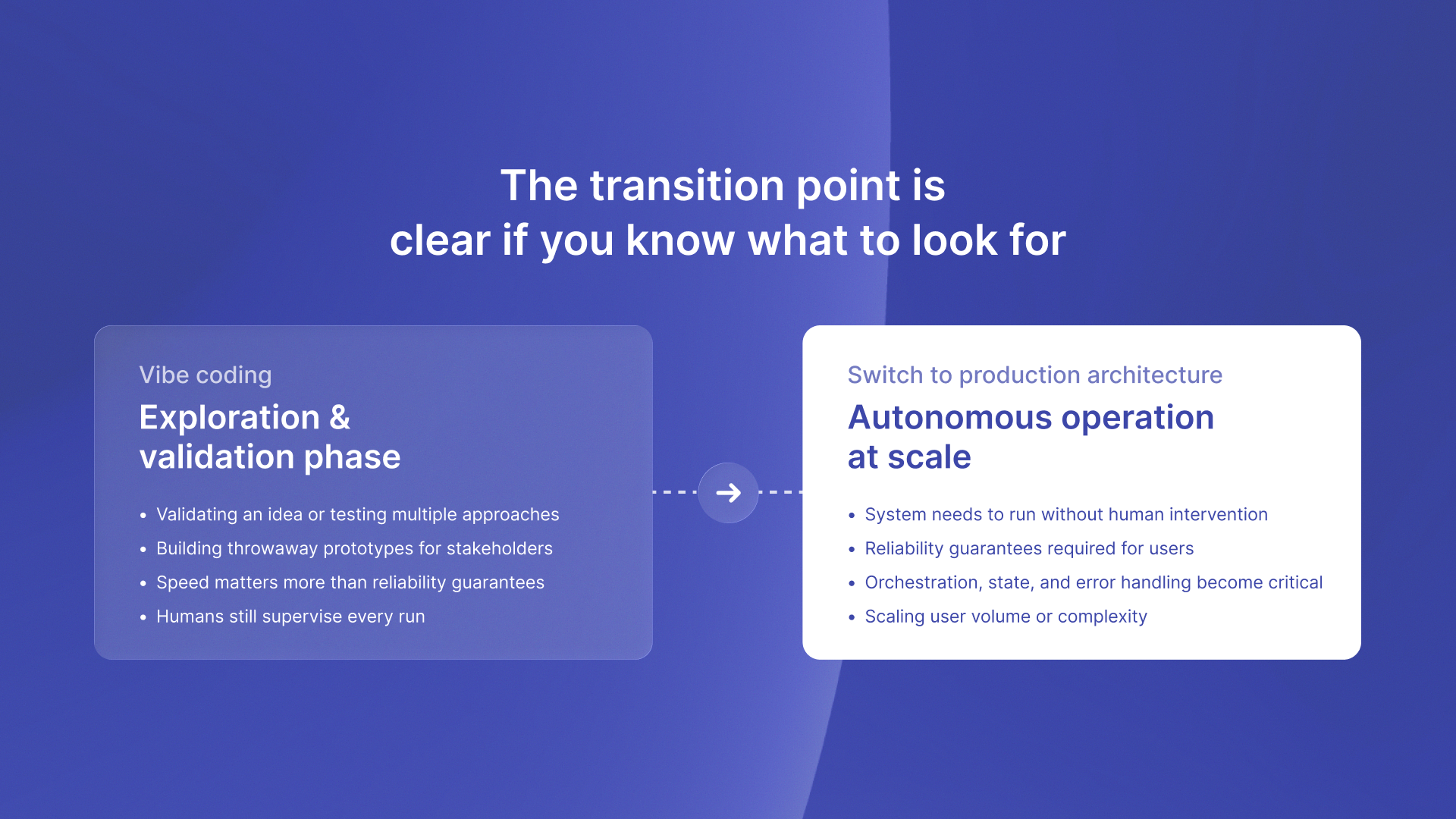
The decision isn't vibe coding versus production architecture. It's knowing which problems require which approach and having clear transition paths between them. Successful AI deployments use vibe coding for exploration and validation, then rebuild with production patterns before scaling.
Companies that skip the rebuild step pay three to five times more in technical debt cleanup later. We've seen this pattern across portfolio deployments. The teams that win aren't the ones coding fastest. They're the ones that know when to switch from exploration mode to production mode.
Here's the framework: use vibe coding when you're validating an idea, testing multiple approaches, or building throwaway prototypes. Switch to production architecture when you're ready to scale, need autonomous operation, or require reliability guarantees. The transition point is clear: when your system needs to run without constant human intervention.
What happens next
Companies building AI systems in 2026 need two distinct playbooks, one for exploration and one for production. The competitive advantage goes to teams that architect for production from the start when deploying autonomous systems. The companies doing this now will have an 18-month head start when competitors are rewriting their vibe-coded prototypes.
Proven playbooks from live deployments beat expensive experimentation every time.
Success Stories
Read more

.svg)
