.svg)
I watched an AI agent replace a $180K marketing manager in 90 days. Here's what actually happened

.png)
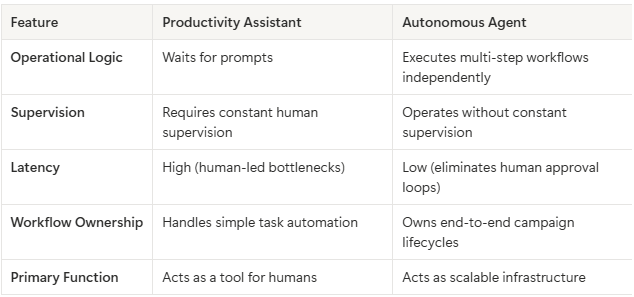
I recently watched a $180,000 marketing manager get replaced by an AI agent in exactly 90 days. It wasn't a cost-cutting hack. It was an architectural overhaul. The startup was drowning in executive overhead. Their marketing lead spent 70% of their week on manual coordination, reporting, and asset approval, which are typical marketing operations manager time consuming tasks ai automation 2026 will solve. By shifting to an autonomous system, they didn't just save on salary. They eliminated the latency of human-led operations.
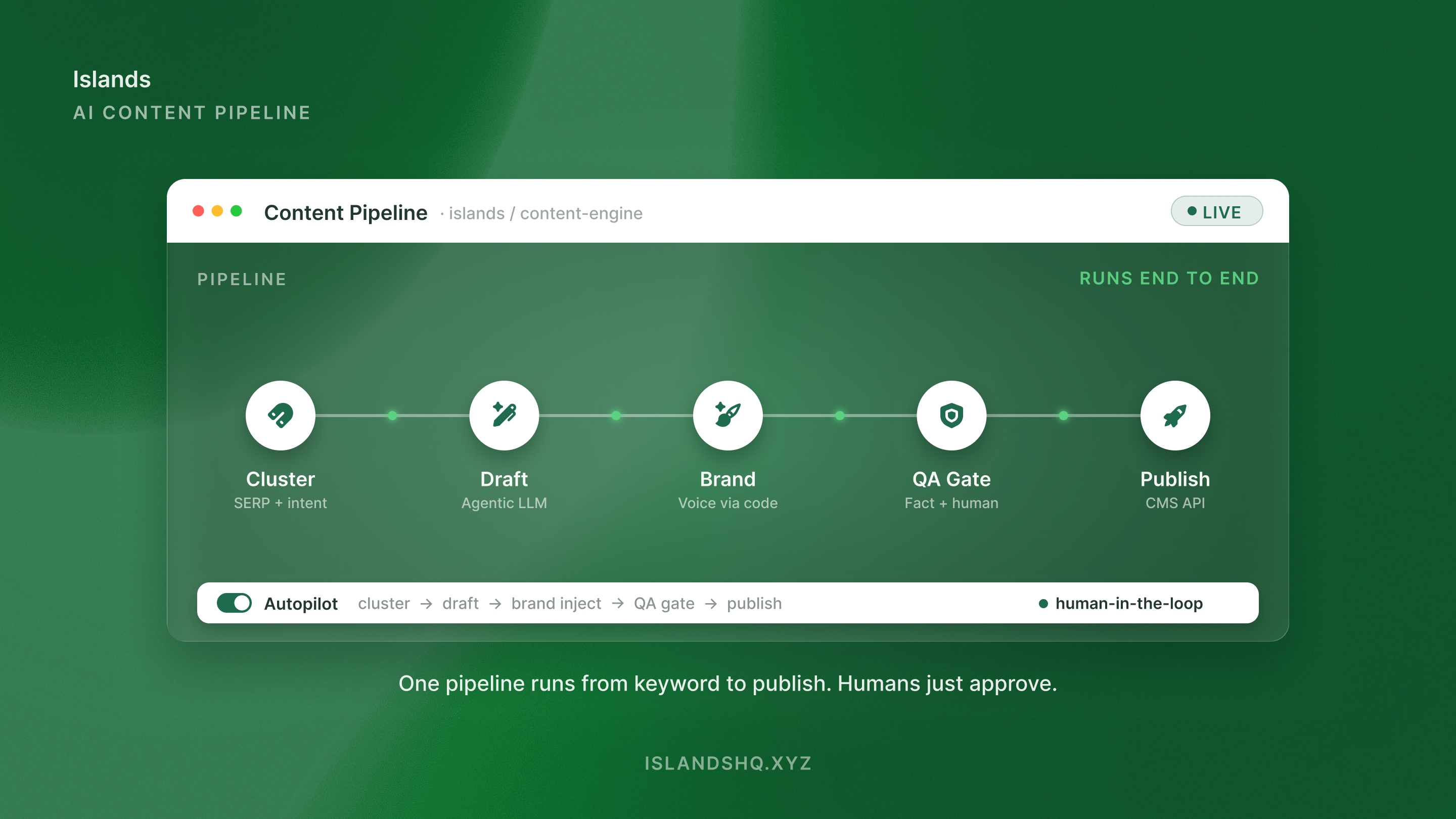
There is a massive difference between a productivity assistant and an autonomous agent. Assistants wait for prompts. Agents possess the logic to execute multi-step workflows without constant supervision. For technical leaders at Series B startups, this is the most critical AI marketing news of the year. The 90-day window is the benchmark to prove AI ROI and transition from human-led bottlenecks to scalable infrastructure.
.png)
Why marketing departments are becoming agentic islands
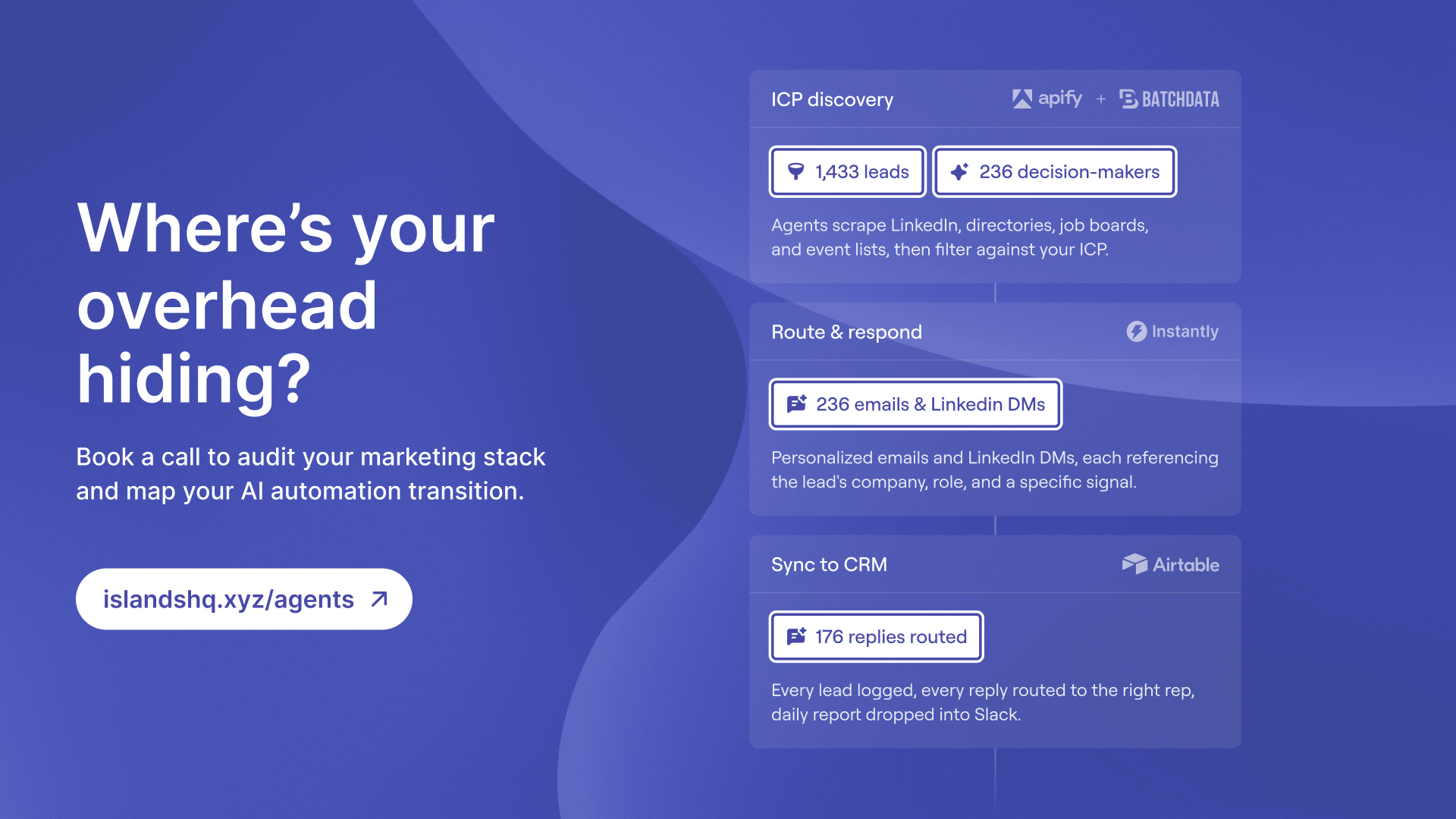
Autonomous agents move beyond simple task automation to end-to-end campaign execution. In the 90-day transition I observed, we didn't just give the team better AI marketing tools. We built a system where the agent owned the entire lifecycle of a lead. This included identifying high-intent accounts, generating personalized outreach, and updating the CRM based on response sentiment.
Dario Amodei, the Anthropic CEO whose Machines of Loving Grace essay reshaped how a generation of technical leaders think about AI's impact on knowledge work, put it in a line every Series B founder should read before their next marketing hire:
“The default trajectory of technology is that individual humans matter less over time.” - Dario Amodei, CEO of Anthropic
AI agents are increasingly capable of replacing traditional marketing departments by executing complex, multi-step workflows (Princeps Polycap). The shift is purely logical. Humans are high-latency. Agents are low-latency. When you remove the human approval loop from the middle of a campaign, your unit economics transform. This is where ai marketing news meets reality: you either architect for autonomy or you fall into the headcount trap.
The shift from assistants to autonomous logic
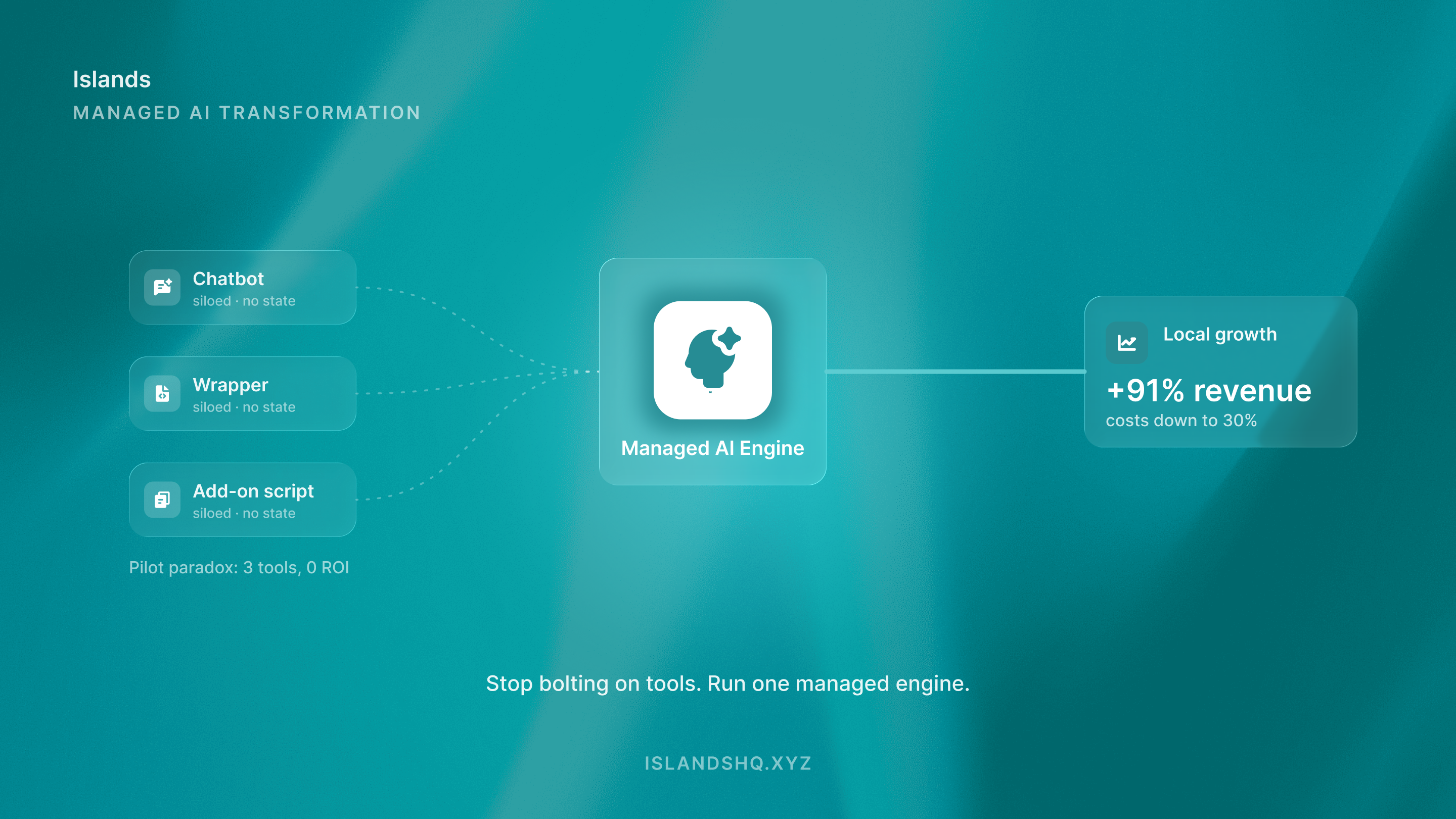
Replacing high-level roles requires re-architecting workflows around agents. These agents must have the logic to execute within a single business quarter. Most companies fail because they try to force AI into human-shaped boxes. They want the AI to act like a manager. Instead, you must build an environment where the agent can navigate technical debt and data silos on its own.
Ethan Mollick, the Wharton professor whose Co-Intelligence research became the operating manual for how modern executives integrate AI into knowledge work, framed the human-shaped-box problem as clearly as anyone:
“AI is the best worst version of AI you will ever use.” - Ethan Mollick, Wharton School
Production ready systems in action
We see this daily in our own systems. For example, autonomous logic handles engineering content at scale by reducing test execution latency. Integrated workflows help build a sustainable AI LinkedIn presence by automating the high-touch engagement that usually requires a full-time marketing manager. These aren't just tools. They are the infrastructure of a modern AI digital marketing strategy.
The 90-day roadmap to executive replacement
Strategic implementation of AI agents can yield measurable ROI and operational shifts within a 90-day window (Mark Cijo). Success isn't about finding the perfect prompt. It's about data integrity and workflow mapping. If you don't know exactly how a lead moves through your funnel, an agent can't help you. This transition requires a move toward an ai automation agency model where the output is a functioning system.
.png)
Procedural steps for deployment
- Map every manual touchpoint in your current marketing operations framework.
- Consolidate your data into a single source of truth that an agent can query via API.
- Deploy fractional leadership frameworks to handle immediate technical audits.
- Deploy a pilot agent to handle the most repetitive 20% of the manager's workload.
- Scale the agent's logic to cover the remaining 80% as accuracy benchmarks are met.
How to use AI in marketing effectively
To use AI effectively, you must stop thinking about content and start thinking about systems. You use AI to build a machine that produces results, not just text. This requires understanding best AI marketing tools and how they integrate into real-time profitability monitoring. If you are still hiring full-time CMOs for early-stage infrastructure, you are burning runway on roles that agents can now orchestrate. Partnering with an AI website marketing agency can help streamline this transition.
Will marketing be replaced by AI
Marketing as a function will not disappear, but the way it is managed will change entirely. The role of a marketing manager is being replaced by an architect of agentic systems. If your current lead is still manually scheduling posts and checking email open rates, they are a bottleneck, not an asset. An AI automation agency website layout that converts clients often highlights this shift toward AI conversational marketing agency website development to improve engagement.
The bottom line
The transition from human-led to agent-orchestrated marketing is an infrastructure play, not a tool update. You are building a system that runs while you sleep. The manager we replaced didn't leave because the AI was smarter. They left because the AI was more efficient at the 2,000 micro-decisions that define modern ai marketing success.
Ready to see where your overhead is hiding? Book a call to audit your marketing stack and map your AI automation agency transition.
Success Stories
Read more

.svg)
