.svg)
5 E-commerce AI Solutions for Scaling Product Catalog Content in Weeks


I recently watched a Series B founder realize their 20-person content team was the biggest blocker to a global launch. They were manual. In high-velocity e-commerce, manual catalog management is a linear solution to an exponential problem. Implementing autonomous e-commerce AI solutions is the only way to break this cycle. Adding more headcount is a house of cards that collapses under the weight of its own management tax.
Scaling with e-commerce AI solutions
Human-in-the-loop latency kills global expansion. When every product description requires a human writer, editor, and translator, your time-to-market is measured in months. This lag is a massive opportunity cost that bleeds market share to faster competitors. According to Position Digital, AI-driven content strategies are now vital for e-commerce brands. They help drive leads and scale efficiently.
Table as you scale. Maintaining a consistent tone across 50,000 SKUs using human teams is nearly impossible. The result is a fragmented customer experience that erodes brand equity. You need an architectural shift toward systems that handle the heavy lifting without human intervention.
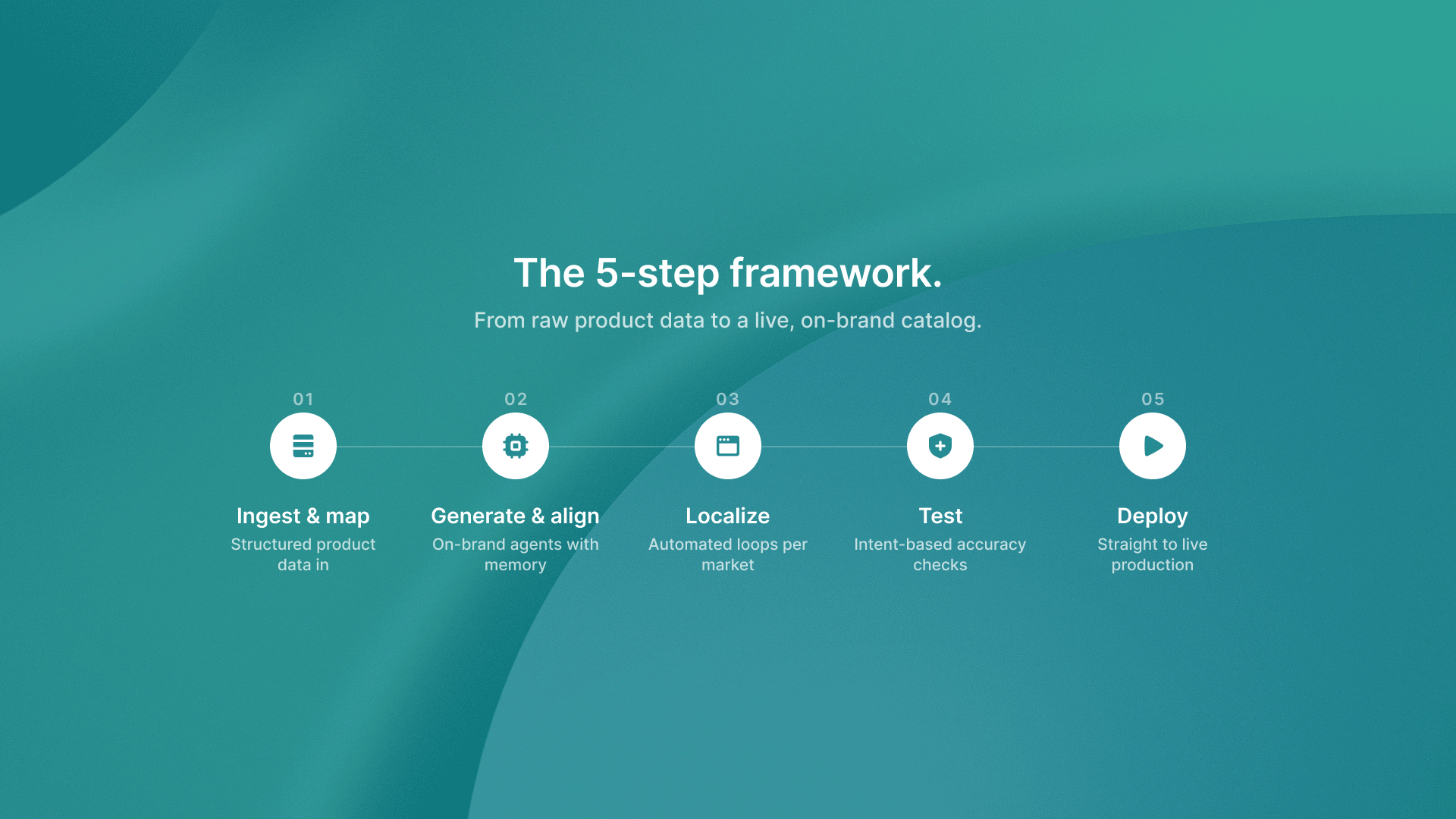
The 5-step framework for autonomous content scaling
Modern retail brands must transition to autonomous agentic workflows to avoid the headcount trap and maintain velocity. By using autonomous agents, companies can eliminate operational overhead while preserving strategic judgment. This transition needs a clear AI content strategy to ensure automated outputs match long-term business goals.
As Kent Beck, the creator of Extreme Programming, famously noted regarding engineering systems:
"Make it work, make it right, make it fast." — Kent Beck, creator of Extreme Programming
Roadmap for production-grade catalogs
- Ingestion and schema mapping for structured product data.
- Agentic generation and brand alignment using persistent memory.
- Automated localization loops for global markets.
- Intent-based testing to ensure catalog accuracy.
- Deployment to live production environments.
Replacing workflows vs. enhancing tasks
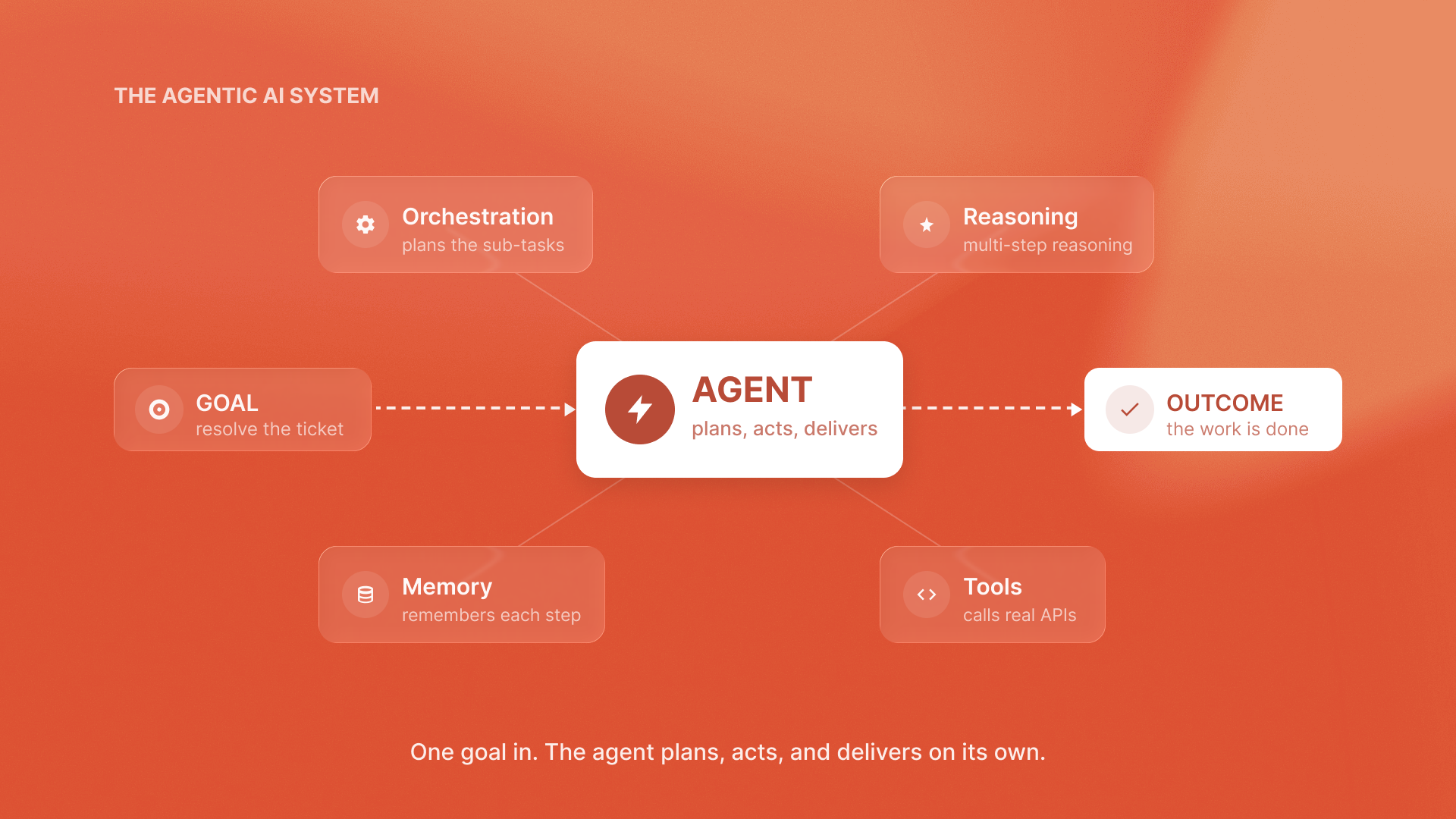
Most brands use LLMs as glorified spell-checkers. This fundamental mistake fails to drive the unit economic shifts required for true content scaling. Real ROI comes from replacing the entire workflow through product catalog automation. Instead of an assistant that helps a writer, you need an agent. This agent handles the ingestion, generation, and optimization without manual help.
The role of persistent memory
Autonomous systems maintain a brand-voice memory that human teams cannot replicate. This ensures that every product description adheres to your core brand identity, regardless of language or category. It turns your content into a technical asset rather than a recurring expense. These systems compress months of manual localization into weeks by maintaining a persistent brand-voice memory across languages.
Production-grade QA: Ensuring reliability at scale
Moving from demos to production requires a rigorous mindset where agents are audited before hitting the live catalog. You cannot afford hallucinations in a production catalog. Quality control requires a specific framework:
- Implement autonomous testing for lean teams via QA flow to prevent bottlenecks.
- Monitor unit economics to ensure scaling does not erode margins.
- Use a persistent feedback loop to refine agent logic.
- Audit for accuracy using intent-based validation.
- Standardize API documentation for cross-platform data flow.
What to do next: Your 30-day implementation
Immediate action items
- Identify the top 10% of your catalog that drives 80% of revenue.
- Pilot an autonomous generation agent for these high-impact SKUs to demonstrate effective content scaling.
- Measure the reduction in time-to-market and content production costs.
The bottom line
Speed is the only moat left for e-commerce giants. Build for autonomy or get left behind. The gap between shipping and waiting is defined entirely by your infrastructure. Build, run, and maintain.
Ready to scale your catalog today? Book a call with Islands to get started.
Success Stories
Read more


.png)
.svg)
