.svg)

.png)
Everyone building AI in 2026 faces the same architectural choice. Most get it wrong.
CTOs evaluating Claude Cowork, Twin.so, or custom AI agent architecture ask the wrong question. They compare features and pricing when they should be asking: "Do I need assistance or autonomy?" The answer determines whether you cap ROI at productivity enhancement or unlock workflow replacement economics.
Here's the gap. GitHub Copilot delivers 30% productivity gains by helping developers write code faster. QA flow delivers 420% ROI by replacing the entire QA workflow with autonomous agents. Both use AI. Only one eliminates headcount through architectural autonomy.
Assistants respond to commands, agents operate independently
The difference isn't capability. It's architectural pattern. AI assistants like ChatGPT, GitHub Copilot, and Salesforce Einstein respond to user commands. You ask, they help, you execute. This requires human oversight at every step, which means productivity enhancement without workflow replacement.
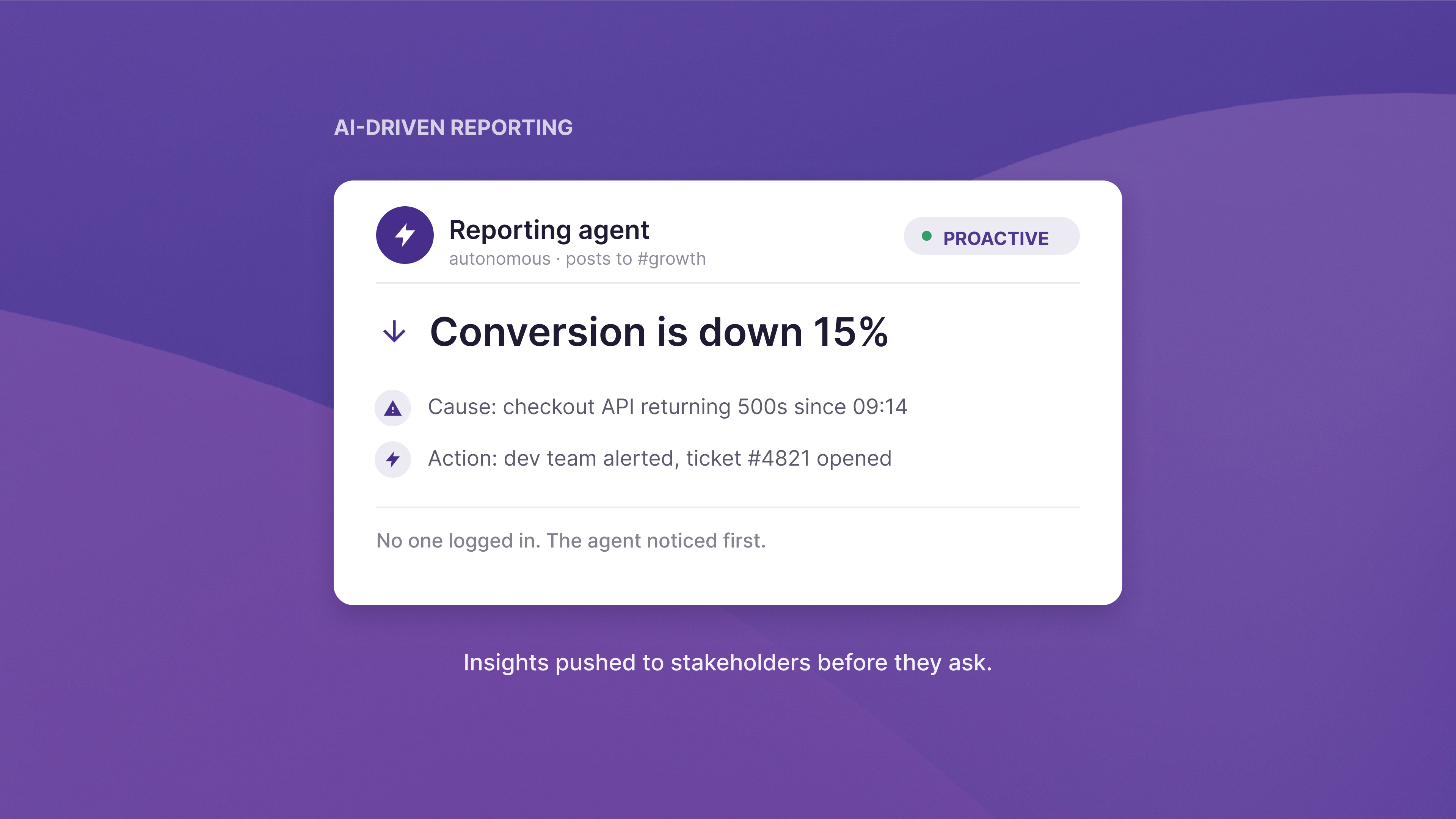
Autonomous agents operate differently. They perceive context, reason about goals, take action independently, and learn from outcomes without human intervention at each step. According to Tray.ai research from January 2026, agents represent three fundamentally different levels of capability and architectural requirements compared to copilots. Copilots assist. Agents execute.
This matters because assistance scales human capacity while autonomy replaces human workflows entirely. When QA flow runs test suites from Figma designs and automatically files bug tickets in Linear, no human executes those steps. The workflow is replaced, not enhanced.
The market is shifting from assistance to delegation
Microsoft Copilot is undergoing a major architectural transformation in 2026, moving from responding to individual commands toward operating as specialized autonomous agents, according to Sentisight AI analysis. This validates what we've seen in production: enterprises are moving from assistance to delegation because the ROI ceiling of productivity tools became clear.
Ampcome's 2026 research confirms this shift. Companies want agentic intelligence that does work autonomously rather than tools that help people work faster. The difference is measurable. When Reachsocial automates LinkedIn campaign orchestration with autonomous agents, sales teams delegate entire workflows. When they use ChatGPT to draft better emails, they enhance productivity but still execute manually.
Why architecture determines ROI ceiling
Choosing assistant architecture when you need agent capabilities caps your returns at 10-30% productivity gains. This isn't a feature gap. It's structural. Assistants lack the perception layers, goal management systems, and autonomous action frameworks that agents require for workflow replacement.
Here's what this looks like in production. GitHub Copilot reduces coding time by 30% but developers still write, review, and deploy every line. QA flow replaces QA engineers by autonomously generating test suites, executing them, and filing bugs. One enhances existing workflows. The other eliminates them entirely. The ROI difference stems directly from architectural decisions about autonomy versus assistance.
Platforms like Claude Cowork and Twin.so solve different problems than custom autonomous agents. They enhance workflows with AI capabilities without full autonomy, which is perfect for productivity gains but won't deliver workflow replacement economics. Understanding this distinction prevents the costly mistake of building assistants when you need agents.
By late 2026, the gap becomes a competitive moat
As Microsoft Copilot and other platforms shift toward autonomous operation, the architectural distinction becomes a competitive advantage. Companies that understand when to build agents versus use assistants will capture workflow replacement economics while competitors remain stuck at productivity enhancement ROI. The gap between companies using the right architecture and those using assistants for agent problems will be measurable in millions of dollars of labor cost savings.
Success Stories

.svg)
