.svg)
AI agents vs assistants: why only 16% of enterprise deployments are actually autonomous

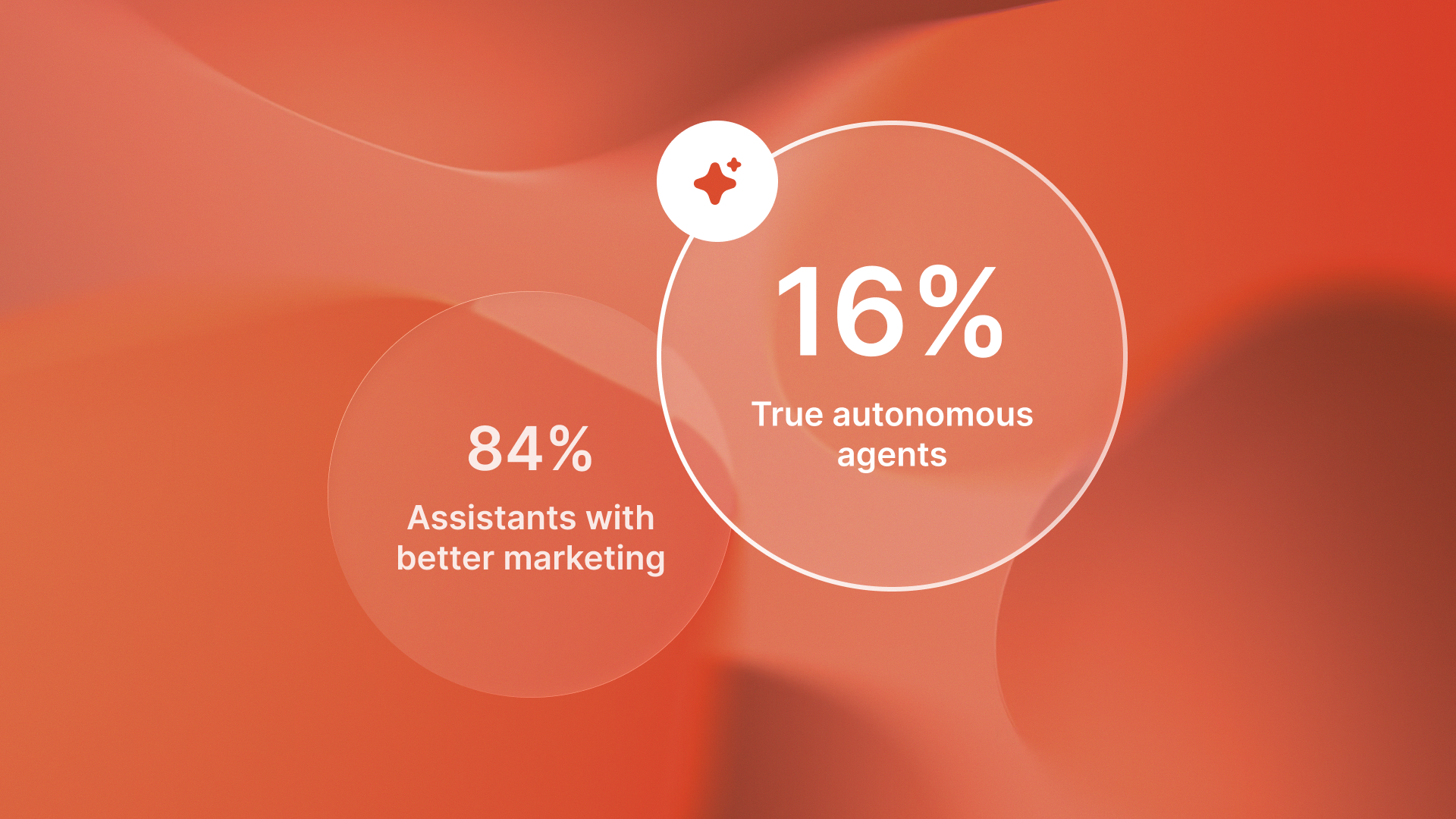
Only 16% of enterprise AI deployments actually qualify as autonomous agents. The other 84% are assistants pretending to be something they're not.
The enterprise AI agent market is growing fast, but building the wrong thing
Gartner predicts 40% of enterprise applications will embed AI agents by end of 2026, up from less than 5% in 2025. That's explosive growth. But here's the problem: most of these "agents" don't qualify as autonomous systems. Menlo Ventures' State of Generative AI 2025 found that only 16% of enterprise deployments are true agents.
It also found that only 27% of startup deployments are true agents — deployments that can plan, execute, use feedback, and adapt. The rest are assistants with better marketing.
This isn't semantic hair-splitting. The distinction between assistants and agents is architectural, and it determines whether you get productivity enhancements or workflow replacement. Most technical leaders can't spot issues in demos, which can cause costly rebuilds when they learn they built the wrong system.
The four architectural layers most companies skip
True autonomous agents require four distinct architectural layers: perception (understanding context), planning (decision-making), action (workflow execution), and learning (continuous improvement from feedback). The 16% vs 84% gap in Menlo Ventures data shows most companies build assistants with perception only. They miss the planning, execution, and adaptation layers that define autonomous systems.
GitHub Copilot suggests code. ChatGPT drafts emails. Salesforce Einstein surfaces insights. These are assistants that enhance human work. They perceive context and generate outputs, but humans still make every decision and execute every action.
QA flow, on the other hand, is a true agent. It finds bugs by analyzing Figma designs and code commits, plans test strategies, and runs test suites on its own. It learns from regression patterns and improves future detection. The qaflow.com/audit tool analyzes entire websites for SEO issues, broken links, and performance problems without human intervention. That's workflow replacement, not enhancement.
Multi-agent orchestration: the next architectural challenge
The 1,445% jump in multi-agent system inquiries from Q1 2024 to Q2 2025 (Gartner 2025) shows rising awareness that complex automation needs coordinated agent systems.
ReachSocial manages LinkedIn engagement with several specialized agents. Content analysis agents assess post performance. Timing agents optimize publishing schedules. Engagement agents coordinate interaction campaigns. Each agent operates autonomously within its domain but coordinates through shared state. This is fundamentally different architecture than a single assistant that helps with LinkedIn posts.
%2520(1).png)
Why building assistants when you need agents creates expensive rebuilds
84% of enterprise deployments do not qualify as true agents. These companies may face rebuild costs if they need autonomous capabilities. Assistant architecture lacks the planning, execution, and learning layers required for autonomy. Adding these layers requires foundational rework, not feature additions.
We've seen this pattern repeatedly. Companies start with an AI assistant that improves current workflows, soon see they need autonomous execution to get real ROI, then find their assistant architecture cannot be retrofitted. The rebuild takes 6-12 months and costs significantly more than building agent architecture from the start.
The window for getting architecture right
The 1,445% surge in multi-agent inquiries shows the market sees the difference. Most companies are still building assistants.
The opportunity cost is real: building assistant architecture now means rebuild costs later when autonomous systems become table stakes. The companies building true agent foundations now will have 12-18 months of head start over those who have to rebuild from assistant patterns. That head start compounds as they iterate on autonomous capabilities while competitors are still figuring out the architectural fundamentals.
Success Stories

.svg)
