.svg)
What is content automation? A founder's guide to AI content systems in 2026


Content automation uses software tools and workflows to plan, write, edit, and publish content with minimal human handoff. In 2026, that almost always means a multi-agent AI system. One agent does keyword research. Another writes the draft. Another reviews it. Another publishes it on blogs, newsletters, and social channels.
That sounds simple. In practice, most companies do it badly. They confuse content automation with "drafting in ChatGPT and pasting into WordPress." This is closer to assisted writing than true automation. Real automation removes the bottleneck, not just the typing.
Bill Gates framed the distinction better than anyone:
"The first rule of any technology used in a business is that automation applied to an efficient operation will magnify the efficiency. The second is that automation applied to an inefficient operation will magnify the inefficiency." - Bill Gates
This guide explains what content automation is. It shows how a modern AI-powered content platform works under the hood. It also covers what to look for when evaluating one for your team.
What content automation is (and isn't)
At its core, content automation replaces a manual production line with a software-driven one. Inputs go in (a brand voice file, a keyword universe, a list of topics). Finished assets come out (blog posts, newsletters, LinkedIn carousels, alt text, meta descriptions). The agents in between handle research, drafting, editing, and distribution.
Here is what it isn't.
It isn't a chatbot. AI content creation in 2026 doesn't mean opening a chat window and typing "write me a blog post about X." That gets you a draft. It doesn't get you a system.
It isn't a single AI content writer plugged into a CMS. One model writing one post is assisted writing. A pipeline that pulls SEMrush keyword data, briefs a research agent, and sends it to a writer is automation.
It then runs three editor review rounds. Finally, it publishes to four channels.
It isn't "set and forget." Strong content automation still has humans in the loop, but they review and approve instead of drafting from scratch.
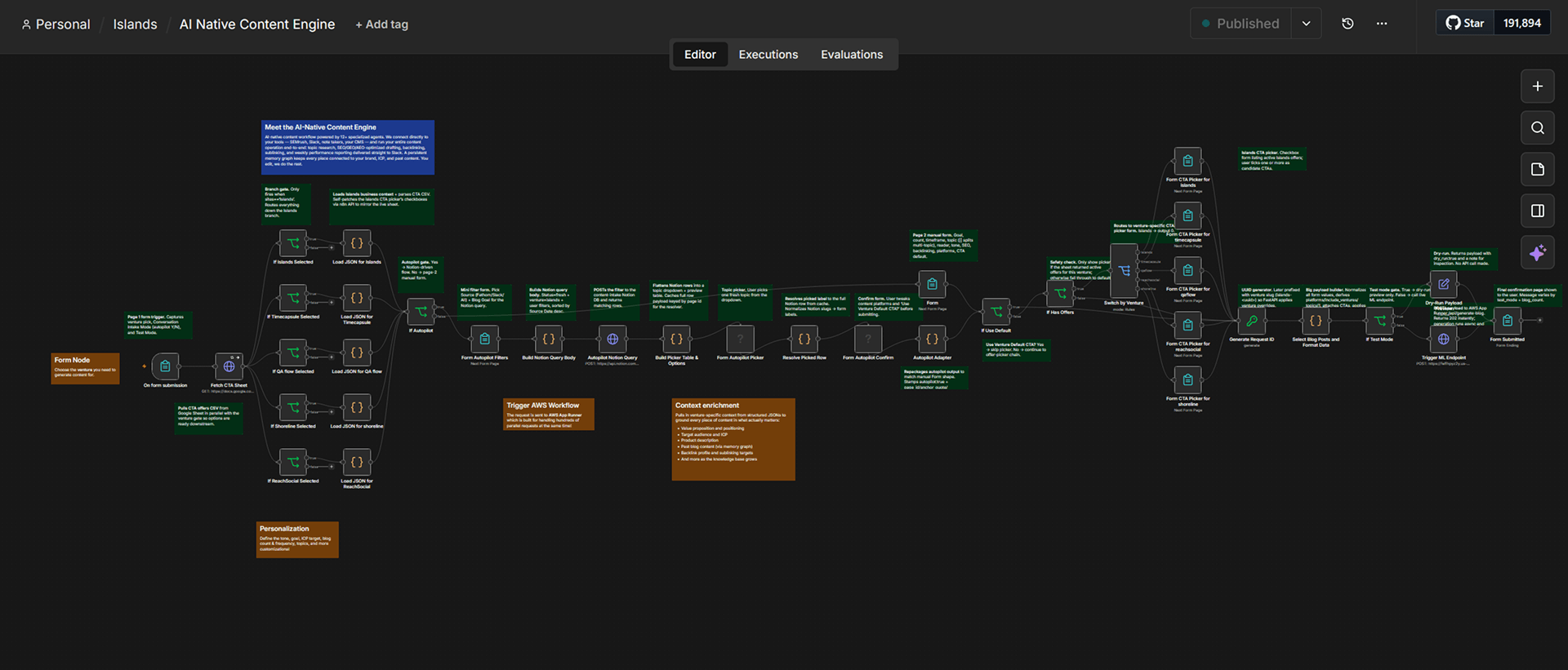
How a modern AI powered content creation platform works
The shape that's winning in 2026 looks like a relay race between specialized agents. Each agent does one thing well, then hands off. Islands uses this exact setup for its own brands and client accounts. The breakdown below is based on a live system, not theory.
Adam Smith laid the groundwork for this idea 250 years ago in The Wealth of Nations with his observation about a pin factory - that ten workers each specialized to one step of pin-making produced 48,000 pins a day, while ten generalists each making whole pins produced fewer than 200.
"The greatest improvement in the productive powers of labour... seem to have been the effects of the division of labour." - Adam Smith, The Wealth of Nations
- Strategy agent. Ingests company docs, competitor URLs, meeting transcripts, and brand exemplars. Connects to SEMrush or Ahrefs to find keyword gaps and trending topics. Outputs a full content calendar mapped to real search demand.
- Research agent. Takes each calendar entry and explores it through live web research, Reddit, X, Hacker News, and competitor analysis. Every piece starts from a research brief, not a blank page.
- Writer agent. Turns briefs into platform-ready drafts. Applies brand voice, psychological hooks, and SEO structure. Generates the meta title, meta description, and image alt captions so the post is ready to rank in both Google and AI search.
- Editor agent. Scores every draft across SEO, style, and flow through three rounds of review. A human expert signs off before anything reaches the client.
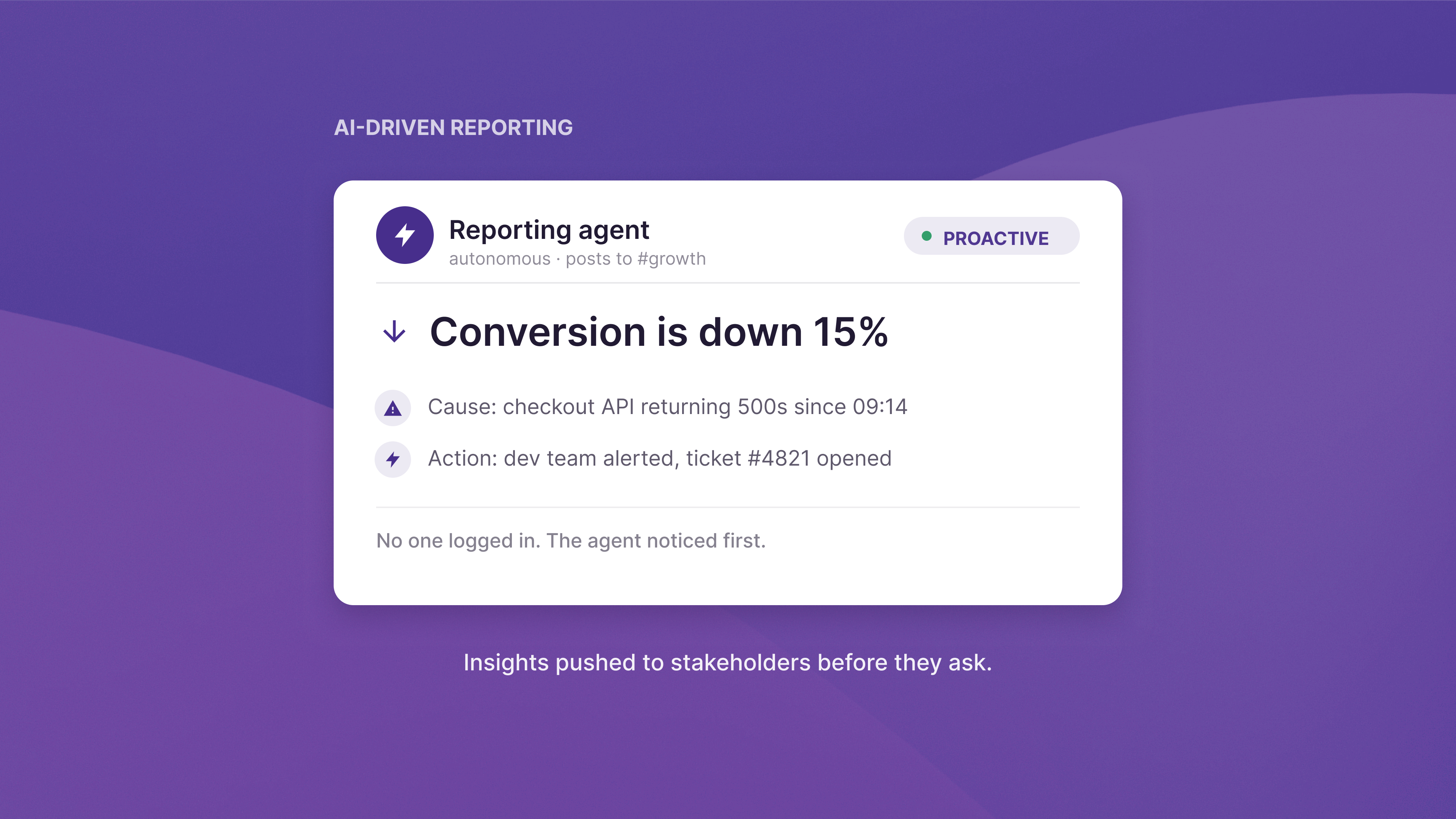
- Reporting agent. Tracks traffic, rankings, and engagement across every channel. Sends weekly reports on what drives growth and where to optimize.
- Platform sub-agents. Dedicated agents that adapt tone, format, and structure for WordPress, Substack, Medium, Shopify, customer.io, and LinkedIn through ReachSocial.
.png)
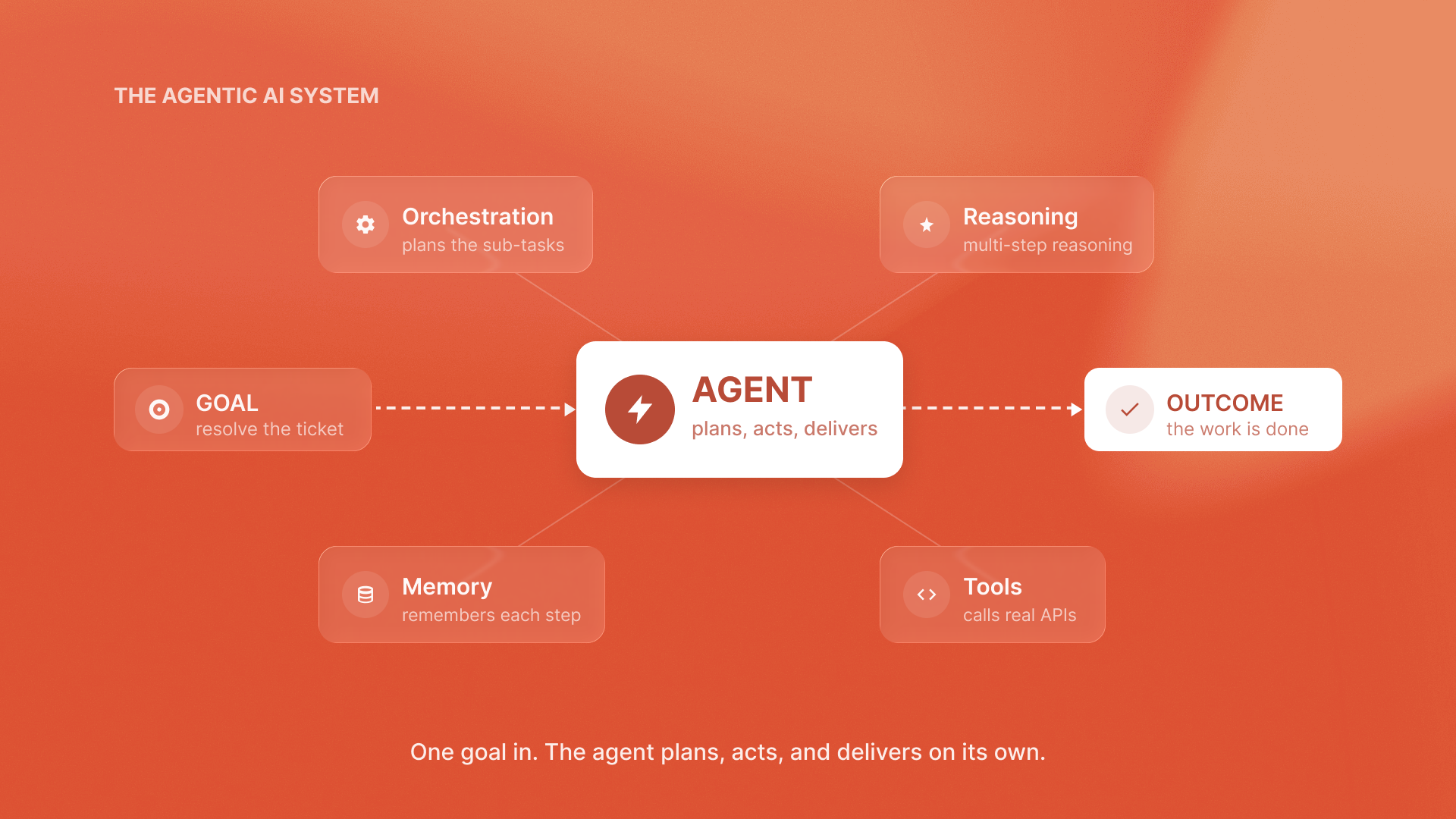
This is what separates an AI content writer from an AI powered content creation platform. The platform is the orchestration layer that connects research, writing, review, and distribution into one continuous loop.
Real results from AI content marketing at scale
Numbers matter more than architecture diagrams. Islands ran the system on its own properties first, before deploying it across other brands.
Marc Benioff has been clear about what this kind of compounding looks like in the AI era:
"Every company in the world will deploy AI agents, billions of them." - Marc Benioff, founder and CEO of Salesforce
On the Islands Substack, subscribers grew from 6 to 1,266 in 180 days. Views climbed from 295 to 10,800. Both metrics moved organically with no paid amplification.
On the QA flow Substack, subscribers went from 7 to 1,233 in the same window. The QA flow LinkedIn account pulled 35,727 organic impressions with an 8,300 peak month.
The same pipeline now powers content across very different verticals: QA engineering for SaaS, LinkedIn content systems for founders, agency operations and time tracking, hiring playbooks for scaling teams, freelance marketing operator content, performance marketing playbooks, Canadian benefits and financial services, beauty brand publishing, and vertical operational how-tos.
One system. Many brands. Zero extra headcount.
.png)
Where AI content systems actually fit
Content automation isn't a fit for every team. It's a fit when one of these is true:
- You publish across three or more channels and the handoffs are eating your week.
- You have a keyword list a mile long and no one to write against it.
- You hired a freelancer or agency and the output didn't sound like you.
- You ship content in bursts because internal experts can't carve out the writing time.
- You want to create content for AI articles. These pieces are structured for ChatGPT, Perplexity, Claude, and Google AI Overviews to cite. They are not just meant to rank on a SERP.
If none of those describe you, an AI content writer plugged into your CMS is probably enough. If two or more do, you need the platform, not the chatbot.
How to evaluate an AI powered content creation platform
Five questions cut through the marketing copy.
1. Does it train on your brand, or on yours plus everyone else's? Generic models produce generic content. A real platform ingests your docs, your old posts, your meeting recordings, and your brand voice file before it writes a word.
2. Does it integrate with your real stack? WordPress, Substack, Medium, Shopify, customer.io, Notion, Slack, Fathom. If you're being told to migrate, that's not automation. That's a tool sale.
3. Is keyword research baked in? SEMrush, Ahrefs, or equivalent should feed the strategy agent automatically. Manual keyword input means the system isn't doing the hardest part.
4. Is there a human in the loop? Editor agents are great. A trained human editor must approve every piece before it ships. This is non-negotiable for serious AI content marketing.
5. Are the results other clients see published? If a vendor can't show you organic subscriber and traffic numbers from real accounts, the system probably hasn't survived production.
The Islands view: content is infrastructure
Most teams treat content like a project. Plan it, fund it, ship a batch, move on. Then the calendar collapses, the agency churns, and three months later you're starting over.
Stewart Brand articulated this distinction in his work on systems that endure versus systems that get rebuilt every quarter:
"Information wants to be free. Information also wants to be expensive. That tension will not go away." - Stewart Brand
Content is infrastructure. It compounds when it's running, and it costs you when it isn't. The AI Content System is how Islands turned content from a recurring scramble into a steady background process. It delivers content on our blog. It also shares content in our newsletter and on our Medium. It supports every venture and client account we manage.
If your content strategy lives in a doc nobody reads, that's the gap.
Sign-up for free and see how a multi-agent AI content marketing platform would run inside your stack.
.png)
Success Stories
Read more

.png)
.svg)
