.svg)
How to validate an AI idea before writing a single line of code


I've seen too many founders burn six figures on an AI product that fails before it launches. The problem isn't the technology. It's that they validated the wrong thing. Founders rush to code because they think building is validation. But building confirms only one thing: that you can build. It doesn't confirm that anyone needs what you're building.
At Islands, we've evaluated hundreds of AI startup ideas across our portfolio. The ones that succeed follow a repeatable process: validate assumptions first, then build. Here's the AI startup idea validation framework we use.
The problem: most AI startups validate the wrong thing
Why founders skip pre-code validation
Founders believe speed is the only competitive advantage. They hear "move fast" and interpret it as "start coding." The reality is that a few days of structured pre-code validation for AI startups can save months of wasted engineering.
The cost of building before validating
Industry analysis suggests AI startups often fail because they build solutions for problems that do not exist (Sainam Tech). The cost isn't just the engineering hours. It's the delayed learning, the missed market opportunity, and the investor perception. I've seen this pattern repeat across our portfolio at Islands. About 42% of AI initiatives fail because teams track vanity metrics.They do not measure real economic impact.
The 5-test framework: a zero-code validation process
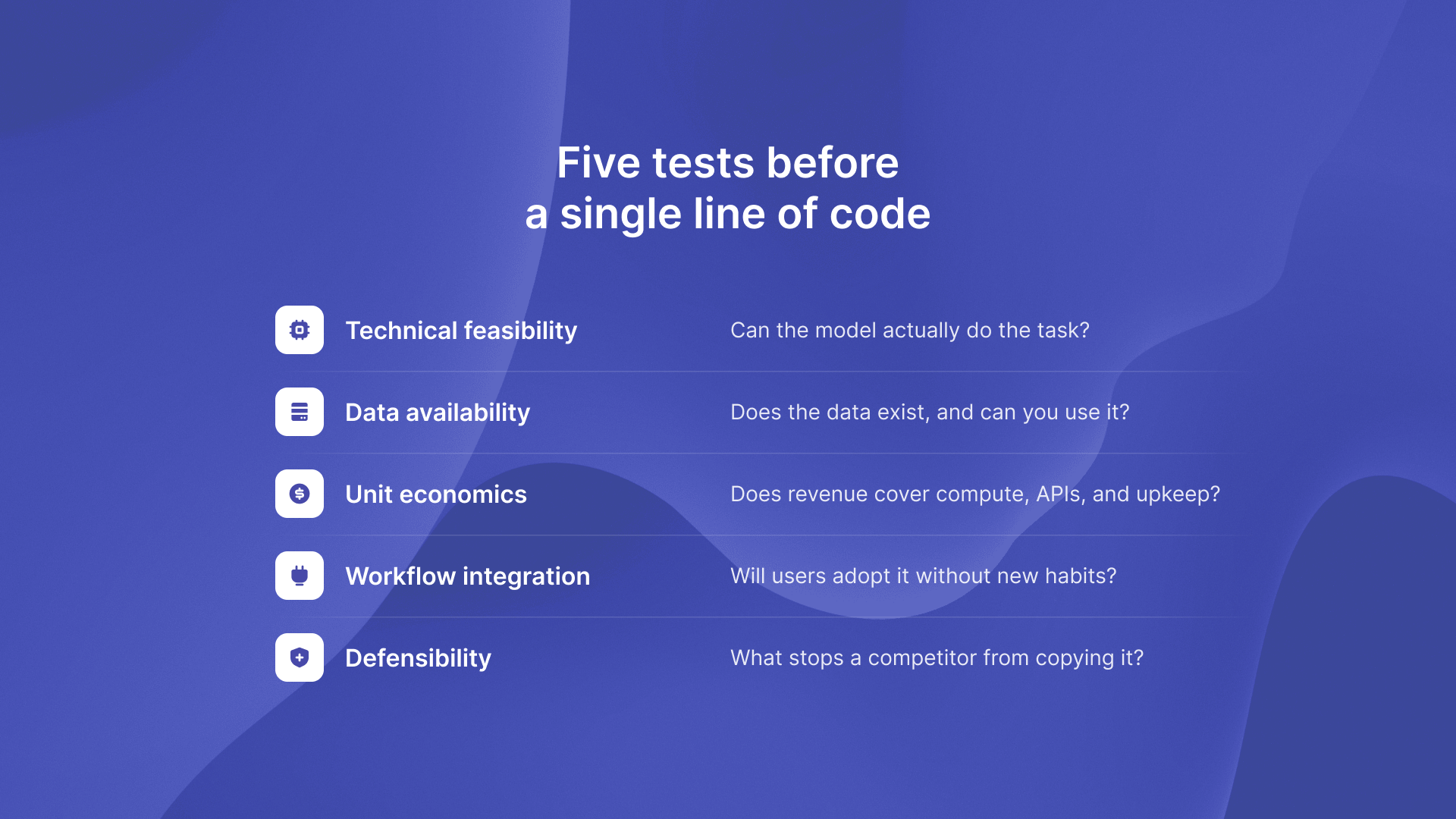
Here is the reality: how to validate an AI business idea comes down to five tests. Run these before you write a single line of code.
Test 1: Technical feasibility
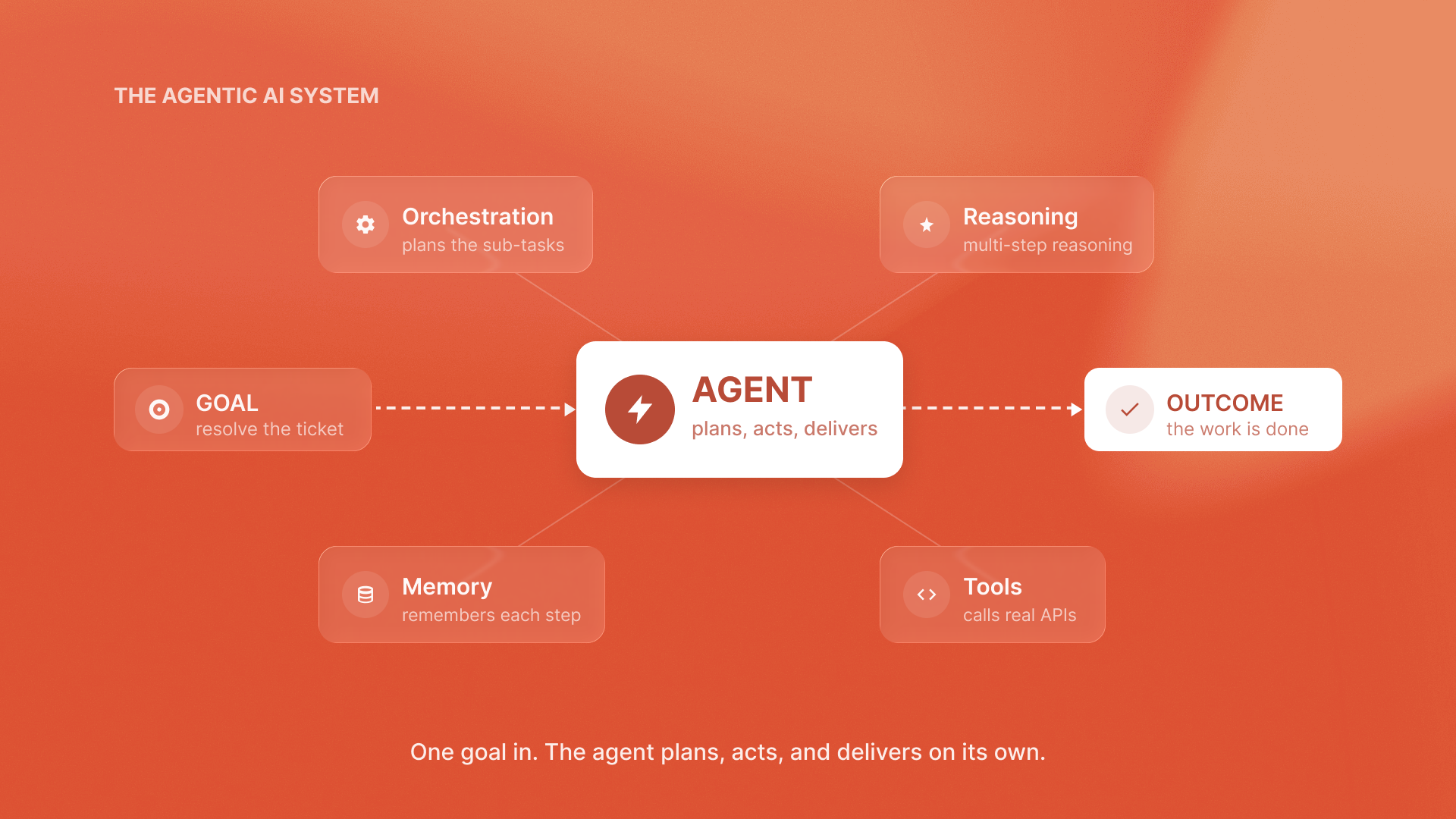
Can the technology actually solve the problem? Many AI ideas fail because the underlying models aren't capable of the required task.
Test 2: Data availability
Most AI ideas fail because the data doesn't exist or isn't accessible. Do you have quality training data? Can you legally use it? Is it structured enough for your use case? These questions must be answered before writing a line of code. I've seen Shoreline face similar hiring issues.Unstructured reviews let unqualified candidates pass.Each bad hire can cost startups $120K–$200K. Same principle applies to data: if you can't evaluate it properly upfront, you're building on sand.
Test 3: Unit economics
Can the AI solution generate positive unit economics? Autonomous agents have compute costs, API fees, and maintenance overhead. If the revenue per user can't cover these, the business won't survive. The QA flow approach to autonomous testing shows why scaling startups must shift from manual processes. This helps them avoid the “velocity wall,” where maintenance costs slow down roadmaps. Your economics need to account for that hidden maintenance cost.
Test 4: Workflow integration
Will users actually adopt the AI into their existing workflow? The best AI is useless if it requires behavior change that users resist. Integration with existing tools and processes is critical. ReachSocial found that fragmented tools across drafting, editing, and scheduling create unsustainable friction for LinkedIn content. Integrated workflows that embed AI eliminate operational overhead while preserving strategic judgment. Same logic applies to your AI idea.
Test 5: Defensibility
What prevents a competitor from replicating your AI? Without a moat, even a successful product gets commoditized. Defensibility moats include:
- Proprietary datasets that are hard to replicate
- Domain-specific models trained on unique data
- Deep workflow integration that creates switching costs
- Network effects driven by user-generated data
How to apply the framework before writing a single line of code
Step 1: Whiteboard the 5 tests
Start with a whiteboard, not a code editor. Map each test to your specific idea.
Step 2: Gather evidence for each test
Talk to potential users. Analyze available datasets. Research technical feasibility. The goal is evidence, not assumptions. I've seen GrowTal use this same idea for SEO work. The first 60 days should focus on clear technical work, not rankings.This helps avoid costly hiring mistakes. Build the foundation first.
Step 3: Make a go/no-go decision
If any test fails, pivot or kill the idea. If all pass, you have a validated concept worth building. Blanka uses a similar approach for small business AI tools: automate tasks, personalize experiences, optimize spend. But only after validation.
This process has been refined by reviewing hundreds of ideas at Islands. Examples include QA flow, ReachSocial, Timecapsule, and Shoreline. The framework is designed to be fast (days, not weeks). The cost of a wrong build far exceeds the cost of a few days of validation.
But won't this slow me down?
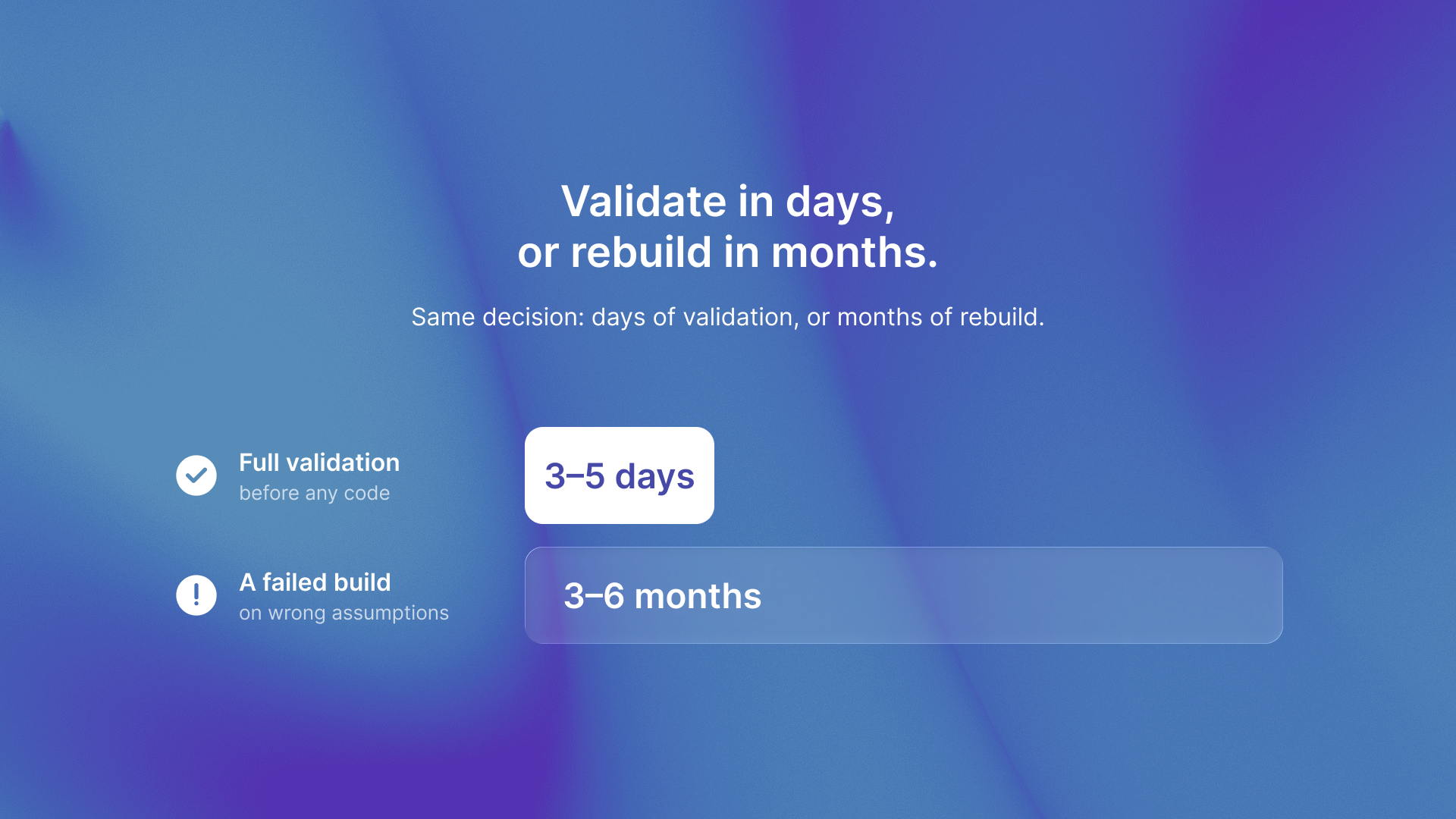
It's the opposite. The framework prevents you from building something nobody wants. Running all 5 tests takes 3 to 5 days. A failed build takes 3 to 6 months. The math is clear.
Key results: 3-5 days for full validation vs. 3-6 months for a failed build.
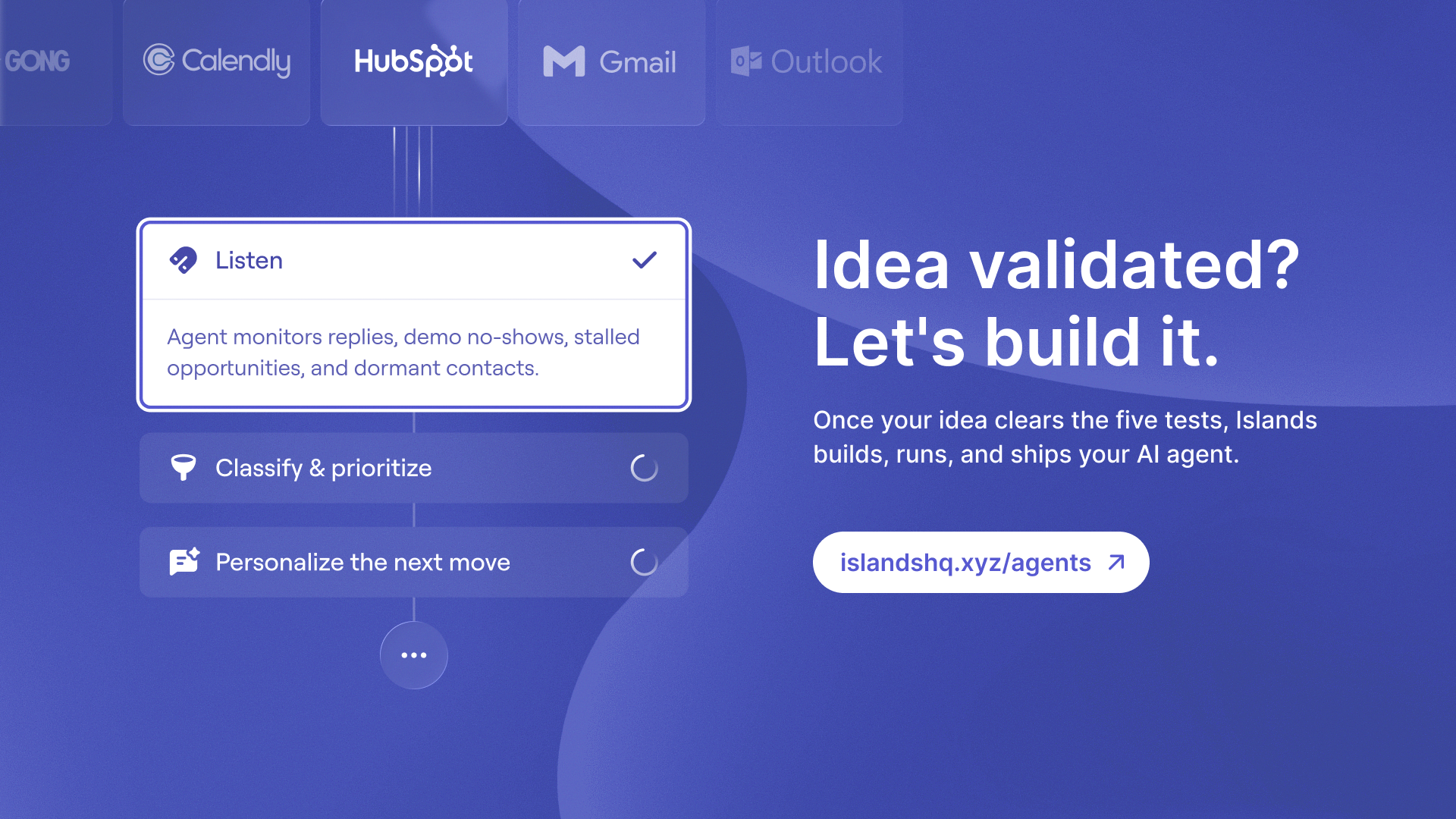
Ready to apply this validated framework to your own AI concept? Explore how Islands helps you accelerate the build phase after you've nailed the validation step.
Success Stories
Read more

.png)
.svg)
