.svg)
Why venture studios beat the technical co-founder search for AI startups

.png)
I've been talking to founders who spent six months searching for a technical co-founder with AI expertise and came up empty. They have a clear AI opportunity, a validated market gap, and a growing pile of investor decks. But they can’t build it themselves, and every ML engineer they contact is either fully booked. Or they want more equity than the team will give. The standard advice says network, pitch, and split equity. That advice was written for a different market.
Here is the reality: the traditional path is broken for AI startups. So how to find a technical co-founder for an AI startup without burning six months on cold outreach? The venture studio model works better.
The math is stacked against you: demand for AI builders vs. supply
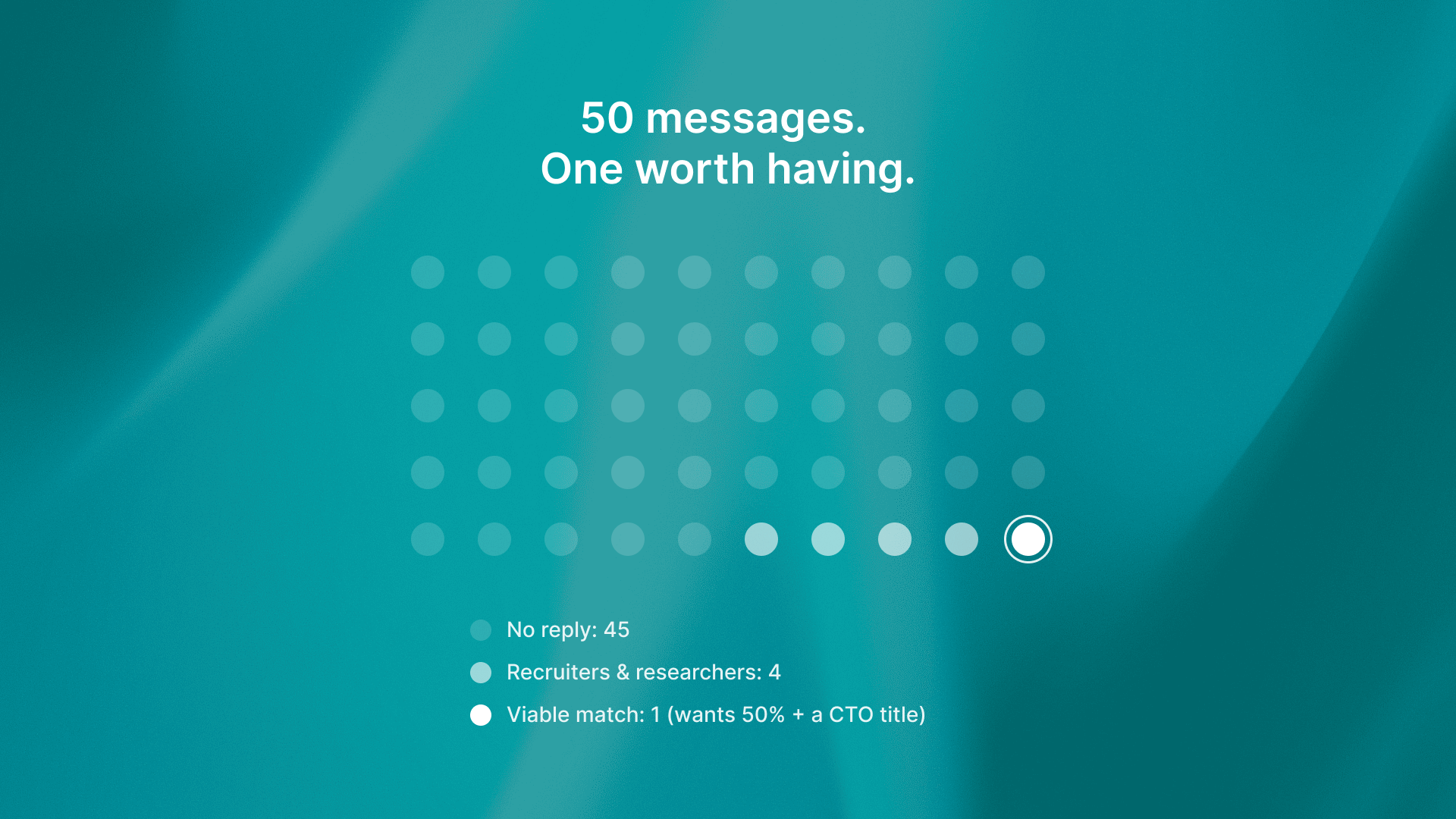
Finding a technical co-founder for an AI startup is getting harder. Demand for ML engineers is much higher than supply.This makes the co-founder search a numbers game that most founders lose. Cold outreach and networking events rarely produce qualified matches.
What cold outreach actually gets you
Most responses are from generalist engineers who have taken an online course on LLMs. They lack the production experience needed to architect, build, and deploy autonomous systems.
The hidden cost of a wrong co-founder match
A wrong co-founder match can cost you time, equity, and momentum. Common failure modes include:
- Equity disputes when contributions do not match expectations
- Misaligned vision on product direction or technical approach
- Skill gaps that emerge when the system needs to scale
- Cultural friction that slows decision-making
Why venture studios break the pattern
Fractional technical leadership during validation
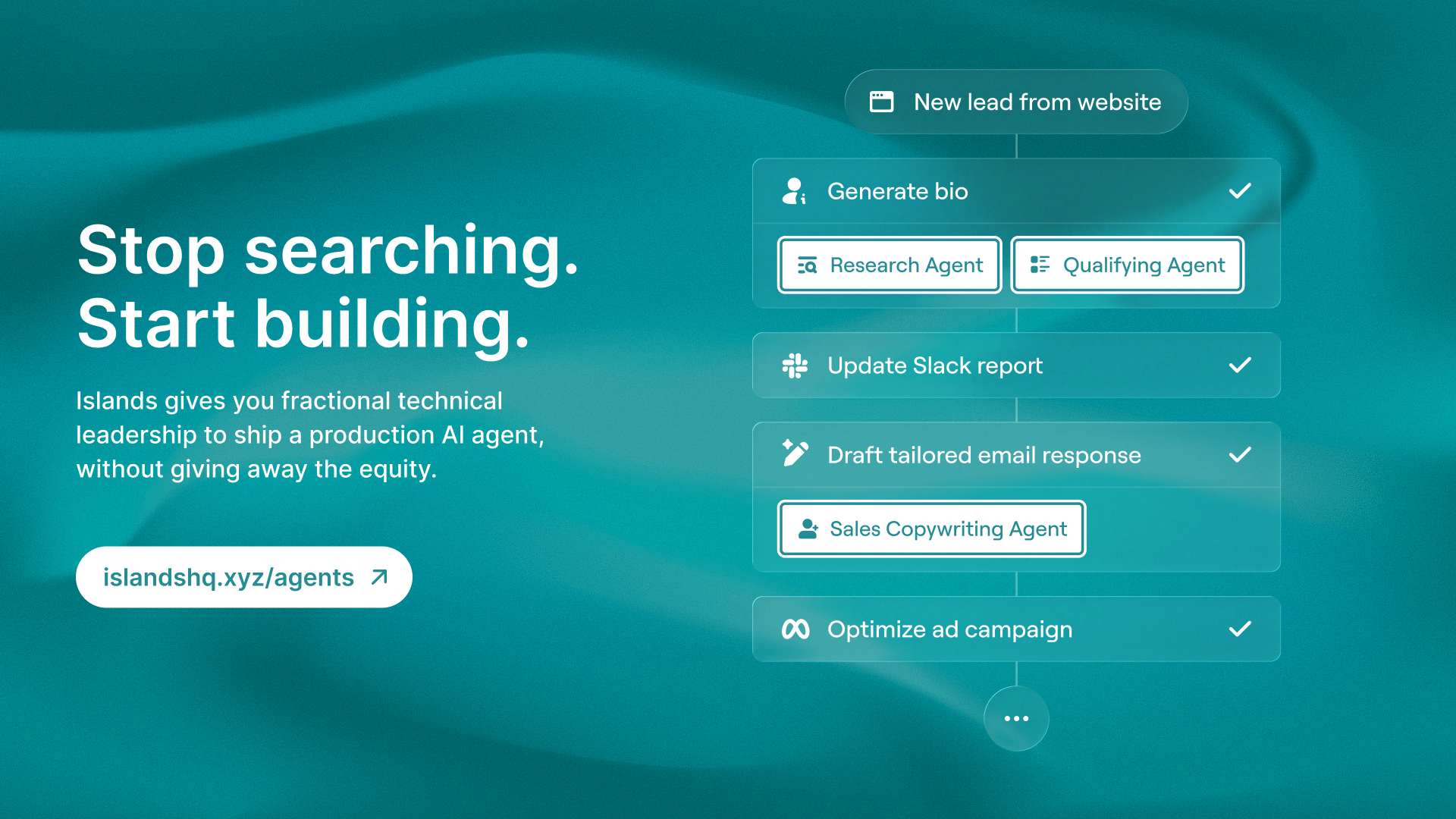
The AI MVP development landscape in 2026 shows that many successful founders now partner with venture studios. This helps them access technical expertise without needing a full-time co-founder right away. This approach works like a fractional CTO for AI startups. It lets you validate your idea before you commit to an equity split. This pattern works like a fractional CTO for AI startups. It lets you test your idea before you commit to an equity split. The venture studio AI model hands you production capability without a permanent hire.
Retained equity and optionality
A venture studio engagement preserves your equity and control during the critical validation phase. You are not giving away a co-founder's share before you know if the idea works. I have seen founders make this mistake repeatedly. They lock in a 50-50 split based on a pitch deck, only to discover six months later that the technical fit was wrong. The same pattern happens with early marketing hires. A fractional specialist-first approach saves money and speeds up growth.
Real MVP outcomes
Islands portfolio companies like QA flow, ReachSocial, Shoreline, and Timecapsule all started with a venture studio model. The result was production-grade AI agents built on realistic timelines. Founders retained control over their equity structure. The venture studio model lowers risk in the co-founder search by offering part-time technical leadership. This lets founders test their idea before agreeing to an equity split.
What to look for in a venture studio partner
Architecture-first mindset vs. demo-driven development
Does the studio prioritize building systems that work in production, or just demos that impress investors? Look for a partner who talks about data pipelines, orchestration layers, and reliability testing.
Production deployment track record
Ask for examples of deployed production systems, not just prototypes. A studio with a portfolio of live agents has the battle scars to guide your build. Many early-stage founders make similar structural mistakes. One example is hiring a full-time CMO before they have enough revenue. They may not be able to justify the salary. The same logic applies to engineering leadership.
Clear milestone-based engagement
The best studio partnerships have clear milestones with defined deliverables, not open-ended engagements. You should know exactly what you are getting at each stage.
Quick gut check: Does the studio ask about your data pipeline before your feature list? If yes, they understand production AI. If no, keep looking. And while you are evaluating partners, do not ignore how you will measure their impact. Agencies often underestimate freelancer costs by 30-50%. This happens when they ignore hidden overhead. The same hidden costs apply when you hire a technical partner.
When the venture studio model is not the right fit
If you already have a technical co-founder with production AI experience, you may not need a studio. If your idea is simple enough for a general engineer to build, you do not need AI experts. For everyone else, the venture studio model is a strategic advantage.
The venture studio model is not a compromise. It is an intentional strategy for a market where the traditional co-founder path has broken down. If you are exploring technical co-founder alternatives for your AI startup, start with a gut check. Are you looking for a partner or production capability?
Ready to validate your AI idea without giving away half your company? Explore how Islands builds production-grade AI agents to get your MVP live fast.
Success Stories
Read more

.png)
.svg)
