.svg)

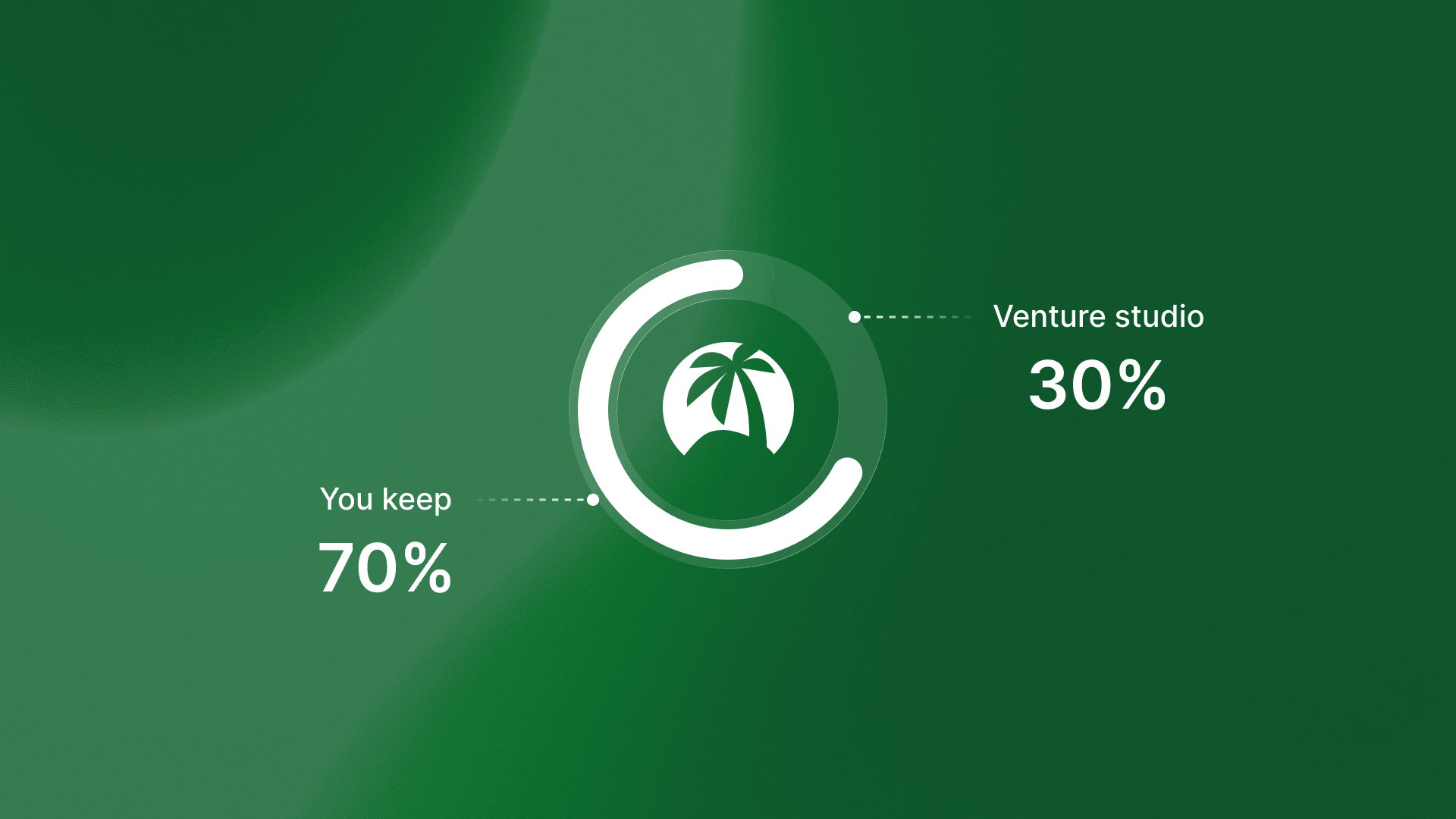
I've been talking to founders who are thrilled about their venture studio partnership until they see the term sheet. The equity ask feels steep, and without industry benchmarks, it's hard to know what's fair. I analyzed deals across our portfolio and industry data to find the real numbers.
Here's what founders should expect in 2026 and how to negotiate effectively.
What the data says: venture studio equity ranges
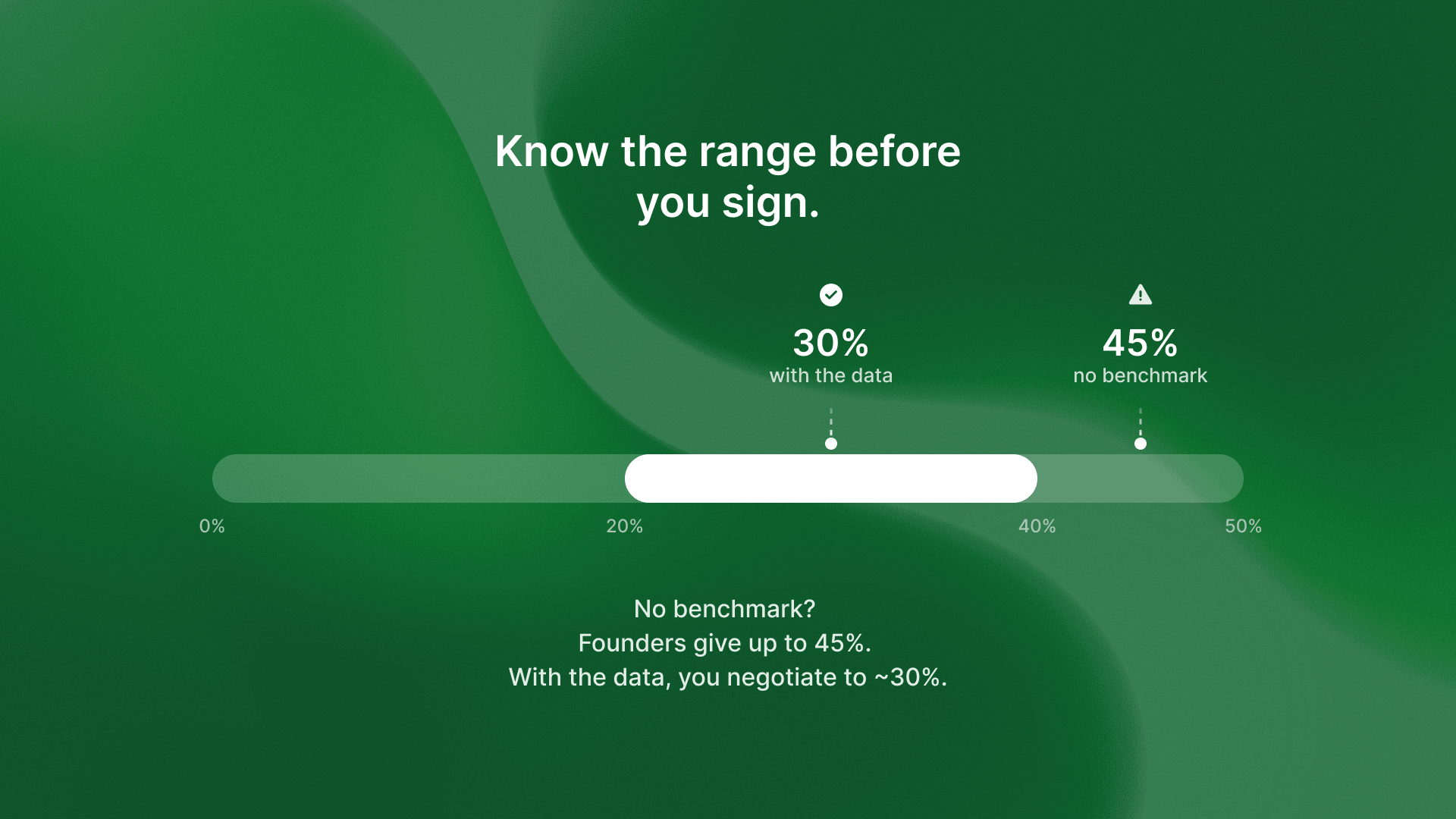
Industry data suggests that venture studios typically take 20 to 40% equity for full-stack development and launch support. The range depends on the studio's contribution and the venture's complexity. I saw this clearly when I mapped the equity ranges by contribution level:
- 20-25%: Studio provides development support and launch assistance, but the founder brings the idea, market access, and initial funding
- 25-30%: Studio provides full-stack development, go-to-market support, and initial funding
- 30-35%: Studio provides the idea, development, go-to-market, and initial funding
- 35-40%: AI ventures with high technical complexity and capital intensity
Why AI ventures hit the 40% ceiling
AI ventures need specialized ML engineers, expensive compute resources, and longer development times. The higher equity reflects the studio's greater investment in time and capital. This is where the venture studio equity percentage matters most. Founders building AI products should expect equity at the upper end of the range.
The hidden layer: revenue-sharing models
A 2026 guide on AI MVP development says studio partnerships often use revenue-sharing models, along with equity. Studios take 10 to 20% of future revenue for ongoing support. This venture studio revenue share usually lasts 3 to 5 years. It covers ongoing technical support, maintenance, and scaling. It is separate from the equity stake.
When revenue share makes sense for founders
Revenue share aligns incentives: the studio only earns when the startup generates revenue. For capital-efficient startups that want to keep upfront costs low, revenue share can be a good trade-off. Here is the reality: the AI startup equity venture studio model often mixes equity and revenue share. Founders should review the total cost, not just one number.
Equity vs. revenue share considerations:
- Equity: Permanent ownership stake, higher impact on exit returns
- Revenue share: Time-bound cost, predictable expense, preserves long-term equity
A founder's framework for evaluating studio equity offers
Step 1: Map the studio's contribution to your journey
What is the studio actually providing? Ideation, development, go-to-market, funding, ongoing support? The more they contribute, the higher the equity should be. If they are only providing development support, the ask should be at the lower end of the range. This is the core of venture studio founder equity negotiation: matching the ask to the actual value delivered.
Step 2: Benchmark against alternative capital sources
Compare the studio terms with traditional VC or angel rounds. A VC round with 20% dilution for $1M differs a lot from a studio taking 30% equity. The studio also takes development time. Calculate the effective cost of each option.
"Raising too much will make your company slack and bloated."- Paul Graham
For example, fractional executives can fill key gaps without the same equity cost. Also, curated talent platforms may offer a cheaper way to hire specialists. Similarly, fractional vs full-time hiring frameworks help founders decide where to invest headcount dollars versus equity.
Step 3: Negotiate the "what if" scenarios
What happens if you need additional funding? Does the studio have pre-emptive rights? What if the studio cannot deliver on their promises? These scenarios should be addressed in the term sheet. I recommend working through a checklist like this 12-question framework before signing anything. It helps you prioritize the studio's technical infrastructure over the equity number alone.
Reid Hoffman has likened startup financing to a "shotgun marriage," where two parties tie their financial futures together fast.
Key takeaway: The best deal depends on the studio's actual contribution to your startup's success. Equity ranges are guides, not rules. Founders who understand the benchmarks negotiate better terms.
Real-world signals: what I've seen across portfolio companies
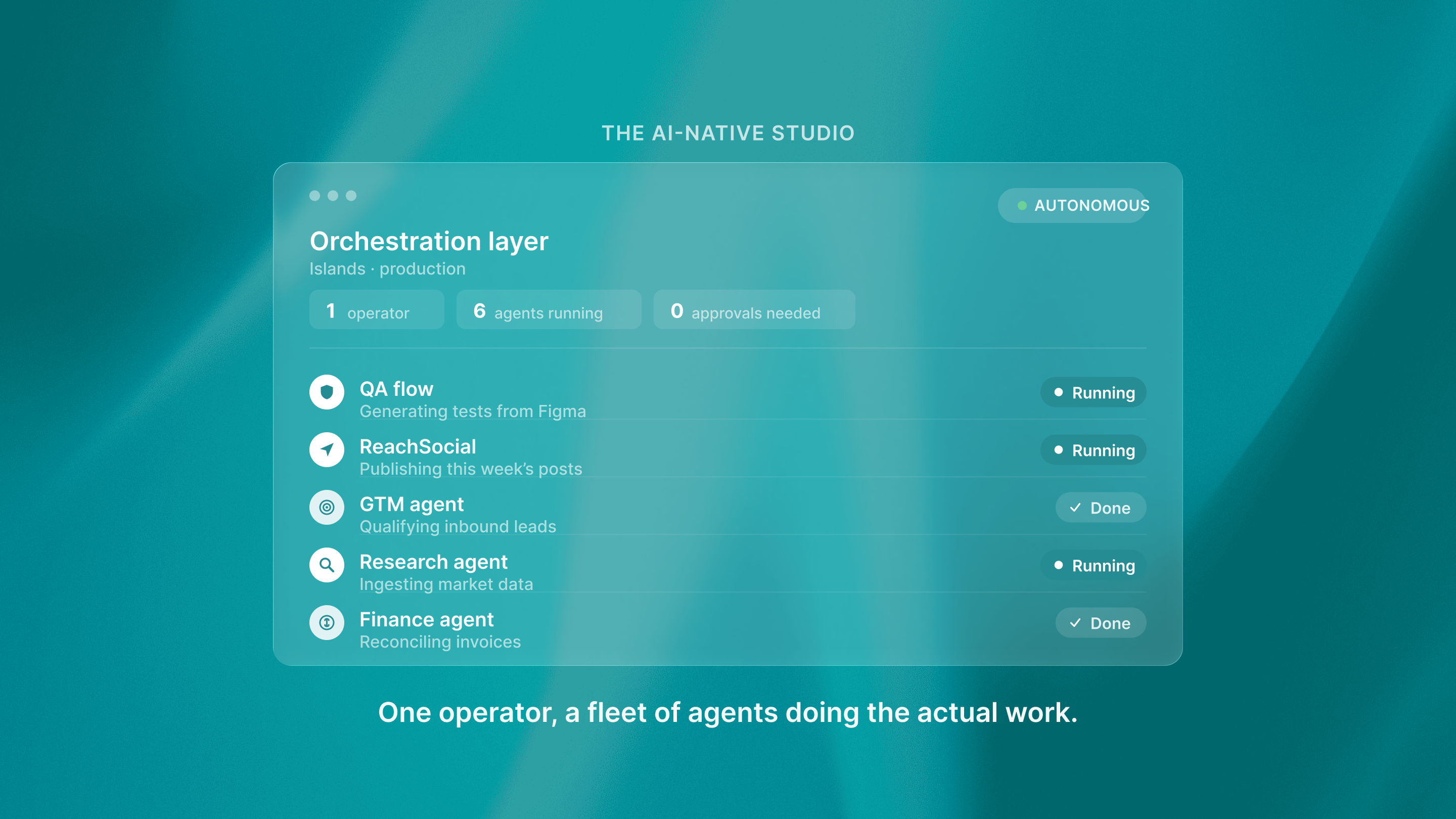
Across Islands portfolio companies like QA flow and ReachSocial, founders who understood the equity benchmarks negotiated more favorable terms. They asked the right questions about contribution scope, revenue share structures, and exit scenarios. The knowledge gap between founders who research benchmarks and those who don't is where bad deals happen.
Ready to negotiate your venture studio deal with confidence? Explore how Islands can help.
Success Stories
Read more

.png)
.svg)
