.svg)


I've been talking to CTOs who are tired of spending six months chasing the wrong AI hire. They have the budget, the urgency, and the AI strategy. One wrong hire sets you back half a year. I’ve hired for over 100 ventures and seen the same mistakes repeat. People chase researchers when they need production engineers. They use standard interviews that don’t test the right skills. They onboard without a clear path to impact.
Here is a playbook for hiring your first AI engineer without wasting time on the wrong candidate.
Key results:
- Faster time-to-hire through targeted assessment
- Higher probability of production success with the right skills
- Lower risk of mismatch by testing real-world capabilities
Why hiring an AI engineer is different
The average time-to-hire for a senior AI engineer exceeds 6 months. That is a long time when your AI strategy depends on this person. You can't afford a slow, generic hiring process. The AI engineering talent shortage means you need to move fast without compromising quality.
AI engineering roles need a distinct skill set. They focus on production deployment, model optimization, and data engineering, not pure research. Hiring for research credentials is the most common mistake I see. A PhD in ML doesn't mean someone can deploy a model to production.
What to look for in your first AI engineer
Production mindset means the candidate thinks about deployment, monitoring, and reliability, not just model accuracy. Ask about how they've handled model drift, latency requirements, and cost optimization. These are the production AI engineer skills that actually matter.
Data engineering is the most undervalued AI skill. Your AI engineer needs to build data pipelines, clean messy datasets, and integrate with existing systems. Without this, your AI system won't have quality data to learn from.
Model deployment experience is non-negotiable. Has the candidate deployed models to production before? Do they understand containerization, API serving, and scaling? These skills determine whether your AI system actually runs.
The assessment that predicts success
- Reject the whiteboard. Standard LeetCode-style interviews don't test AI engineering skills. They test algorithmic knowledge that's irrelevant to production systems. A structured AI engineer interview process focuses on real problems.
- Design a take-home task that mirrors real work. The task should test data pipelining and model deployment, not just model training. Give them a dataset and ask them to build a deployable prediction system.
- Evaluate the deployment, not just the model. Look at how they structure the code, handle errors, document the system, and consider production requirements. These are the skills that matter.
- Interview for system thinking. Ask them to design a system from start to finish. How would they handle data collection, model training, deployment, monitoring, and updates? This reveals their understanding of the full lifecyc
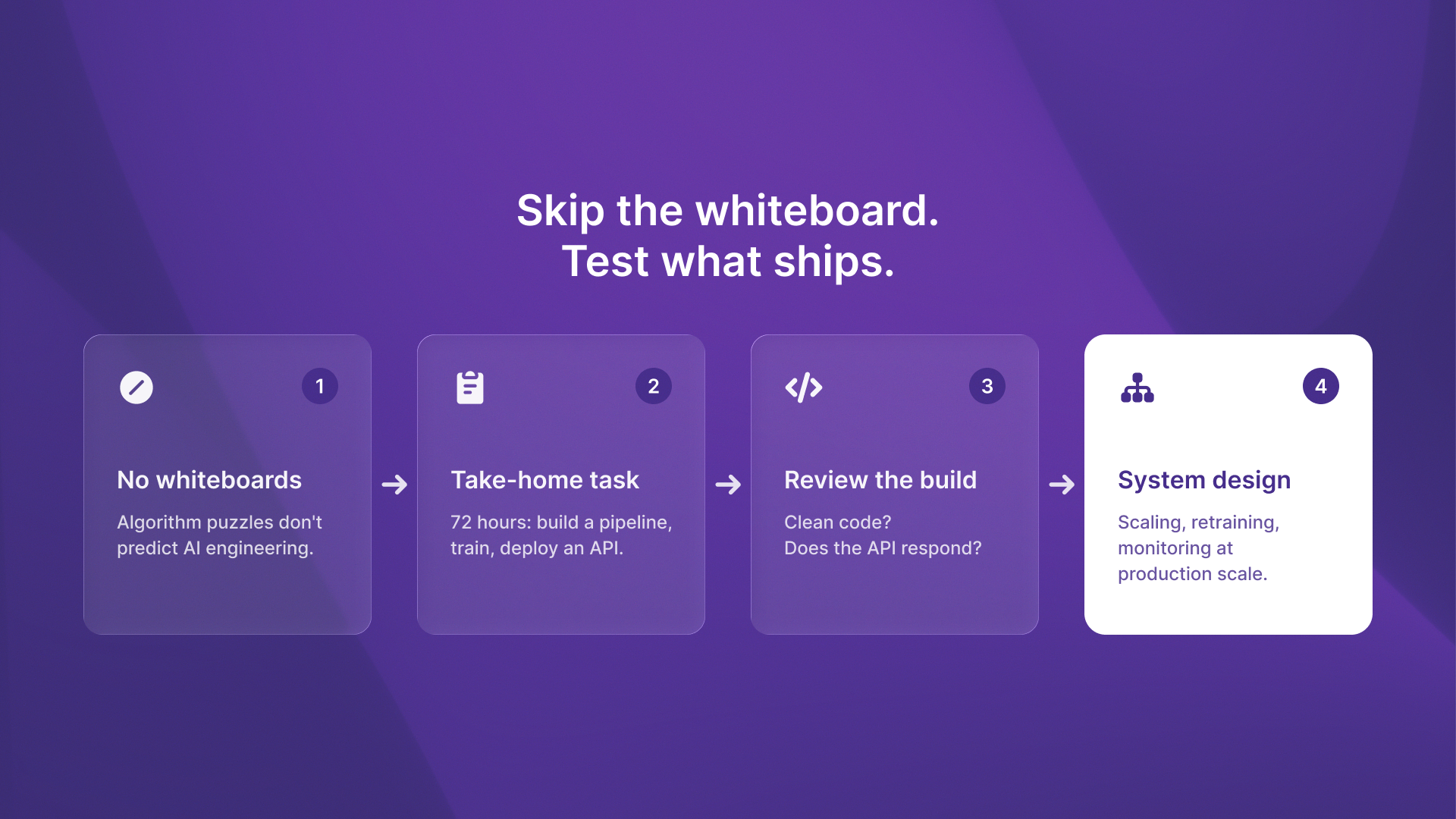
Most teams fail at this stage because they don't have a structured interview framework. I've seen this firsthand. Unstructured technical hiring lets unqualified candidates pass interviews. It can cost startups $120K to $200K per bad hire in year one (Shoreline). A 4-stage structured framework improves evaluation accuracy to 90-95%.
Onboarding your AI engineer for impact
Give them access to your data infrastructure on day one. They need to understand the data landscape before they can improve it.
Set a goal of deploying a simple model to production within the first week. This builds confidence and proves the deployment pipeline works.
By month one, they should be operating independently with clear metrics for success. Regular check-ins ensure they're aligned with business priorities.
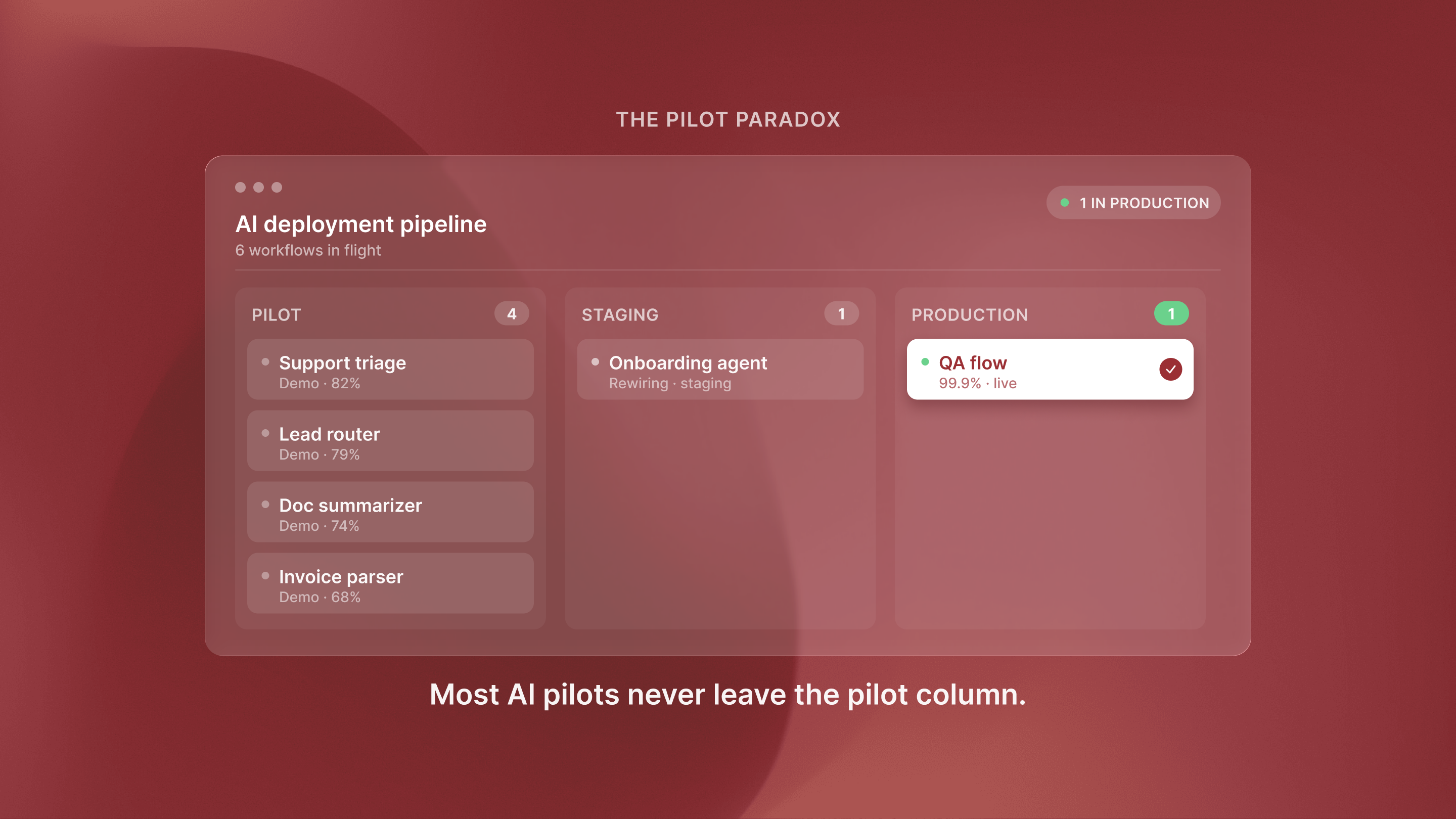
Your first AI engineer hire determines whether your AI strategy succeeds or stalls. The right hire transforms your entire workflow. Fractional engagements can compress AI deployment timelines from 11-13 months to 2-3 months (Islands). But 95% of enterprise AI pilots fail because teams build assistants instead of autonomous agents (Islands). Your first hire needs to design for production from day one.
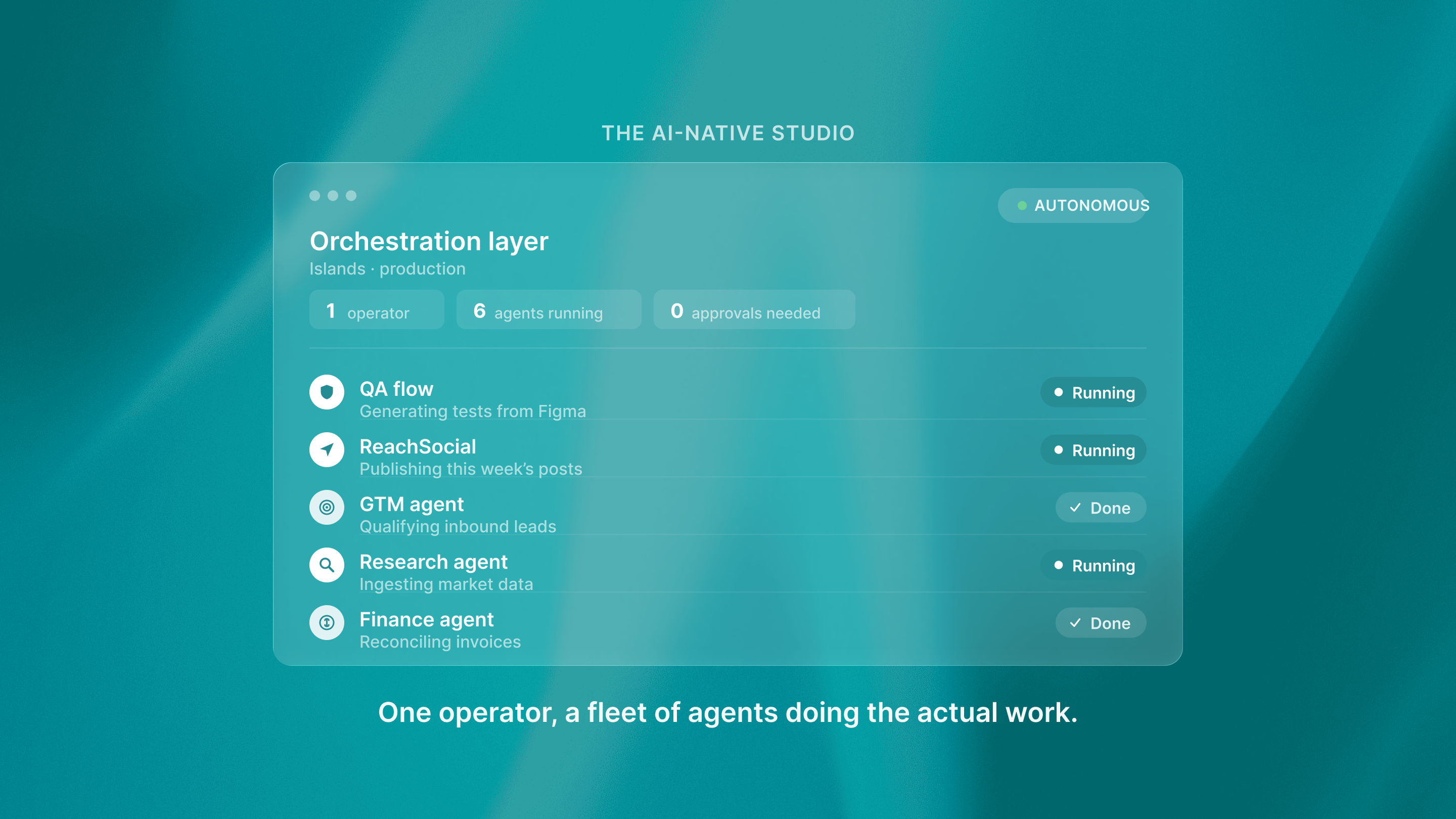
Integrated workflows can eliminate operational overhead while preserving strategic judgment (ReachSocial). And startups that delay building the right hiring sequence often waste capital on the wrong roles (GrowTal). Framing your AI engineer search around production deployment, not research skills, is the fastest way to ship an AI system.
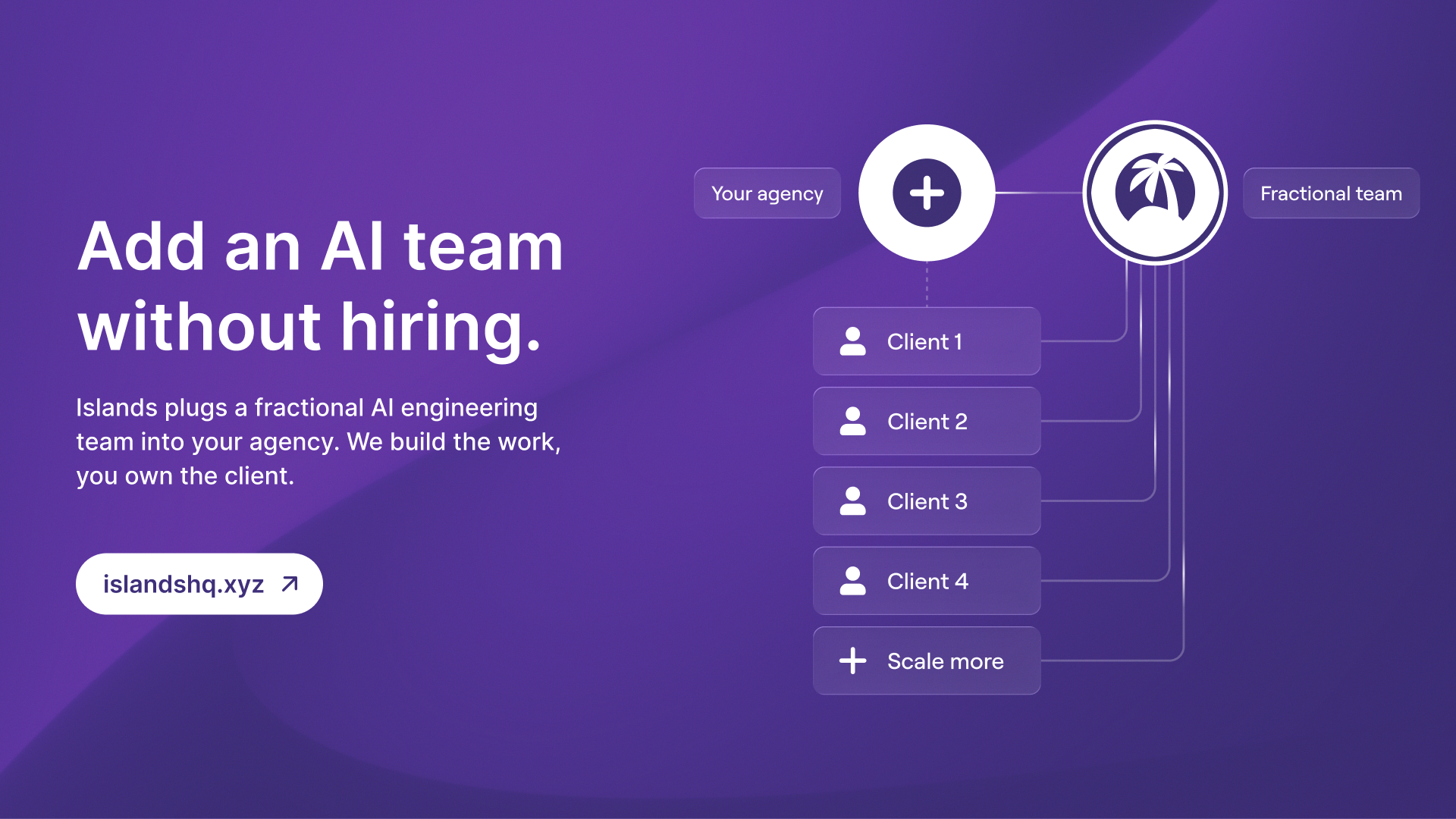
Ready to hire your first AI engineer without wasting time? Let's make it happen.
Success Stories
Read more

.png)
.svg)
