.svg)
Building a self-optimizing GTM engine with Webflow AI agent stack


I've been talking to CTOs who are tired of AI assistants that create more work for their marketing teams. The real wins aren't in chatbots;they're in autonomous agents that own the entire workflow. For Series B+ startups, the shift from AI assistants to autonomous agents is an architectural necessity for scale. I reviewed this shift across our portfolio. The conclusion is clear: if your marketing site does not drive growth, it is technical debt.
The Webflow AI agent stack and orchestration
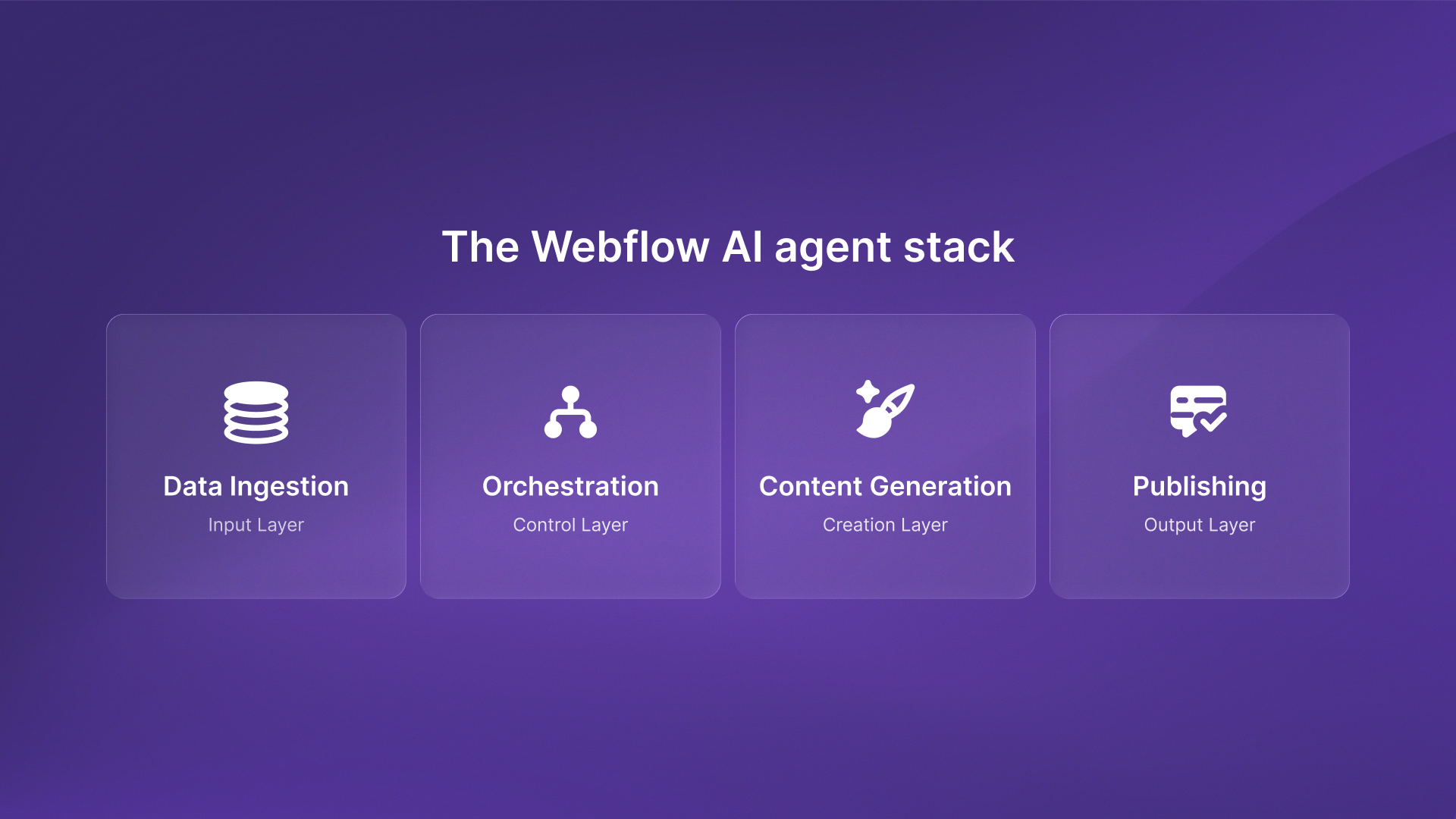
Webflow serves as the ideal head for an AI orchestration layer. By using Webflow's API, agents perform real-time content updates and data enrichment without manual developer intervention. At Islands, we use this stack to move our own portfolio sites from static brochures to living, data-enriched systems. This isn't a minor upgrade. It is a fundamental change in how we handle marketing site automation.
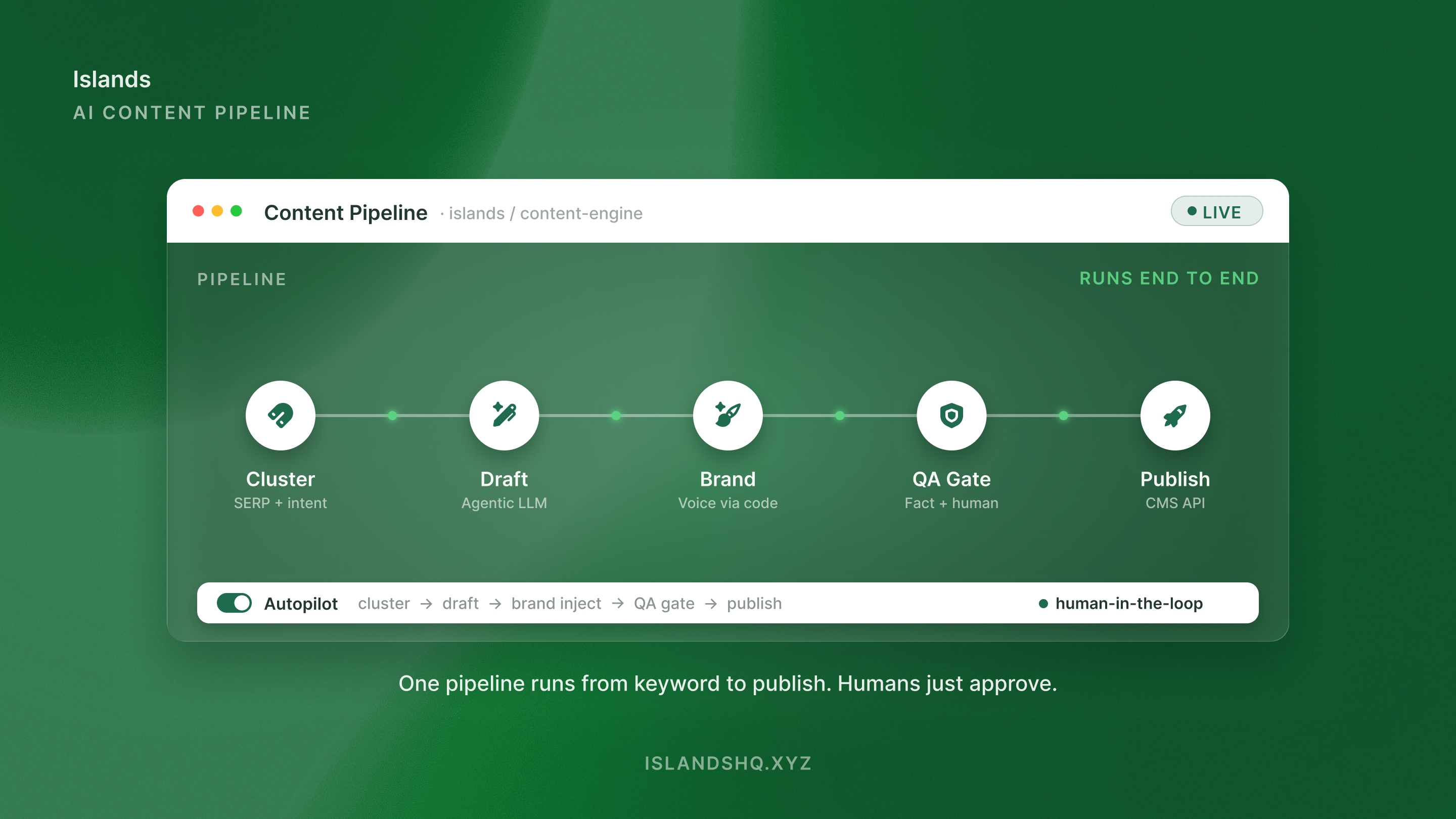
I saw this clearly when we integrated multi-agent systems. Organizations report 45% increases in organic traffic and 3x faster content production with AI content agents (Islands 2026). The Webflow AI agent stack lets these specialized agents update the CMS directly.This avoids the usual bottleneck of manual data entry.
Replacing the manual GTM tax
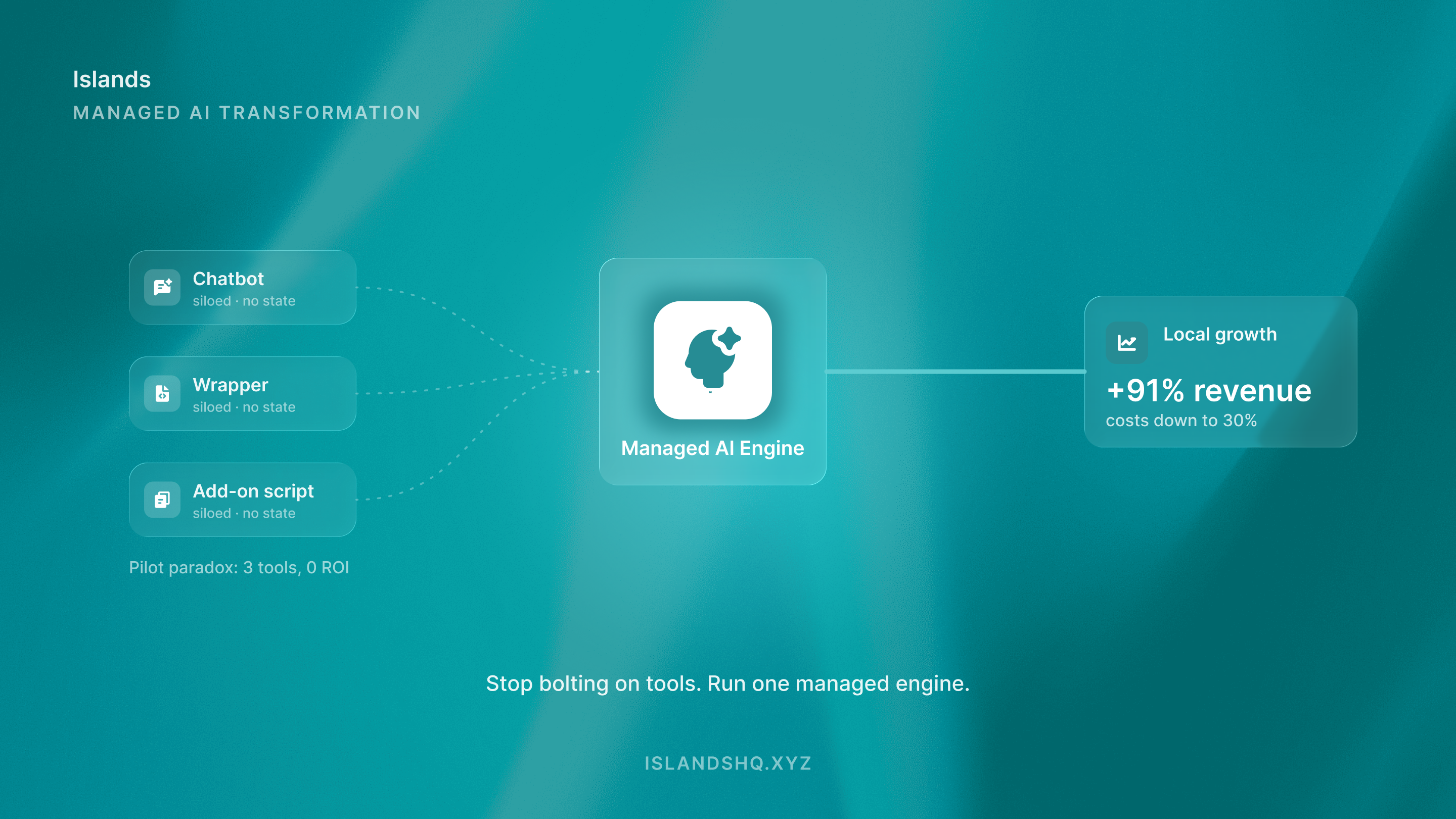
Autonomous agents are replacing simple assistants by taking over entire workflows like domain management and marketplace updates (DN Journal). This replaces the hidden tax of manual maintenance. Instead of a marketing manager updating listings, an autonomous GTM engine handles the enrichment and synchronization automatically.
I've seen teams struggle because 60% of multi-agent projects stall at the orchestration layer (Islands 2026). Success requires moving beyond simple prompts to a self-optimizing CMS that manages state and handles failure recovery. When your site updates itself based on real-time data, your team can focus on strategy rather than drudge work. This is the only way to achieve AI workflow replacement that actually scales.
The real economics of automation
I analyzed the performance gap between traditional setups and agentic architectures. The numbers don't lie:
- Manual GTM: High headcount, slow updates, 30% productivity ceiling
- Autonomous GTM: Lean team, real-time updates, 200-400% ROI
- Infrastructure: 8-12 weeks for multi-agent infrastructure 2026
We've seen this clearly at ReachSocial. Integrated workflows eliminate operational overhead while preserving strategic judgment (ReachSocial 2026). Similarly, QA flow uses autonomous testing to break the time-scaling constraint. Your testing isn't truly autonomous if you are still writing test cases (QA flow 2026).
Why the window is closing
Generative engine optimization
Here is the reality: companies that optimize for AI citation 2026 are seeing AI-referred traffic grow by over 500%. If your site is a static brochure, you are invisible to the next generation of search. You need a self-optimizing engine to stay competitive. Small businesses are already using these tools to optimize marketing spend and accelerate growth (Blanka 2025).
Avoiding the hiring trap
Startups that delay this transition face a hiring trap. You can hire more operations staff to manage the friction, or you can build the sequence correctly from the start (Shoreline 2026). But inaccurate tracking in these systems often costs more than it saves (Timecapsule 2026).
The choice isn't between AI or no AI. It is a choice between manual maintenance and autonomous scaling. Built correctly, your marketing site becomes an active agent rather than a passive repository. Choose accordingly.
Ready to transform your static site into an autonomous growth engine? Explore how Islands makes this work for your portfolio today.
Success Stories
Read more

.svg)
