.svg)
Be the brand AI recommends: how to win AI search in 2026 (GEO guide)


Your buyer no longer types three keywords into Google and scrolls a list of links. They ask ChatGPT which tool to use. They ask Perplexity which vendor is best. They read the answer Google writes for them and never click. The question that now decides your pipeline is not "do I rank on page one." It is "does the AI recommend me."
I have watched this shift hit our own portfolio and every client we onboard. Most teams are still feeding a content treadmill built for a search engine that is quietly dismantling itself. This is the guide I wish someone had handed me eighteen months ago.
What is the difference between SEO, AEO, and GEO?
SEO, AEO, and GEO are three layers of the same goal, getting found. They differ in who is doing the finding.
SEO (Search Engine Optimization) gets your page ranked in a list of links. It optimizes for crawlers and clicks.
AEO (Answer Engine Optimization) gets your content pulled into a direct answer, like a featured snippet or a voice result. It optimizes for extraction.
GEO (Generative Engine Optimization) gets your brand cited inside an AI-generated answer from ChatGPT, Perplexity, Gemini, or Google AI Overviews. It optimizes for citation and recommendation.
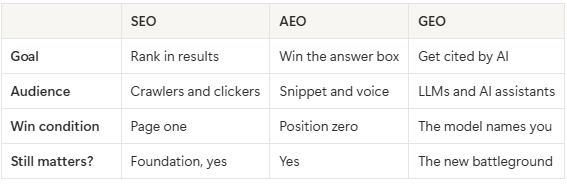
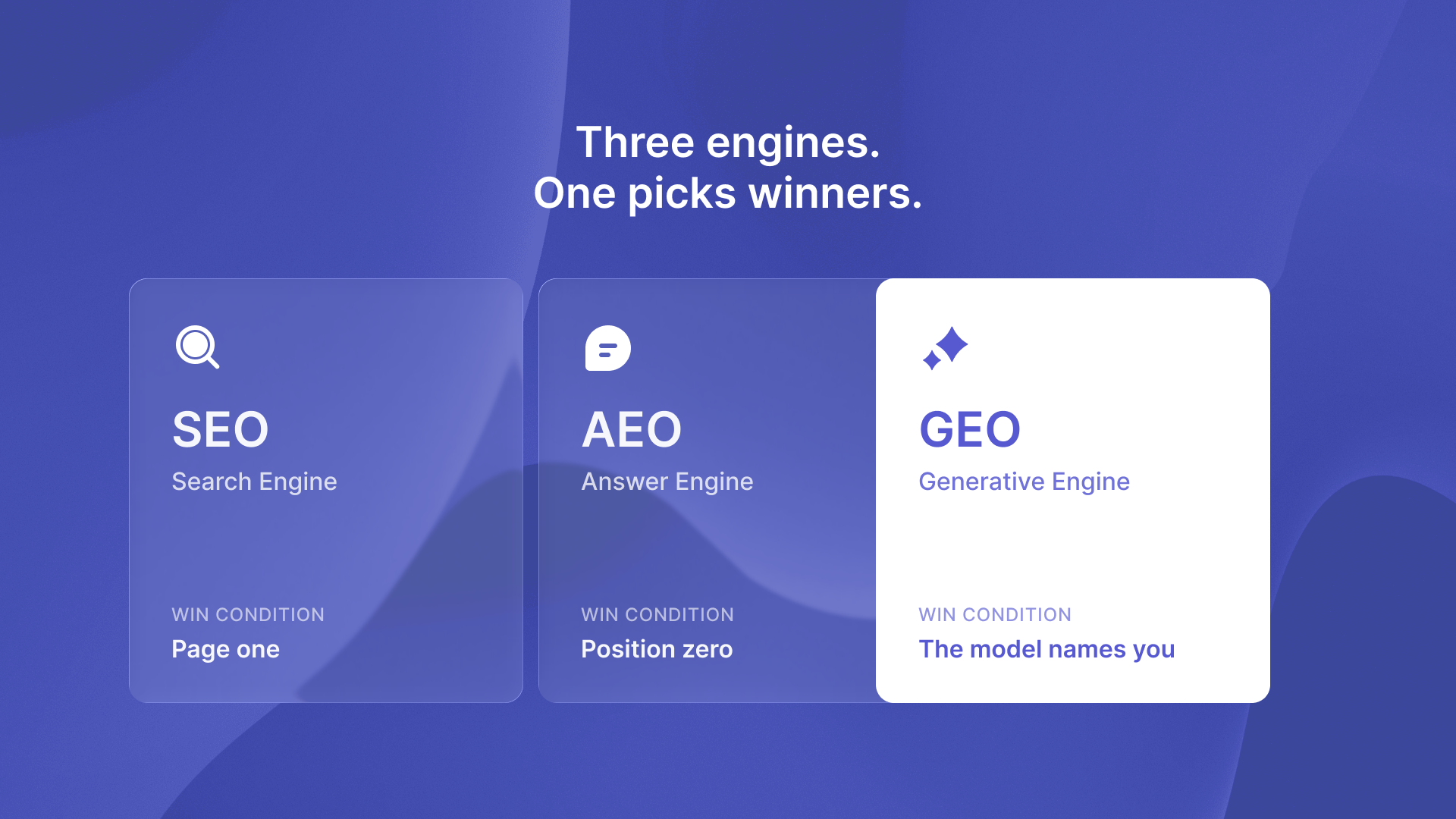
These are not replacements. Strong SEO is the foundation GEO is built on. But ranking is no longer the finish line. The finish line is the moment an AI tells your buyer, in its own voice, that you are the answer.
Search is moving from Google to AI, and the data is brutal
- Roughly 68% of searches now end without a click. Zero-click searches climbed sharply after AI Overviews launched. (Similarweb, 2025)
- AI referral traffic grew 357%. AI platforms drove 1.13 billion referral visits in a single month in 2025. (BCG, AI at Work)
- 77% of brands ranking on Google page one do not appear in AI answers at all. Page-one authority no longer guarantees AI visibility. (Omni Eclipse AI Search Visibility Report, 2026)
Even the people building these systems agree the ground has moved. Google CEO Sundar Pichai has called AI agents the next evolution of the web. On the challenger side, Perplexity CEO Aravind Srinivas confirmed the discipline already has a name. Asked how people will game AI answers the way they once gamed Google, he answered plainly: it is called answer engine optimization. The optimization game did not end. It changed targets.
Why generic AI content is invisible
Most SEO strategy in 2026 is a race to the bottom. Teams point a single AI tool at a keyword, generate fifty bland articles, and publish them. The content has no original depth, so it never earns authority. In a world where AI models are the new gatekeepers, generic content is not weak. It is invisible.
We saw this auditing our own ventures. The instinct was to publish static, templated comparisons anyone could generate in thirty seconds. The AI had already read a thousand versions of that exact post. It had no reason to cite ours. The unlock was treating our real work, the engineering threads and deployment results, as the raw material. That is what gets cited. The goal is not to be the page the AI replaces. It is to be the source the AI quotes.
How to become the brand AI recommends
After running this across our brands and dozens of client accounts, the playbook comes down to three pillars.
1. Structure: make your content extractable
AI lifts passages, not whole pages. Write so every key claim stands alone. Lead each section with a direct answer. Keep core answers tight, around 40 to 60 words. Use headings that match how people ask questions. Use comparison tables for "X vs Y" queries. Add an FAQ in natural language.
2. Authority: make your content citable
AI cites sources it can trust. The Princeton GEO study measured key factors. Citing sources boosts AI visibility by about 40%. Adding statistics increases it by 37%. Including expert quotes raises it by 30%. Keyword stuffing actively hurts you, dropping visibility by 10%. Back claims with sourced numbers. Quote named experts with titles. Show first-hand experience. Display a clear "last updated" date.
3. Presence: be where AI looks
AI does not only cite your website. It cites where you show up. Wikipedia, Reddit, review sites like G2 and Capterra, YouTube, and industry roundups all feed the models. If you are absent from the places AI reads, you are absent from the answer.
What an AI-run content operation looks like
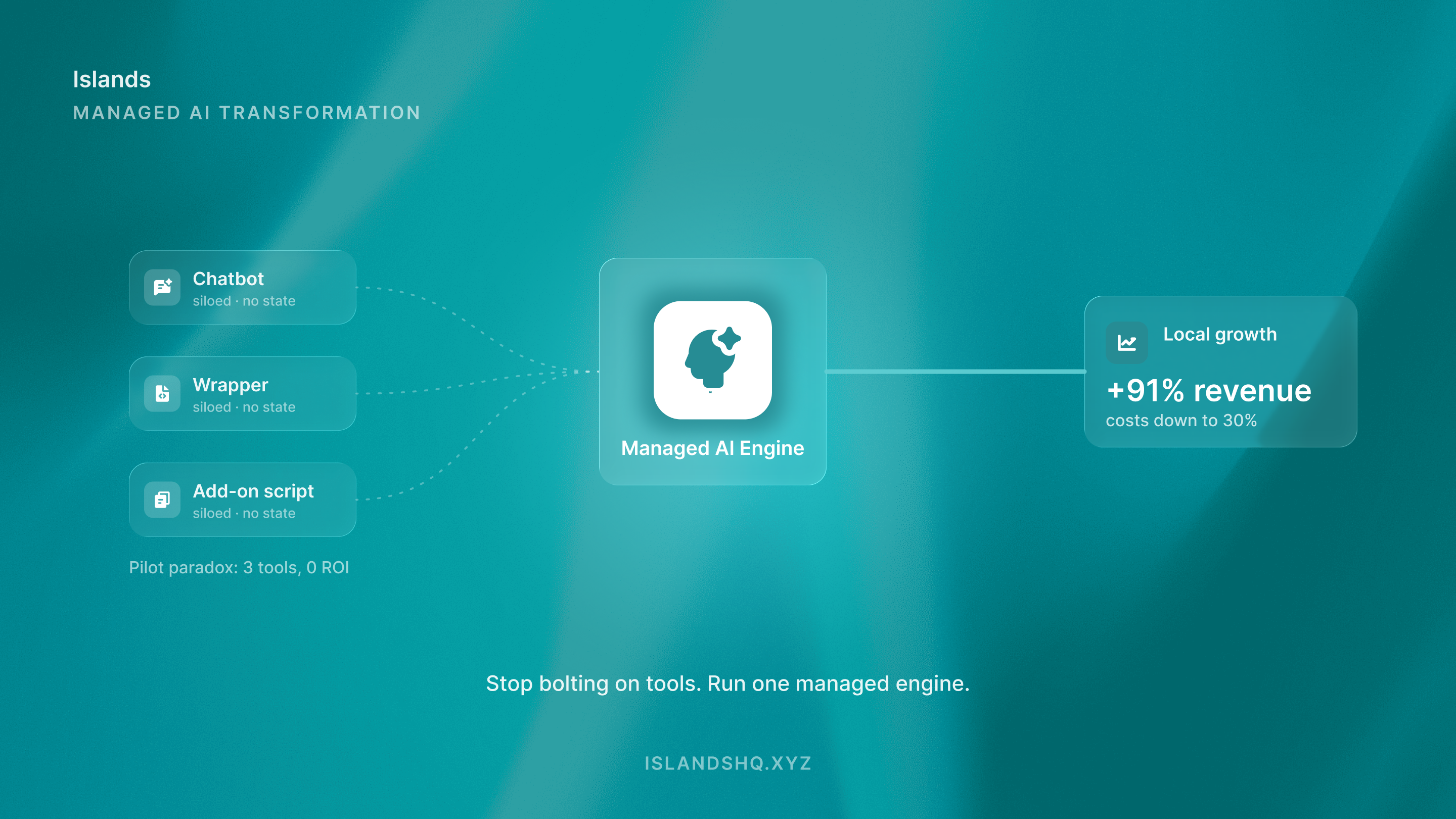
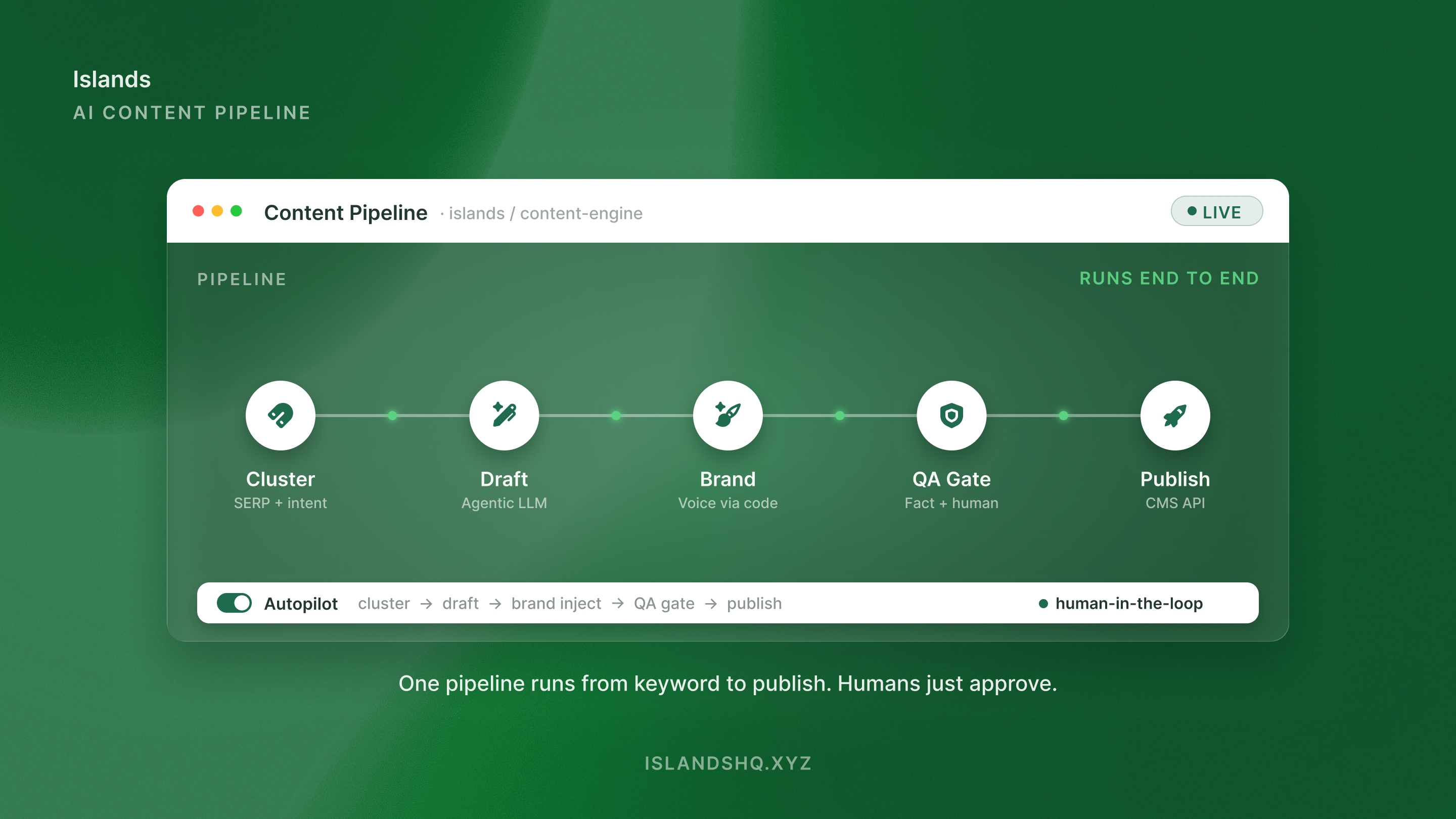
Doing all three at the volume modern search demands is a system, not a person. We run content through a stack of 12+ AI agents that share memory, so a brand shows up consistently across every channel. A strategy agent maps the calendar and audits gaps. A research agent tracks competitors. A writer agent drafts in your voice. An editor agent scores every draft. Then a human expert signs off before anything reaches you. Agents do the volume. People own the judgment.
We built the engine on our own brands first. Two of them went from near-zero to 20 to 2,400+ subscribers in under three months, with zero paid amplification. Across our brands we drove 3.25 million+ clicks in 2025, with a 30%+ average open rate on our newsletters. Since 2021 we have accelerated 100+ companies.

We build backlinks into your domain, and grow them
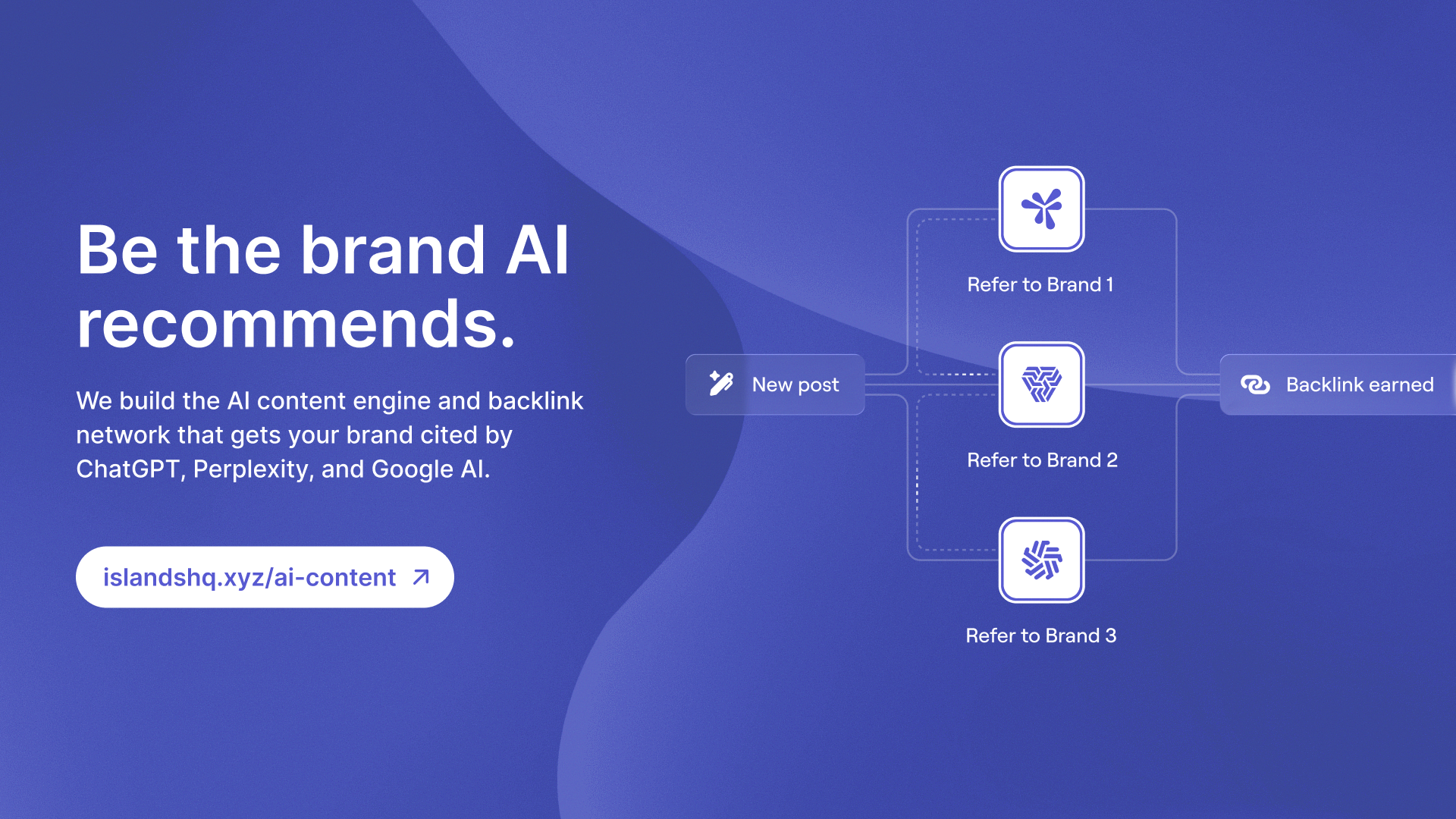
Authority does not come only from what you publish. It comes from who points to you. Backlinks are still one of Google’s strongest ranking signals for a domain. They also help build trust that AI engines use when choosing sources to cite. So we do not leave them to chance. We build a backlink network to your domain from real, relevant sites.
.png)
We start with 6+ in your first month. We then scale past 12+ as results compound. Every link raises your domain authority, which lifts both your rankings and your odds of getting named in an AI answer. The content earns the citations. The backlink network makes them stick.
.png)
Frequently asked questions
What is generative engine optimization (GEO)?GEO is the practice of structuring and publishing content so AI systems like ChatGPT and Gemini cite your brand. It optimizes for citation, not just ranking.
Is SEO dead?
No. Traditional SEO is the foundation AI search is built on. But ranking alone no longer wins. You also need to be extractable, citable, and present where AI looks.
How do I get cited by ChatGPT and Perplexity?
Lead with direct answers, back claims with sourced statistics, quote named experts, keep content fresh, allow AI crawlers in robots.txt, and build presence on third-party sources.
How fast does GEO work?
Faster than most expect. Two of our brands went from near-zero to thousands of subscribers in 180 days, and the advantage compounds.
AI search is already picking winners. Make sure it is you.
The models are training on the open web right now. The authority you build today is the authority you get cited for over the next several years. The window is open. It will not stay open forever.
If you want to see how your brand shows up on ChatGPT, Perplexity, and Google AI, we can help. We will run an analysis and walk you through the results. Book a free consultation
Success Stories
Read more

.svg)
