.png)

How we helped make speech therapy accessible.
%20(3).png)


.svg)
.svg)
.svg)
.svg)
.svg)
At Islands, we believe technology can create real, tangible impact. When Lisa Brillinger, a speech language therapist and founder of Northern Voices Speech Services (NVSS), approached us with a challenge, we knew this was an opportunity to make a difference.
Lisa had spent years working with children in remote and Indigenous communities and saw firsthand how traditional speech therapy was out of reach for many families. She envisioned a tool that could deliver high-quality therapy anytime, anywhere, and asked us to help bring that vision to life.
Together, we built TeachSpeech, a mobile app designed to make speech therapy engaging, interactive, and accessible—no matter where a child is.
Understanding the challenge
Lisa shared her vision for a more accessible, engaging, and culturally responsive approach to speech therapy. The challenges were clear:
.png)
.png)
1. Designing for simplicity & engagement
Creating an intuitive experience was critical. The journey began with extensive research, engaging directly with parents, educators, and speech-language pathologists. The team at Islands discovered that existing solutions were either too clinical or failed to engage young learners effectively. Drawing inspiration from popular apps like Calm and Duolingo, they set out to create something different.
Key design priorities
By making speech therapy feel like an interactive journey rather than a chore, the goal for TeachSpeech was to drive higher engagement, better retention, and ultimately, more meaningful speech progress.
.svg)
Seamless Onboarding
Design a step-by-step setup to ensure parents and educators could start using the app in minutes.
Visual & Interactive Learning
Integrate videos, visual prompts, and instructional animations to reinforce speech patterns. Prioritized clear, high-contrast UI elements for easy readability across age groups.
Adaptive Design for Different Age Groups
A user interface that balances playfulness for children and clarity for educators.
.png)
2. Ensuring accurate speech feedback
One of the biggest hurdles was ensuring precise, meaningful pronunciation feedback tailored for speech therapy. Most speech recognition tools focus on transcription, lacking the phoneme-level precision needed for speech therapy. A simple "correct" or "incorrect" response wouldn’t be enough—children needed actionable feedback that guided them toward better pronunciation.
The solution
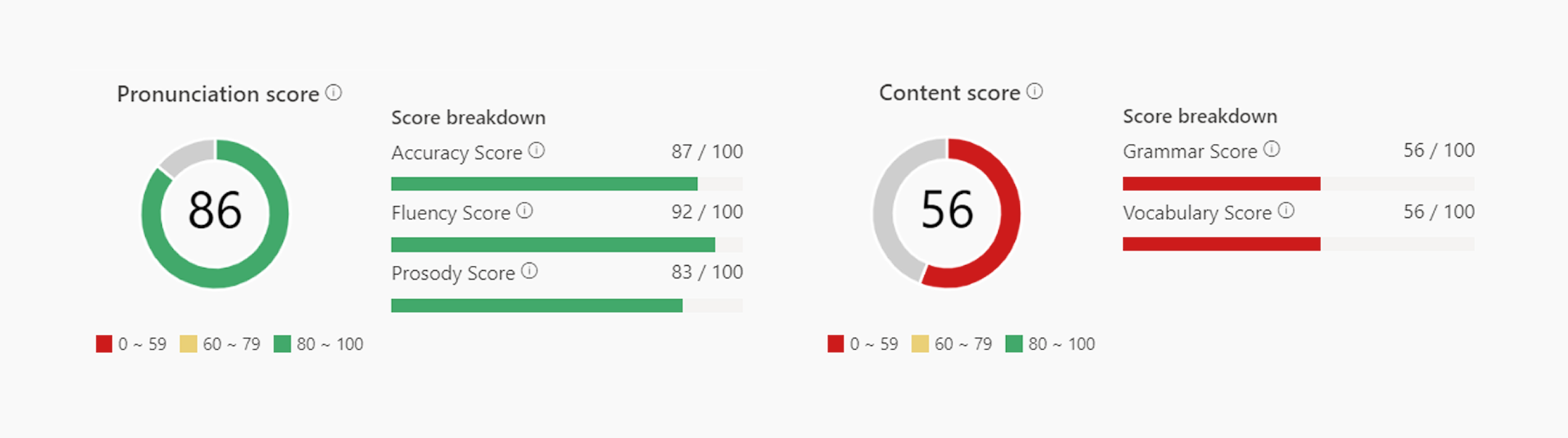
To address this, we integrated Azure Speech Service’s Pronunciation Assessment API, an AI-powered tool that evaluates speech at a granular level. The API analyzes key pronunciation factors:
The API supports both scripted and unscripted speech assessments, allowing children to either read predefined text or speak freely, receiving real-time, personalized feedback.
The impact
TeachSpeech leverages AI-driven speech analysis to provide instant feedback, helping children correct pronunciation in real time. Its data-driven insights will enable personalized learning plans in the future, while structured speech data supports educators in tracking progress and refining therapy strategies. This technology ensures accurate, adaptive, and scalable speech development support for children, parents, and educators.
.png)
3. Building TeachSpeech
Bringing TeachSpeech to life meant addressing real-world obstacles in accessibility, engagement, and usability. Our goal was to create an intuitive, effective, and scalable solution for speech therapy, especially for families in remote areas.
Making learning fun & engaging
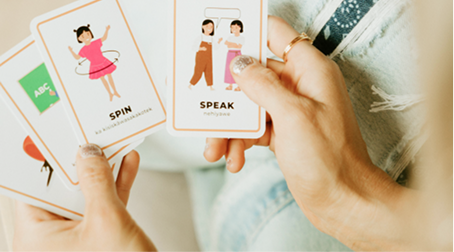
We designed interactive games like scavenger hunts, flashcards, and matching exercises to reinforce speech learning through play. By incorporating rewards, animations, and progress tracking, we made the learning process feel more like a game than a lesson.
.png)
.png)
“Islands doesn't merely execute on existing ideas; they proactively enhance them! They bring valuable suggestions and alternative ideas to the table, expanding on what I have in mind and adding depth to what we aim to achieve.”
.png)
Speech and Language Pathologist
Offline access & device optimization
Many families in remote areas struggle with limited internet access, making cloud-dependent tools unreliable. We built offline functionality, ensuring the app could function without an internet connection. The backend was optimized for older devices, reducing performance lag and making TeachSpeech accessible across a wide range of hardware.
.png)
Launch, early feedback, and results
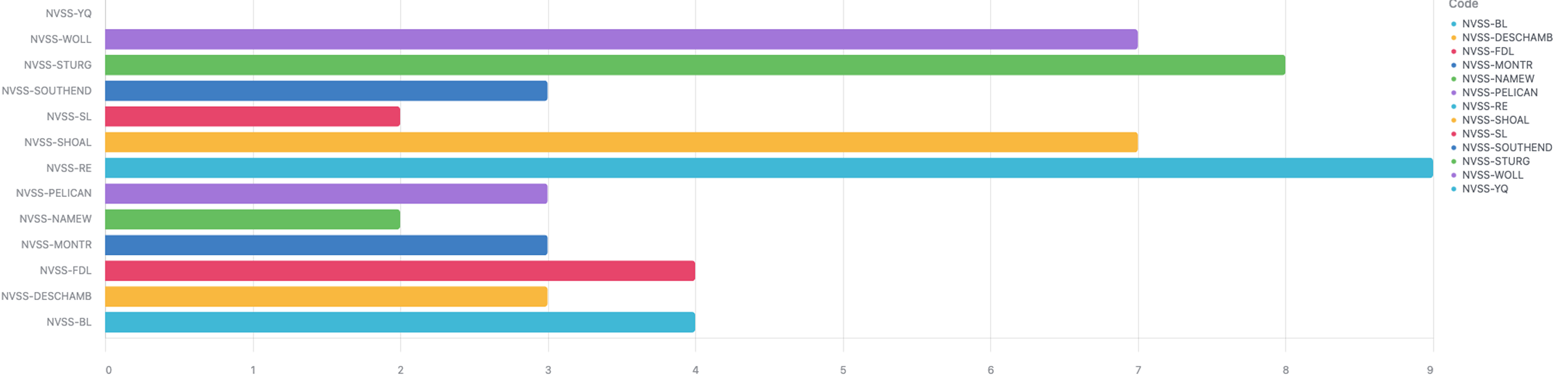
TeachSpeech officially launched in 12 schools across Saskatchewan, Canada, as part of a controlled rollout in October 2024. We distributed waitlist codes to early adopters, speech-language pathologists (SLPs), and educational institutions. Using Airtable, we closely tracked signups, user engagement, and feedback, allowing us to refine the experience in real-time.
The app was showcased at conferences and professional gatherings, where we engaged with educators, therapists, and researchers. Early feedback highlighted:
Ease of use for educators & parents
Engaging gamified experience for children
Strong demand for more games, activities, and resources
Additionally, we introduced new waitlist codes to manage access and monitor growth, ensuring a smooth onboarding process. TeachSpeech is built on a modern stack using React Native, Node.js, AWS, PostgreSQL, and Azure Speech AI for pronunciation assessment, with design prototyped in Figma and delivered by a cross-functional team of frontend and backend developers, a UX designer, and a project manager.
13
Schools launched in Saskatchewan
300+
SLPs/Teachers (Speech Language Pathologists) Engaged on App
1500+
Students being distributed
What’s next for TeachSpeech?
TeachSpeech is just getting started. We’re continuing to build on its success with new features:
1. 3D Animated Articulator Videos
Showing tongue and mouth movements for better pronunciation.
2. Advanced Gamification
Expanding interactive exercises to make learning even more engaging.
3. AI-Powered Personalization
Adapting lessons based on individual learning patterns.
4. Deeper Product Analytics
Enhancing data tracking to optimize user engagement and learning outcomes.
Learn more about NVSS’s mission.
Want to build something?
Let’s talk about what you’re working on next and see how we can help.
No pitches, no hard sell. Just a real conversation.
.png)
.png)
.png)
.svg)
