
How we helped make speech therapy accessible

13
Schools launched in Saskatchewan
300+
Speech-language pathologists and teachers engaged on the app
1,500+
Students being distributed
TL;DR

Families in remote and Indigenous communities lacked consistent access to speech therapy, and existing tools were complex or uninspiring for children.
We designed and built TeachSpeech, a React Native app with phoneme-level pronunciation feedback from Azure Speech's Pronunciation Assessment API, gamified practice and offline support.
TeachSpeech launched across Saskatchewan schools in October 2024, with 300+ SLPs and teachers engaged and 1,500+ students being distributed.
The founder of Northern Voices Speech Services, a speech-language therapist, had spent years working with children in remote and Indigenous communities and saw how traditional speech therapy was out of reach for many families.
She envisioned a tool that could deliver high-quality therapy anytime, anywhere. Together we built TeachSpeech, a mobile app that makes speech therapy engaging, interactive and accessible wherever a child is.
The challenges
The goal was a more accessible, engaging and culturally responsive approach to speech therapy.
1. Limited access
2. Uninspiring tools
3. Fitting daily routines
Parents and educators needed an easy, effective solution that fit into daily life.
What we built
1. Designing for simplicity and engagement
Research with parents, educators and speech-language pathologists showed existing solutions were too clinical or failed to engage young learners. Design priorities: onboarding in minutes, videos and visual prompts with high-contrast UI, and an interface that is playful for children and clear for educators.

2. Accurate speech feedback
Most speech recognition tools focus on transcription and lack phoneme-level precision. We integrated Azure Speech Service's Pronunciation Assessment API, which scores accuracy, fluency, completeness and prosody for both scripted and unscripted speech, giving children real-time, actionable feedback.
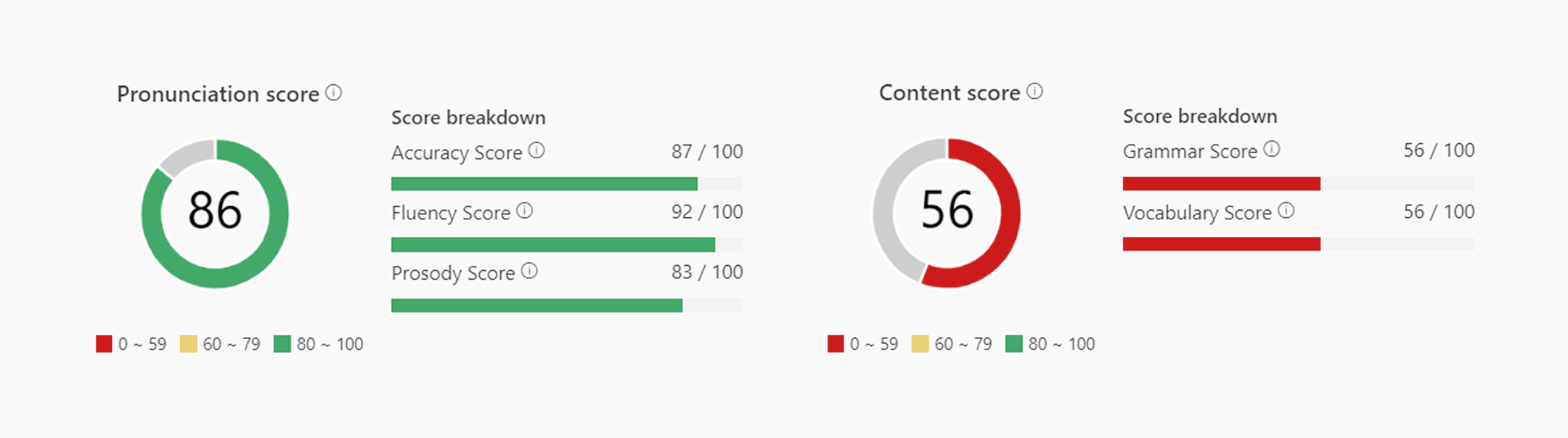
3. Building TeachSpeech
Scavenger hunts, flashcards and matching games reinforce speech through play, with rewards, animations and progress tracking. Because many families in remote areas have limited internet, the app works offline, and the backend was optimized for older devices.
Conclusion
TeachSpeech launched in schools across Saskatchewan in a controlled rollout in October 2024, with waitlist codes for early adopters, SLPs and institutions and sign-ups tracked in Airtable. Early feedback highlighted ease of use, an engaging gamified experience and strong demand for more activities.
Next: 3D animated articulator videos, advanced gamification, AI-powered personalization and deeper analytics. Get in touch.
13
Schools launched in Saskatchewan
300+
Speech-language pathologists and teachers engaged on the app
1,500+
Students being distributed
Use case: speech recognition, AI, accessibility | Industry: education
Stack: React Native, Node.js, AWS, PostgreSQL, Azure Speech AI | Design: Figma
Team: frontend and backend developers, UX designer, project manager
FAQ
How do you build phoneme-level pronunciation feedback into an app?
Integrate Azure Speech Service's Pronunciation Assessment API, which scores accuracy, fluency, completeness and prosody for scripted and unscripted speech in real time.
How do you make a speech therapy app work in remote areas?
Build offline functionality and optimize the backend for older devices, so the app works without a reliable connection.
How did TeachSpeech launch?
In a controlled rollout across Saskatchewan schools in October 2024, using waitlist codes and Airtable to track sign-ups and feedback.
What stack powers TeachSpeech?
React Native, Node.js, AWS, PostgreSQL and Azure Speech AI, designed in Figma.
AWS, PostgreSQL
Azure Speech AI

Read more


