
Structure and traceability for a high-stakes medical release
10
Features tested across every branch and browser
3 days
Full smoke suite to production sign-off
0 gaps
Every bug logged and linked to its GitHub PR
TL;DR

FluidAI Medical needed QA for a ten-feature release of surgical software, each feature on its own branch and tested across browsers and screen sizes.
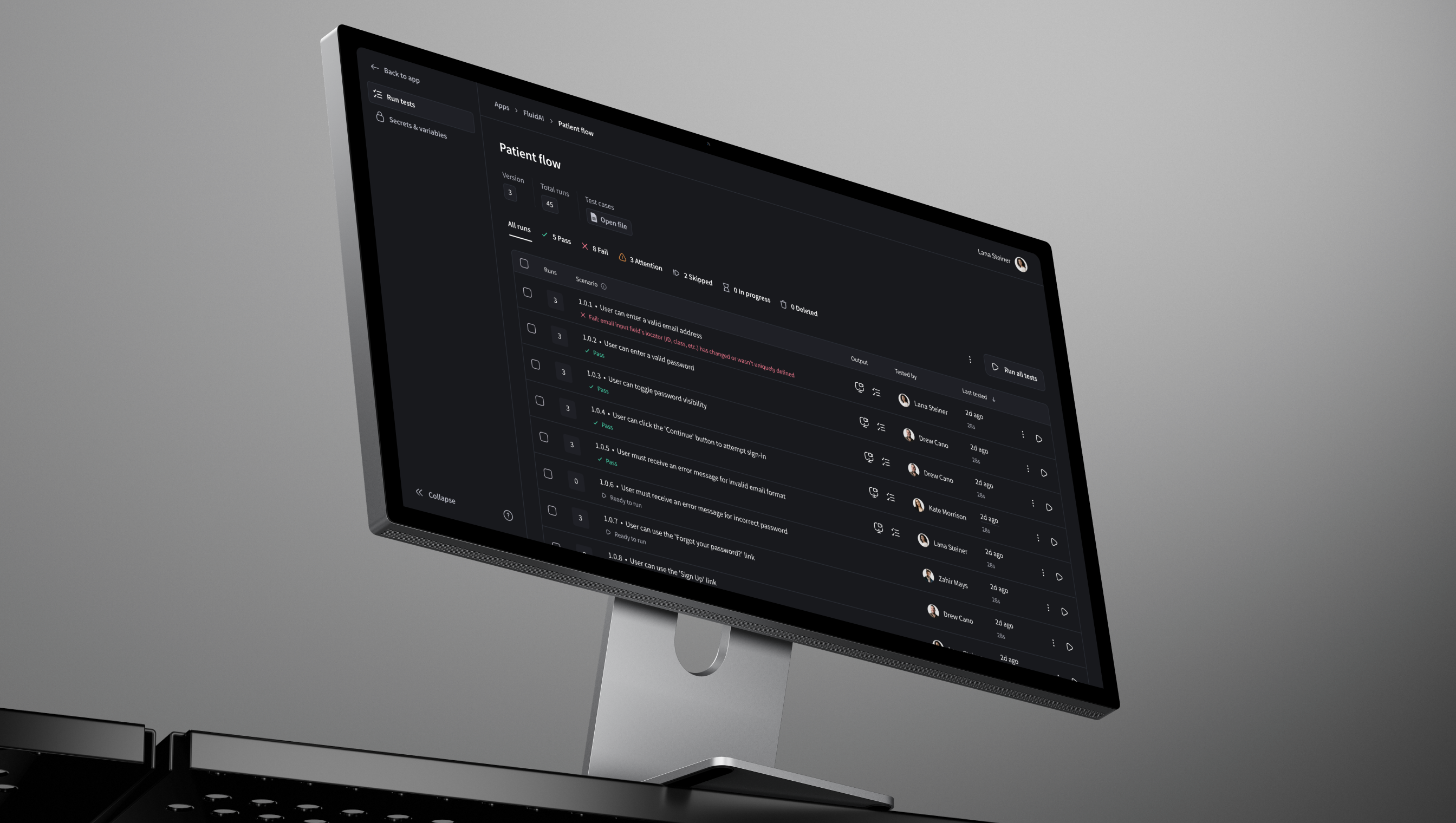
We combined QA flow's AI-generated test cases with manual execution by QA engineers, managed in TestMo and linked to every GitHub pull request.
All ten features shipped after a three-day smoke test, with every bug logged and traceable.
FluidAI Medical develops data-driven surgical solutions for general and gastrointestinal surgery. When software touches the operating room, quality has to be verifiable, traceable and repeatable.
With a multi-feature release on the horizon, FluidAI needed a QA process that matched its platform: ten features on separate branches, tested across browsers and screen sizes, with every failure documented and every result traceable. That's where QA flow came in.
The challenges
The release was a coordinated rollout of ten distinct features, not a single deployment.
1. Ten features on separate branches
2. Multiple browsers and screen sizes
3. Full traceability required
Every bug had to be logged and linked to its GitHub pull request, with results visible to developers.
What we built
1. Feature testing: AI-generated cases, human judgment
QA flow's AI test case generation created cases for each of the ten features, covering expected flows, edge cases and failure states. All cases were imported into TestMo as a single source of truth, then executed manually by QA engineers. Every failure became a detailed bug, and run results were updated directly on the matching GitHub pull request. Testing repeated across browsers and screen sizes until each feature passed.
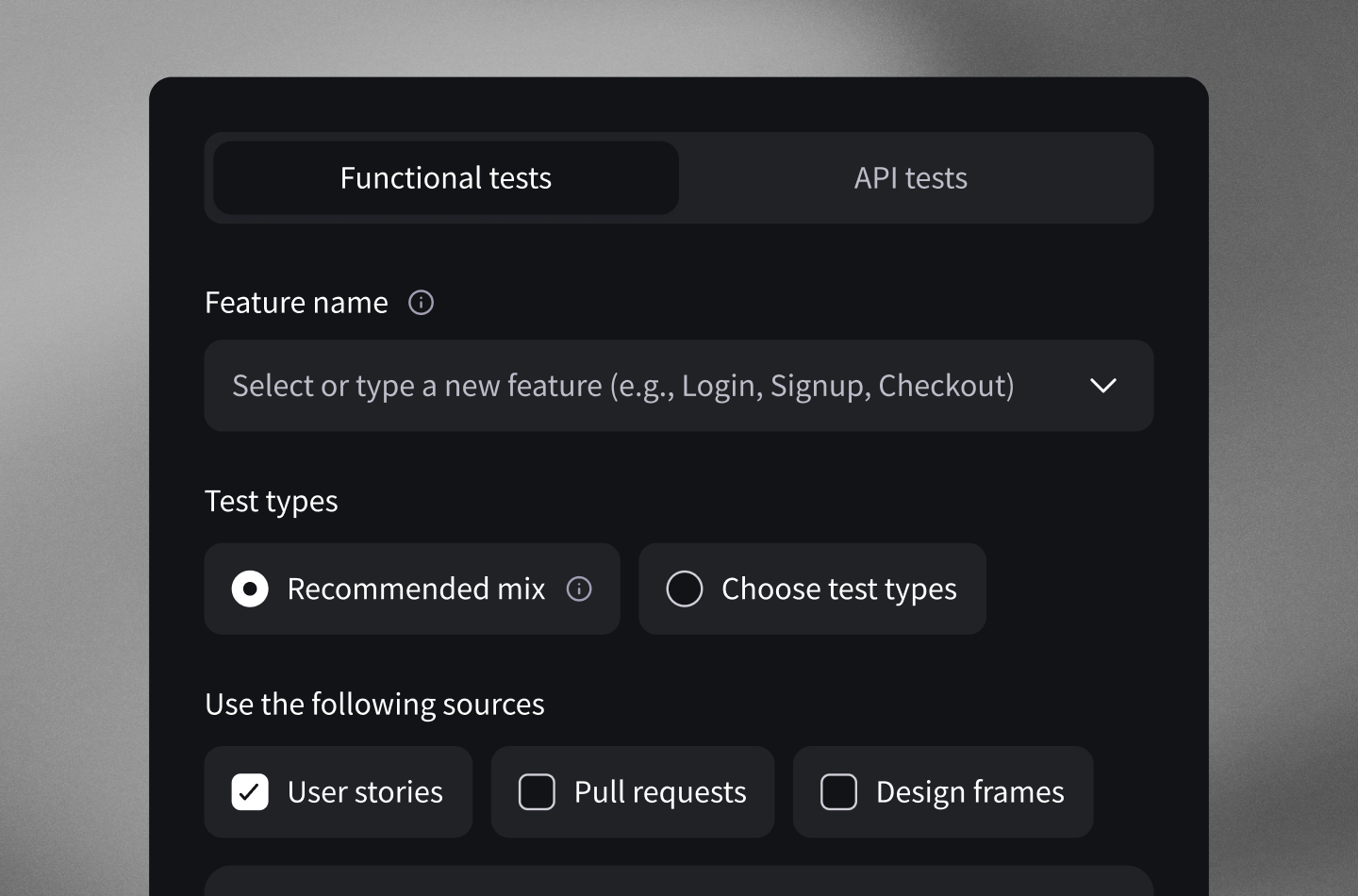
2. Three days to production confidence
A smoke suite covered all ten features together as an integrated system, built from QA flow's AI capabilities and the failure modes found during feature testing. It ran over three consecutive days, regressions were investigated each day, and the release moved to production only once the full suite passed consistently.
3. Why the process works for high-stakes software
Traceability: every test, bug and result linked from QA flow through TestMo to the GitHub PRs. AI plus human expertise: AI for systematic coverage, experienced engineers for execution, bug analysis and smoke suite design. Iterative rigour: no sign-off after a single pass.
Conclusion
FluidAI arrived at production with documented evidence of what was tested, how it performed and what was fixed. All ten features were covered across browsers and screen sizes, every bug was linked to its PR in real time, and the release deployed after a verified three-day smoke test.
Shipping something that has to be right the first time? Get in touch.
10
Features tested across every branch and browser
3 days
Full smoke suite to production sign-off
0 gaps
Every bug logged and linked to its GitHub PR
Use case: feature and smoke testing, QA | Industry: medical
Test generation: QA flow AI test cases | Management: TestMo
Traceability: bugs and run results linked to GitHub pull requests
Coverage: 10 features, multiple browsers and screen sizes, 3-day smoke suite
FAQ
How do you QA a high-stakes medical software release?
Generate systematic test cases per feature with AI, manage them in one tool, execute manually across browsers and screen sizes, link every bug to its pull request, and finish with a multi-day smoke test.
How do you automate QA with machine learning?
QA flow generated cases for each feature, covering expected flows, edge cases and failure states, so coverage did not depend on memory.
How do you keep QA results traceable?
Every test, bug and result was linked from QA flow through TestMo to the GitHub pull request where developers worked.
How long did the smoke test take?
Three consecutive days, covering all ten features end to end before production deployment.


Read more


